Xam in Vietnam: The Street Voice of Northern Folk Music
If ca tru asks for stillness – a small room, a poem, and a listener leaning into every quiet beat – xam walks back into the noise.
It belongs to places where life is already moving. Crowded markets. Ferry landings. Village roads. Train stations. Street corners where people pass by, slow down for a song, then return to their day.
That is the first thing to understand about xam. It was shaped by public life. The singer did not wait for a perfect stage or a silent audience. A song had to catch people in the middle of buying, waiting, traveling, gossiping, working, and worrying.
Among Vietnam’s traditional music forms, xam carries a grounded and human kind of beauty. It can be funny, sharp, bitter, playful, or full of sorrow. It can tell a story, give a warning, mock a bad habit, or turn daily hardship into something people can recognize together.
For travelers, xam opens a different door into northern Vietnamese culture. It does not feel distant or ceremonial. It feels closer to the street – to ordinary voices, public spaces, and the old habit of turning life into song.
A Folk Voice Made for Public Life
Xam is a traditional folk singing form from northern Vietnam. Its old world was not built around formal theaters. It grew in open, busy places where people naturally gathered.
Historically, xam was closely associated with blind wandering singers who performed to earn a living. They sang in markets, on village roads, near ferry docks, and later around tramways and train stations. Their audience was not seated in neat rows. It was moving, bargaining, waiting, laughing, and leaving.
That setting shaped the music. Xam had to be direct. A singer needed to catch attention quickly, hold the crowd, and make a story clear enough to follow in a noisy place.
This is why xam feels so close to ordinary life. Its songs often speak about poverty, love, family, work, injustice, moral choices, social habits, and the small dramas of everyday people. Some songs make listeners laugh, while others carry sadness or quiet criticism. At times, xam can sound like folk wisdom wrapped inside a joke, which is exactly why it could stay close to ordinary people.
Xam grew from the street, so it kept the street’s energy: quick, observant, emotional, and never too far from the lives of the people listening.
The People Who Carried the Songs
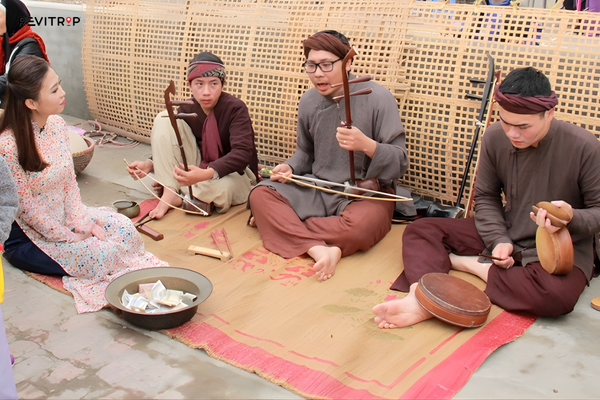
The image of the blind xam singer is central to the memory of this art form.
For many performers, xam was a livelihood. Singing was a way to survive, but it was also a way to speak. A good xam singer could turn a crowded public space into a small theater. They might sing about a moral lesson, a local story, a social problem, or a funny scene from daily life.
The singer had to be more than musical. They needed timing, wit, memory, and the ability to read a crowd. A line could be stretched for humor. A phrase could be sharpened for criticism. A sad story could be softened with rhythm so people stayed to listen.
That gives xam a very human texture. The form carries the voice of people who stood close to hardship, but still found a way to make life singable.
The Sound of Xam
Xam is built around storytelling before polish.
The voice leads everything. It may sound playful in one line, then suddenly bitter or wounded in the next. A xam singer can tease, warn, complain, imitate, or comfort, depending on the story being told.
The instruments support that voice. The đàn nhị, a two-string bowed instrument, often gives xam its raw and emotional color. Its sound can bend around the singer like a second voice. The đàn bầu may add a more haunting layer. Percussion instruments such as phách, trống mảnh, or sênh tiền help keep the rhythm alive.
A xam performance does not need to feel smooth in a polished stage-show way. Its charm comes from character. The song moves like someone telling a story in public, with enough rhythm to hold the crowd and enough feeling to stay in the memory.
Stories, Jokes, and Sharp Edges
Xam has always had a sharp ear for human behavior.
A song could praise kindness, mock arrogance, warn against greed, or speak about injustice in a way people could accept because it came through music. Humor gave the singer room to say difficult things. A joke could carry criticism. A playful line could hide a serious wound.
This is one of the strongest parts of xam. Xam was entertainment, yet it also carried a social voice. Through humor, singers could make people laugh at themselves while pointing toward habits, struggles, or injustices that everyone recognized. In that way, a shared hardship could become a story, and an unspoken truth could briefly enter public life.
For travelers, this makes xam easier to feel even when the language is unfamiliar. You may not understand every word, but the singer’s tone often tells you what kind of story is unfolding. A teasing line sounds different from a warning. A comic phrase lands differently from a line of grief.
Xam speaks through character as much as melody.
Xam Tau Dien and Old Hanoi
One of the most memorable branches of xam is xam tau dien, often associated with Hanoi’s old tramways.
In the early 20th century, tramcars and busy streets gave xam singers a moving public stage. Passengers came and went. The city kept shifting around them. Songs could refer to modern life, social habits, or the mood of urban movement.
That image fits xam beautifully. A singer on the tram did not perform inside a closed cultural space. They sang inside the rhythm of the city itself.
Today, the old tramway world has disappeared, but Hanoi still gives xam a meaningful setting. The city’s old streets, public spaces, markets, and cultural venues carry echoes of the places where xam once lived more naturally.
If ca tru feels most powerful in a quiet room, xam feels like it remembers the street even when it is performed on a stage.
Ninh Binh and the Work of Keeping Xam Alive
Ninh Binh is another important place in the recent story of xam preservation.
The province has supported xam through cultural programs, teaching activities, performances, and efforts to introduce the form to students and younger audiences. This matters because xam cannot survive only as an old recording or a museum note. Xam cannot survive only as an old recording or a museum note. Instead, it needs living voices, familiar instruments, patient teachers, curious learners, and listeners willing to gather in the same space.
For travelers, Ninh Binh is usually known for limestone mountains, boat rides, temples, and ancient capital history. Xam adds another layer to that landscape. It brings in the sound of northern folk life – not the postcard view, but the voice of people who turned daily struggle, humor, and memory into music.
This also shows how heritage can stay active. Preservation is not only about keeping something safe. It is also about giving it enough air to be heard by new people.

A Modern Doorway Into Xam
For younger listeners, xam can feel far away at first. Its old world belongs to markets, tramways, village roads, and public gatherings that no longer look the same. Yet the tradition has started to return through cultural programs, school workshops, online performances, and contemporary music.
Some people meet xam through a live heritage show. Others hear it first in a short video, a music competition, or a modern stage arrangement. These entry points cannot show the full depth of the form, but they can spark curiosity. A striking vocal line, a folk rhythm, or the dramatic shape of a melody may lead listeners back to the older tradition.
SOOBIN’s “Mục Hạ Vô Nhân” is one visible example of this bridge. The song brings the spirit of xam into a modern register, placing its storytelling energy beside contemporary pop and R&B textures. For many young listeners, it creates a softer first step into the tradition, where the old voice of xam can be heard through a sound world they already know.
This is not about turning xam into pop. It is about giving the tradition more ways to be heard. Xam still needs artists, teachers, instruments, live performances, and cultural spaces that keep its street-born character alive. When younger people find a first doorway into the sound, preservation becomes less like storing something away and more like keeping it in motion.

Xam and Other Northern Vietnamese Music Traditions
Xam belongs to the broad world of northern Vietnamese music, but it has its own ground.
Ca tru carries poetry into a quieter, more intimate performance space. Quan ho opens into village call-and-response singing. Cheo brings folk theater, comedy, and dramatic characters to the stage.
Xam moves through a different atmosphere. It steps into public life. It carries stories from the road, the market, the station, and the crowd. Its voice can be rough, witty, sorrowful, and direct within the same song.
This difference is important for travelers. Vietnamese traditional music is not one single sound. Each form grew from a different social world. Xam’s world was public, mobile, and close to daily survival.
Where Travelers Can Hear Xam in Vietnam
Hanoi is the easiest starting point for most travelers.
Look for traditional music spaces, cultural centers, heritage programs, or special performances around the city. Xam performances are not always scheduled like regular tourist shows, so it is best to check before planning your visit.
Ninh Binh is also closely connected with xam preservation. Performances may appear during cultural festivals, school programs, local events, or heritage activities. These are not always daily experiences for visitors, but they can be meaningful if your timing works.
A guided cultural experience can help if you are hearing xam for the first time. Even a short explanation of the instruments, the singer’s role, and the street-born background will make the performance easier to follow.
How to Listen to Xam for the First Time
Start with the story.
You may not understand every Vietnamese word, especially if the song uses older language, local phrasing, or fast delivery. That is fine. Listen first to the singer’s tone. Is the line playful? Bitter? Proud? Sad? Is the singer teasing someone, warning someone, or carrying a small wound inside the rhythm?
Then notice the instruments. The đàn nhị may bend around the voice. Percussion keeps the story moving. The singer may repeat a phrase, stretch a line, or shift expression as if several characters are passing through the same body.
Xam becomes clearer when you stop waiting for a polished stage moment. Its charm sits in directness. It feels like someone pulling a story out of a busy day and making everyone pause long enough to hear it.
Final Take
Xam is one of the most grounded voices in Vietnamese traditional music. It came from public life, from streets and markets, from people who turned hardship, humor, and social observation into song.
For travelers, xam offers a vivid way into northern Vietnamese heritage. It feels close to movement, work, waiting, joking, and surviving.
Today, younger artists, cultural spaces, schools, and community programs have helped bring xam back into view. The deeper story still belongs to the older form itself: a singer, a crowd, a few instruments, and a voice sharp enough to make ordinary life sound unforgettable.
FAQ
Xam grew from public life in northern Vietnam. It was often performed in markets, ferry docks, village roads, tramways, train stations, and other busy gathering places.
No. Xam is not currently listed by UNESCO. It was recognized by Vietnam as a National Intangible Cultural Heritage in 2022.
No. Xam and ca tru are different northern Vietnamese music traditions. Ca tru is more poetic and chamber-like, while xam is street-rooted and built around public storytelling.