Ca Tru Singing in Vietnam: Poetry, Voice, and an Old Way of Listening
Ca tru begins close to silence.
A small wooden beat lands first. Then comes the low sound of the dan day, dry and deep, like a string pulled from an older room. The singer does not rush into melody. She carries the poem slowly, shaping each word until the space around it begins to change.
This is one of Vietnam’s most refined traditional music forms. It belongs to poetry, performance, ritual, and the old art of listening with care. For many travelers, ca tru may feel unfamiliar at first. It does not offer the bright visual charm of water puppetry or the easy rhythm of a street performance. Its beauty arrives more quietly.
To hear ca tru well, you need a small room, a little patience, and the willingness to follow details: the singer’s hand on the phach, the hollow notes of the lute, the praise drum waiting for the right moment to answer.
The Old Art of Sung Poetry
Ca tru is often described as sung poetry. That is a useful beginning, though the form is richer than the phrase suggests.
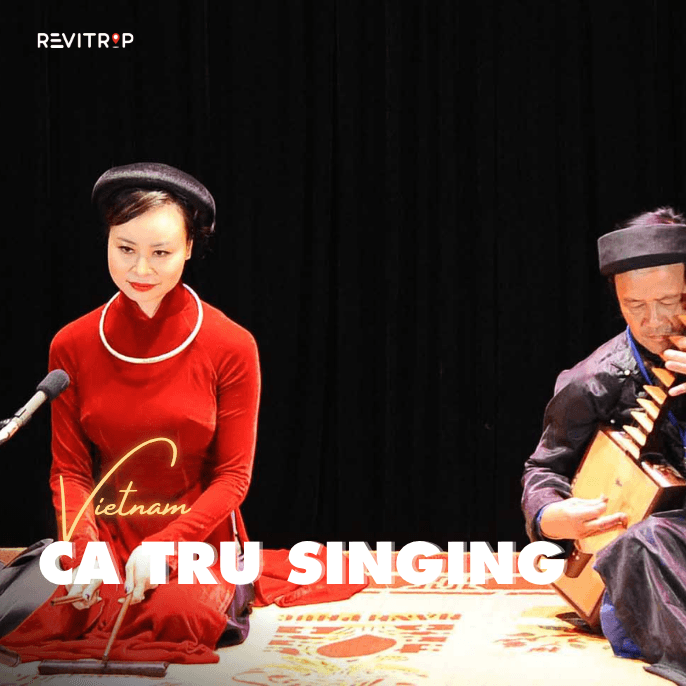
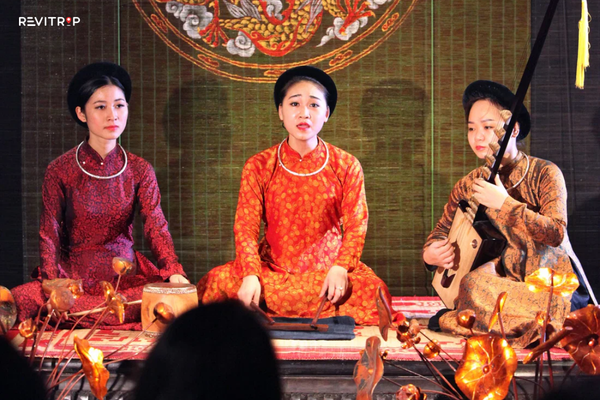
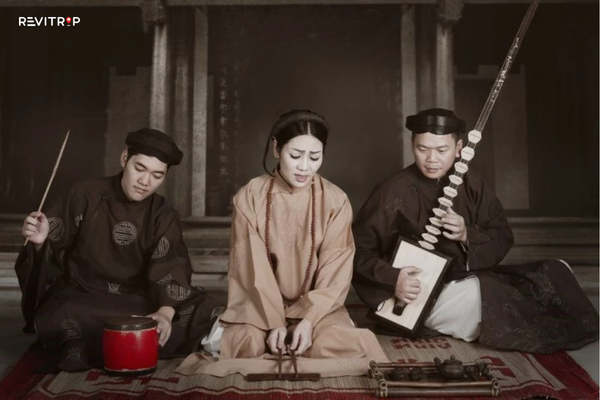
A traditional performance usually centers on a female vocalist, often called a ca nuong or dao nuong. She sings while keeping rhythm with the phach, a small wooden or bamboo percussion set. Beside her, a musician plays the dan day, a long-necked three-string lute with a sound that feels spare, low, and slightly haunting.
Then comes the trong chau, or praise drum. The drummer is not simply keeping time. He listens, judges, and responds. A well-placed beat can mark approval, sharpen the mood, or turn the performance into a quiet exchange between singer, musician, and listener.
This is where ca tru becomes intimate. It does not need a large stage. Its force comes from control, timing, and the tension between sound and silence.
Ca Tru in Vietnamese Cultural Life
Ca tru grew within a world where poetry, music, scholarship, and ritual often touched one another.
In older northern Vietnamese life, ca tru appeared in several spaces: communal houses, ceremonial settings, learned gatherings, private homes, and singing houses. Some performances were connected to worship and village customs. Others belonged to more literary or social settings, where the beauty of a poem could be shaped through voice and judged by a listener with a trained ear.
That relationship with poetry gives ca tru its special texture. Words are not treated as simple lyrics. They are stretched, ornamented, and placed carefully inside rhythm. A singer does not only perform a song. She gives the poem a body.
For travelers, this can be the most rewarding way to approach ca tru. Do not try to decode everything at once. Start with the structure. Listen for the voice, the phach, the dan day, the drum, and the pauses between them. The form begins to open when your attention slows down.
The Sound of Ca Tru
Ca tru does not move like modern pop music.
The melody may feel narrow in the beginning, then unexpectedly expressive. The singer bends around syllables with small ornaments. The phach creates a dry pulse. The dan day answers with hollow, almost shadowy notes. The trong chau enters briefly, then disappears again.
Nothing is wasted. A pause can hold as much feeling as a sung line. A short drumbeat can change the room. The voice may sound restrained, but the emotion is still there, folded into technique.
This is why ca tru often works best in a small venue. When you sit close enough, the performance becomes less distant. You can see the singer’s hand move over the phach; you can hear the lute breathe between lines; you can feel the drummer waiting.
Ca Tru and Hanoi’s Old Atmosphere
Hanoi is one of the easiest places for travelers to experience ca tru today. The city gives the form a natural setting.
After a day around the Old Quarter, Hoan Kiem Lake, or the Temple of Literature, ca tru brings Hanoi into a quieter register. The city’s noise does not vanish, but for a short while, it sits outside the room. Inside, the performance gathers around voice, wood, string, and poetry.
For visitors, ca tru is best treated as an evening cultural experience. It is slower and more literary than water puppetry. It also asks for more attention. That makes it especially rewarding for travelers who enjoy old music, intimate spaces, and heritage that does not announce itself too loudly.
If you are new to Vietnamese traditional performance, a short introduction before the show helps. Knowing the basic roles of the singer, lute player, and drummer can make the whole experience easier to follow.
A Modern Doorway Into Ca Tru
For younger listeners, ca tru often feels distant at first. The form is old, the rhythm is unfamiliar, and the performance setting can seem far from everyday music culture. Yet that distance is slowly becoming smaller as young artists, students, and cultural spaces find new ways to bring traditional sounds back into public life.
Some begin through formal training, learning from older masters before stepping onto contemporary stages. Others meet ca tru through short videos, fusion performances, school projects, or cultural programs in Hanoi. These entry points may not show the full depth of the tradition, but they can spark curiosity. A modern arrangement, a striking vocal phrase, or a stage performance by a young ca nương can lead listeners back to the original form.
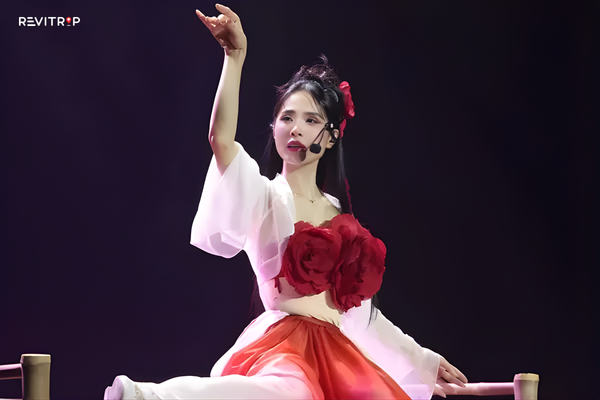
Ca nương Kieu Anh is one example of this bridge. With songs like “Trach Trang Tan,” she brings ca tru into a modern register, letting the old vocal color of hat a dao move through contemporary Vietnamese music. The result is not a traditional ca tru performance in the strict sense, but a modern doorway into its sound, mood, and expressive technique.
This is not about replacing the traditional room with a modern stage. It is about giving ca tru more ways to be heard. The old form still needs teachers, patient practice, and careful performance. But when younger people find a first doorway into the sound, preservation becomes less like storing something away and more like keeping it in motion.
Listening to Ca Tru for the First Time
The best way to listen to ca tru is to let go of the need for an instant hook.
Do not wait for a chorus. Do not expect the music to rise and fall like a familiar ballad. Instead, follow the relationships inside the performance. The singer leads the poem. The phach keeps the pulse. The dan day shades the line. The trong chau enters only when the moment calls for it.
You do not need to understand every word. Even Vietnamese listeners may need context for older poems. Start with sound and gesture. Watch how the singer controls her breath. Notice how little movement is needed to create tension. Listen for the short silence after a line ends.
Once you catch the pattern, ca tru begins to feel less distant. It becomes a slow conversation, carried by people who know how to leave space around a sound.
Where to Hear Ca Tru in Vietnam
Hanoi is the most practical starting point for most travelers. Small ca tru clubs, heritage houses, and traditional music venues sometimes host performances in the city. Schedules can change, so it is better to check directly before going.
A short performance is enough for a first encounter. It gives you time to hear the main instruments, understand the mood, and decide whether you want to go deeper. Travelers with a strong interest in music may prefer a longer session with commentary from a guide, artist, or researcher.
You may also come across ca tru in northern Vietnam during cultural programs or festival-related events. These settings can feel more rooted in local life, though they are usually harder to find without local help.
A Fragile Heritage Still Being Carried Forward
Ca tru has passed through a delicate path of decline and revival.
Many old masters passed away. Fewer people knew how to sing, play, teach, and listen in the traditional way. Its UNESCO listing in 2009 brought wider attention to the need for safeguarding, but the survival of ca tru still depends on people: artists, teachers, clubs, researchers, students, and audiences who keep showing up.
Preservation does not only mean recording old songs. Young singers need teachers who can pass down the technique with patience and precision. Small clubs and cultural spaces give the art form a place to breathe beyond archives and recordings. New listeners also need gentle introductions, so ca tru can become approachable without being reduced to a quick cultural display.
Ca tru is strongest when it is allowed to stay precise and demanding, while still welcoming people who are hearing it for the first time.
Final Take
Ca tru is one of Vietnam’s most delicate traditional art forms. It brings poetry, rhythm, voice, and refined listening into a performance that can feel quiet at first, then deeply absorbing.
For travelers in Hanoi, ca tru offers a softer way into northern Vietnamese heritage. It does not compete with the city’s noise. It creates a pause inside it.
A wooden beat lands. The lute answers. The singer carries the poem forward. For a short while, the old room still knows how to listen.
FAQ
Ca tru is a traditional Vietnamese form of sung poetry. It is usually performed with a vocalist, phach percussion, dan day lute, and trong chau praise drum.
Yes. Ca tru was listed by UNESCO in 2009 as an Intangible Cultural Heritage in Need of Urgent Safeguarding.
Yes, a dao is one of the older names associated with ca tru. Ca tru has also been known by names such as hat co dau and hat cua dinh, depending on context and period.