Ho Dynasty Citadel: A Quiet Guide to Vietnam’s Stone Fortress in Thanh Hoa
Ho Dynasty Citadel is one of Vietnam’s most quietly powerful heritage sites. Set among fields and low mountains in Thanh Hoa, the old stone fortress does not feel polished or crowded. Its beauty comes from scale, silence, and the strange weight of a former capital reduced to gates, walls, and open land.
For travelers moving between Hanoi, Ninh Binh, Thanh Hoa, or Pu Luong, the citadel makes a thoughtful historical stop. It is not a place of quick spectacle, but a place to pause, look at the stonework, and imagine a short-lived dynasty that once tried to shape power from this rural landscape.
At a Glance
| Item | Details |
|---|---|
| Location | Vinh Loc District, Thanh Hoa Province |
| Best for | History lovers, road trips, quiet heritage travel |
| Time needed | 1.5–2.5 hours on site |
| UNESCO status | World Heritage Site |
| Best combined with | Thanh Hoa city, Pu Luong, Ninh Binh |
| Travel style | Historical site, rural landscape, slow cultural stop |
A Stone Gate in the Middle of the Fields
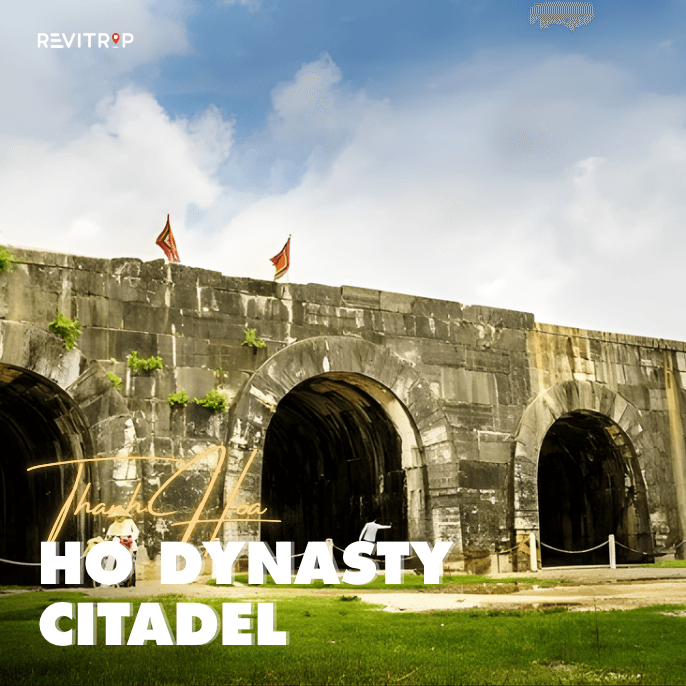
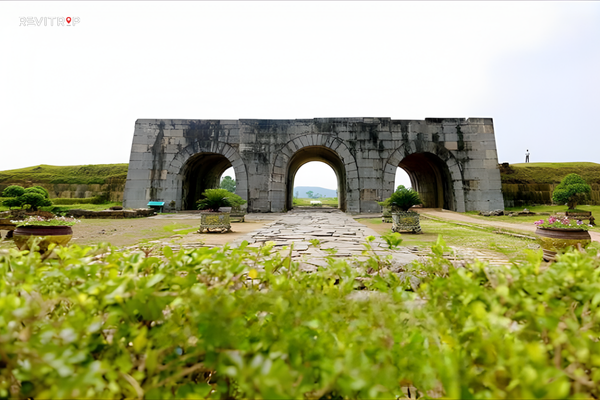
Ho Dynasty Citadel appears with a calm that feels unusual for a former capital. The road moves through Thanh Hoa’s rural landscape, past fields, village houses, and low mountain shapes. Then the stone gate rises ahead, broad and heavy, standing in the open land with a kind of weathered confidence. It does not need decoration to feel powerful.
Built in the late 14th century, the citadel once served as the capital of the Ho Dynasty. Much of the palace life has disappeared, leaving behind stone walls, gates, foundations, and the larger shape of an old political center. For visitors, the experience is not about a fully rebuilt royal complex. It is about reading what remains and imagining what once stood within those walls.
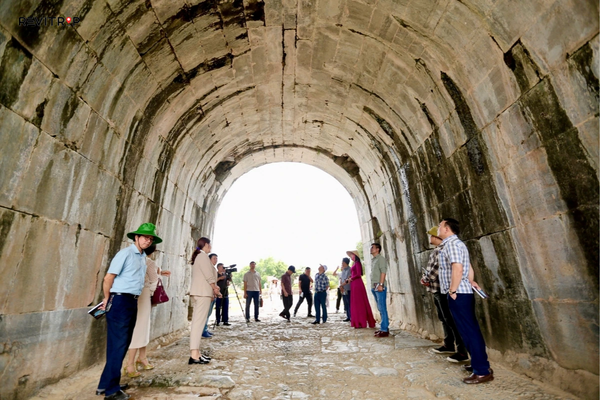
The atmosphere is one of the site’s strongest qualities. Ho Dynasty Citadel is usually far quieter than Vietnam’s most famous heritage stops. That quiet gives the place space to breathe. You can stand under the main gate, look across the fields, and feel how history has settled into the landscape rather than being polished into spectacle.
Why Ho Dynasty Citadel?
Ho Dynasty Citadel is remarkable because of its stone construction. Large limestone blocks were used to create the walls and gates, and their scale still feels impressive after more than six centuries. The stonework gives the site a different mood from many brick or wooden historical structures in Vietnam. It feels severe, controlled, and almost minimalist.
The location also carries meaning. The citadel sits in a landscape shaped by rivers, mountains, and open fields. Its placement reflects both defensive thinking and traditional ideas of harmony between architecture and nature. When you stand near the gate, the surrounding land becomes part of the experience. The citadel was designed with its environment, not placed apart from it.
For travelers, this makes Ho Dynasty Citadel easier to appreciate when approached slowly. The walls may seem simple at first, yet their scale, layout, and age begin to speak as you walk around them. It is a site where context matters. A little history before visiting can turn a quiet ruin into a much richer encounter.
What to See at Ho Dynasty Citadel
The main gate is the highlight and the image most visitors remember. Its arched openings are built from massive stone blocks, creating a strong, balanced structure that still feels imposing. Walk around it from different angles before passing through. The gate changes with distance, light, and viewpoint, especially when the fields around it are green.
Inside the citadel area, you will find open grounds and traces of older structures. Do not expect a palace complex with rooms, roofs, and detailed interiors. The appeal lies in the remains, the proportions, and the sense of a former capital reduced to its essential lines. This can feel surprisingly moving if you give the site enough time.
The Nam Giao Altar is also worth adding if your schedule allows. It helps explain the ritual world of the old capital, where royal authority was connected with ceremonies, heaven, earth, and order. Visiting both the citadel and altar gives a fuller picture of how political power and spiritual ritual once belonged to the same landscape.
How Long Should You Spend There?
Most visitors need around 1.5 to 2.5 hours at Ho Dynasty Citadel. This is enough time to see the main gate, walk through the central area, take photos, and visit nearby related points if transport is arranged. Travelers with a strong interest in Vietnamese history may want to stay longer, especially with a guide.
The site rewards context more than speed. If you arrive without knowing anything about the Ho Dynasty, the visit may feel visually brief. If you understand that this was once a royal capital built during a short and turbulent period, the stones feel more charged. A guide, museum stop, or short reading before arrival can make the experience much stronger.
Because the area is open and exposed, avoid treating the visit as a midday walk in hot weather. Morning and late afternoon are more comfortable, and the light is better for photography. Bring water, sun protection, and shoes that can handle uneven ground.
How to Get to Ho Dynasty Citadel
Ho Dynasty Citadel is located in Vinh Loc District, Thanh Hoa Province. From Hanoi, it works best as part of a longer route rather than a quick standalone day trip. A private car gives the most flexibility, especially if you want to combine the citadel with Ninh Binh, Pu Luong, or other Thanh Hoa historical sites.
From Ninh Binh, the citadel can be added as a cultural detour before continuing south or west. This route is useful for travelers who want to move beyond the usual Ninh Binh boat trips and include a quieter heritage site. From Thanh Hoa city, the drive is more direct and easier to manage.
Public transport may be possible, but it is not the smoothest option for most foreign visitors. The site is best experienced when you can control your timing, avoid rushed connections, and add nearby stops if needed. A driver or arranged tour makes the day far more comfortable.
Best Time to Visit
Morning and late afternoon are the best times to visit Ho Dynasty Citadel. The stone looks softer in angled light, and the fields around the site feel more atmospheric. Midday can be hot and bright, especially in summer, since there is limited shade in many parts of the complex.
The dry season is easier for walking and photography. A cloudy day can also suit the citadel well, giving the stone a muted, almost ancient tone. This site does not need strong sunlight to look beautiful. In many ways, its mood works best when the landscape feels quiet and slightly subdued.
If you are planning a route with Pu Luong or Ninh Binh, check the weather for the whole region. Roads, mountain areas, and open heritage sites can feel very different depending on rain, heat, and visibility.
Is Ho Dynasty Citadel Worth It?
Ho Dynasty Citadel is worth visiting for travelers who enjoy history, architecture, and uncrowded places. It is less suitable for visitors looking for a full entertainment complex or a site packed with reconstructed buildings. The beauty here is quieter and more demanding. You need to bring a little patience to it.
The reward is a rare view of medieval Vietnamese power expressed through stone, scale, and landscape. The main gate alone gives the visit a strong visual anchor, while the surrounding fields make the site feel deeply tied to Thanh Hoa’s countryside. It is a place where the past does not feel polished; it feels weathered, spacious, and still.
If your Vietnam trip already includes Ninh Binh or Pu Luong, Ho Dynasty Citadel can add a thoughtful historical layer to the journey. It balances natural scenery with cultural depth and gives you a heritage stop that many travelers miss.
Suggested Route
A strong route is Hanoi – Ninh Binh – Ho Dynasty Citadel – Pu Luong. This gives you limestone landscapes, river scenery, medieval heritage, and mountain valleys in one journey. It works well for travelers who want a slower northern-central itinerary with more variety than a simple city-to-city route.
Another option is Thanh Hoa city – Ho Dynasty Citadel – Lam Kinh. This route is better for travelers who want to focus on Thanh Hoa’s historical identity. It gives a deeper look at the province beyond beaches and transit stops.
For a quieter look at Vietnam’s handmade heritage, continue north to Bac Ninh, where Dong Ho folk paintings preserve village humor, Tet wishes, and traditional woodblock craft.
Whichever route you choose, keep the citadel as a calm stop rather than a rushed photo break. The site needs time, space, and a little imagination.
FAQ
The Citadel of the Ho Dynasty is located in Vinh Loc District, Thanh Hoa Province, in north-central Vietnam. It sits in a rural landscape of fields, rivers, and low mountains, several hours south of Hanoi by road. Most travelers visit it by private car, often as part of a longer route through Ninh Binh, Thanh Hoa, or Pu Luong.
Vietnam has had many dynasties, so there is no single official group called “the 4 dynasties of Vietnam.” In many general history and travel contexts, four major dynasties often mentioned are the Ly, Tran, Le, and Nguyen dynasties. The Ho Dynasty was much shorter, lasting from 1400 to 1407, yet it left behind one of Vietnam’s most distinctive stone citadels.
The Citadel of the Ho Dynasty is unique because of its large stone construction. Many historic structures in Vietnam were built with wood or brick, while this citadel used massive limestone blocks to form its walls and gates. Its design also reflects a careful relationship with the surrounding landscape, including rivers, mountains, and open fields. Today, that combination of stone architecture, historical meaning, and rural setting makes it one of Vietnam’s most unusual UNESCO heritage sites.