
Where is Vietnam: Complete Guide to the S-Shaped Country
Where is Vietnam located on the world map? This Southeast Asian gem sits on the Indochina Peninsula. The country stretches 1,650 kilometers from north to south in a unique S-shape. Understanding Vietnam’s location helps you plan the perfect journey.
For anyone still wondering where Vietnam sits on the map, the short answer is that Vietnam is located in Southeast Asia on the eastern side of the Indochina Peninsula. If you are asking what continent Vietnam is in, the answer is Asia – more specifically, mainland Southeast Asia.
Where is Vietnam positioned? China borders the north, Laos and Cambodia border the west, and the South China Sea lies to the east. This location creates diverse climates, landscapes, and cultures. This guide reveals what is special about Vietnam’s geography, climate, population, and practical travel information.
Geographical Location
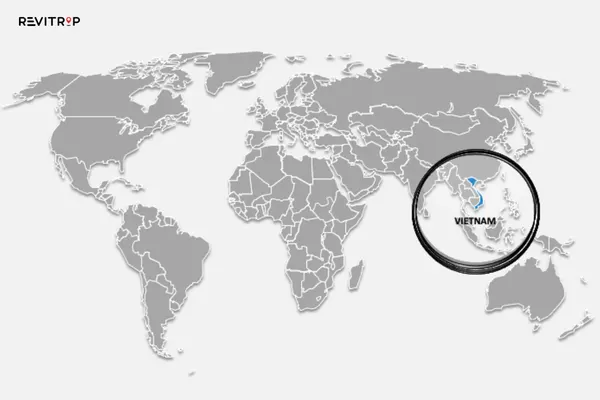
Where is Vietnam in Southeast Asia? Vietnam occupies the eastern Indochina Peninsula.
The country shares a 4,550-kilometer land border with three neighbors. China extends along the northern border. Laos and Cambodia border the western regions.
Vietnam’s eastern coastline stretches 3,260 kilometers along the South China Sea. The coast runs from Mong Cai in the north to Ha Tien in the southwest.
Vietnam ranks as the 66th largest country worldwide, covering 331,210 square kilometers. Mountains and hills make up three-quarters of the territory. Deltas cover one-fourth, including the Red River Delta and Mekong Delta.
Climate
Vietnam sits in the tropical zone with high temperature and humidity year-round. What is special about Vietnam’s climate is the variation between regions.
Northern Vietnam experiences four distinct seasons. Winter temperatures drop to 0°C in mountainous areas. Southern Vietnam maintains warm weather throughout the year.
Two major climate regions divide Vietnam at Hai Van Pass. The north has a humid tropical monsoon climate. The south has a moderate tropical climate with dry and rainy seasons.
Average temperatures range between 21°C and 27°C. Annual rainfall measures 1,500mm to 2,000mm. Air humidity stays around 80%.
Population
Vietnam’s population reached 98 million people by 2022. This ranks the country 13th among the world’s most populous nations.
About 30% live in urban areas. The remaining 70% reside in rural regions. People aged 15-60 account for 60% of the population.
Ho Chi Minh City has 7.1 million people. Hanoi has 6.44 million people. These are Vietnam’s most populous cities.
Average life expectancy reaches 73 years. The total workforce numbers around 45 million people across all economic sectors.
Ethnicity
Vietnam is a multi-ethnic country with 54 ethnic groups. These groups coexist peacefully throughout the territory. The Kinh people account for 86% of the population.
The remaining 53 ethnic groups live mainly in mountainous areas. Northern and Northern Central regions host the most diverse ethnic communities.
What is special about Vietnam’s ethnic diversity is how communities maintain traditional lifestyles. Each group preserves unique cultures, languages, and customs.
Beliefs and religions vary widely. Groups practice ancestor worship, Buddhism, animism, and Christianity. This creates rich cultural diversity throughout Vietnam.
Language
Vietnamese is the official language. The majority of Vietnam’s population speaks Vietnamese. About 30% of vocabulary comes from Chinese.
The writing system uses a Latin alphabet with additional diacritics for tones. The French colonial period introduced this system.
English is increasingly popular among young people. Major cities have many English speakers. Tourist guides typically speak English, French, Russian, Chinese, and Japanese. Communication is relatively easy in tourist areas. Translation apps help in areas with fewer English speakers.
Currency Exchange in Vietnam
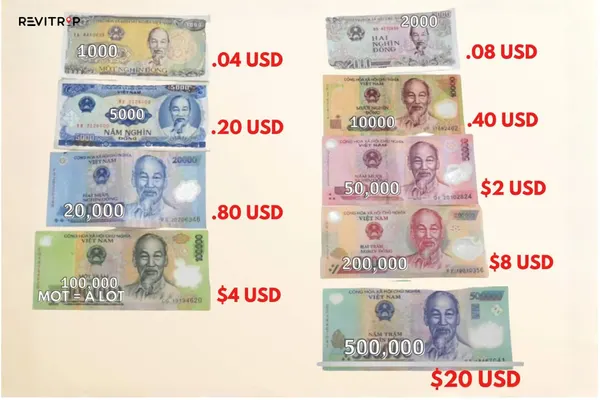
The official currency is the Vietnamese Dong (VND). The exchange rate is approximately 23,000-26,000 dong to 1 USD. The US dollar is widely accepted in major shops and restaurants. Smaller vendors typically only accept Vietnamese dong.
Major credit cards work in bigger hotels and restaurants. Cards include Visa, Mastercard, and American Express.
Many 24-hour ATM machines operate throughout Vietnam. International banks operate in Hanoi and Ho Chi Minh City. These provide convenient financial services for travelers.
Vaccination
No vaccinations are required except yellow fever. Yellow fever vaccination is needed if arriving from affected areas. However, visitors should get several vaccinations.
Get shots for typhoid, cholera, hepatitis A and B, tetanus, and polio. Schedule vaccinations at least one month before traveling.
Malaria prevention matters for rural areas. Dengue fever poses risks throughout tropical regions. Use mosquito repellent containing DEET.
Wear long sleeves during dawn and dusk. Travel insurance covering medical emergencies is highly recommended for all visitors.
Food
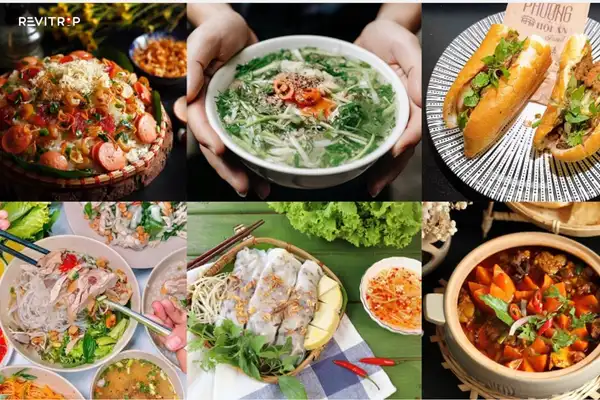
Vietnamese cuisine pleasantly surprises visitors. Food is an essential part of the Vietnam experience. What is special about Vietnamese food is its freshness.
Ingredients are bought the same morning straight from markets. This ensures quality and vibrant flavors in every dish.
Typical dishes include pho (rice noodle soup), cha gio (spring rolls), banh mi (baguette sandwich), and bun cha (grilled pork with noodles).
Buddhist influence makes vegetarian food widely available. Regional cuisines vary significantly. Northern food has subtle flavors. Central cuisine features spicy dishes. Southern cooking includes more sweetness.
Electricity
Vietnam uses mainly 220V electrical current. Some areas still use 110V. Electrical outlets typically accept two-pin plugs. Bring a universal adapter for your devices to ensure compatibility.
Power outages occasionally occur in rural areas. Severe weather can also cause outages. Carry portable chargers for essential devices.
Consider bringing a flashlight for remote areas. These preparations help you stay connected throughout your journey.
Communications
International phone charges are steep in Vietnam. Many hotels add extra fees on top. Email and internet are readily available in almost every hotel. Digital communication is the most practical option for staying connected during travels.
Major telecom providers include Viettel, Vinaphone, and Mobifone. Tourist SIM cards with 4GB-10GB data cost just $5-10 monthly.
Purchase them at airports or official stores. WiFi is available at most hotels, cafes, and restaurants. Quality varies but generally works well for basic needs.
Public Holidays
Vietnam observes several national holidays. New Year’s Day falls on January 1. Tet or Vietnamese Lunar New Year occurs in January or February. Victory Day is April 30. International Labour Day is May 1. National Day falls on September 2.
Tet represents Vietnam’s most important holiday. It officially lasts three days. Many businesses close for a full week. This is the busiest time for domestic travel. Hotels, flights, and trains often sell out. Plan accordingly and book early if visiting during Tet.
Tourism Seasons
Where is Vietnam best to visit? It depends on which region interests you. Northern Vietnam is ideal from November to April. The climate is cooler and drier during these months.
Bring warm clothes as winter temperatures range 10-15°C.
Central Vietnam is best from February through August. Avoid October and November when heavy rains occur. Southern Vietnam has optimal conditions from November to April. Average temperatures stay around 27°C year-round.
What is special about shoulder seasons (March-April, September-October) is fewer crowds. Prices are also lower during these periods.
Conclusion
Where is Vietnam located? It sits on the Indochina Peninsula in Southeast Asia. This makes it one of the region’s most geographically diverse countries. Its strategic position creates incredible travel opportunities.
The country borders China, Laos, and Cambodia. It has an extensive 3,260-kilometer coastline facing the South China Sea.
Understanding where is Vietnam positioned helps travelers appreciate what is special about this S-shaped country. From Sapa’s snowy peaks to Phu Quoc’s tropical islands, each region offers unique experiences.
Bustling Hanoi contrasts with dynamic Ho Chi Minh City. Start planning your Vietnamese adventure today. Vietnam welcomes travelers year-round with stunning landscapes, rich culture, delicious cuisine, and warm hospitality throughout this magnificent destination!
More of us
- Transportation in Vietnam: Best Ways to Get Around in 2025
- Vietnam Currency Guide: Everything Tourists Need to Know
- Where is Vietnam: Complete Guide to the S-Shaped Country
Book your trip now with Klook!
FAQs
Vietnam is located on the Indochina Peninsula in Southeast Asia. The country sits in the eastern portion of mainland Southeast Asia, bordered by China to the north, Laos and Cambodia to the west, and the South China Sea to the east. Vietnam is in which continent? Asia. Specifically, it’s part of Southeast Asia alongside countries like Thailand, Malaysia, and Indonesia. The S-shaped country stretches 1,650 kilometers from north to south with a 3,260-kilometer coastline facing the Pacific Ocean.
Vietnam capital is Hanoi, located in the northern Red River Delta region with a population of 6.44 million people. Hanoi serves as the political and cultural center of Vietnam. Vietnam area covers 331,210 square kilometers total, making it the 66th largest country in the world. This includes 310,070 square kilometers of land and 21,140 square kilometers of water. The country has a 3,260-kilometer coastline. Ho Chi Minh City in the south is Vietnam’s largest city with 7.1 million people.
Vietnam is famous for stunning natural landscapes including Ha Long Bay (UNESCO World Heritage), beautiful beaches like Phu Quoc and Nha Trang, rich history spanning 4,000 years, and delicious cuisine featuring pho, banh mi, and fresh spring rolls. The country is also known for its 54 ethnic groups and diverse culture. Vietnam currency is the Vietnamese Dong (VND), exchanging at approximately 23,000-25,000 dong to 1 USD. US dollars are widely accepted in major cities. ATMs are available throughout Vietnam for convenient cash access.
