Sapa Street Food: 12 Must-Try Snacks(2026)
Sapa draws visitors for the rice terraces and the trekking, but the food is just as good a reason to come. The town sits at the crossroads of Vietnamese and highland ethnic minority cooking traditions, and that combination produces a street food scene unlike anything in the lowland cities.
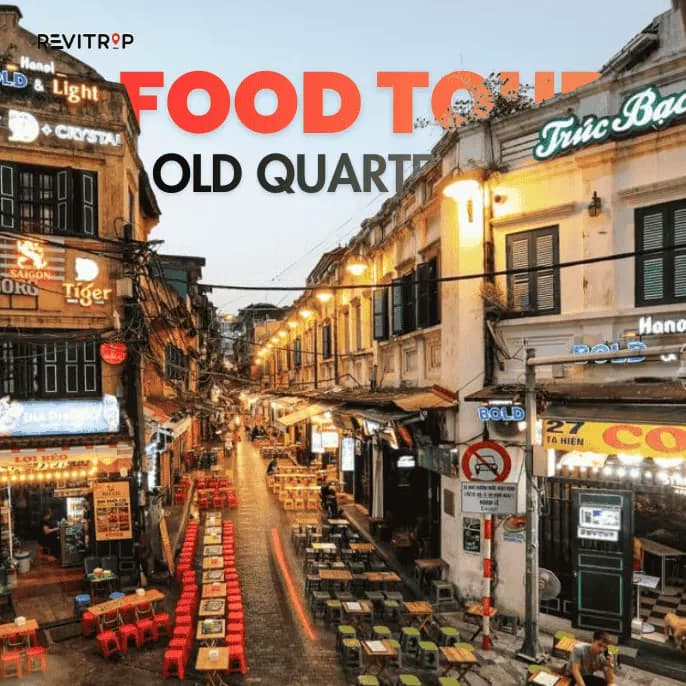
Most of the best Sapa street food comes from the Hmong, Dao, and Nung communities who have cooked with corn, bamboo, sticky rice, and mountain herbs for generations. You find it at the Sapa night market food stalls, in the alleys around Sapa Square, and at small vendors that open before sunrise and close when the food runs out.
Bottom line: For grilled snacks, head to the Sapa night market after 6pm. For cakes and sticky rice, look for ethnic minority women selling from baskets near the Stone Church. For corn milk and warm snacks, walk the main street on a cold evening and follow the smoke. Listen to the Sapa audio guide as you eat your way through the market.
Grilled Sapa Street Food: Night Market Essentials
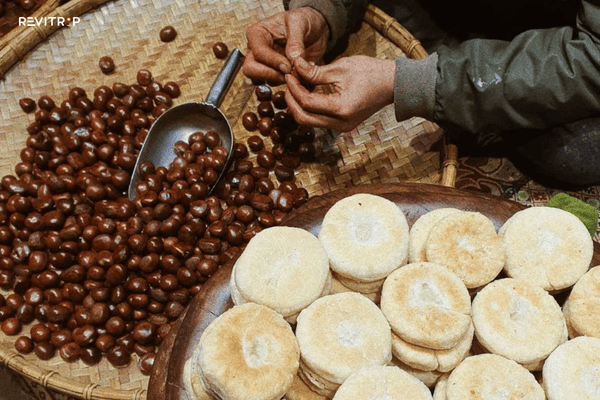
1. Roasted Chestnuts (Hat De Nuong)
Roasted chestnuts are among the most immediately recognizable forms of Sapa street food. As you walk through the foggy alleys near the market, the sweet smoky scent reaches you before you spot the stall. Vendors roast fresh chestnuts over glowing charcoal until the shells crack open, revealing warm, nutty flesh inside.
The flavor is soft and earthy with a hint of caramel, and the cold mountain air makes the warmth of the paper cone feel especially satisfying. In particular, chestnuts appear from October onward when the cold sets in, making them one of the most seasonal treats in the Sapa night market food scene.
2. Grilled Pork Skewers (Thit Xien Nuong)
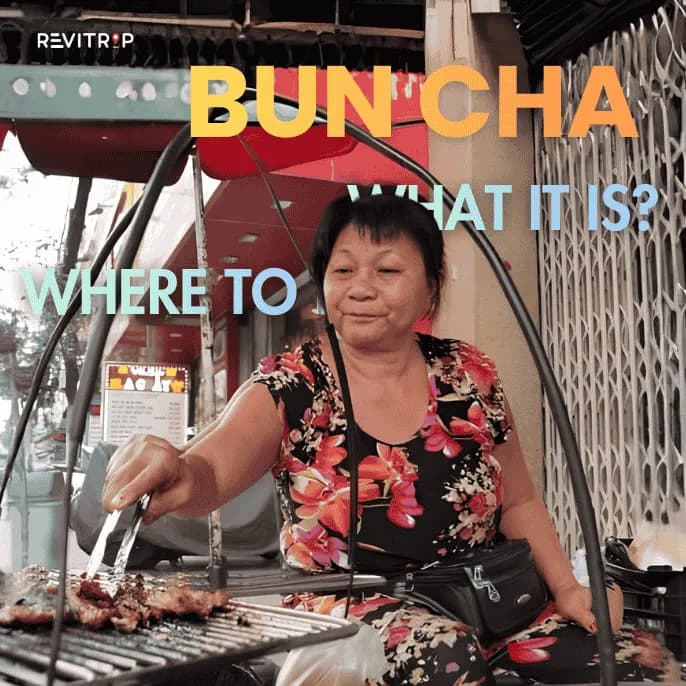
Grilled pork skewers are a staple across the Sapa night market and surrounding street stalls. Vendors marinate thin slices of pork with lemongrass, garlic, shallots, and local highland spices, then cook them over an open flame until charred at the edges and juicy inside.
Beyond the flavor, the visual appeal of a row of skewers glowing over coals draws people in before the smell does. Each stick costs very little and makes for a perfect walking snack while exploring the market.
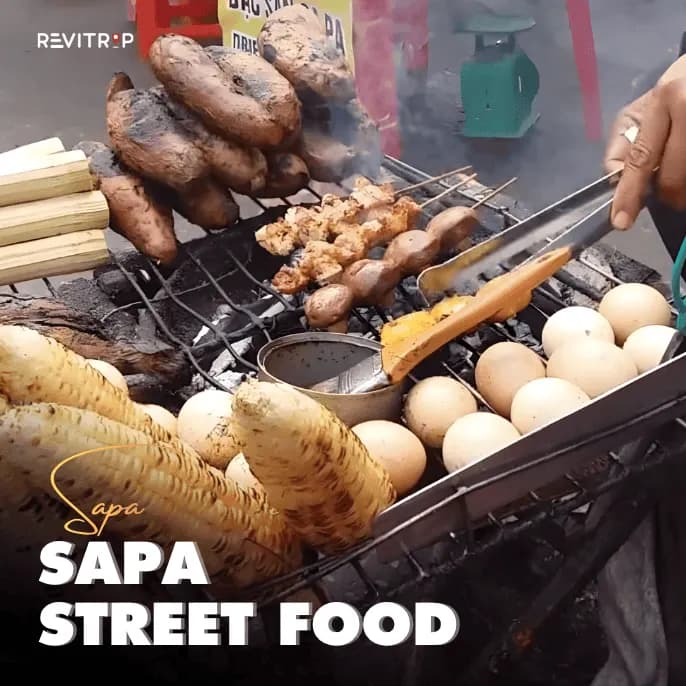
3. Grilled Corn and Sweet Potato (Bap and Khoai Nuong)
Grilled corn and sweet potato represent the most accessible entry point into Sapa street food. Vendors char them directly over coals until the skins blacken and the inside turns soft. The corn delivers a chewy bite with a concentrated sweetness, while the sweet potato offers a caramel-like depth that improves with every charred layer. Book a ride to Sapa Square and walk the market on foot from there.
Moreover, these two snacks cost almost nothing and suit every age group, making them a reliable choice at any time of day on the Sapa night market food circuit.
4. Grilled Eggs (Trung Nuong)
Grilled eggs are specific to mountainous areas like Sapa and rarely appear in city street food scenes. Vendors crack eggs into metal molds or grill them whole in their shells over charcoal. The result is a slightly smoky, creamy egg with a golden, set center. Some versions include green onion or chili on top, which adds contrast to the richness of the yolk.
Cakes and Pastries
5. Pau Plau Sticky Rice Cake (Banh Day)
Dao ethnic women make Pau Plau from soaked, ground, and steamed glutinous rice that forms a smooth, chewy white disc. Some versions include mung bean paste filling, while others come plain with shredded coconut or sesame on the surface. The taste is gentle and the texture deeply satisfying, and the cultural weight behind the recipe adds meaning to every bite.
As a result, Pau Plau consistently ranks among the most memorable items in the Sapa street food scene for first-time visitors. Book a Sapa street food tour with a local guide who knows exactly which vendors to find.
6. Chestnut Cake (Banh Hat De)
Chestnut cake highlights one of Sapa’s most celebrated local ingredients. Freshly harvested chestnuts are mashed and blended with rice flour to create a moist, chewy cake with a subtle sweetness and a distinct earthy aroma. Unlike many modern desserts, it lets the ingredient speak for itself. Furthermore, it pairs exceptionally well with a hot cup of green tea on a cold afternoon.
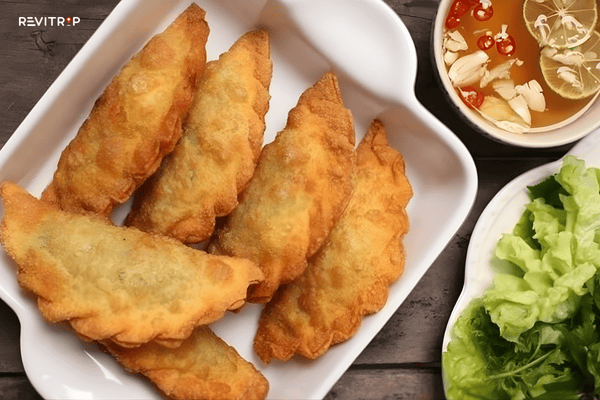
7. Deep-Fried Pillow Cake (Banh Goi Chien)
Banh goi is the most filling item in the Sapa street food cake category. Vendors fill a golden pastry shell with minced pork, mushrooms, glass noodles, and carrot, then fry it until the crust turns crisp and bubbled. The contrast between the flaky exterior and the savory, herb-laced filling makes it one of the best hot Sapa night market food options for a cold evening.
8. Black Chung Cake (Banh Chung Den)
This cake stands out visually among all Sapa street food offerings. Black glutinous rice mixed with ash water gives it a deep, striking color. Inside, mung bean and pork fill the center, and the whole cake steams for hours wrapped in leaves. The flavor is dense, subtly sweet, and deeply aromatic. Although the recipe comes from Tet tradition, vendors sell slices at market stalls throughout the year.
Sticky Rice and Rice-Based Street Food
9. Bamboo Tube Rice (Com Lam)
Com lam is one of the oldest preparations in the Sapa street food tradition. Vendors pack glutinous rice into bamboo tubes, sometimes with coconut water, and roast them slowly over open flames. The bamboo transfers a soft woody aroma into the rice as it cooks. Vendors then split the tubes open and serve the rice in sections alongside grilled skewers or smoked meat.
In particular, the combination of the bamboo fragrance, the sticky texture, and the simplicity of the preparation makes com lam one of the dishes visitors most often mention when describing their Sapa food experience.
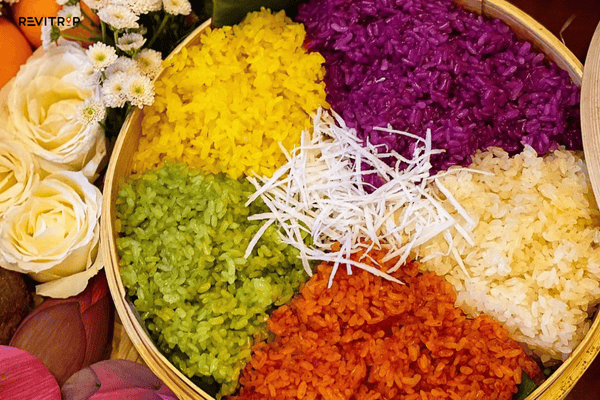
10. Five-Color Sticky Rice (Xoi Ngu Sac)
Five-color sticky rice is the most visually striking item in the Sapa street food lineup. Vendors dye glutinous rice naturally using leaves, flowers, and forest roots to produce red, green, yellow, purple, and white portions. Each color carries symbolic meaning in the traditions of the highland communities: red for luck, yellow for wealth, green for growth, purple for fertility, and white for unity.
Beyond symbolism, the rice tastes excellent, with each color carrying a slightly different aromatic note from the natural dye ingredients. Vendors sell it in bamboo baskets or paper trays, which makes it easy to eat while walking.
Drinks and Sweet Snacks
11. Hot Corn Milk (Sua Bap Nong)
On cold foggy evenings, hot corn milk is the most comforting drink in the Sapa night market food selection. Vendors blend boiled and pureed corn with condensed milk or coconut milk, sometimes adding a pinch of salt to balance the sweetness. The result is thick, warming, and naturally sweet in a way that coffee and tea cannot replicate on a cold mountain night.
12. Fried Rolls with Bitter Bamboo Shoots (Nem Mang Dang)
Nem mang dang is the most adventurous item on this list. Vendors fill rice paper rolls with wild bitter bamboo shoots, ground pork, herbs, and spices, then deep-fry them until golden. The bitterness of the bamboo balances the richness of the pork, and the crunch of the wrapper ties the whole thing together. It is a flavor profile that takes a moment to understand, but most people who try it want another immediately.
[IMAGE: sapa-nem-mang-dang-bitter-bamboo-shoot-fried-roll-street-snack.jpg] Alt text: “Fried bitter bamboo shoot rolls nem mang dang Sapa street food with ground pork and rice paper at a market stall”
Tips for Eating Sapa Street Food and Night Market Food
Go to the Saturday night market. The largest concentration of Sapa night market food gathers every Saturday evening around Sapa Square. Additionally, smaller daily markets near the Stone Church carry cakes and sticky rice from early morning.
Eat in the cold season. October through February is when Sapa street food and Sapa night market food both reach their peak. Roasted chestnuts, hot corn milk, and grilled skewers all taste better in cold mountain air than they do in summer warmth.
Bring small VND notes. Most street vendors sell individual items for 10,000 to 50,000 VND. Paying with large notes at small stalls creates unnecessary difficulty.
Try the ethnic minority cakes first. Pau Plau, corn cake, and five-color sticky rice are the items most specific to Sapa. You can find grilled corn and pork skewers across Vietnam, but those three cakes belong specifically to the highland communities here.
FAQ
Try salmon or sturgeon hotpot, black chicken, bamboo-tube rice (cơm lam), and seasonal mountain vegetables. If you’re feeling adventurous, sample thắng cố—just start with a small portion.
Go for places that specialize in a few local dishes instead of huge tourist menus. Pick restaurants with clear pricing and busy tables, especially at dinner time.
Sapa Night Market is best for grilled street food, small souvenirs, and the lively evening vibe. Arrive earlier in the evening for shorter lines and fresher food, then walk it off around the church area.