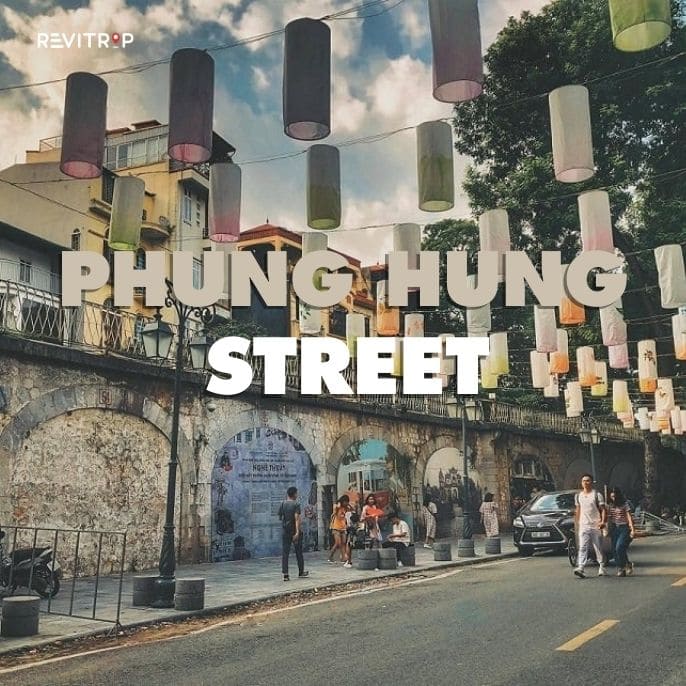
Train Street is closed again? Don’t waste your trip. Walk 2 minutes to Phung Hung Street murals instead. Honestly, you’ll get better photos, learn more about Hanoi culture, and spend zero time waiting for trains that might never come.
Phung Hung Street offers colorful, Instagram-worthy photos without the uncertainty, crowds, or disappointment of Train Street. Furthermore, it’s just around the corner. So you lose nothing by visiting both, if Train Street is open.
Quick Facts: Phung Hung Street Murals at a Glance
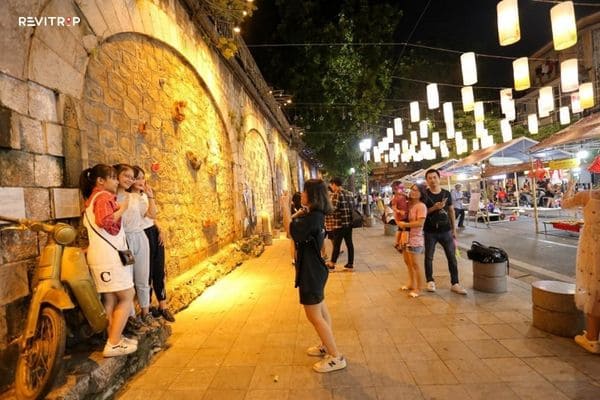
Location: Phung Hung Street, Hoàn Kiếm District (Old Quarter)
Distance from Train Street: 100 meters (2-minute walk)
Total murals: 19+ large-scale artworks
Theme: Old Hanoi life, culture, and history
Access: Free and always open (it’s a public street)
Best time: Morning (8-10am) for soft light, or late afternoon (4-6pm)
Time needed: 30-45 minutes
Perfect for: Photography, Instagram, understanding Hanoi culture, families
Why visit instead of Train Street:
- Always accessible (no security, no closures)
- Better lighting for photos (street faces east-west)
- More colorful and visually interesting
- Educational (each mural tells a story)
- Zero waiting time (no train schedules)
- Completely free (no forced cafe purchases)
What Are the Street Murals?
The Project Background
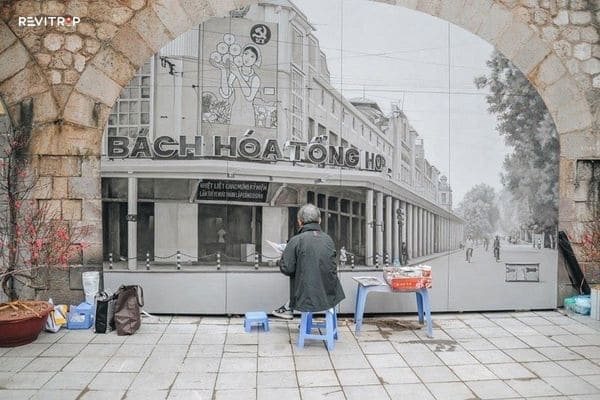
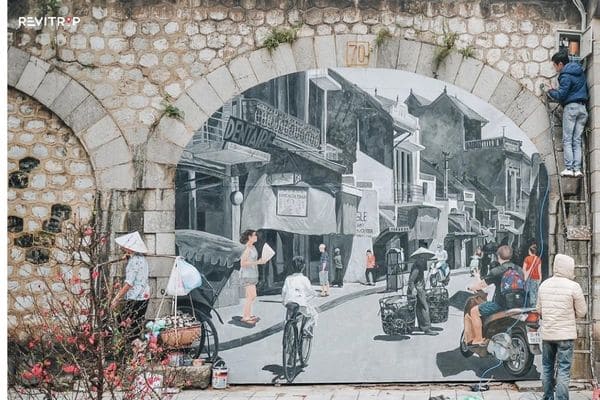
In 2018, Hanoi officials hired Korean and Vietnamese artists. They created large murals under the elevated Hanoi-Haiphong railway line on Phung Hung Street. Specifically, the project aimed to beautify a previously drab concrete wall while celebrating Vietnamese culture.
The result: A 200-meter stretch of striking street art. It shows traditional Hanoi life, from the French colonial era to today.
What Makes Them Special
Unlike random street art, these Phung Hung Street murals were carefully planned and painted. They tell clear, connected stories about Hanoi’s identity.
Key themes covered:
- Vintage Hanoi trams (operated 1901-1991)
- Traditional street vendors and food culture
- Vietnamese festivals and celebrations
- Daily life in old Hanoi
- Architectural heritage
- Seasonal activities and customs
The Must-See Murals: What Each One Depicts
1. The Vintage Hanoi Tram
A yellow Hanoi tram from the French colonial era, packed with passengers in period clothing. Hanoi operated electric trams from 1901 to 1991. Consequently, they’re nostalgic symbols of old Hanoi for older generations.
Most tourists don’t know Hanoi had trams. Therefore, this mural sparks curiosity about the city’s layered history. Stand in front as if you’re boarding the tram. The 3D perspective works perfectly for this composition.
2. Street Vendors and Food Culture
Traditional vendors selling phở, bánh mì, and fresh produce from shoulder poles (gánh hàng rong). These mobile vendors defined Hanoi street life for centuries. Although modernization is reducing their numbers, they still exist in some neighborhoods.
The artist captured the exact posture of vendors balancing heavy loads. It’s remarkably accurate.
3. Mid-Autumn Festival Celebration
Children carry colorful lanterns during Tết Trung Thu, the Mid-Autumn Festival. Mooncakes and dragon dances are part of the celebration. This is Vietnam’s second most important festival after Tết (Lunar New Year). It’s specifically for children.
During actual Mid-Autumn Festival (September), when Hanoi decorates streets with similar lanterns. The mural becomes meta—art reflecting real celebrations happening around it. The lanterns provide incredible pops of color (red, yellow, pink, green).
4. Old Hanoi Architecture
Traditional tube houses with French colonial details—shuttered windows, narrow facades, red-tiled roofs. This mural explains why Old Quarter buildings look the way they do (taxed by street frontage, hence narrow and deep). Compare the mural to actual buildings across the street. Many original features remain.
How to Visit Phung Hung Street Murals
Location and Access
Exact location: Phung Hung Street, running parallel to the elevated railway, between Hàng Bông and Trần Nhân Tông intersections.
From Hoàn Kiếm Lake: 1 km north (15-minute walk)
From Train Street entrance: 100 meters (2-minute walk)
The relationship: Phung Hung Street runs directly above/beside where Train Street alleys connect. Therefore, if you’re visiting Train Street (or trying to), you’ll pass the murals anyway.
Getting There
Walking from Old Quarter (Recommended)
Route from Hoàn Kiếm Lake:
- Walk north on Hàng Đào Street
- Continue as it becomes Hàng Dầu
- Turn left on Hàng Bông
- Phung Hung Street is straight ahead
- Murals line the left side (under railway)
Distance: ~1 km
Time: 12-15 minutes
Cost: Free
My take: Pleasant walk through Old Quarter. Moreover, you’ll pass interesting shops and cafes.
By Grab/Taxi
Instructions: Show driver “Phố Phùng Hưng, Hoàn Kiếm” or say “phố bích họa Phùng Hưng” (mural street Phung Hung)
Cost: 25,000-40,000 VND from Hoàn Kiếm Lake
Time: 5-10 minutes (depending on traffic)
Drop-off point: Ask driver to stop mid-block on Phung Hung. The murals stretch along the street, so any point works.
By Bicycle/Motorbike
Parking: Available along the street
Cost: 5,000-10,000 VND at nearby shops
Reality check: The street is narrow with traffic. Therefore, parking can be challenging during busy hours (10am-4pm).
Combined with Train Street Visit
Smart strategy:
- Start at Phung Hung Street murals (guaranteed success)
- Take photos (30 minutes)
- Walk 2 minutes to check Train Street status
- If open, visit Train Street as bonus
- If closed, you’ve already got great photos from murals
This way: You ensure worthwhile photos regardless of Train Street accessibility.
Best Route to See All Murals
The murals stretch about 200 meters. Here’s the optimal viewing route:
Start: Northern end (near Hàng Bông intersection)
Direction: Walk south toward Trần Nhân Tông
Strategy: Walk the full length first to see everything, then return to favorites for photos
Time: 30-45 minutes total
What Else to Do Near Phung Hung Street
1. Đồng Xuân Market (5-minute walk)
Hanoi’s largest covered market sits just north of Phung Hung Street.
What to do:
- Ground floor: Fresh produce, sensory overload
- Second floor: Fabrics, textiles (bargain hard)
- Third floor: Wholesale clothing
Time needed: 30-45 minutes
Best timing: Morning (7-9am) before crowds and heat
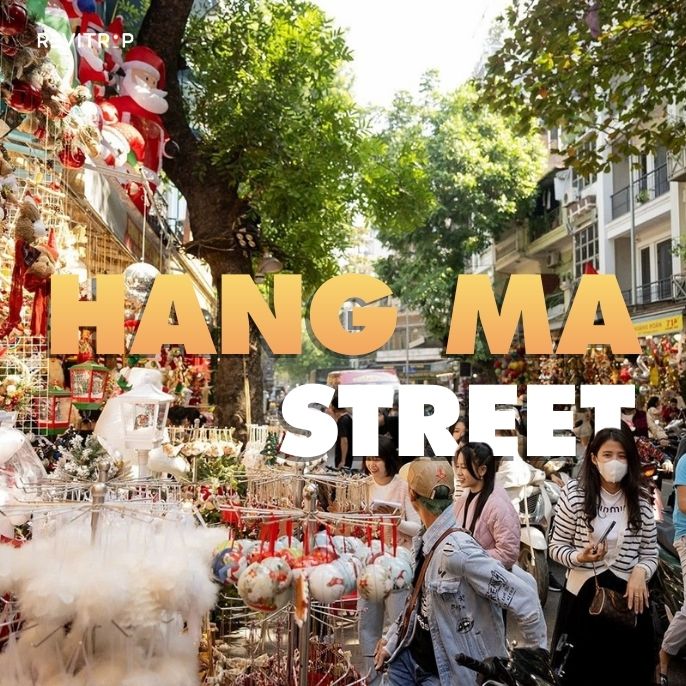
3. Hàng Mã Street (5-minute walk)
The colorful paper goods street explodes with religious offerings and festival decorations.
Best for: Photos, cultural understanding, festival shopping
Time needed: 20-30 minutes
Most colorful: Before Tết and Mid-Autumn Festival
4. Old Quarter Guild Streets
Phung Hung Street sits at the northern edge of the Old Quarter. Therefore, dozens of interesting streets are within 5-10 minutes walking.
Recommended nearby streets:
- Hàng Buồm (toy and housewares)
- Hàng Chiếu (mats and home goods)
- Lãn Ông (traditional medicine, aromatic)
- Hàng Bạc (silver and jewelry)
5. Bia Hơi Junction (10-minute walk)
Hanoi’s famous beer corner sits on Tạ Hiện Street, easily walkable from the murals.
Best timing: Evening (5-9pm) for the full experience
Cost: 10,000-15,000 VND per beer
Is Phung Hung Street Worth It? The Honest Verdict
Visit Even If Train Street Is Open
I now recommend Phung Hung Street murals OVER Train Street even when both are accessible.
Why: Better photos. More educational. No waiting. It always works. You learn real Hanoi culture, not just a slow train.
Skip Only If:
- You have less than 4 hours total in Hanoi (prioritize lake + food)
- You have zero interest in art or culture
- You’re uncomfortable with street environments
Compared to Other Hanoi Attractions
Better than:
- Train Street (more reliable, more interesting)
- Generic temples (unless you’re specifically interested)
- Most tourist-trap spots
On par with:
- Hoàn Kiếm Lake morning walk (both essential Old Quarter experiences)
- Good street food spots (both show real Hanoi)
Not quite as essential as:
- Old Quarter wandering overall (but murals are PART of that)
- Vietnamese egg coffee (cultural must-do)
Final Thoughts: Hanoi’s Most Underrated Photo Spot
Most tourists still chase Train Street’s fading glory while Phung Hung Street murals sit quietly next door, delivering better experiences without the drama.
People waste hours trying to access Train Street while walking past these stunning murals without a second glance. Phung Hung Street offers everything travelers actually want—beautiful photos, cultural insight, Instagram-worthy backdrops, and reliable access—without the frustration.
Next time someone asks “Is Train Street worth it?” the honest answer is: “Skip it. Walk 2 minutes to Phung Hung Street instead. You’ll thank me.”
Sometimes the alternative really is better than the original.
Have you visited the Phung Hung Street murals? Did they surprise you? Share your photos and experience in the comments!