Hue
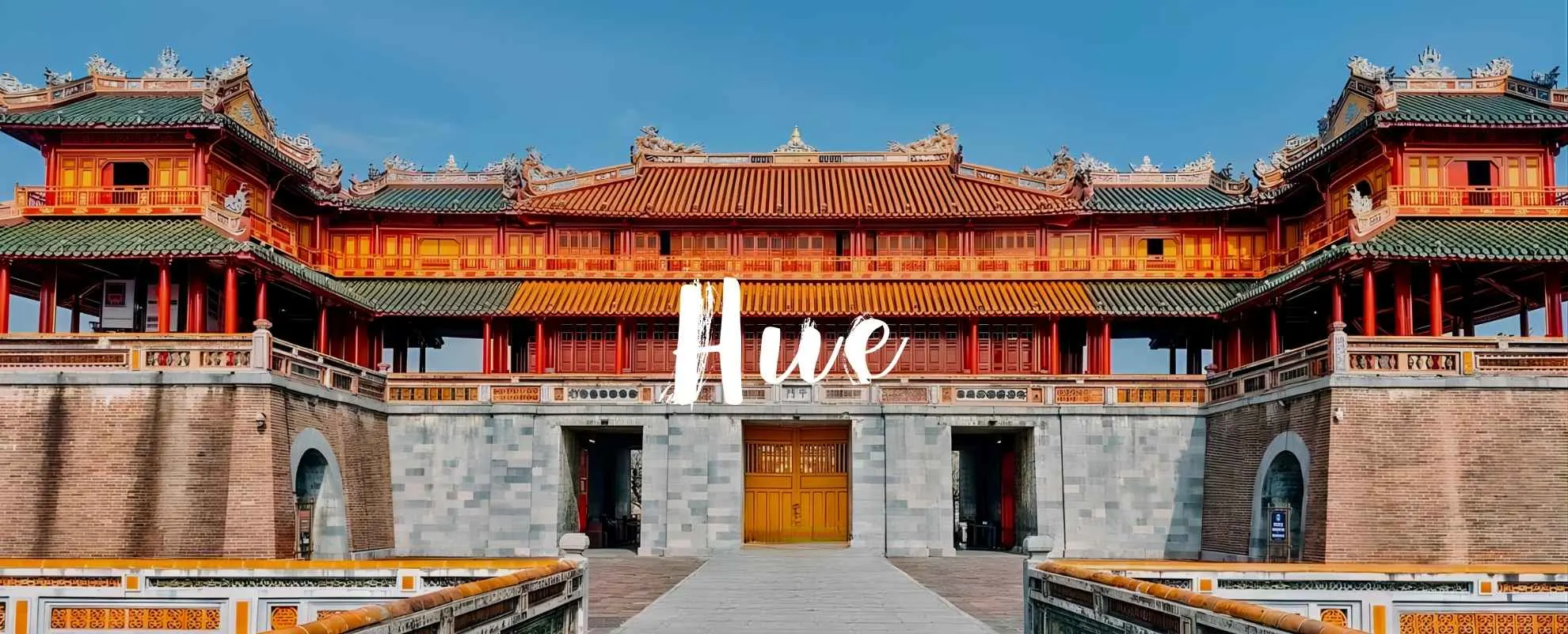
Hue moves at its own pace, and that is precisely its charm. Sitting on the banks of the Perfume River in central Vietnam, this former imperial capital served as the seat of the Nguyen Dynasty from 1802 to 1945. The city it left behind is extraordinary. A vast UNESCO-listed citadel, seven royal tombs, ancient pagodas, and a refined culinary tradition unlike anywhere else in the country all await within a compact and very walkable area. Hue rewards those who slow down. Give it two or three days, and it will give you a great deal back.
Top things to do in Hue
Explore the Imperial Citadel
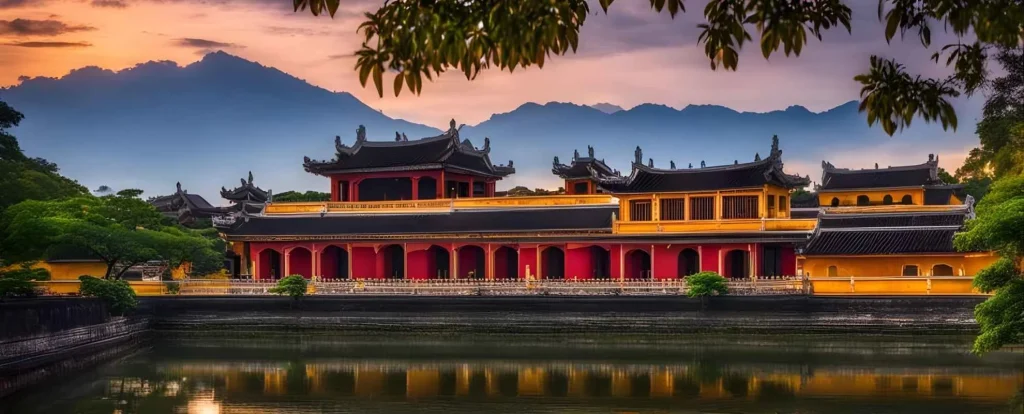
The Hue Citadel is the city’s undisputed centrepiece. Built in the early 19th century, this vast walled complex once housed the emperor, his court, and the entire apparatus of imperial power. Inside, tree-lined avenues, ornate gateways, lotus ponds, and restored palaces tell the story of a dynasty that shaped modern Vietnam. Arrive early to beat the crowds and consider hiring a local guide to bring the history to life.
Visit the Royal Tombs
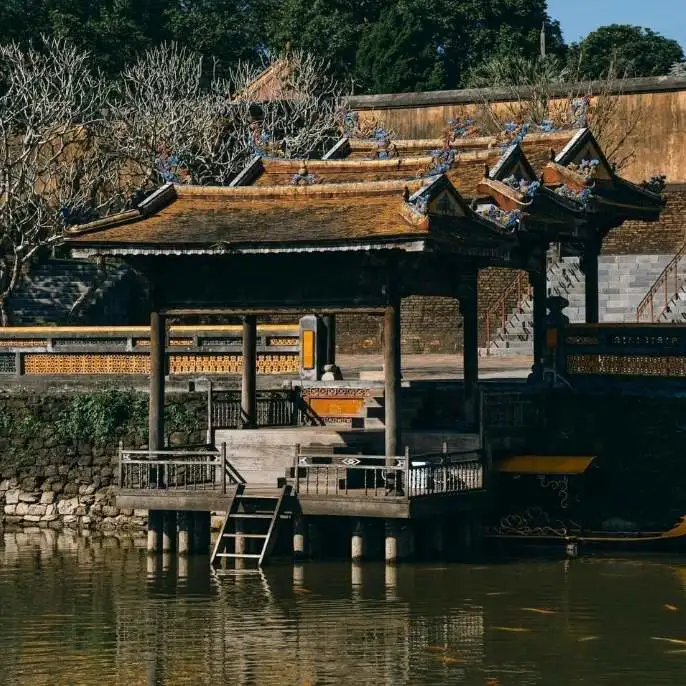
Scattered across the forested hillsides south of the city, Hue’s seven royal tombs are each a reflection of the emperor who commissioned them. The tomb of Minh Mang is grand and symmetrical, set within a landscape of lakes and pavilions. Khai Dinh’s tomb is ornate and unusual, blending Vietnamese and European styles in a striking hilltop structure. Tu Duc’s is the most poetic, surrounded by pine trees and still water. Visit two or three rather than rushing through all seven.
Cruise the Perfume River
A boat ride along the Perfume River is one of Hue’s most atmospheric experiences. Traditional dragon boats depart from Le Loi Street and wind past riverbank pagodas, fishing villages, and lush green banks. The route typically includes a stop at Thien Mu Pagoda, Hue’s most iconic religious landmark. Early morning is the best time to be on the water, when mist sits low over the river and the city is still waking up.
Discover Thien Mu Pagoda
Sitting on a gentle hillside above the Perfume River, Thien Mu is the oldest and most recognisable pagoda in Hue. Its seven-storey octagonal tower has been a symbol of the city since it was first built in 1601. The grounds are serene and beautifully maintained, with bonsai gardens, a bell tower, and a small museum. It can be reached by boat from the city centre or by bicycle along the riverbank road.
Taste Royal Hue Cuisine
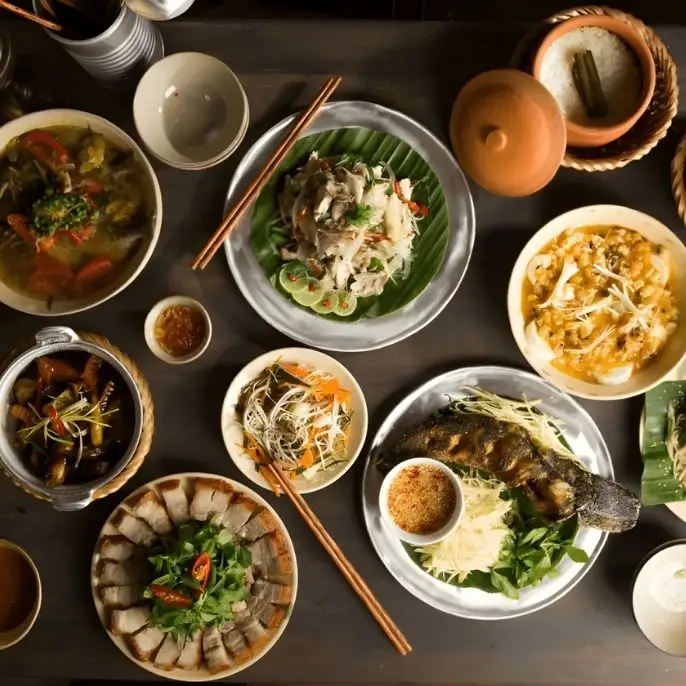
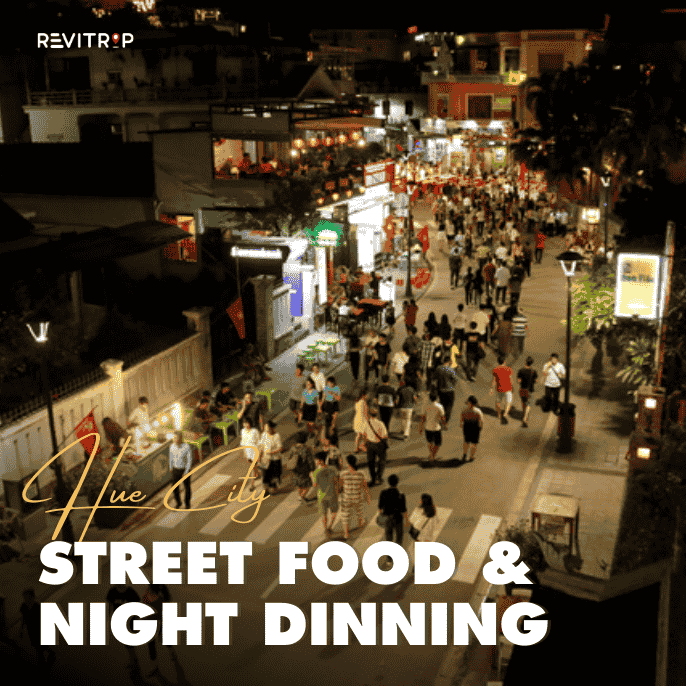
Hue has one of the most distinctive food cultures in Vietnam, shaped in part by the elaborate banquets once prepared for the imperial court. Banh beo, tiny steamed rice cakes topped with dried shrimp, and banh khoai, crispy turmeric crepes filled with pork and prawn, are street food staples. Bun bo Hue, a spicy lemongrass beef noodle soup, is arguably the city’s most famous dish. Look for it at small local restaurants that open only in the mornings.
Cycle Through the Garden Houses of Kim Long
North of the river, the quiet neighbourhood of Kim Long is home to a string of traditional garden houses. These walled compounds, with their ancient trees, lotus ponds, and wooden architecture, offer a glimpse into the refined lifestyle of Hue’s former aristocracy. The area is best explored by bicycle. The lanes are flat, shaded, and rarely crowded, and the atmosphere feels a world away from the tourist sites across the river.
Hue Weather
Hue has one of the most variable climates in Vietnam. The dry season runs from February to August, with March to April offering the most comfortable temperatures for sightseeing. June and July can be extremely hot, with temperatures regularly exceeding 38 degrees Celsius. The rainy season runs from September to January, with October and November seeing the heaviest rainfall and occasional flooding. Nevertheless, February to April remains the clear sweet spot for a visit, offering warm days and mostly clear skies.
Hue Transport
Phu Bai International Airport sits around 15 kilometres from the city centre, with domestic flights connecting to Hanoi and Ho Chi Minh City. The train is a popular and scenic option, with Hue Railway Station on the main North-South Reunification Express line. Buses from Da Nang take around two hours, while Hanoi and Ho Chi Minh City are both served by overnight services. Once in Hue, bicycles and cyclos are ideal for the Citadel and riverside areas. For the royal tombs and outlying sites, motorbike rental or a Grab taxi are the most practical choices.
Gallery


You may also like



Nearby places