Should you visit Hoa Lo Prison in Hanoi? Yes—if you’re interested in Vietnamese history or colonial legacy. However, understand this upfront: you’ll encounter two very different narratives in one museum. Consequently, Hoa Lo Prison offers a complex, sometimes uncomfortable historical experience that rewards thoughtful visitors.
Hoa Lo Prison is Hanoi’s most thought-provoking museum. Moreover, it features a central location, air conditioning, and requires just 60-90 minutes. Therefore, it’s worth visiting—but go prepared for propaganda alongside legitimate history.
Quick Facts: Hoa Lo Prison at a Glance
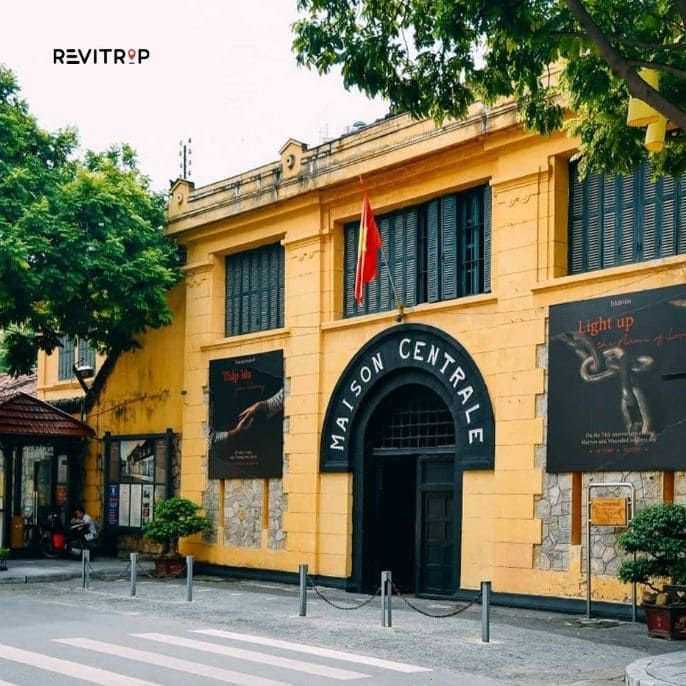
Also known as: “Hanoi Hilton” (American POW nickname), Maison Centrale (French name)
Location: 1 Hỏa Lò, Hoàn Kiếm District (Old Quarter)
Built: 1896-1901 (French colonial era)
Current use: Historical museum (opened 1997)
Hours: 8:00am – 5:00pm daily
Entry fee: 30,000 VND (~$1.20) + 30,000 VND for optional guidebook
Time needed: 60-90 minutes (day visit) or 90 minutes (night tour)
Best for: History enthusiasts, those interested in Vietnam War or colonial history
Skip if: You have less than 4 hours in Hanoi or prefer uplifting experiences
The reality: This museum tells two stories—Vietnamese resistance against French colonialism, and American POWs during the Vietnam War. However, the narratives don’t always align with Western historical accounts.
What Is Hoa Lo Prison? Understanding the Dual History
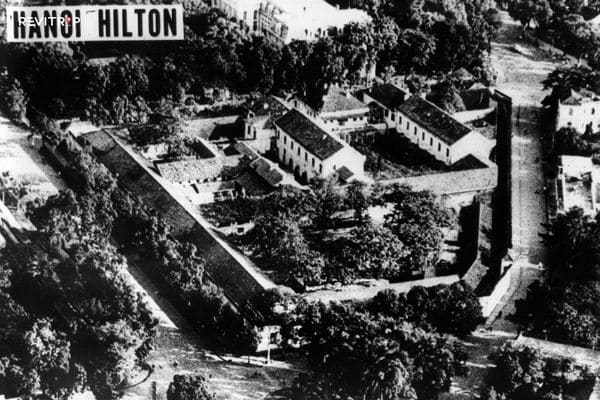
The French Colonial Era (1896-1954)
Originally, the French built Hoa Lo Prison (called “Maison Centrale”) in 1896 to incarcerate Vietnamese political prisoners and revolutionaries. Specifically, it held those fighting for independence from French colonial rule.
What happened here:
- Vietnamese revolutionaries endured brutal conditions
- Torture, executions, and inhumane treatment were common
- Many future Vietnamese leaders passed through these cells
- The guillotine executed numerous independence fighters
Historical accuracy: This part of the museum is well-documented and generally accurate. Moreover, the conditions were genuinely horrific by any standard.
The American War Era (1964-1973)
Later, during what Americans call the “Vietnam War” and Vietnamese call the “American War,” Hoa Lo Prison housed captured U.S. pilots and military personnel. Consequently, American POWs nicknamed it the “Hanoi Hilton” (ironically, since conditions were harsh).
Notable prisoners:
- Senator John McCain (held 5.5 years, 1967-1973)
- Commander James Stockdale (Medal of Honor recipient)
- Colonel Robinson Risner
- Numerous other U.S. military personnel
The controversy: The museum portrays POW conditions as relatively comfortable—showing photos of prisoners playing volleyball, receiving medical care, and celebrating Christmas. However, American accounts describe systematic torture, isolation, and abuse. This disconnect is jarring for Western visitors.
What to See at Hoa Lo Prison: Main Exhibits
Section 1: French Colonial Prison (Most Powerful)
This section occupies most of the museum and, honestly, is the most impactful part.
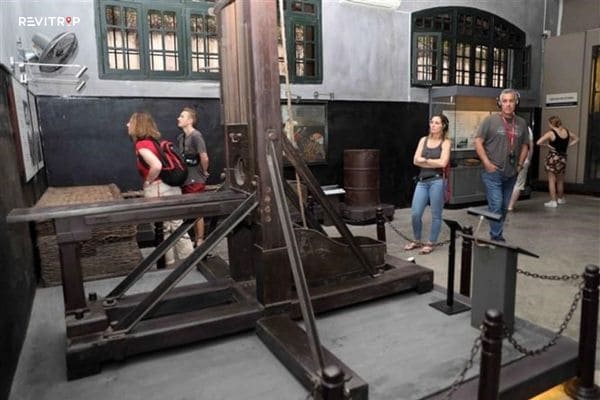
Key exhibits:
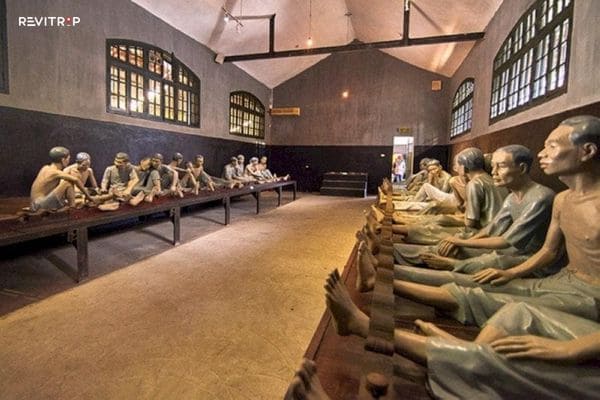
Communal Cell Block: Life-size mannequins show prisoners shackled in rows on concrete slabs. The lighting is deliberately dim and oppressive. Meanwhile, audio recordings describe daily suffering.
Solitary Confinement Cells: Tiny concrete boxes where “troublesome” prisoners faced isolation and torture.
Guillotine Display: The actual French guillotine used for executions sits preserved behind glass. It’s a chilling reminder of colonial violence.
Female Prisoner Section: This section honors revolutionary women. It includes Nguyen Thi Quang Thai, who was General Vo Nguyen Giap’s first wife. She died while in custody.
Escape Tunnel Exhibit: Shows how 17 death-row prisoners escaped through sewers in 1951. Only 5 survived to join the resistance.
Section 2: American POW Era
This smaller section discusses the period from 1964 to 1973 when American authorities held prisoners here.
What you’ll see:
John McCain’s Flight Suit: The most famous exhibit—McCain’s actual flight suit and parachute from when he was shot down.
POW Living Quarters: Reconstructed cells showing beds, tables, and basic amenities.
Propaganda Photos: Images of prisoners playing sports, receiving gifts, celebrating holidays.
“Humane Treatment” Narrative: Signs and exhibits emphasizing how well prisoners were supposedly treated.
The problem: American POW accounts directly contradict this portrayal. For instance, McCain himself described torture, broken bones, and systematic abuse. However, the museum presents a sanitized version.
How to handle this: Understand you’re viewing Vietnamese state narrative, not objective history. Therefore, do your own research beforehand or afterward for balanced perspective.
The Night Tour: “Sacred Night – Glorious Vietnamese Spirit”
Since July 2020, Hoa Lo Prison offers an immersive night tour on Friday, Saturday, and Sunday evenings.
Night Tour Logistics
Schedule: Friday-Sunday, 7:00pm start
Duration: 90 minutes
Cost: Higher than day admission (check current rates)
Language: Vietnamese with English audio guide via headphones
Booking: Advance reservation recommended
What Makes the Night Tour Different
Enhanced atmosphere: Dark lighting, ambient sounds, and theatrical elements create an oppressive mood. Consequently, you feel the prison’s weight more than during daytime visits.
Focused narrative: The night tour concentrates entirely on Vietnamese revolutionary prisoners during French colonial era. Therefore, it skips the American POW section.
Special features:
- Personal audio guide via headphones
- Live musical performance in courtyard (composed specifically for the tour)
- Traditional tea ceremony at the end
- Access to areas closed during day tours
My experience: The night tour is more emotionally intense than the day visit. Furthermore, the theatrical elements genuinely enhance understanding of prisoner suffering. However, it’s heavy—not appropriate for young children or those seeking light entertainment.
Is the Night Tour Worth It?
Worth it if:
- You’re deeply interested in Vietnamese revolutionary history
- You want a more immersive, emotional experience
- You appreciate theatrical historical presentations
- You’re visiting on a weekend (when it’s available)
Skip if:
- You’re uncomfortable with dark, oppressive atmospheres
- You want balanced coverage including American POW history
- You prefer straightforward museum visits without theatrics
- You have young children (too intense)
My verdict: The night tour is impressive but intense. Moreover, it’s not essential—the day visit covers most of the same material. Therefore, do it only if you have extra time and specific interest.
Practical Information: Visiting Hoa Lo Prison
Location and How to Get There
Address: 1 Hỏa Lò, Trần Hưng Đạo, Hoàn Kiếm, Hanoi
From Old Quarter: 10-15 minute walk from Hoàn Kiếm Lake area
By Grab/Taxi: 20,000-40,000 VND from central Old Quarter
Walking route: From Hoàn Kiếm Lake, walk south on Tràng Tiền, turn onto Hai Bà Trưng, then left onto Hỏa Lò Street.
Entrance Fees and Hours
Day visit:
- Entrance: 30,000 VND (~$1.20)
- Guidebook: 30,000 VND (recommended)
- Total: 60,000 VND (~$2.40)
Hours: 8:00am – 5:00pm daily (closed 11:30am-1:30pm for lunch—verify current schedule)
Night tour:
- Friday-Sunday, 7:00pm
- Pre-booking required
- Check current pricing locally
What to Bring
Essential:
- Cash (no cards accepted)
- Modest clothing (covered shoulders recommended out of respect)
- 60-90 minutes of time
Helpful:
- Guidebook (30,000 VND, provides important context)
- Camera (photos allowed in most areas)
- Open mind (prepare for propaganda alongside history)
Not needed:
- Guide (exhibits have English text, though guidebook helps)
Is Hoa Lo Prison Worth Visiting? The Honest Answer
Visit if:
- You’re interested in Vietnamese independence history
- You want to understand French colonial brutality
- You’re curious about Vietnam War from Vietnamese perspective
- You appreciate complex, thought-provoking museums
- You have 4+ hours in Hanoi with major sights covered
- You’re okay with propaganda alongside legitimate history
When to Skip Hoa Lo Prison
Skip if:
- You have very limited time in Hanoi (less than 1 day)
- You want only uplifting experiences
- You’re uncomfortable with conflicting historical narratives
- You expect balanced Western-perspective Vietnam War history
- You can’t handle graphic displays of suffering
Final Thoughts: A Complex but Worthwhile Museum
Hoa Lo Prison isn’t an easy museum. Rather, it challenges you to engage with difficult history from unfamiliar perspectives. Moreover, it forces recognition that historical “truth” depends heavily on who’s telling the story.
The French colonial section is powerful, well-documented, and genuinely moving. However, the American POW section requires critical thinking and additional research. Therefore, approach this museum as a starting point for learning, not the final word.
For visitors willing to engage thoughtfully, Hoa Lo Prison offers one of Hanoi’s most memorable experiences. It’s not entertaining, but it is important.
Have you visited Hoa Lo Prison? How did you process the dual narratives? Share your thoughts in the comments.