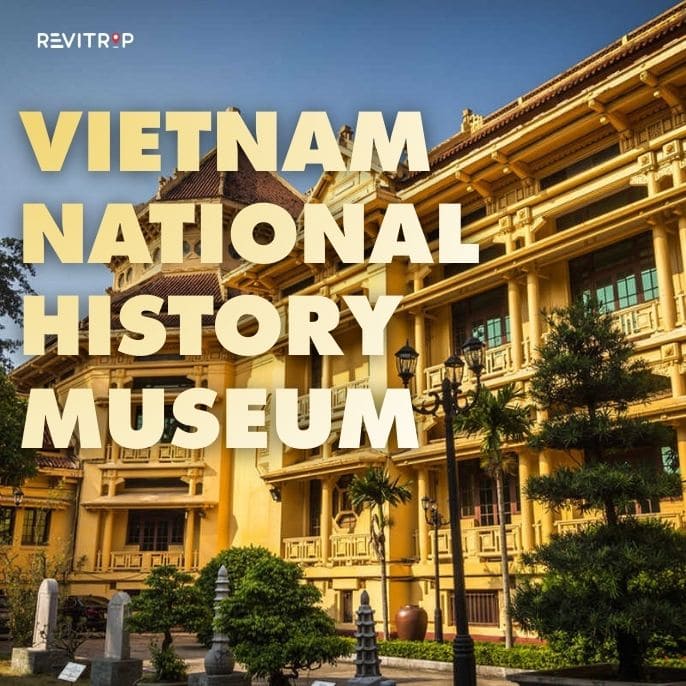
For comprehensive Vietnamese history from prehistoric times through the modern era, all in one beautiful French colonial building. Moreover, its central location in the Old Quarter makes it far more accessible than other major Hanoi museums.
The Vietnam National Museum of History is Hanoi’s second-best museum (after Ethnology Museum). Well-curated, centrally located, and providing essential historical context for understanding modern Vietnam. Therefore, visit if you have 2+ days in Hanoi and genuine interest in Vietnamese history.
Quick Facts: Vietnam National Museum of History at a Glance
Location: Two buildings in Old Quarter area
- Building A (main): 1 Tràng Tiền (behind Opera House)
- Building B: 216 Trần Quang Khải (across street, 20th century focus)
Hours: 8am-12pm, 1:30pm-5pm daily (closed first Monday of each month)
Entry fee: 40,000 VND (~$1.60) covers both buildings
Time needed: 2-2.5 hours (both buildings)
Distance from Hoàn Kiếm Lake: 500 meters (walkable)
Best for: History enthusiasts, those wanting chronological Vietnamese history overview
What Makes Vietnam National Museum of History Special
The Beautiful French Colonial Building
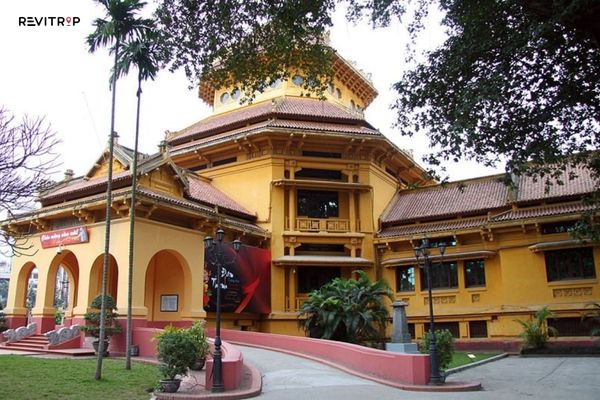
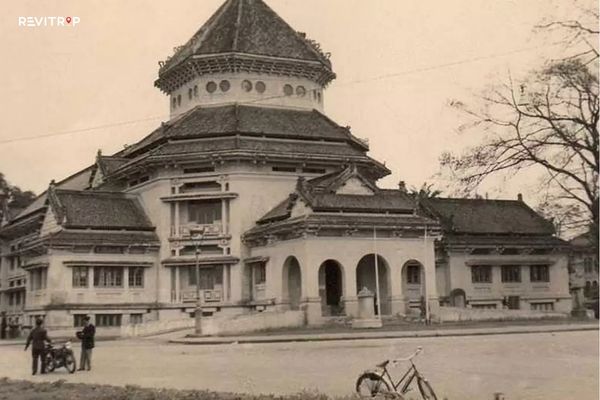
The Vietnam National Museum of History is in one of Hanoi’s most notable buildings. It is a grand ochre-yellow structure with red tile roofs. It was first built as the École Française d’Extrême-Orient. This was the French School of Asian Studies in the early 20th century.
Architectural highlights:
- Elegant colonial-era facade with tropical trees framing entrance
- Indo-Chinese architectural style (European + Asian elements)
- Octagonal tower resembling Vietnamese pagoda bell towers
- Double-layer roofs inspired by traditional Vietnamese temples
- Spacious interior halls with high ceilings and natural light
Pro tip: Photograph the exterior before entering (8-9am light is best). The building sits in a garden with large tropical trees, beautiful setting.
Comprehensive Chronological History
Unlike specialized museums (military, ethnology, women’s), the Vietnam National Museum of History covers EVERYTHING from prehistoric times through modern Vietnam, all organized chronologically.
What this means: You walk through Vietnamese history in order, seeing how cultures evolved, kingdoms rose and fell, and modern Vietnam emerged. It’s logical, efficient, and educational.
Why it works: By the end, you understand the flow of Vietnamese history not just isolated facts, but how each period connected to the next.
What to See: Two Buildings, Two Historical Periods
The museum intelligently divides content between two buildings across the street from each other.
Building A (Main Building): Prehistoric to 1945
Location: 1 Tràng Tiền (behind Hanoi Opera House)
Focus: Ancient Vietnam through end of Nguyen Dynasty
Time needed: 90-120 minutes
Prehistoric Vietnam (200,000 BCE – 1000 BCE)
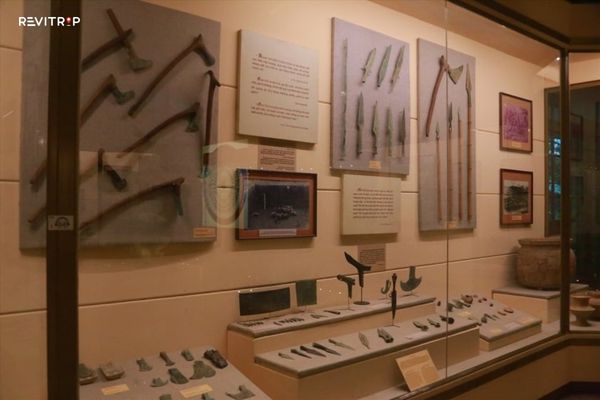
What you’ll see:
- Stone tools from early human inhabitants
- Evidence of prehistoric settlements
- Development of early Vietnamese societies
Educational value: Provides context that Vietnamese civilization is ancient (not just defined by recent wars).
Time needed: 15 minutes
Bronze Age and Dong Son Culture (1000 BCE – 100 CE)
What you’ll see:
- The famous Dong Son bronze drum (the star artifact)
- Bronze weapons, tools, and ceremonial objects
- Intricate carvings showing boats, birds, and daily life
Why it matters: The Dong Son drum design has become a Vietnamese national symbol. You’ll see this pattern everywhere in Vietnam—on beer cans, shop signs, government buildings.
Time needed: 20-30 minutes (don’t rush the drum section)
Indianized Kingdoms: Funan and Champa (100-1400 CE)
What you’ll see:
- Oc Eo culture artifacts (Funan kingdom in southern Vietnam)
- Stunning Cham sculptures (Hindu and Buddhist stone carvings)
- Evidence of Indian cultural influence on early Vietnam
Why it’s fascinating: Before Vietnamese culture dominated, southern Vietnam had completely different kingdoms with Sanskrit writing and Hindu temples.
The Cham sculptures: These are genuinely beautiful stone figures of Hindu gods (Shiva, Vishnu) and Buddhist deities carved with incredible skill. If you’ve visited My Son ruins or Cham towers in central Vietnam, this section provides essential context.
Time needed: 30 minutes
Vietnamese Imperial Dynasties (1000-1945 CE)
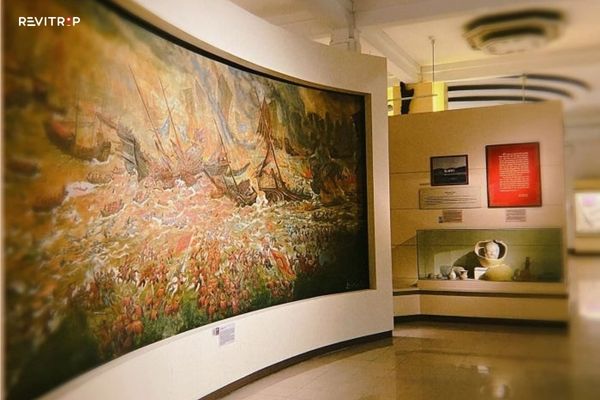
What you’ll see:
- Ceramics, pottery, and porcelain from various dynasties
- Imperial artifacts (royal clothing, ceremonial objects)
- Wooden screens inlaid with mother-of-pearl (exquisite craftsmanship)
- Nguyen Dynasty painted ceramics
- Bronze ceremonial dragons
- Stone steles with historical inscriptions
Highlights:
- Mother-of-pearl inlaid screens: Intricate wooden panels with shimmering shell decorations
- Imperial gold crowns: Delicate gold leaf ceremonial headwear
- Ceramic collections: Show evolution of Vietnamese pottery techniques
Educational value: Understand how Vietnamese imperial culture developed distinct identity while being influenced by Chinese civilization.
Time needed: 40-50 minutes
Building B: 20th Century History (1858-Present)
Location: 216 Trần Quang Khải (across street from main building)
Focus: French colonialism, independence struggles, modern Vietnam
Time needed: 45-60 minutes
French Colonial Period (1858-1945)
What you’ll see:
- Vietnamese resistance artifacts
- Colonial-era photographs
- Documents and propaganda
- Revolutionary objects
Time needed: 20-30 minutes
Independence and Modern Vietnam (1945-Present)
What you’ll see:
- Ho Chi Minh artifacts and documents
- Vietnam War (American War) materials
- Modern Vietnamese development
- Gifts given to Vietnamese leaders from foreign countries
Time needed: 20-30 minutes
Why Vietnam National Museum of History Is Worth Visiting
Advantages Over Other Hanoi Museums
Better than Military Museum:
- Broader scope (not just war)
- More convenient location (walkable from Old Quarter)
- Beautiful building (versus modern suburban facility)
- More efficient use of time (2 hours vs 3+ hours)
Better than Fine Arts Museum:
- More comprehensive (history + art vs just art)
- More engaging for general travelers
- Better English signage
Not quite as good as Ethnology Museum:
- Ethnology Museum is more valuable for enriching Vietnam travel
- However, History Museum is far more conveniently located
My ranking: #2 out of 15+ Hanoi museums (after Ethnology, before everything else).
Who Should Visit Vietnam National Museum of History
Perfect for:
- History enthusiasts wanting comprehensive Vietnamese chronology
- First-time Vietnam visitors seeking historical context
- Travelers planning to visit Hue Imperial City or Cham ruins (provides background)
- Architecture lovers (the building itself is stunning)
- Anyone with 2+ days in Hanoi
Also good for:
- Rainy day activity (fully indoor, air-conditioned)
- Midday heat escape (cool building)
- Photography enthusiasts (beautiful artifacts + architecture)
Skip if:
- You have less than 1 day in Hanoi (prioritize Old Quarter wandering)
- You hate museums (no amount of persuasion will help)
- You’ve already visited excellent history museums elsewhere in Vietnam
Practical Information
Getting There
From Hoàn Kiếm Lake: 500-meter walk (7-10 minutes)
Walking route: Walk south on Tràng Tiền toward Opera House. The museum is directly behind the Opera House. You’ll see the yellow colonial building.
Landmark: Right behind Hanoi Opera House (same street address: 1 Tràng Tiền)
By Grab/taxi: Not necessary it’s walkable from anywhere in Old Quarter
Entry Fees and Discounts
Standard ticket: 40,000 VND (~$1.60) covers both buildings
Discounts:
- University students: 20,000 VND (show student ID)
- High school students: 10,000 VND
- Children under 6: Free
- Disabled visitors: Free
Optional purchases:
- Guidebook: 30,000 VND (recommended adds valuable context)
- Photography: Included (no extra fee)
Best Times to Visit
Optimal timing:
Weekday mornings (8-10am): BEST
- Few visitors
- Fresh energy for dense historical information
- Good natural light in exhibition halls
- Cafe nearby for post-museum coffee
Weekday afternoons (2-4pm): DECENT
- Moderate crowds
- Cooler than midday
- Good if you’re not a morning person
Avoid:
- First Monday of each month (closed)
- Lunch closure 12-1:30pm (very annoying—plan around this)
- Last 30 minutes before closing (rushed)
Tips for Maximizing Your Visit
Strategic Viewing Order
Option A (My recommendation):
- Building A main hall (Dong Son drum and ancient artifacts)
- Building A side exhibitions (dynasties, Cham sculptures)
- Short break outside (5 minutes)
- Cross street to Building B
- 20th century exhibitions
Option B (If time-limited):
- Building A highlights only (Dong Son drum, Cham sculptures, mother-of-pearl screens)
- Skip Building B (overlaps with other museums)
Don’t: Try to read every single plaque. You’ll burn out. Instead, read introductions, focus on star artifacts.
What Not to Miss
Top 5 artifacts:
- Dong Son bronze drum (national symbol, historically significant)
- Cham stone sculptures (beautiful Hindu/Buddhist carvings)
- Mother-of-pearl inlaid screens (exquisite craftsmanship)
- Nguyen Dynasty ceramics (colorful imperial pottery)
- Imperial gold crowns (delicate golden leaf work)
Is Vietnam National Museum of History Worth It?
After two visits and recommending it to dozens of travelers, here’s my honest verdict.
Absolutely Visit If:
- You have 2+ days in Hanoi
- You enjoy history museums
- You want to understand Vietnamese history chronologically
- You’re visiting Hue Imperial City or Cham ruins (provides context)
- You appreciate beautiful colonial architecture
- You need a rainy day or hot midday activity
Consider Visiting If:
- You have 1 day in Hanoi but are efficient (morning only)
- You’re curious about Vietnamese culture beyond war history
- You’re interested in ancient Southeast Asian civilizations
- You want air-conditioned escape from heat
Skip If:
- You have less than 4 hours total in Hanoi
- You absolutely hate museums
- You’ve visited comprehensive Vietnam history museums elsewhere
- You’d rather spend that time eating street food and wandering
The Vietnam National Museum of History does exactly what it promises tells Vietnam’s history comprehensively and logically in a beautiful building. It won’t blow your mind, but it’s solidly good and worth 2 hours of your Hanoi time..
Have you visited the Vietnam National Museum of History? What was your favorite artifact? Share your thoughts in the comments!