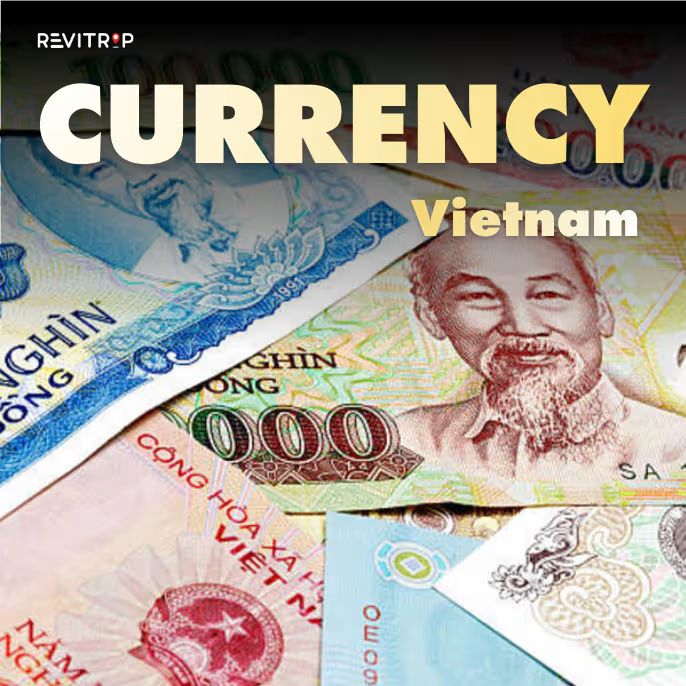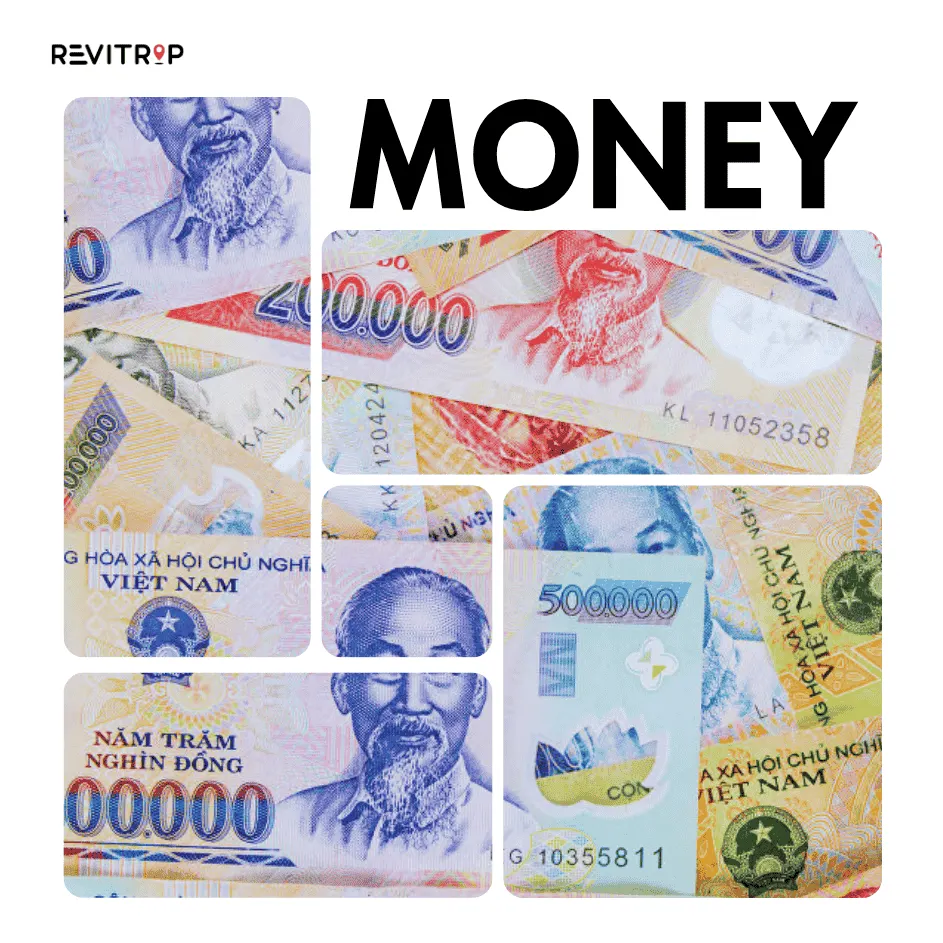
Vietnam money exchange gets framed as a “best rate” game. The real win is simpler: you leave with legitimate Vietnamese dong (VND), the right amount, and no drama – no getting shorted, no quiet conversion markups, and no starting your trip arguing with someone fanning a stack of bills.
Vietnam runs on two systems at once: cards are getting better every year, but cash still does a lot of heavy lifting (street food, small taxis, markets, tips, tiny cafés, countryside stops). So the winning move is simple: get a small amount safely, then top up in boring, licensed places.
Also, Vietnam has been tightening enforcement and penalties around unauthorized foreign currency trading, with a new decree taking effect February 9, 2026. Play it safe: exchange at banks or authorized counters and keep everything above-board.
The 60-second plan
You want cash fast, but not all of your cash, not at airport rates, and not from a random person who “has a good price.”
Do this instead:
- Step 1 (arrival): get a starter amount of VND for your first ride, food, and a SIM/top-up.
- Step 2 (day 1 or 2): exchange the larger amount at a bank or licensed exchange counter in the city.
- Step 3 (every day): carry small notes, keep big notes separated, and don’t treat your wallet like a public performance.
Where to exchange money in Vietnam (what’s actually worth using)
Vietnam’s rules revolve around licensed banks and licensed foreign exchange desks/counters. A “foreign exchange desk” is defined as an organization allowed by the State Bank to exchange foreign currency cash, including authorized agents.
Here’s the practical breakdown:
| Option | Best for | What you trade for |
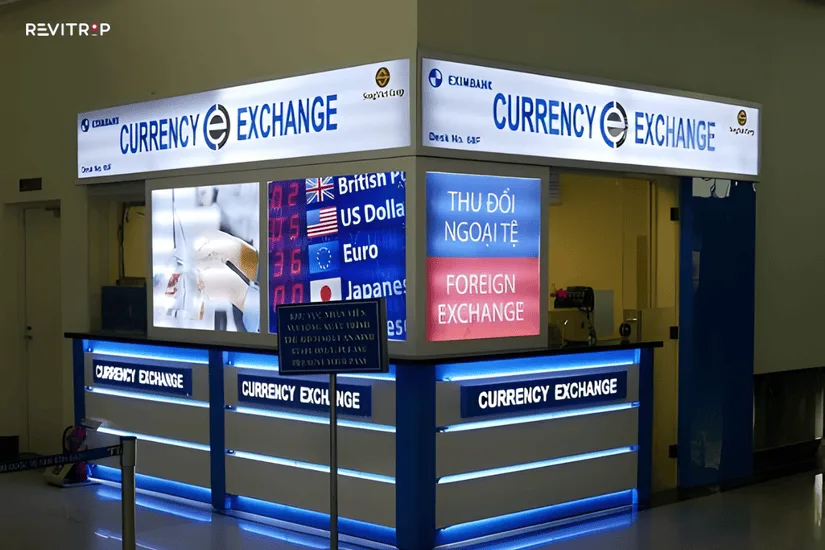
| Airport exchange counters | Starter cash on arrival | Convenience (rates are usually worse) |
| Bank branches | Larger exchanges, receipts, safety | Time + paperwork |
| Licensed exchange counters (including authorized agents) | Quick, decent rates, tourist zones | You must verify it’s legit |
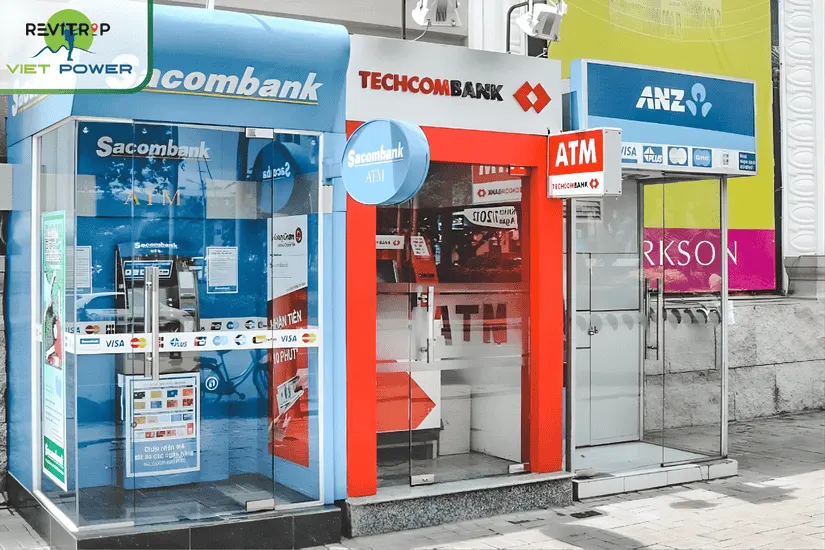
| ATMs | Fast cash access if your card is solid | Fees + withdrawal limits |
If you only remember one rule: use places that look regulated (posted rates, receipts, real counters, staff who do this all day). Unauthorized street exchanges are exactly where scams and “oops you counted wrong” moments happen, and enforcement has been getting stricter.
Airport exchange: good for “starter money,” not your whole trip
Airport counters are fine when you need VND immediately. Think: ride into town, water, snacks, first meal, SIM.
For example, Noi Bai International Airport (Hanoi) lists multiple currency exchange counters in both terminals (T1 and T2), including counters operated by major banks.
What I’d do:
- Exchange just enough for 24 hours.
- Then stop. Don’t do the “I’ll exchange everything here so I don’t have to think later” move. That’s how you pay the convenience tax.
Banks and licensed counters: the boring choice that wins
If you’re exchanging a meaningful amount, banks are your safest baseline. They’re also the easiest place to get a receipt, which matters more than people think.
Why receipts matter:
- They keep your spending “explainable.
- They help if you ever need to show a paper trail for a bigger transaction.
- They’re also useful if you later want to convert leftover VND (or at least show where your cash came from).
Vietnam’s regulations also define and structure how exchange counters operate (direct counters at banks and agent counters run by authorized organizations). In plain English: not every counter is equal, and licensing is the difference between normal and sketchy.
Can you exchange at gold/jewelry shops?
You’ll hear this tip constantly. Sometimes it’s true in practice: certain jewelry shops offer competitive rates. The part people skip is the only part that matters:
Only use licensed places.
Vietnam’s foreign exchange framework is built around permitted entities, and there are penalties tied to unauthorized trading. With new penalty rules taking effect Feb 9, 2026, the risk-reward math gets worse for “random exchange.”
If you’re not sure it’s licensed, treat it as a no.
A quick legitimacy sniff test:
- Posted rates (not whispered rates)
- Receipts available
- It looks like a real business doing normal business, not a side hustle
The easiest money leak: Dynamic Currency Conversion (DCC)
This is where travelers get quietly taxed.
Sometimes an ATM or card terminal will offer:
“Pay in USD?” or “Convert for you?”
That’s Dynamic Currency Conversion (DCC). It often comes with extra markup, and Visa explicitly describes DCC as a conversion into your home currency that can include additional fees, with the option to decline.
Here’s the rule:
When the screen asks, choose VND (local currency) and decline conversion.
Let your bank/card network do the conversion, not the random machine in front of you.
Can you pay in USD in Vietnam?
Sometimes a hotel will accept USD. Sometimes a tour operator might quote you in dollars. But as a general rule, Vietnam restricts the use of foreign currency for transactions inside the country, with specific exceptions (like certain licensed service contexts).
Practical takeaway:
- Pay in VND when you can.
- If someone quotes in USD, ask what the VND price is (and whether that includes fees).
- Don’t assume “USD accepted” means “USD is a good deal.”
Cash limits: what you should know about declaring money
If you’re carrying large cash, don’t guess. Vietnam has clear declaration thresholds.
Under Circular No. 15/2011/TT-NHNN, if you enter or exit Vietnam carrying more than USD 5,000 (or equivalent) or more than VND 15,000,000, you’re required to declare it to border customs.
This matters even more if you plan to deposit foreign cash into an account later – the rules describe using the customs-confirmed declaration as a basis for that deposit process.
If you’re under the threshold, you’re usually living a simpler life. If you’re over it, be organized and document it.
A simple wallet system that keeps you out of trouble
Vietnamese notes can stack fast. What feels like “a little money” becomes a thick brick of bills, and that’s where people get sloppy.
Use a two-pocket system:
- Pocket A: daily spend (small notes)
- Pocket B: reserve (larger notes), touched only in private
And one last rule: count slowly, in calm light, away from a crowd. The goal isn’t paranoia. It’s reducing dumb mistakes.
The bottom line
The best Vietnam money exchange strategy isn’t “find the magic counter.” It’s building a routine:
Starter cash on arrival, bigger exchange in a licensed place, always choose VND on screens, keep receipts when it matters, and keep your wallet behavior calm and boring.
Vietnam rewards travelers who don’t improvise their finances in public. Keep it tracked. Keep it boring.
FAQ
For most travelers, yes. You’ll usually get more options once you’re in the city (banks, authorized exchange counters, ATMs), and you won’t feel pressured into swapping a big amount at an airport rate. A simple approach works well: exchange a small amount on arrival for transport and basics, then do your main exchange at a bank or authorized counter.
Start with the State Bank of Vietnam’s published rates, then compare with a major commercial bank’s rate for what you’ll actually receive at a counter. For example, the State Bank of Vietnam central rate on 03/03/2026 lists 1 USD = 25,046 VND, and it also publishes reference buy/sell figures used for official reference purposes. Real-world cash buy/sell rates at banks and authorized counters will differ, so checking a bank page (like Vietcombank) gives you a practical comparison before you exchange.
Think of it as the official reference layer, not a guaranteed “what you’ll get at the counter” number. The State Bank publishes the central rate (commonly referenced in news and financial reporting) and also posts reference rates for multiple currencies. Banks and authorized exchange counters set their own buy/sell rates around that framework, so your best move is using the SBV rate as a benchmark and then comparing a few bank rates before exchanging.