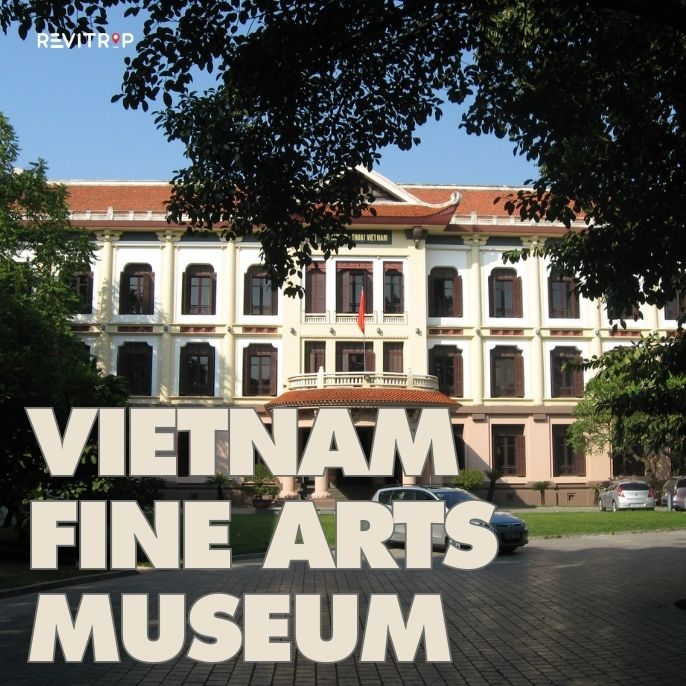
Should you visit the Vietnam Fine Arts Museum in Hanoi? Only if you’re genuinely interested in art or have 3+ days in Hanoi with major museums already covered. This museum takes you through 1,000 years of Vietnamese art in time order.
The Vietnam Fine Arts Museum does a great job. It showcases Vietnamese art from the 11th century to today. Nevertheless, it’s more specialized than Ethnology or History museums, making it optional rather than essential for short Hanoi visits.
Quick Facts: Vietnam Fine Arts Museum at a Glance
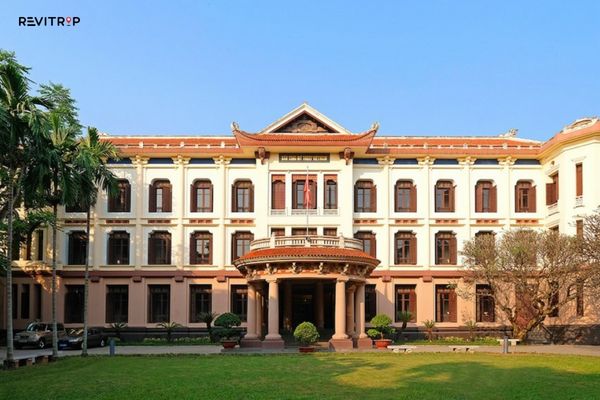
Location: 66 Nguyễn Thái Học Street, Ba Đình District
Hours: 8:30am-5:30pm (closed Mondays)
Entry fee: 40,000 VND (~$1.60)
Time needed: 1.5-2 hours
Distance from Old Quarter: 2.5km (10-15 minute Grab ride)
Floors: 3 floors, ~3,000m² exhibition space
Best for: Art lovers, those interested in lacquer paintings, visitors with 3+ days in Hanoi
The reality: The Vietnam Fine Arts Museum is in a stunning 1937 colonial building. It was once a Catholic girls’ boarding house.
It features beautiful architecture. However, the content is very art-focused and needs real interest in visual arts. This helps you stay engaged during a 90+ minute visit.
What Is Vietnam Fine Arts Museum? Understanding the Collection
A Chronological Walk Through Vietnamese Art
The Vietnam Fine Arts Museum organizes exhibits chronologically, showing how Vietnamese art evolved over 1000 years.
Timeline covered:
- 11th-19th centuries: Imperial decoration, religious art, architectural motifs
- Early 20th century: French colonial influence, Indochina Fine Arts School
- Mid-20th century: Revolutionary war art, propaganda paintings
- Late 20th century-present: Post-war reconstruction, contemporary art
What this means: By the end, you will understand how Vietnamese art styles changed over time. They moved from imperial court art to French-influenced techniques. Then they shifted to socialist realism and modern experimentation.
The Beautiful Colonial Building
Before discussing the art, acknowledge the building itself genuinely stunning.
Architectural details:
- Built 1937 during French colonial period
- Originally housed Catholic girls’ boarding school
- Yellow colonial facade with shuttered windows
- Elegant wooden staircase connecting three floors
- High ceilings with natural light
- Colonial-era architectural details preserved
My take: Even if you’re not an art person, the building is worth seeing. The French colonial architecture is beautiful, and walking through the structure provides cultural context about Hanoi’s layered history.
What to See: Floor-by-Floor Overview
Imperial and Religious Art (11th-19th Centuries)
What you’ll see:
Religious sculptures:
- Buddhist figures (stone, wood, bronze)
- Lacquer Guanyin statues (16th century highlights)
- Temple decorative elements
- Shrine carvings
Imperial decorative arts:
- Finely carved wooden doors and screens
- Architectural motifs from palaces and temples
- Decorative panels with imperial symbolism
- Mother-of-pearl inlay work
Folk art:
- Dong Ho folk paintings (bright colors, vivid content)
- Traditional woodblock prints
- Terracotta and carved wood folk statues
- Ceramic collections (unglazed and glazed styles)
Educational value: This section shows how Vietnamese art served religious and imperial purposes for centuries art wasn’t “decoration” but rather spiritual and political expression.
Time needed: 30-40 minutes
French Colonial Period & Indochina Fine Arts School (Early 20th Century)
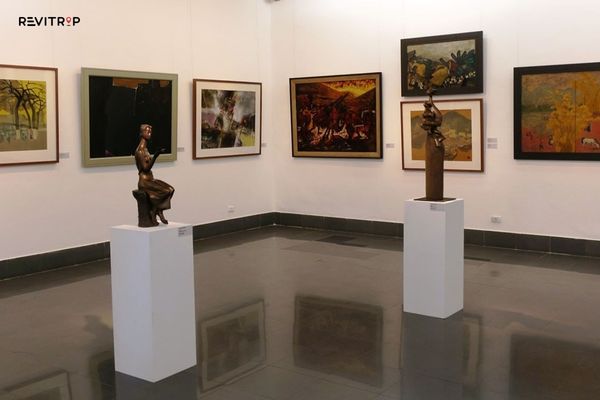
What changed: French colonial rule introduced Western artistic techniques while Vietnamese artists maintained cultural identity.
What you’ll see:
- Oil paintings using Western perspective techniques
- Lacquer paintings combining Vietnamese materials with French composition styles
- Silk paintings with delicate brushwork
- Works by Indochina Fine Arts School students
Highlights:
- “Younger sister Thuy” by Tran Van Can (1943) – oil painting showing French influence
- Early lacquer paintings experimenting with technique
- Portraits of Vietnamese people using Western artistic methods
Why this section matters: Shows cultural fusion. Vietnamese artists learning French techniques but depicting Vietnamese subjects and maintaining cultural aesthetics.
Time needed: 25-30 minutes
Revolutionary Art (Mid-20th Century) – LARGEST SECTION
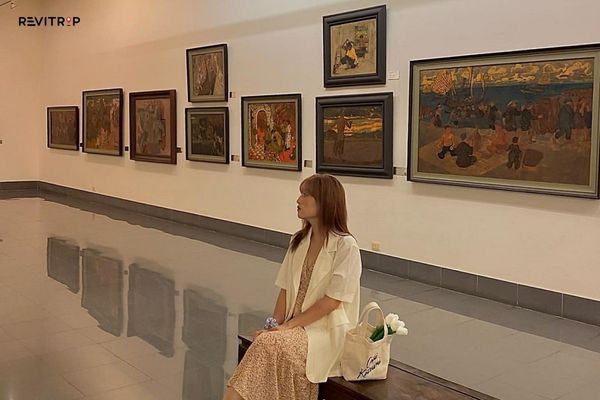
The reality: This section dominates the museum extensive revolutionary war paintings, heroic battle scenes, political propaganda art.
What you’ll see:
War-themed paintings:
- Battles against French and American forces
- Heroic Vietnamese soldiers and civilians
- Strategic military operations depicted
- Sacrifice and resistance themes
Labor and reconstruction art:
- Workers building new Vietnam
- Agricultural collectives
- Industrial development scenes
- “Socialist construction” themes
Political figures:
- Ho Chi Minh portraits and depictions
- Revolutionary leaders in various contexts
- Political messaging through visual art
Example: “Uncle Ho was in the Viet Bac war zone” by Duong Bich Lien (1980) – lacquer painting showing Ho Chi Minh during resistance
Artistic style: Socialist realism idealized depictions of workers, soldiers, and revolutionary activities. Bold colors, heroic postures, optimistic tones.
My honest take: If you’ve visited the Military History Museum or other war-focused sites, this content becomes repetitive. Moreover, the propagandistic nature is heavy-handed. However, from pure artistic perspective, the lacquer technique is impressive.
Time needed: 40-50 minutes (it’s extensive)
Skip if: You’re war-fatigued or not interested in political art.
Contemporary Art (Late 20th Century-Present)
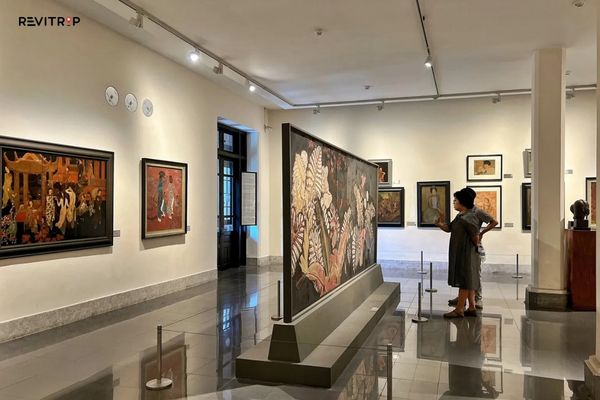
What’s different: This section shows Vietnamese artists addressing current issues and experimenting with modern techniques.
What you’ll see:
- Environmental concerns depicted artistically
- Industrialization impacts
- Social commentary (subtle, given government oversight)
- Contemporary lacquer innovations
- Mixed media experimentation
Why it’s interesting: After extensive historical and revolutionary content, contemporary art feels refreshing showing Vietnam as modern, evolving nation rather than just historical artifact.
Time needed: 20-25 minutes
Is Vietnam Fine Arts Museum Worth It? The Honest Assessment
After two visits and comparing it to other Hanoi museums, here’s my frank verdict.
Visit If You:
- Genuinely enjoy art museums and visual arts
- Are interested in lacquer painting techniques (Vietnam specializes in this)
- Want to understand Vietnamese artistic evolution
- Have 3+ days in Hanoi with major museums covered
- Appreciate colonial architecture
- Are researching Vietnamese art history
- Enjoy analyzing political propaganda as historical artifacts
Skip If You:
- Have limited time in Hanoi (1-2 days only)
- Are already war-fatigued from other museums
- Don’t particularly enjoy art museums generally
- Prefer active experiences over contemplative viewing
- Want museums with practical travel-enhancing value (Ethnology Museum is better)
- Are traveling with young children (they’ll be bored)
Compared to Other Hanoi Museums
Better than:
- Ho Chi Minh Museum (more coherent, better presentation)
- Imperial Citadel (more actual content to see)
Not as essential as:
- Ethnology Museum (more valuable for enriching Vietnam travels)
- National History Museum (broader historical scope, more efficient)
- Hoa Lo Prison (more thought-provoking, more unique)
On par with:
- Women’s Museum (both are good specialized museums)
My ranking: #5-6 out of 15+ Hanoi museums I’ve visited. Good but not essential.
Practical Information
Getting There
From Old Quarter: 2.5km (not walkable)
By Grab/taxi:
- Cost: 35,000-50,000 VND
- Time: 10-15 minutes
- Drop-off: Directly at museum entrance on Nguyễn Thái Học Street
Walking from the Ba Dinh Square area. If you visit the Ho Chi Minh Mausoleum or the One Pillar Pagoda, you can walk to the museum in about 15 minutes. Therefore, it’s combinable with Ba Dinh area attractions.
My recommendation: Combine with Ba Dinh Square complex (Mausoleum, One Pillar Pagoda, Presidential Palace grounds) if doing that area. Otherwise, it requires dedicated trip.
Costs and Timing
Entry: 40,000 VND (~$1.60)
Photography: Included (no flash)
Audio guide: Not available
Guidebook: May be available (ask at entrance)
Best times:
- Weekday mornings (9-11am): Quietest, best natural light
- Avoid: Mondays (closed), weekends (tour groups)
Time needed:
- Art enthusiasts: 2-2.5 hours (thorough viewing)
- General visitors: 1.5 hours (key highlights)
- Quick visit: 60 minutes (rushed, main pieces only)
What to Bring
Essential:
- Cash (40,000 VND)
- Camera (lacquer paintings are photogenic)
Recommended:
- Art background reading (enriches understanding)
- Patience (lots of revolutionary art requires mental stamina)
Not needed:
- Audio guide (doesn’t exist)
- Children (they’ll be very bored)
Special Features Worth Knowing
Le Art Cafe & Wine Bistro
Location: Near museum entrance
What it offers:
- Excellent coffee and wine
- Light meals and snacks
- Comfortable seating
- Art-gallery atmosphere
My recommendation: This cafe is worth visiting EVEN WITHOUT seeing the museum. Seriously, it’s one of Hanoi’s better cafes. Therefore, if you skip the museum but are in the area, at least stop here for coffee.
Creative Space for Children (If Traveling with Kids)
What it is: Interactive art space established 2011 for children to experience art hands-on
Activities:
- Painting workshops
- Ceramic exploration
- Sculpture activities
- Suitable for various ages
Reality check: This helps if you have children, but the main museum galleries will still bore most kids. Therefore, don’t visit this museum primarily for children better options exist (puppetry, outdoor activities).
Virtual Exhibition and iMuseum VFA App
Digital features:
- Virtual exhibition space online
- “iMuseum VFA” multimedia guide app
- Browse collection remotely
My take: Nice technological addition but doesn’t replace in-person visit. However, useful for pre-visit research or post-visit reference.
Who Should Actually Visit This Museum?
Perfect for:
- Art history students and researchers
- Lacquer painting enthusiasts
- Artists seeking inspiration
- Visitors with 4+ days in Hanoi
- Those who love ALL art museums everywhere
Also okay for:
- Rainy day activity (indoor, air-conditioned)
- Colonial architecture appreciators
- Those combining with Ba Dinh area visit
Better alternatives for most tourists:
- Ethnology Museum (more valuable for travel)
- History Museum (more comprehensive)
- Women’s Museum (more unique perspective)
- Simply wandering Old Quarter (more memorable)
Final Verdict: Good But Not Essential
The Vietnam Fine Arts Museum does its job well preserving and displaying 1000 years of Vietnamese artistic evolution. Moreover, the building is beautiful, the lacquer paintings are impressive, and the collection is comprehensive.
However, “doing its job well” doesn’t automatically mean “essential for tourists.”
The core issue: Most travelers visit Vietnam for culture, history, food, and landscapes not specifically for fine arts. Consequently, this museum appeals to a narrower audience than more broadly cultural museums like Ethnology or History.
The revolutionary art problem: A significant portion (maybe 40%) focuses on mid-20th century revolutionary/political art. If you’ve already visited Military Museum or are war-fatigued, this becomes repetitive rather than enlightening.
The time opportunity cost: Spending 1.5–2 hours at this museum means 1.5–2 hours not spent elsewhere.
That could be time eating street food, wandering the Old Quarter, or visiting more rewarding museums.
When it makes sense: If you’re genuinely into art, have time, and want comprehensive Vietnamese cultural understanding, visit. Otherwise, it’s optional rather than essential.
My honest recommendation: Most Hanoi visitors with limited time should skip this museum. Use that time to visit the Ethnology Museum, explore Old Quarter streets, or take a cooking class. For the 20% who love art museums specifically, visit and enjoy it.
The Vietnam Fine Arts Museum is a good specialized museum that serves art enthusiasts well. It’s just not a must-see for general travelers with 1-3 days in Hanoi.
Have you visited the Vietnam Fine Arts Museum? Did you find the revolutionary art fascinating or repetitive? Share your thoughts in the comments!