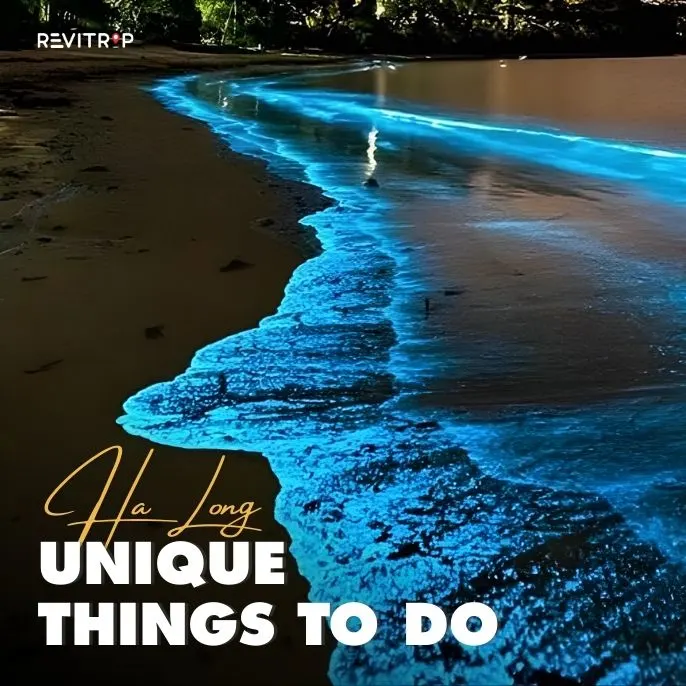
Most people come to Ha Long Bay for the same three things: a cruise, a cave, and a photo of the karst skyline. All three are worth doing. Ha Long has a deeper roster than that. If you spend any meaningful time on the water or in the city, try at least a few of the experiences below.
This list focuses on things that are actually distinctive to Ha Long, not generic Vietnam activities you could do anywhere. Some are easy to add to an existing cruise itinerary. Others require a bit more planning. All of them are worth it.
Night Squid Fishing on the Bay
Squid fishing is the defining after-dark activity on Ha Long Bay, and it earns that reputation. After dinner on an overnight cruise, the crew drops anchor and sets up bright lights at the stern. The lights attract squid to the surface, and guests are handed simple rods with shrimp-shaped hooks. No bait needed: squid mistake the hook for prey and latch on.
The technique is straightforward. Lower your line into the brightest part of the water, give it a slow, gentle movement, and wait. When a squid grabs on, you feel a sudden tension and reel it in. Experienced anglers in the group might pull up 20 or 30 in a session. On a good night, you can clearly see shoals of squid hovering under the lights below the surface.
The best time for squid fishing runs from October to February. October and November produce the largest squid. Moonless nights yield the best results because the fishing lights become more attractive when the water is fully dark. Foggy conditions also work surprisingly well. If you go during this window, dress warmly: nights on the bay dip cold, especially from December onwards.
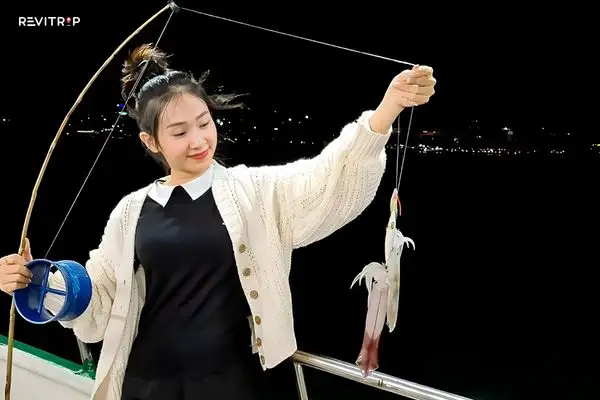
After the fishing session, the crew cooks your catch immediately. The most popular preparation is whole squid in a hot pot with tamarind and chili. It is served fresh with lime salt dipping sauce. There is genuinely nothing else like eating seafood you caught yourself. Still warm from the sea, anchored among karst formations at night.
Squid fishing is only available on overnight Ha Long Bay cruise tours. Day trips do not include it. Most mid-range and luxury cruises build it into the evening program at no extra cost. If you plan specifically around squid season, confirm with your operator before booking.
Practical tips: Bring a light windbreaker for the night chill. Wear shoes with grip rather than sandals on a wet deck. Be patient in the early session since squid take time to gather. Release undersized squid back into the water.
Kayaking into Hidden Lagoons
Kayaking is on almost every cruise itinerary, but the quality of the experience depends entirely on where you go. The main tourist route sends kayaks through Luon Cave, a water tunnel opening into a hidden lagoon. Macaques and flying squirrels live in the surrounding limestone. That route takes around 45 minutes. It remains one of the best introductions to what the bay looks like from water level.
Beyond Luon, less-trafficked spots include the Tung Sau Cove area, Ba Trai Dao Beach, and the caves around Lan Ha Bay, where crowds thin out considerably. In those quieter areas, you paddle through passages too narrow for any motorized boat. Cliff walls rise vertically from the water. Lagoons open unexpectedly from total darkness.
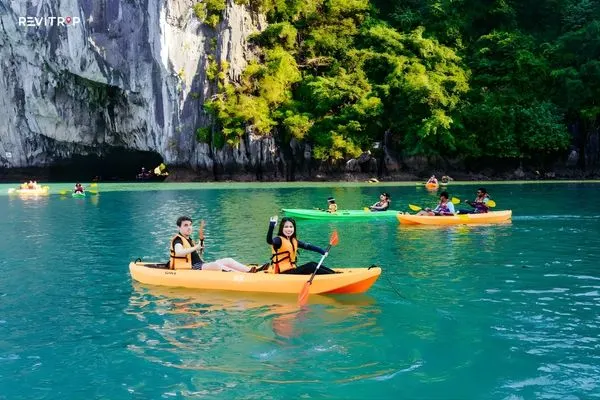
The experience at water level is fundamentally different from any view you get from the cruise deck. The scale of the limestone formations only becomes apparent when you are sitting low in a kayak next to them. Many travelers say the kayaking session ends up being the sensory peak of their entire trip to Ha Long.
Go in the morning if you have the choice. Light and water conditions are best before midday, the temperature is lower, and fewer boats are moving. Most cruises include a free kayaking session; some offer additional time for an extra charge.
Witnessing Bioluminescent Plankton
Few things in Ha Long Bay are as quietly spectacular as bioluminescent plankton, and most visitors never know it exists. The phenomenon is caused by a microscopic marine organism called Noctiluca scintillans, which emits a blue-green glow when disturbed. Dip your paddle into dark water on the right night and the surface lights up in your wake like scattered sparks.
The best conditions for bioluminescent plankton are warm water, darkness, and distance from light pollution. In practice, this means heading away from the main cruise corridors into calmer, less-trafficked waters. The Lan Ha Bay area, near Cat Ba Island, consistently offers better plankton viewing than the central Ha Long Bay zone. It is calmer and fewer boats create background light.
May to August is the peak season for bioluminescent plankton in Ha Long Bay. Water temperatures are at their highest and plankton concentrations are at their thickest. Avoid full moon nights: the bright moonlight washes out the glow. After a hot, humid day followed by a clear evening is when conditions align best.
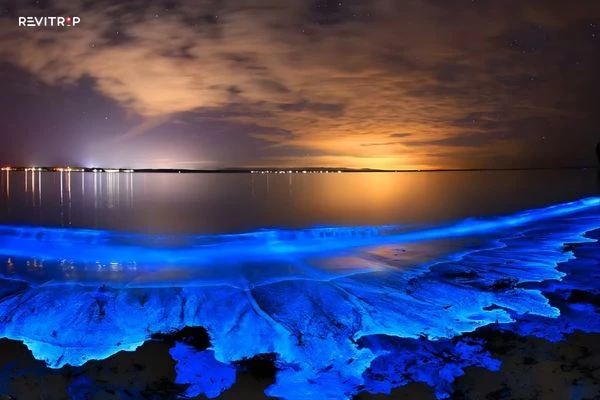
The most effective way to see bioluminescent plankton is through a dedicated night kayaking tour. These typically depart from Cat Ba Island in the late afternoon and include a sunset cruise into Lan Ha Bay. After dark, guests head out by kayak to spots where plankton concentrations are highest. The standard format includes a light dinner on the boat between the two kayak sessions. Tours run from around $36 to $50 per person, including pickup, boat cruise, kayak, and dinner.
On overnight cruises, bioluminescent plankton occasionally appears around the boat during squid fishing sessions. Dropping a line or swirling your hand in the water near the boat lights can trigger the glow. However, the dedicated kayaking tours produce far more reliable results because they specifically target the right locations and conditions.
One honest caveat: bioluminescence is a natural phenomenon and not guaranteed. Overcast skies, strong winds, or the wrong lunar phase can reduce or eliminate the glow. Book with operators who offer weather-conditional refunds or rebooking options.
Sunrise Tai Chi on the Cruise Sundeck
This one sounds like a brochure activity, and in some ways it is. But on a clear morning, with mist sitting between the karst formations and the light shifting from grey to gold, Tai Chi on a sundeck in Ha Long Bay is genuinely something.
The sessions run on most mid-range and luxury overnight cruises, typically around 6:00 to 6:30 AM. An instructor leads a 30 to 40-minute session of slow, flowing movements while the bay materializes around you. No experience is necessary. The movements are gentle and the instructor adapts to the group.
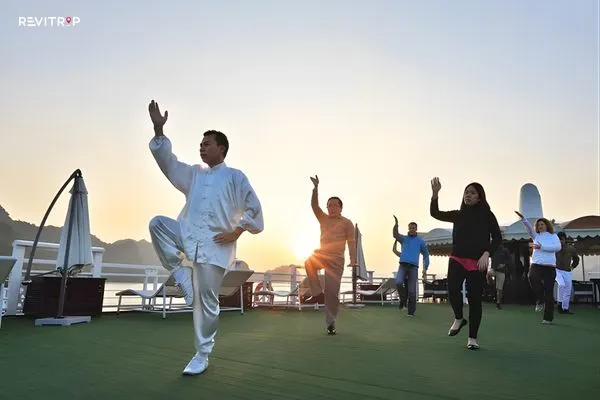
Beyond the novelty, the activity makes practical sense. Starting the day outside on the water, in fresh sea air, before the tourist boats crowd the bay: it sets a different tone from any hotel morning. Several guests describe it as one of the few times on a busy trip where they felt genuinely present, rather than moving between scheduled stops.
If Tai Chi does not appeal, most cruises also offer yoga as an alternative. The setting is the same; the pace is similar. Both work best if you set an alarm and actually get up.
Visiting a Floating Fishing Village
Ha Long Bay was home to several floating villages for generations. Fishing communities built entire lives on the water: houses on pontoons, children rowing to school, daily routines structured around tides and catch. Today, most residents have been relocated onshore by the Vietnamese government, but several villages remain accessible to visitors.
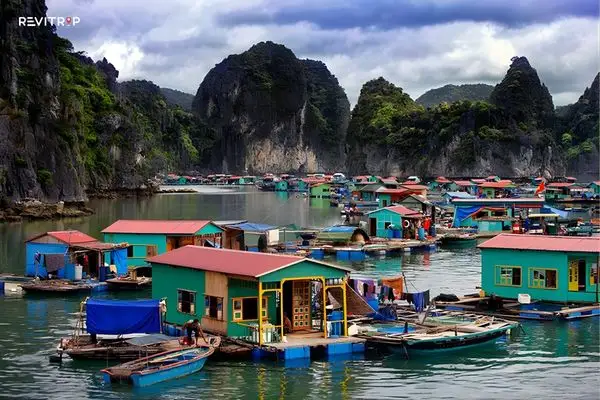
Cua Van is the largest remaining floating village in Ha Long Bay, home to around 130 households. Getting there usually means a short kayak from a cruise anchor point or a local wooden boat transfer. Once inside, you paddle or drift between floating homes and fish farms. Occasionally, residents are hauling nets or repairing equipment nearby. Guides on better cruises explain the history of these communities and their complicated relationship with relocation programs.
Vung Vieng, located further into Bai Tu Long Bay, is smaller and quieter. The village has a cultural center where visitors can learn traditional fishing techniques and try rowing the circular bamboo boats called thung chai. It is a genuinely hands-on stop. The experience at Vung Vieng feels more intact and less staged than some of the more-visited alternatives.
Both villages provide a kind of cultural anchor that the geological sightseeing in Ha Long Bay does not. The karsts are extraordinary. However, walking through a floating fishing village where people have lived for generations adds a human dimension to the landscape that sightseeing alone does not.
Riding the Sun Wheel at Sun World Ha Long
Sun World Ha Long is the large amusement and cable car park on the hillside above Bai Chay. Most visitors use it to reach Mystic Mountain via the Queen Cable Car. That ride alone is worth doing for the views across the bay. But the Sun Wheel, the giant Ferris wheel at the summit, deserves specific mention as a unique vantage point.
The Sun Wheel stands 215 meters above sea level, making it one of the highest Ferris wheels in the world. From the top, the view takes in Ha Long Bay, the city, and the surrounding islands in a single sweep. On clear days, the karst formations stretch to the horizon in every direction. The ride itself is slow and smooth, with 64 cabins each carrying up to eight passengers. The whole rotation takes around 15 minutes.
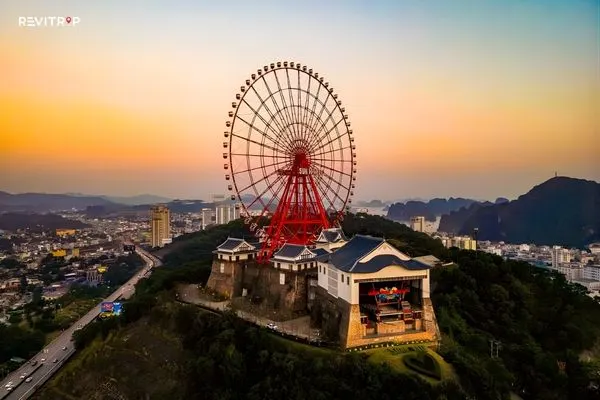
The Sun Wheel is included in the cable car and Mystic Mountain ticket combo. For standalone entry, tickets run around 380,000 VND. The park is most photogenic in the late afternoon, when light drops across the bay, and in the evening, when the city and water glow with reflected light. A full visit to Sun World Ha Long, including the cable car, Mystic Mountain, and Sun Wheel, takes around 3 to 4 hours.
A Seafood BBQ on the Bay
This does not require special planning. Most overnight cruises include a barbecue option either on the top deck or at an anchored beach stop. Fresh prawns, clams, squid, and fish are grilled over open charcoal. All served with lemon, salt, and chili while the bay sits around you.
The quality of the seafood is directly linked to where you cruise. Ships that anchor further from the main tourist corridors have access to better catch and fresher supply lines. On higher-end cruises, this often means geoduck, fresh oysters, or live crab alongside the standard grilling menu.
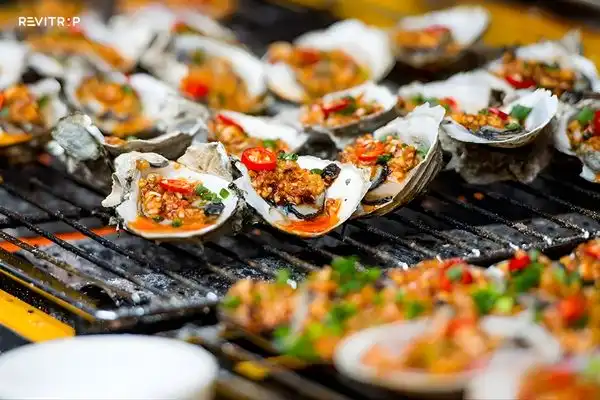
If you want great seafood onshore, Bai Chay Beach is lined with restaurants serving catch from Ha Long Bay. The city’s Ha Long food scene goes deeper than most visitors expect. Cha muc (squid cake), ngan (local clam), and bun be be (mantis shrimp noodle soup) are all specific to this part of Vietnam and worth seeking out beyond the cruise.
For context on what makes Ha Long Bay seafood distinct, the Hai Phong food tour covers the neighboring city’s take on coastal cuisine.
Quick Planning Reference
| Activity | When | How to Book | Best For |
|---|---|---|---|
| Night squid fishing | Oct to Feb (peak) | Via overnight cruise | Everyone on overnight stays |
| Bioluminescent kayaking | May to Aug (peak) | Dedicated tour from Cat Ba | Active travelers, couples |
| Floating village visit | Year-round | Via cruise itinerary | Cultural travelers |
| Sunrise Tai Chi | Year-round | Via overnight cruise | Morning people |
| Kayaking hidden lagoons | Year-round, morning best | Via cruise or day tour | Most visitors |
| Sun Wheel & cable car | Year-round, late afternoon | On-site at Sun World | Families, non-cruise days |
| Seafood BBQ | Year-round | Via cruise or onshore | Everyone |
FAQ
Night squid fishing, kayaking to see bioluminescent plankton, visiting floating fishing villages, sunrise Tai Chi on the sundeck, and onboard cooking classes are all available on overnight cruises. On land, the Sun Wheel at Sun World Ha Long, the Ha Long Night Market, and less-visited caves offer experiences outside the standard itinerary.
No. Squid fishing in Ha Long Bay only happens at night on overnight cruises. Day trips do not include this activity. If squid fishing is a priority, book a minimum two-day, one-night cruise and confirm the activity is included before paying.
May to August produces the brightest and most reliable bioluminescent plankton in Ha Long Bay, when water temperatures peak and plankton concentrations are highest. Moonless nights give the clearest glow. The Lan Ha Bay area near Cat Ba Island provides better viewing conditions than the main Ha Long Bay zone.