Nha Trang is famous for its beaches. There is more to see in this city. Thap Ba Ponagar is an important historic site in Vietnam.
It is a group of ancient towers built by the Cham people. The towers sit on a small hill near the Cai River. They are about 2 kilometers from the city center.
What Is Thap Ba Ponagar?
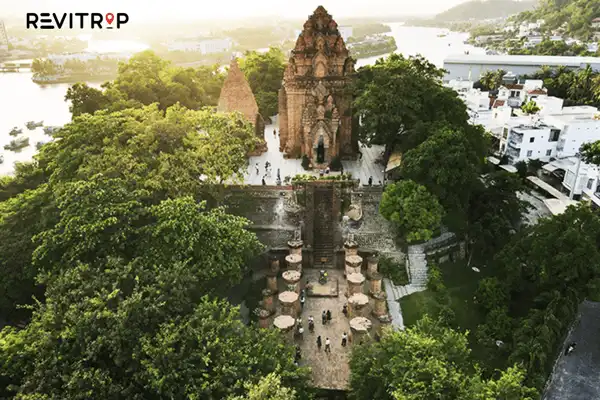
Thap Ba Ponagar is a group of towers built by the Cham people. The complex sits atop a small hill, approximately 50 meters above sea level, near the Cai River estuary. It is located about 2 kilometers north of Nha Trang city center.
In the language of the Cham people, the word “Ponagar” means “the mother of the country.” The towers were built to worship a goddess named Po Ina Nagar.
In Cham belief, she was the goddess who came from the clouds and sea foam to bring good crops and peace.
The full name of the site is Yang Po Inu Nagar. Many locals simply call it Thap Ba, which means “Tower of the Lady.”
A Long History
Constructed between the 7th and 13th centuries, the complex once housed as many as seven towers. Today, four remain — resilient against time and weather, standing in homage to the gods.
Built between the 7th and 13th centuries, Po Nagar Temple originally served as a Hindu worship site honoring Shiva and the goddess Bhagavati, representing the architectural magnificence of the ancient Champa civilization.
Po Nagar Nha Trang was designated as a national monument by the Ministry of Culture and Information in 1979. This recognition shows how important the site is to the history of Vietnam.
For nearly 300 years, Vietnamese residents in Nha Trang have embraced the towers and inherited the Cham matriarchal worship tradition, transforming it into their own Mother Goddess veneration site.
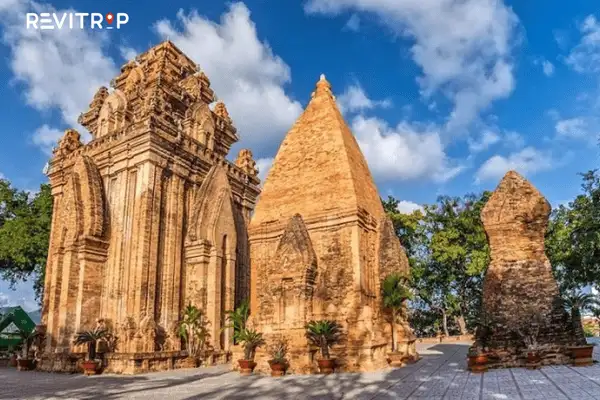
The Architecture
The temple complex has three main levels. Each level has a different purpose.
The lowest level once had a gate tower. The gate no longer stands. Only the stone steps going up remain.
The middle level is called the Mandapa. The Mandapa is 20 meters long and 15 meters wide, featuring four rows of octagonal columns.
The top level holds the main towers. The main tower is the highest tower of the complex at about 23 meters high. It was built in 813–817 and renovated in the 11th century.
Inside, there is a 2.6-meter-tall statue of the goddess carved from black granite. The goddess sits majestically on a stone lotus pedestal, with her back resting against a large bodhi leaf-shaped stone slab.
Each tower has four doors facing East, West, South and North. But only the East door is open for pilgrims. The remaining three doors are shaped like fake doors.
The brickwork is very special. The ancient Cham built these towers without modern tools. Researchers still study how the bricks were made and joined together.
The Legend of Thien Y Ana
The story behind the temple is very interesting. According to legend, a beautiful woman named Thien Y Ana emerged from a mystical piece of wood. A prince found the wood and brought it back to his court. He married her.
After giving birth to two children, Thien Y Ana returned to her homeland, where she taught the people farming and weaving. In the end, she ascended to the heavens on a crane, leaving behind a legacy of wisdom and generosity.
To honor her memory, the Cham people built the Ponagar towers. This legend is still told today. It connects the Cham and Vietnamese people to the same sacred place.
The Ponagar Festival
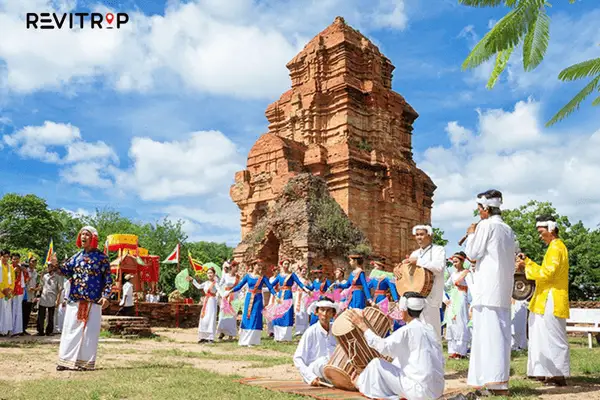
Every year, from the 21st to the 23rd of the third lunar month, the Ponagar Tower Festival takes place, featuring diverse and vibrant activities that showcase Cham culture. It is recognized as one of Vietnam’s 16 national festivals.
During the festival, the site becomes very lively. People come from all over the country. They bring offerings and pray for good luck, health, and a good harvest. Traditional Cham dances are performed at the site. These dances are beautiful and unique. They are not found anywhere else in Vietnam.
The Thap Ba Ponagar Festival reflects the distinct coastal Vietnamese version of Mother Goddess worship, differing from other Cham religious festivals.
Practical Information for Visitors
Planning a visit is easy. The site is close to the city center. Here is what you need to know.
Address: 61 Hai Thang Tu Street, Bac Nha Trang Ward, Khanh Hoa Province.
Opening hours: Daily from 06:00 AM to 06:00 PM. From October to the end of December, the site typically closes slightly earlier at 05:30 PM.
Entrance fee: The ticket price is 30,000 VND per person. This is very affordable for such a rich cultural experience.
How to get there: A taxi or Grab ride from the city center takes 5–10 minutes, costing around 40,000–60,000 VND. Adventurous travelers can rent a motorbike or bicycle. Walking takes about 30 minutes from Tran Phu Beach.
Tips for Your Visit
Visit early in the morning or after 3:00 PM. The light is better and the weather is cooler at these times.
Wear modest clothes. This is an active place of worship. People still come here to pray every day.
Take off your shoes before entering the towers. This is required.
Bring a camera. The red brick towers look great in photos. The view of the Cai River from the hill is also nice.
Why You Should Visit
This is not just a tourist spot. Local people still come here to pray and offer gifts. When you visit, you can see real religious rituals. It is a living part of Vietnamese and Cham culture.
Thap Ba Ponagar is easy to reach, affordable, and full of history. If you are in Nha Trang, this place is worth a visit.
FAQ
Thap Ba Ponagar is an ancient Cham temple complex in Nha Trang. It was built to worship the goddess Po Ina Nagar, a key figure in Cham culture and beliefs.
Thap Ba Ponagar is located on a hill near the Cai River, about 2 kilometers north of Nha Trang city center.
The site is famous for its long history, unique Cham architecture, and cultural importance. It is one of the most significant historical landmarks in central Vietnam.