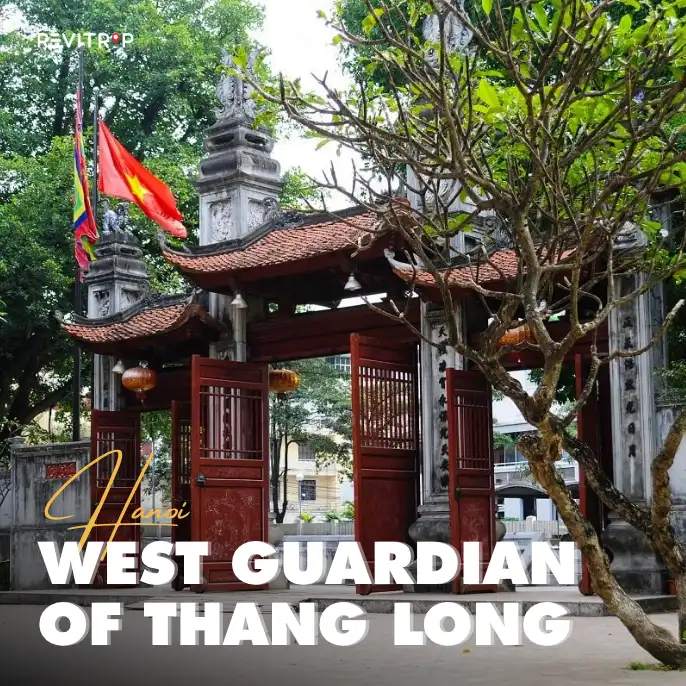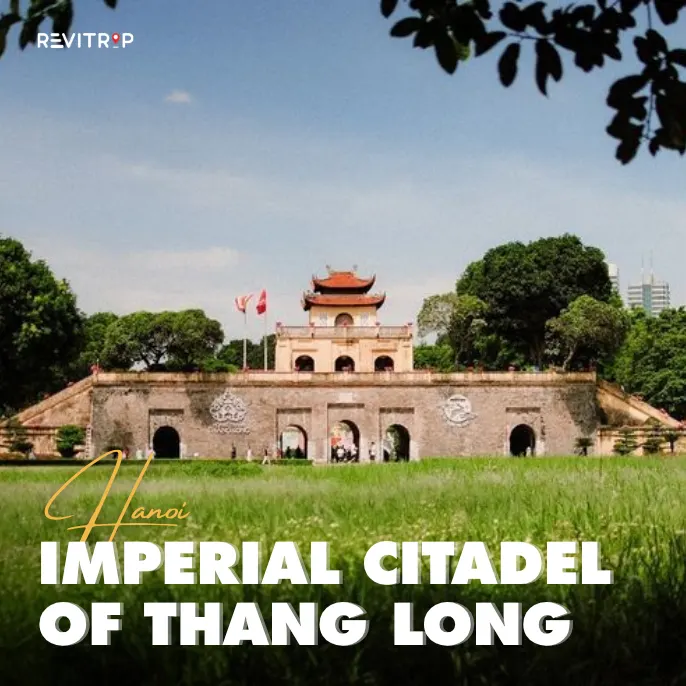
Thang Long Imperial Citadel sits in a part of Hanoi that many first-time visitors already pass through, but stepping inside changes the feeling of the city almost immediately. The traffic falls back, the space opens, and the capital begins to feel older, more formal, and more deeply rooted in its own history. This is not a remote monument on the edge of an itinerary. It lives right inside modern Hanoi, which is part of what makes it memorable. The central sector of the citadel was inscribed on the UNESCO World Heritage List in 2010, recognized for the long continuity of political power and cultural life held in the site across many centuries.
A heritage site woven into the capital
One of the nicest things about Thang Long Imperial Citadel is how little effort it takes to reach. The site is at 19C Hoang Dieu in Ba Dinh, close to several of Hanoi’s best-known landmarks, so it does not need to become a separate day trip. For foreign visitors staying around the Old Quarter, French Quarter, or Ba Dinh, it fits naturally into one morning without making the day feel overplanned. The citadel is also open daily from 8:00 AM to 5:00 PM, which gives it an easy rhythm for travelers who want one strong historical stop without having to leave the city early or return late.
That location also changes the mood of the visit. Some heritage sites feel detached from the places around them. Thang Long does not. It feels like a quieter layer of Hanoi still holding its ground inside the present city. You do not go there for one dramatic postcard view. You go there to understand that Hanoi was shaped slowly, over dynasties and centuries, and that much of what once stood at the center of power survives now in traces, foundations, gates, and archaeological depth. UNESCO describes the site as the seat of regional political power for almost thirteen centuries without interruption, beginning in the 11th century on the remains of an earlier Chinese fortress from the 7th century.
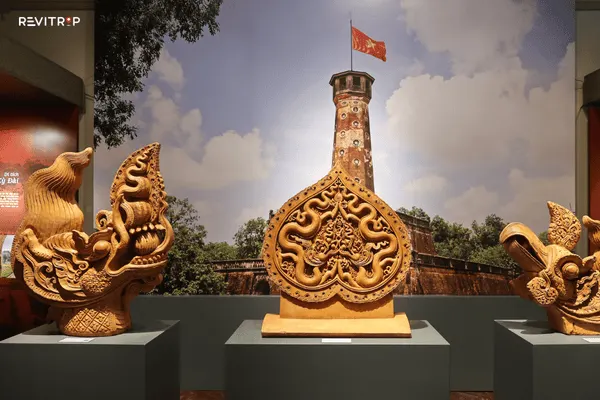
The kind of morning that suits the site best
For most travelers, morning is the best time to come. The grounds feel calmer, the light is softer, and the walking is easier before Hanoi’s heat begins to press down on open stone and courtyards. Thang Long is not physically demanding, but it is broad enough that comfortable shoes make a difference. This is not the kind of place you rush through in forty minutes. It usually sits best in about two to three hours, which gives enough time to move through the gates, spend a little longer around the archaeological remains, and let the site reveal itself at a slower pace.
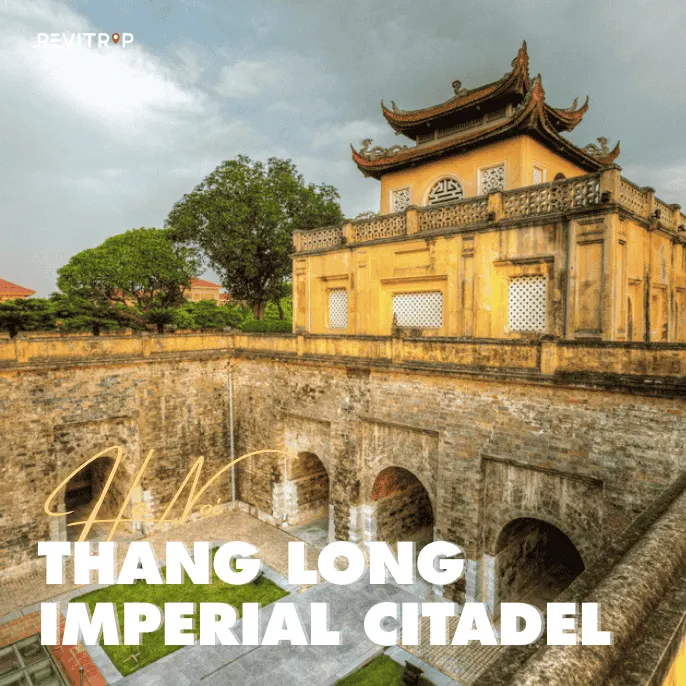
It also helps to arrive with the right expectation. Thang Long is not preserved like an untouched palace city. Part of its meaning lies in what has been excavated rather than fully rebuilt. That is why it often feels richer with a little context. The heritage center offers online booking and a smartphone-based guide system in multiple languages, including English, which makes the site easier to read for first-time visitors who want more than a surface-level walk through old walls and open grounds.
Tickets, timing, and the practical side
The practical part is refreshingly simple. The current official daytime ticket is 100,000 VND per person, which is roughly US$3.80 at recent exchange rates. Children under 16 enter free, and the official site also lists reduced rates for some eligible groups. For foreign visitors, that makes Thang Long one of the easiest major heritage sites in Vietnam to visit without much planning or cost. You can also buy tickets online in advance, which helps if you prefer to keep the morning clean and avoid dealing with payment at the gate.
There is also a separate evening experience at the citadel for people who want a more atmospheric version of the site, but for a first visit, daytime still works better. The layout is easier to understand, the historical layers are more legible, and the whole place feels more generous when seen in clear light. That matters here because so much of the site’s appeal comes from reading space, sequence, and continuity rather than from spectacle alone.
Reading the older layers of Hanoi
What gives Thang Long its force is not grandeur in the obvious sense. It is the accumulation of time. A gate here, a staircase there, an excavation below, a ceremonial axis still visible in the layout – all of it adds up to a site that feels less like a single monument and more like a long memory still held in the ground. It was the political center of several Vietnamese dynasties, and that continuity gives the citadel a different kind of weight from places that impress mainly through scale or ornament.
For foreign visitors, this is often where the site becomes more affecting than expected. Hanoi can be intense, fast, and layered in ways that are not always easy to read on a first trip. Thang Long helps with that. It makes the city’s long history feel more visible. You begin to see that the capital was not built all at once, but shaped and reshaped through centuries of rule, defense, ceremony, and change. In that sense, the citadel does something many heritage sites do at their best – it quietly reorganizes how the rest of the city makes sense afterward.
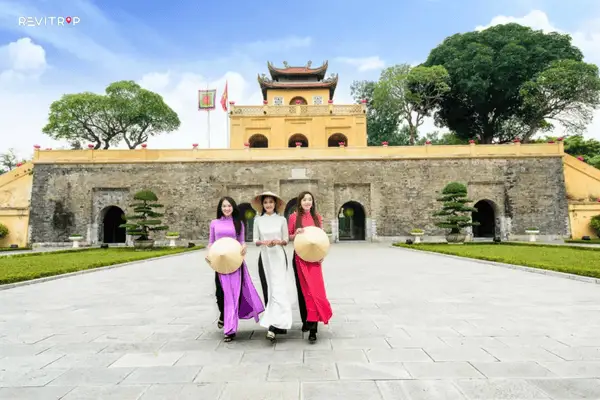
A route that feels natural for first-time visitors
Because the citadel sits in Ba Dinh, it is easy to fold into a wider route without forcing the day. A very natural plan is to start at Thang Long Imperial Citadel in the morning, then continue through the Ba Dinh area afterward, where several major landmarks sit close together. That keeps the first half of the day historical and measured, then leaves room later for lunch, coffee, or a return to the livelier rhythm of the Old Quarter. The site’s central location is one of its biggest strengths, especially for travelers who want depth without spending half the day in transit.
If you only have one full day in Hanoi, the citadel works well as the cultural center of that day. If you have more time, it becomes an easy half-day that adds historical depth without exhausting the itinerary. Either way, it does not need complicated planning. That simplicity is part of its charm. You do not need a tour bus or a long transfer. You only need a free morning, a pair of comfortable shoes, and enough unhurried time to let the place unfold properly.
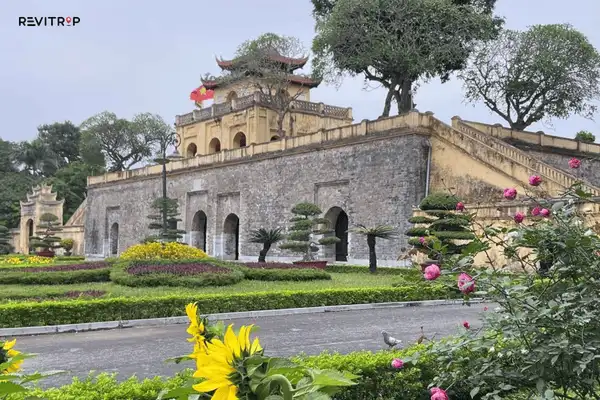
A quieter kind of significance
Thang Long Imperial Citadel stays with people in a quieter way than many heritage sites do. It is not romantic in the way a riverside old town can be, and not overwhelming in the way a huge palace complex can be. Its beauty is more restrained than that. It lives in open space, measured proportions, and the feeling that something important once stood here for a very long time. In the middle of Hanoi, where so much feels immediate and in motion, the citadel holds stillness unusually well.
For a first-time visitor, that is often enough to make it one of the most rewarding heritage stops in the city. It slips easily into a Hanoi plan, but once you are inside, it does not feel casual at all. It feels layered, formal, and deeply central to the story of the capital – a place where the city’s long memory is still visible if you give it a little time.
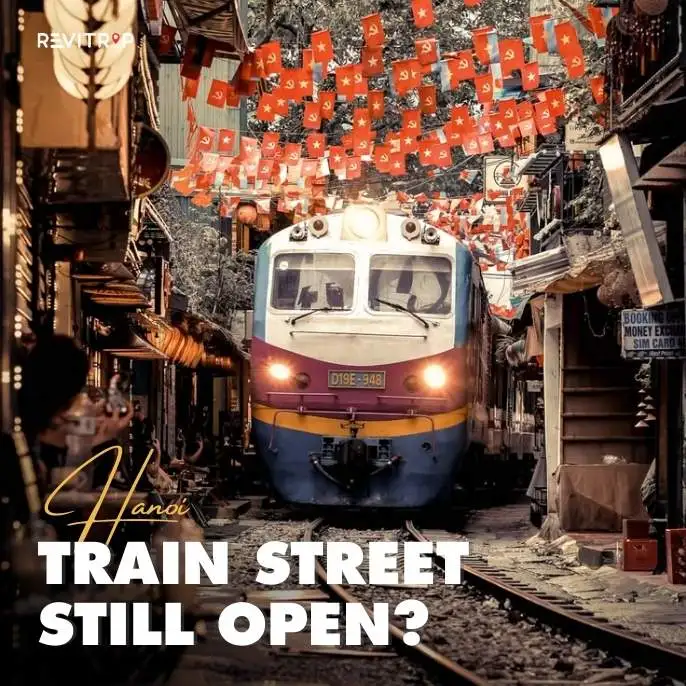
Thang Long Imperial Citadel shows one of Hanoi’s oldest and most formal layers. If you want to see how different the city can feel just a little later in the day, our Hanoi Train Street guide offers a complete contrast.
FAQ
The easiest way is to search the full address – 19C Hoang Dieu Street, Ba Dinh District, Hanoi – on Google Maps or your preferred map app. That will take you straight to the main heritage complex in central Hanoi.
The current official entrance fee is 100,000 VND per person for both Vietnamese and international visitors. Children under 16 can enter free, and some discounted categories are also listed by the heritage site.
The citadel was established in the 11th century and developed on top of earlier foundations, including remains linked to a Chinese fortress from the 7th century. Over time, it became the political heart of several Vietnamese dynasties, which is why the site feels so layered rather than tied to only one era.