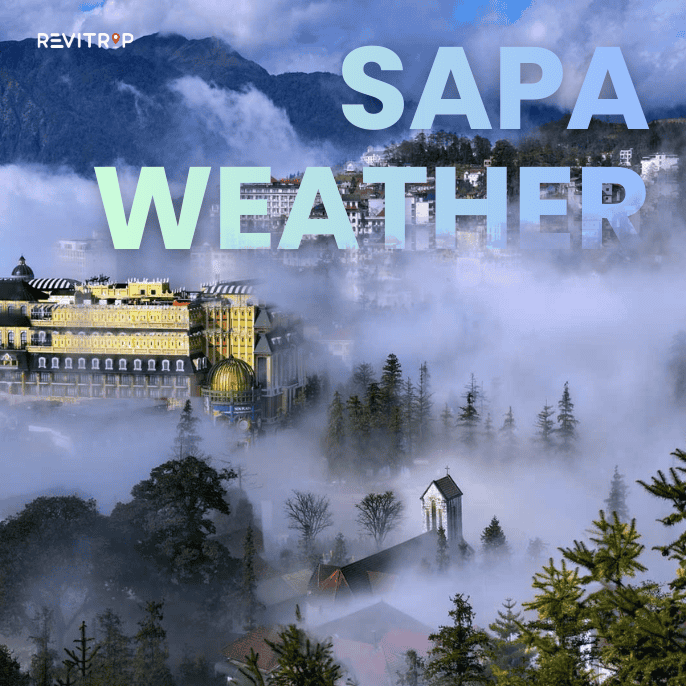
Sapa weather changes dramatically throughout the year, and picking the wrong month can genuinely ruin a trip.
I have seen travelers arrive in August expecting clear mountain views and spend three days in solid fog and rain. I have also seen people dismiss winter in Sapa.
Then they arrive in December and find frost-covered valleys. It is the most atmospheric scenery the town can offer. The difference between a great trip and a frustrating one usually comes down to one thing: knowing what to expect before you book.
Bottom line: October and November are the best months to visit Sapa. Spring (March to April) is the second-best window. Summer works if you plan around the rain. Winter is genuinely beautiful, but cold enough to catch people off guard.
Explore more: Fansipan Mountain: Complete Trekking Guide (2026)
Quick Facts: Sapa Weather Overview
- Elevation: 1,500 to 1,800 meters above sea level
- Average annual temperature: 15 to 18°C
- Coldest months: December and January (average below 10°C, possible frost)
- Hottest months: June to August (average 20 to 24°C, heavy rain)
- Best overall months: October, November, March, April
- Rainy season: June to September
- Snow: Rare but possible in December and January at higher elevations
- The reality: Sapa weather can deliver four seasons in a single day, especially in March. Always pack layers regardless of when you visit.
Sapa Weather Season by Season
Spring (February to May): Good Light, Changeable Days
Spring is one of the most popular windows for visiting Sapa, and for good reason. Temperatures climb from around 8 to 14°C in February to a comfortable 17 to 24°C by May. The hillsides come alive with blossoming flowers, and the air is clear enough for solid mountain views on most mornings.
March is particularly good for trekking. Average temperatures are around 15°C. The trails are dry. The light on the terraced fields is great for photos.
The tradeoff is that March brings unpredictable weather swings. Warm mornings can turn into cold, foggy afternoons within a few hours. Layers are not optional.
April and May bring warmer days but also the first hints of incoming monsoon. Some afternoon showers are common by May, though nothing close to the sustained rainfall of summer.
Best activity in spring: Fansipan Mountain trekking (March to April), village walks, cycling through the valleys.
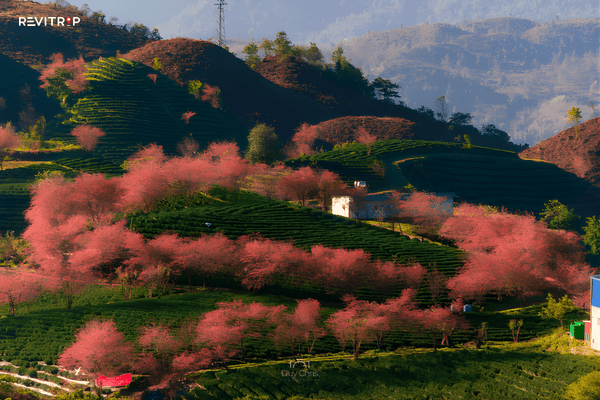
Summer (June to August): Lush but Wet
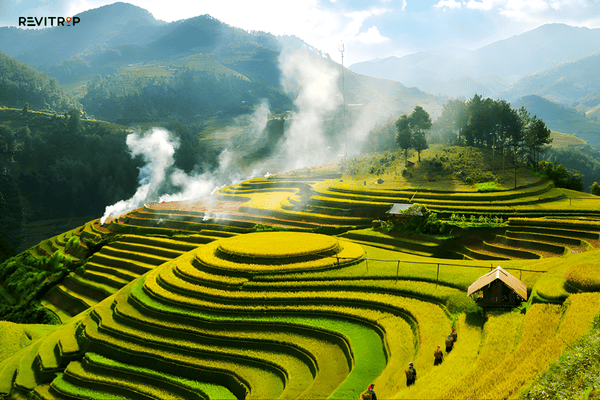
Summer in Sapa is genuinely beautiful from a visual standpoint. The terraced rice paddies fill with water and turn deep green. Ethnic minority farmers work the fields.
Flowers cover the lower valley slopes. Average temperatures hover around 20 to 24°C during the day, dropping to around 10 to 15°C at night.
The problem is the rain. June to August is the monsoon season. Sapa gets a large share of its yearly rain then. Rain falls on 20 or more days per month at peak.
Trails become slippery, some trekking routes are closed or dangerous, and cloud cover makes mountain views unreliable.
Flash floods and landslides are a real risk during summer, particularly in July and August. If you visit during this period, avoid trekking alone. Stay informed about local weather warnings. Add buffer days to your itinerary for weather delays.
Summer verdict: Worth visiting if you understand the conditions and adjust your activities accordingly. Not the right choice if clear mountain views are your main goal.
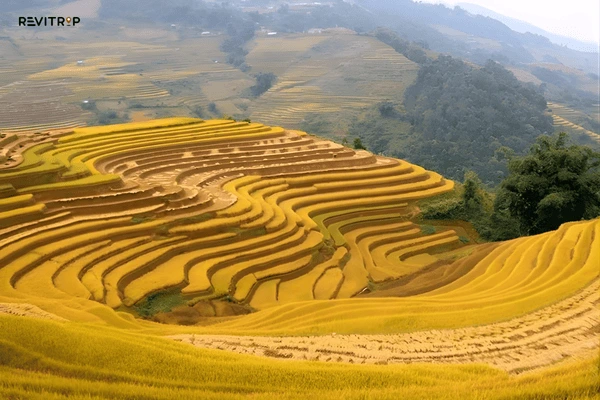
Autumn (September to November): The Best Time to Visit Sapa
This is the window most experienced travelers target, and it deserves the reputation.
September starts with some residual rain from the monsoon, but conditions improve significantly by mid-month. Daytime temperatures range from 20 to 24°C. Nights cool to around 11 to 13°C. Skies clear, giving some of the most consistent views of the year.
October is the rice harvest season. The terraced fields turn from green to gold across the hillsides around Sapa. The visual effect is genuinely extraordinary.
This is the most photographed and most visited month in Sapa for good reason. Expect crowds at popular viewpoints, and book accommodation at least a few weeks in advance.
November brings cooler temperatures (14 to 17°C average), lower humidity, and significantly fewer tourists than October. It also marks the start of cloud hunting season, when morning clouds settle in the valleys below Ham Rong Mountain. They create a surreal view unlike anything else in Vietnam.
Autumn verdict: October for the golden rice harvest, November for quieter trails and cloud photography.
Winter (December to January): Cold, Quiet, and Underrated
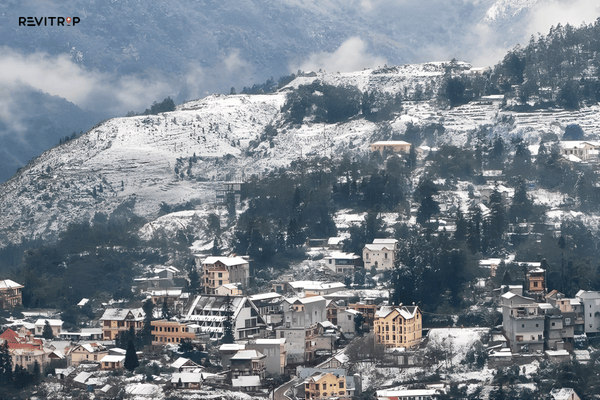
Sapa weather in winter catches most visitors off guard. December and January average between 8 and 10°C during the day. Nighttime temperatures occasionally dropping below 0°C at higher elevations.
Frost in the valleys is common in January. Snow falls on Fansipan Mountain and sometimes on the town. It usually happens once or twice each season.
This is low season, which means accommodation is cheaper, popular spots are quieter. This means you will have significantly more space on the trekking trails. The December Winter Festival features traditional costumes and performances by local ethnic groups. It is one of the most authentic cultural events of the year.
The main downside is the cold and the fog. Misty mornings persist through both months, and low visibility can last for days at a time. Pack proper winter layers, a waterproof outer shell, and thermal underlayers.
Winter verdict: Underrated and worth considering for travelers who do not mind cold. The atmosphere is unique and the crowds are minimal.
Sapa Weather by Month: Quick Reference
January: Below 10°C average, light rain, minimal crowds, possible frost. Good for Cat Cat Village and budget travel.
February: 8 to 14°C, foggy mornings, good for hiking. Start of spring flowers by late month.
March: Around 15°C, unpredictable but generally good. Best month for Fansipan Mountain trekking.
April: Around 17°C, some afternoon showers, excellent for outdoor activities and Muong Hoa Valley walks.
May: 16 to 24°C, warming up, first monsoon showers arriving. Good for Ta Phin Village visits.
June: Around 21°C, rain increasing, plum picking season along the O Quy Ho Pass road.
July: 18 to 24°C, frequent rain, lush landscapes. Festivals happening but weather is unpredictable.
August: Around 20°C, heavy rain on most days, best rice paddy scenery but difficult trekking conditions.
September: 20 to 24°C, improving conditions from mid-month, good for hiking and valley exploration.
October: 13 to 25°C, golden rice harvest, best overall month. Book early as this is peak season.
November: 14 to 17°C, cool and clear, low crowds, excellent for cloud hunting at Ham Rong Mountain.
December: 8 to 10°C, cold and misty, possible snow, Winter Festival, good value on accommodation.
[IMAGE: sapa-weather-monthly-comparison-seasons.jpg] Alt text: “Sapa weather across four seasons showing spring flowers, summer rice fields, autumn harvest, and winter frost”
What to Pack for Sapa: Season by Season
Spring and autumn: Light layers, waterproof jacket, comfortable hiking shoes, one warm layer for evenings.
Summer: Waterproof jacket (essential), quick-dry clothing, insect repellent, solid grip trekking shoes.
Winter: Thermal base layers, heavy fleece or down jacket, waterproof outer layer, gloves, warm hat, thick socks.
Year-round: Sunscreen (the UV at elevation is stronger than it feels), a small daypack, and an offline map since mobile coverage is unreliable on the trails.
Final Verdict: When to Visit Sapa
For first-time visitors, October is the single best month. The combination of clear Sapa weather, the rice harvest scenery, and comfortable temperatures is hard to beat.
For repeat visitors or travelers who prefer quieter trails, November and March offer almost the same quality with significantly fewer crowds.
For budget travelers willing to deal with cold, January and February offer the best prices and a genuinely atmospheric version of the town that most tourists never see.
Avoid July and August unless you are specifically interested in the green rice paddy scenery and have no plans to trek.
FAQ
Sapa is coolest from December to February, warms up from March to May, turns humid and rainy from June to August, then becomes clearer and drier again in September to November. Month-to-month conditions shift fast in the mountains, so check the forecast close to your travel date.
Snow in Sapa is rare, but it can happen during strong cold spells in late December to February, usually on higher elevations. When it does snow, it’s often light and doesn’t last long.
Sapa has a mountain climate with cool temperatures year-round, plus a clear split between a rainy season (roughly summer) and a drier season (roughly fall to early spring). Expect misty mornings and quick weather changes in any season.
Booking Hotels/ Attractions Tickets/ Tours near: Klook
Booking train, bus, private car: Bookaway
Buy Audio Guide: Izi Travel