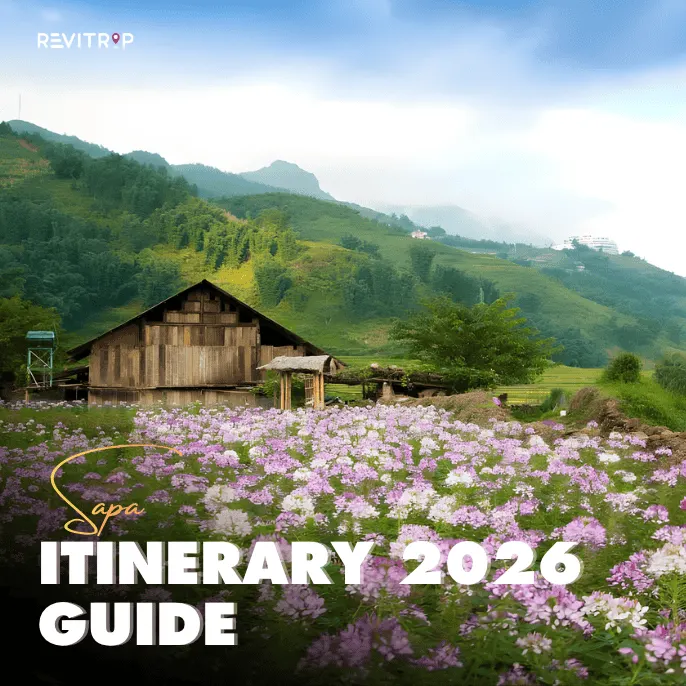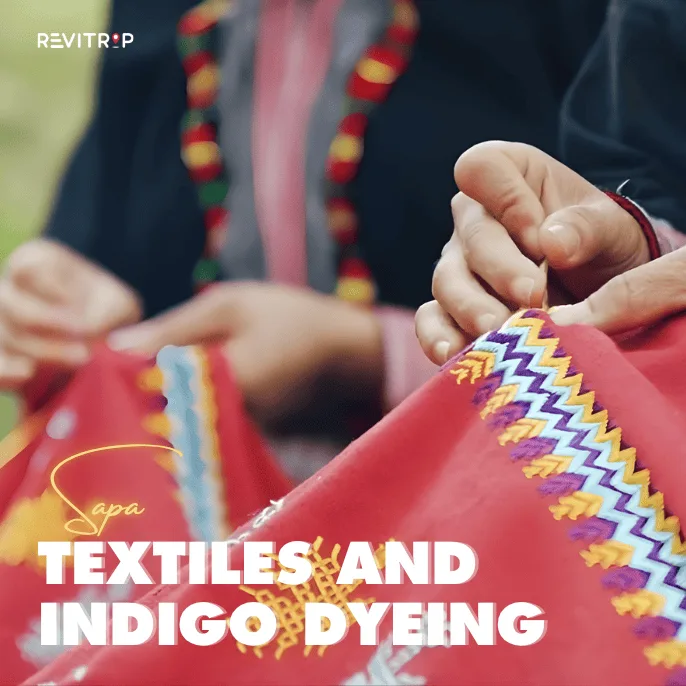
Sa Pa stays in people’s minds through texture as much as scenery. Mist settles over the valley in the early morning. Terraces hold their quiet lines along the mountain. Indigo cloth dries outside wooden houses, moving lightly in the cold air. In places like Lao Chai, Ta Van, and Giang Ta Chai, the mood of the landscape is carried not only by the land, but by the people who have lived with it for generations. Sa Pa is home to several ethnic communities, including H’Mong, Red Dao, Giay, Tay, and Xa Pho, and villages in Muong Hoa Valley are especially associated with H’Mong, Red Dao, and Giay life.
That’s where Sa Pa’s textile traditions truly come to life. They are part of daily rhythm rather than display. Women weave, embroider, dye, and finish cloth in ways that are tied to family life, identity, and memory. These traditions sit naturally within Vietnamese cultural heritage – not as something distant or staged, but as a living practice. The H’Mong in Sa Pa continue to make much of their clothing themselves, while Red Dao dress remains distinctive for its red headgear, indigo tones, and detailed embroidery.
Where the Pattern Begins
In Sa Pa, cloth begins long before it becomes clothing. Among H’Mong communities, women have passed traditional textile work down through generations, using locally sourced hemp, flax, and cotton. The process includes growing or gathering fiber, preparing thread, weaving fabric, and dyeing it with color taken from natural plants and grasses.
The finished piece carries more than decoration. It holds time, skill, and repetition. A skirt, blouse, headscarf, or embroidered panel is not simply made and worn. It is built slowly, by hand, through habits that have stayed close to mountain life for a very long time. In Sa Pa, textile work belongs to the place as deeply as the terraces do.
Indigo in the Mountain Air
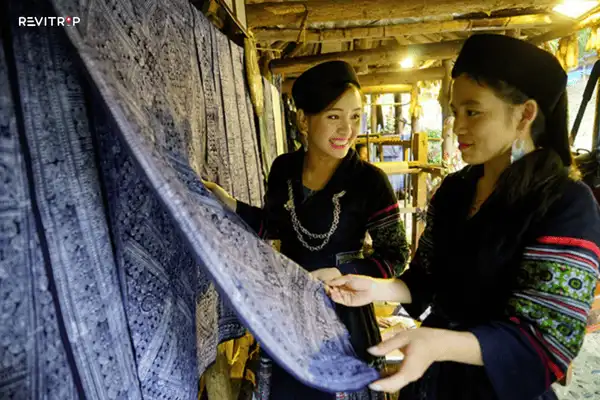
Indigo is one of the clearest signatures of Sa Pa’s textile traditions. In villages from Ta Van to Giang Ta Chai, Lao Chai, Hau Thao, and Cat Cat, indigo dyeing remains closely tied to the cultural identity of ethnic communities such as the H’Mong. Local tourism sources describe the dye as something made from leaves, worked patiently in wooden vats, and still practiced as part of village life rather than separated from it.
The color belongs here – it settles into Sa Pa as naturally as the hills and mist. Deep blue sits naturally against cold weather, mountain shadows, dark timber houses, and wet earth after rain. When artisans dip the fabric into the vat, it comes out green at first, then slowly deepens in the air. In Ta Van, local people make the dye from indigo leaves, limestone, and water, then leave the cloth to dry in the open mountain air.
My rule is simple: when you see indigo here, don’t think of it as a souvenir first – see it as part of the landscape.
The Language of Brocade
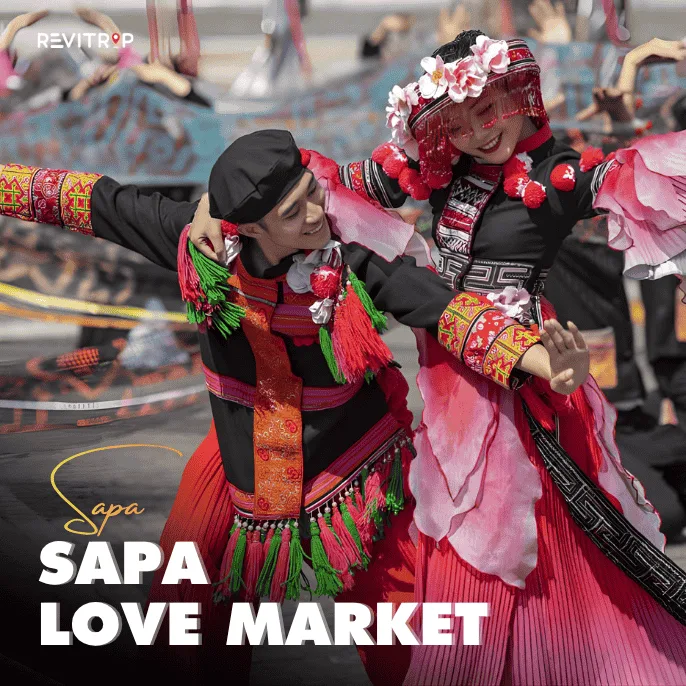
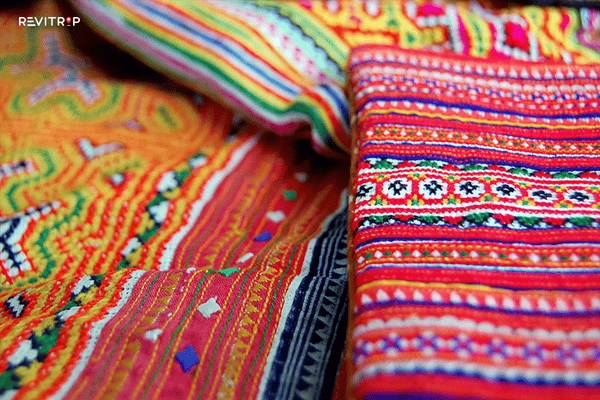
Sa Pa’s brocade is beautiful on sight, but it is not only about color. The patterns carry their own rhythm. H’Mong weaving is for elaborate designs, and local descriptions note motifs drawn from flowers, animals, geometric forms, and everyday life. Red Dao clothing also includes symbolic details, with patterns inspired by birds, the sun, trees, and traces of animal life.
What makes these textiles so memorable is the way they feel both precise and alive. Nothing about them reads as generic. A piece of fabric can hold the memory of seasons, household skill, visual identity, and a way of seeing the world. In Sa Pa, brocade does not sit apart from culture. It is culture made visible – worn on the body, carried into festivals, and folded into ordinary days at home.
What Red Dao Dress Carries
Among the many textile traditions in Sa Pa, Red Dao clothing leaves one of the strongest visual impressions. Local descriptions emphasize the bright red headgear of women’s dress, set against black and deep indigo tones, with natural colors derived from forest plants. A complete women’s outfit traditionally includes a shirt, trousers, belt, plastron, and richly detailed jewelry and accessories, while the men’s clothing is simpler and often centered on black and indigo.
There is patience inside that beauty. The fabric must be dyed carefully, sometimes multiple times, before embroidery is added. Mothers usually pass these skills to their daughters from an early age, which keeps clothing-making closely tied to family memory rather than detached workshop production.
Textiles are only one part of Sa Pa’s living culture, and local traditions feel fuller when you start noticing how clothing, ritual, and community life still meet.
The Villages Where It Still Feels Close
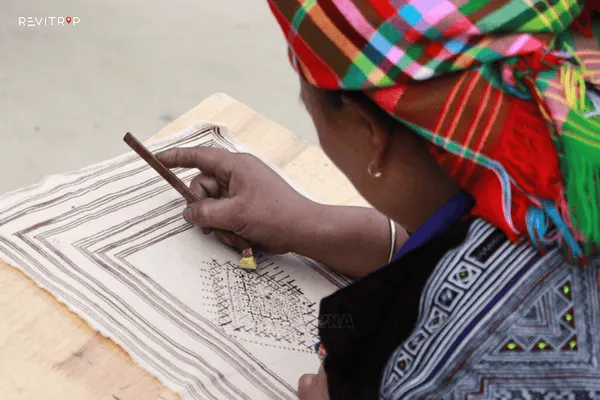
Ta Van is one of the easiest places to feel how naturally textile work still belongs to everyday life. Local tourism descriptions note that people in the village continue to work in the fields during the day and return home to knit and weave cloth in the evening. The same area also hosts hands-on experiences with beeswax painting and indigo dyeing, where visitors can watch people draw patterns before dipping the cloth into natural blue dye.
And that sense of closeness lingers longer than any single demonstration.The most memorable part is often not the workshop table itself, but the fact that the craft still sits inside village rhythm – alongside farming, cooking, walking home before dark, and the ordinary pace of mountain life. Sa Pa feels strongest when people keep culture close to its setting, and textile traditions still hold that sense of belonging.
How to Take It In With Respect
If you want to understand this part of Vietnamese cultural heritage in Sa Pa, slow down enough to see where the cloth comes from. Go beyond the market stall if you can. Spend time in villages like Ta Van or Lao Chai. Notice which garments people still wear naturally and which ones makers now produce mainly for visitors. Pay attention to texture, stitching, and color before you reach for your camera. Local tourism information also notes that Ta Van has resisted becoming overly industrialized, which is part of what keeps the experience calmer and more grounded.
Buying handmade textiles can be meaningful, but only when you approach it with care. Ask who made the piece. Ask what the pattern means if the maker is open to sharing. Do not bargain so aggressively that the craft becomes reduced to a prop. In a place like Sa Pa, respect often shows up in the smallest gestures. Those matter more than any performance of cultural interest.
A Softer Way Into Vietnamese Cultural Heritage
There are many ways to think about Vietnamese cultural heritage. Some are monumental. Some are ceremonial. In Sa Pa, it often arrives through cloth, color, and the quiet repetition of work done by hand. Brocade and indigo dyeing hold a kind of memory that stays close to the body and close to the land.
That is what makes this part of Sa Pa worth seeking out. The traditions do not need dramatic framing. They already belong to the mountain, the villages, and the long life of the valley. Once you begin to notice them, they become part of how Sa Pa feels – not added on top, but woven all the way through.
If you are coming to Sa Pa for more than scenery alone, planning the journey well makes it easier to spend real time in the valleys and villages.
FAQ
Indigo dye in Vietnam is a traditional natural dye made from plant leaves and used widely in ethnic textile-making, especially in mountain regions like Sa Pa. It gives fabric that deep blue tone that feels so closely tied to village life, handmade cloth, and traditional dress.
Hmong indigo is well known because it plays such a central role in traditional clothing and textile-making. In Sa Pa, indigo is not only a color choice. It is part of a longer craft process that connects fabric, identity, and everyday life in the mountains.
Indigo dye comes from indigo-producing plants whose leaves are processed to create natural blue pigment. In Sa Pa, local dyeing traditions use those leaves along with other natural ingredients before the cloth is left to dry in the mountain air.