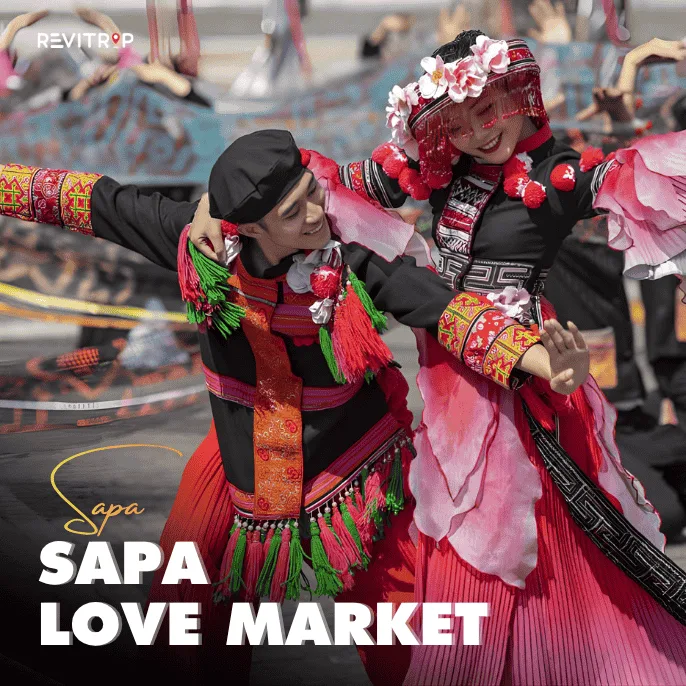
Every Saturday evening, the main square in front of the Stone Church fills with flutes, laughter, and the color of traditional highland costumes. This is the Sapa Love Market, one of the most distinctive cultural events in northern Vietnam and the most atmospheric thing to do in Sapa at night.
The market has roots in an annual tradition where young men and women from Hmong, Dao, and other ethnic minority communities gathered to meet, perform music, and express affection through dance. Today it runs weekly and welcomes visitors alongside locals, offering a direct window into highland culture that few evening events anywhere in Vietnam can match.
Bottom line: Go on a Saturday, arrive by 8pm for a good spot near the square, and stay until 10pm to catch the full cultural program. If you want a guided experience, book a Sapa evening tour that includes the Love Market alongside a local dinner.
Quick Facts: Sapa Love Market
- Location: Sapa Town Square, in front of the Stone Church
- Day and time: Every Saturday evening, from approximately 8:00 PM
- Cultural showcase: “Diem Hen” event at Van Hoa Park, 9:30 PM to 11:00 PM on Saturdays
- Admission: Free to attend the square; cultural park events may charge separately
- Best season: November to April for cold-weather atmosphere and best traditional dress
- Nearby: Stone Church (190m), Sapa Culture Museum (550m), Cat Cat Village (2.1km)
History of the Sapa Love Market
The term “Love Market” came from travelers in the late 20th century, but the tradition behind it runs much deeper. Originally, this gathering happened just once a year, following the customs of local ethnic minority groups. Young men and women waited an entire year for the chance to confess feelings or reconnect with someone special.
In those earlier forms, the market started in the morning and ran through the evening, filling with music, shared meals, and village-to-village conversations. People ate thang co together, passed bottles of corn wine, and traded goods alongside the more personal exchanges. Over time, the weekly format developed to serve both the local community and the growing number of visitors coming to Sapa.
What Happens at the Sapa Love Market
The Cultural Traditions
At the Sapa Love Market, young men arrive in indigo or brocade garments and carry bamboo flutes or bottles of homemade corn wine. Young women wear vibrant embroidered costumes adorned with silver jewelry, headpieces, and small woven baskets. Both groups gather in clusters around the square, and the interactions that follow follow a clear traditional script.
When a boy spots someone he admires, he plays the khen or flute and begins to dance. If the girl shares the feeling, she opens her umbrella and joins him. That gesture of the open umbrella is the traditional signal of mutual interest. Through music, glances, and careful movement, the courtship unfolds in public view.
In addition to the organic gatherings around the square, the formal “Diem Hen” cultural showcase at Van Hoa Park runs from 9:30 PM to 11:00 PM on Saturdays. This curated program recreates the highland weekend market with traditional costumes, folk music, dance performances, and artisan stalls in a more structured setting.
Shopping and Souvenirs
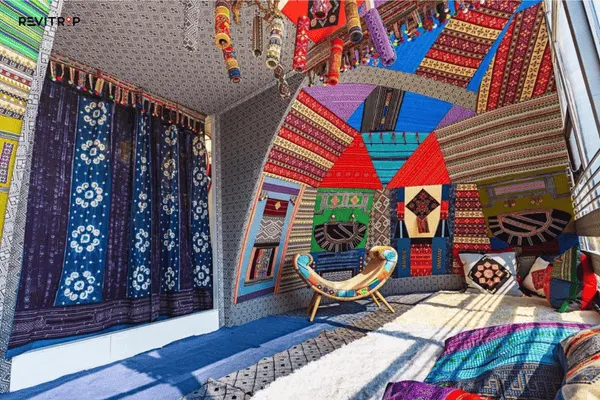
Beyond the cultural performances, the Sapa Love Market draws visitors with a strong selection of handmade goods. Local artisans sell hand-embroidered bags, scarves, traditional clothing, silver bracelets, and woven textiles directly from stalls around the square. Each item reflects the craft traditions of the Hmong, Dao, and Nung communities. Prices are negotiable, and asking the cost before agreeing is standard practice.
Food at the Market
The Sapa Love Market also brings together some of the best street food in the town. As one of the primary things to do in Sapa at night, the food experience alone justifies the visit. Key dishes available around the square include:
Thang co: Horse meat stew slow-cooked with over 20 herbs and spices. The most emblematic dish of highland Hmong culture, traditionally eaten with corn wine.
Com lam: Sticky rice cooked inside bamboo tubes over open coals. Best eaten with grilled pork or chicken alongside.
Five-color sticky rice (Xoi ngu sac): Glutinous rice dyed with natural plant pigments in five colors. Each color carries symbolic meaning within ethnic minority tradition.
Men men: Steamed cornmeal porridge, the Hmong staple grain. Simple, filling, and genuinely specific to this region.
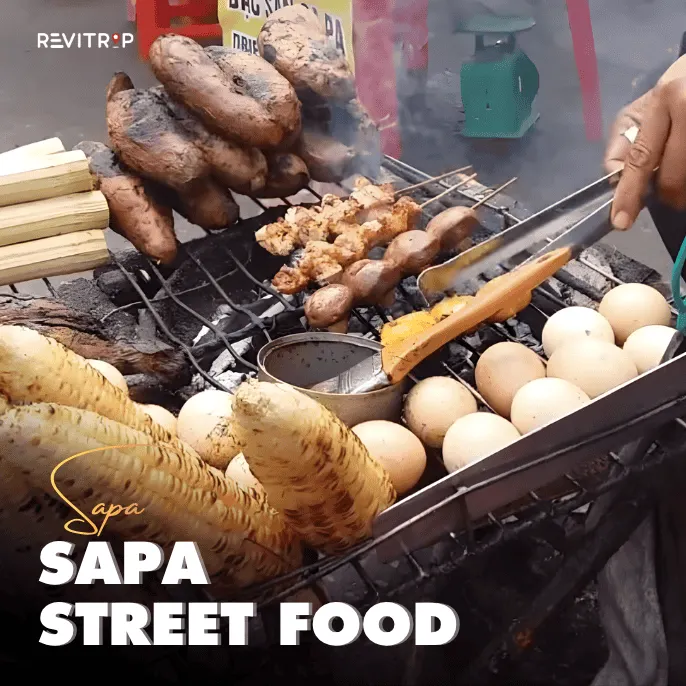
Grilled corn and sweet potatoes: The most widely available hot snack at the market and the right choice on a cold Saturday night.
Wild apple wine (Ruou tao meo): Tangy, aromatic, and fermented from highland apples. One of the most distinctive drinks in the Sapa street food scene.
Best Time to Visit the Sapa Love Market
The Sapa Love Market runs every Saturday regardless of season, but the experience changes significantly depending on when you visit.
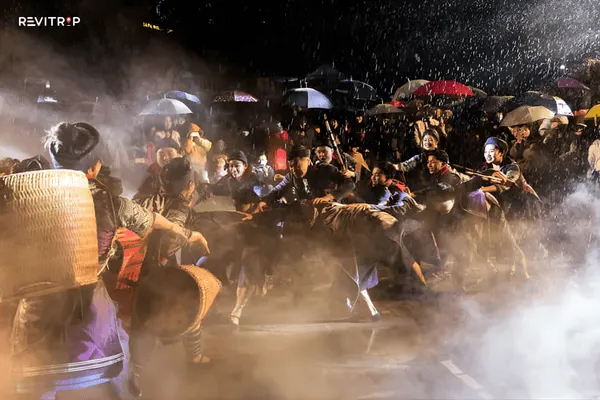
November to April offers the best atmosphere. Cold mountain air, occasional mist or light rain, and the sight of vendors and performers in full highland dress around glowing food stalls create a setting that photographs cannot fully capture. Furthermore, this window overlaps with the spring festive season from January to March, when traditional clothing reaches its most elaborate and colorful.
May to October is warmer and wetter. The market still runs, but the misty, cold-night atmosphere that defines the Sapa Love Market at its best is less reliable during these months. If you visit in summer, go early in the evening before the afternoon rain carries over into nighttime.
How to Get to the Sapa Love Market
The market takes place at Sapa Town Square, which sits within easy walking distance of most hotels in the central area. From Sapa Bus Station, head southeast on Luong Dinh Cua Street, turn right onto Ngu Chi Son Street, continue to Xuan Vien Street, then turn left onto Thach Son Street. The walk takes about 20 minutes. By motorbike or taxi, the same journey takes 5 to 10 minutes.
For visitors arriving from Hanoi on the same day, book a sleeper bus or VIP cabin transfer from Hanoi to Sapa that arrives in the early afternoon, giving you time to check in and reach the square by evening.
Nearby Attractions to Combine with the Market
Sapa Stone Church (190 meters): A French colonial Gothic church dating to the early 20th century. The lit facade at night makes it one of the best photography spots in Sapa alongside the Love Market.
Sapa Culture Museum (550 meters): Houses displays on the clothing, musical instruments, and daily traditions of the local ethnic minority communities. Worth visiting in the afternoon before the market begins to add context to what you see later in the evening.
Cat Cat Village (2.1 km): An H’Mong village with stone paths, folk music, and waterfalls. Book a Cat Cat Village guided tour in the afternoon and combine it with the Love Market the same evening.
Practical Tips for First-Time Visitors
Arrive by 8pm. The square fills quickly on Saturday evenings, and the best viewing positions go to early arrivals. Moreover, the food stalls are at their busiest and most fully stocked in the first hour.
Avoid Hmong or Dao-style costumes if you are a woman. Wearing traditional ethnic minority dress as a tourist can create unintended confusion during certain cultural reenactments. This is a specific safety consideration rather than a general fashion note.
Confirm prices before buying. Bargaining is standard at the market stalls, but always ask the price first. This applies to food, souvenirs, and any activity that involves a fee.
Keep your belongings secure. Large crowds and low lighting create the conditions for petty theft. Keep bags in front and phones in pockets rather than displayed.
Use an audio guide for Sapa during your walk to and from the market to add historical context to what you observe along the route.
FAQ
It’s worth it if you want a cultural night vibe and don’t mind crowds, but it’s more of a small local gathering + tourist spectacle than a big “market.” Reviews are mixed because the atmosphere depends heavily on the day, season, and how busy Sapa is.
Go for hot, simple street food like grilled skewers, corn, sweet potatoes, and warm drinks because everything is best eaten fresh. Stick to stalls cooking in front of you and avoid anything that’s been sitting out.
Cat Cat Village is the most famous, easiest-to-reach village walk from Sapa town, known for photo spots, views, and a waterfall path. Plan about 2–3 hours, and go early to avoid the biggest crowds.