Sapa sits at over 1,500 meters above sea level in the mountains of northwest Vietnam. More than just altitude, that elevation shapes everything: the climate, the farming, the livestock, and most importantly, the food. Sapa local food is not simply Vietnamese food with a mountain backdrop. Rather, it is a distinct culinary tradition rooted in the cooking of the Hmong, Red Dao, and other ethnic minority communities who have lived in this landscape for generations.
You will not find the best food in Sapa in the tourist restaurants along the main strip. Look instead at the Saturday market, in rustic eateries with brick fireplaces, at street food stalls that open before sunrise, and in the homes of people who have been cooking the same dishes for decades.
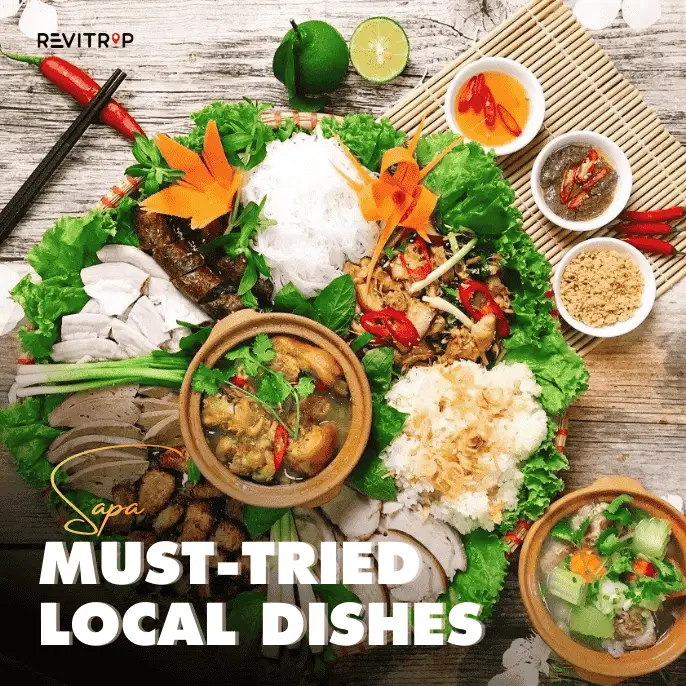
Specifically, this guide covers five essential Sapa local food dishes, what makes each one worth trying, and where you are most likely to find them.
Bottom line: Start your Sapa food tour with com lam from a market stall and thang co from Thang Co A Quynh restaurant. Those two dishes alone give you a better understanding of northwest Vietnamese food culture than any cafe menu in the town center. Listen to the Sapa audio guide as you eat your way through the markets.
Quick Overview: Must-Try Sapa Local Food
| Dish | Type | Best Setting |
|---|---|---|
| Thang co | Horse meat soup | Restaurant, Bac Ha market |
| Com lam | Bamboo tube sticky rice | Street vendor, market stall |
| Cap nach pork | Grilled highland pork | Market, grill restaurants |
| Salmon and sturgeon hotpot | Fish hotpot | Restaurants |
| Men men | Corn porridge | Local homes, market stalls |
1. Thang Co: The Most Iconic Sapa Local Food
Thang co is the dish most closely associated with Sapa local food culture. Specifically, it is a Hmong specialty built from horse or buffalo meat, bones, and offal, slow-cooked for hours in a large open pan with over 20 herbs and spices including star anise, cardamom, cinnamon, and ginger. As a result, the broth turns rich, dark, and deeply savory.
The smell of thang co simmering over an open fire is one of the defining sensory experiences of any Sapa food tour, particularly on a cold day. At first, the flavor hits with a slight bitterness from the herbs, but that bitterness quickly gives way to a warming, complex depth. Traditionally, cooks pair thang co with corn wine, which also goes into the cooking as an ingredient.
For visitors who have never eaten offal or are unfamiliar with horse meat, thang co requires an open mind. Even so, the dish makes complete sense in its context: a high-calorie, warming meal built from the whole animal, designed for people who work physically hard in cold mountain conditions.
Where to find it: Thang Co A Quynh on Thach Son Street is the most established place in Sapa town. Alternatively, Bac Ha market on Sundays offers the most atmospheric setting, where locals eat thang co communally from large shared pots.
2. Com Lam: Bamboo Tube Sticky Rice
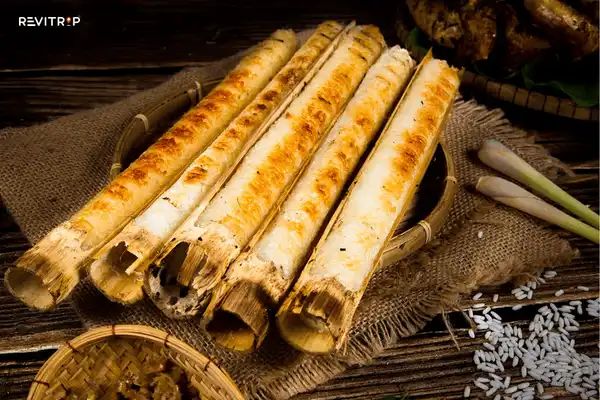
Com lam is the most accessible Sapa local food for first-time visitors. In particular, it appeals because it is simple, inexpensive, and immediately satisfying. Vendors pack glutinous rice into a section of bamboo with a piece of banana leaf, then slow-roast the tube over hot coals until the rice cooks through. The result is sticky, fragrant rice that carries the subtle flavor of bamboo in every grain.
During cooking, the outside of the bamboo chars and blackens. When you crack it open, the rice inside retains a gentle smoky sweetness from the wood. Beyond the rice itself, vendors usually pair com lam with salted roasted peanuts, grilled pork skewers, or grilled chicken. That combination of aromatic rice and charred meat makes it one of the most satisfying quick meals on any Sapa food tour.
You will find com lam at market stalls, street vendors near the town square, and at most surrounding village markets. For the best experience, eat it hot and directly from the bamboo tube.
Where to find it: Any Sapa market or street food stall near Sapa Square. Both the Saturday night market and the Bac Ha Sunday market have multiple com lam vendors.
3. Cap Nach Pork: Sapa’s Highland Pig
Cap nach pork is one of the most prized ingredients in Sapa local food. More specifically, the name refers to a small-breed pig that farmers raise free-range in the forests and fields of the highlands. Compared to commercially raised pigs, these animals are leaner and more muscular, with denser and more flavorful meat that carries noticeably less fat.
At local markets, you will see vendors carrying whole cap nach pigs by their front legs, which is actually how the dish got its name. Cooks prepare the meat in multiple ways: steamed, stir-fried, or pan-fried. However, the best preparation is over charcoal, which produces a lightly crispy outer layer and keeps the interior juicy and tender.
Beyond the texture, cap nach pork develops a distinctive aroma during cooking that differs sharply from lowland pork. The flavor is cleaner, and the meat holds its texture better under heat. For this reason, experienced travelers to Vietnam consistently single it out as one of the Sapa local food dishes unlike anything they have eaten elsewhere in the country.
Where to find it: Morning markets in Sapa and surrounding ethnic minority villages. Local restaurants that specialize in highland cooking also grill cap nach pork throughout the day.
4. Salmon and Sturgeon Hotpot: A Cold Weather Essential
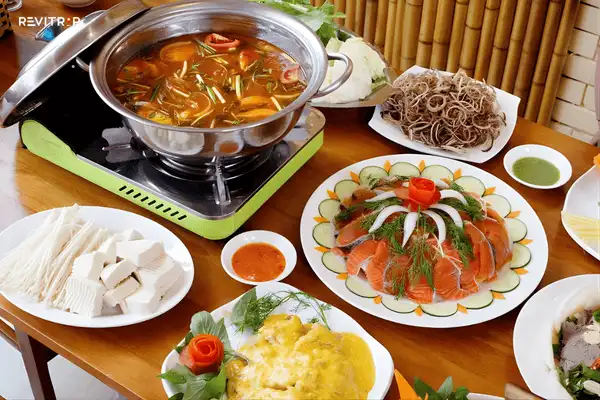
The cold mountain climate of Sapa makes hotpot the natural format for a substantial meal. In particular, salmon and sturgeon hotpot stands out as the most popular fish-based Sapa local food and one of the few dishes on this list that works equally well in a casual family restaurant and in a more upscale setting.
Sapa’s salmon and sturgeon grow in the cold, clear mountain streams of the region. Because of that cold water, the fish develop firm, dense flesh and a clean flavor that holds up well to the hot and sour broth. Cooks build the hotpot base from fish bones, fresh vegetables, and local mushrooms, then you add the raw fish directly to the simmering pot at the table.
On a cold evening from October to February, when the mountain air drops to near-freezing overnight, a salmon or sturgeon hotpot becomes the ideal Sapa food tour meal. Moreover, the contrast between the cold air outside and the hot, fragrant pot at the center of the table makes it one of the most satisfying experiences Sapa local food has to offer.
Where to find it: Most mid-range and upper-range restaurants in Sapa offer salmon hotpot. Thang Co A Quynh includes it on their expanded menu, and Hill Station Signature Restaurant also serves fresh local salmon as part of their broader highland menu.
5. Men Men: Hmong Corn Porridge
Men men is both the most everyday dish in Hmong households and the least-known Sapa local food among visitors. After the corn harvest, Hmong cooks grind dried maize into coarse cornmeal, mix it with water, and steam or pan-cook the mixture until it forms a thick, grainy porridge. The flavor is mildly sweet with an earthy corn undertone.
Above all, men men is sustaining food. Hmong families eat it as a staple grain in the same way that lowland Vietnamese eat rice. In the Hmong diet, people pair men men alongside pumpkin soup or bone broth, or eat it with chili sauce and fresh herbs. Compared to rice porridge, the texture is denser and the flavor more robust.
On a Sapa food tour, finding men men requires a bit of effort. Tourist restaurant menus do not carry it. Instead, look for village markets and roadside stalls run by Hmong vendors, since those are the most reliable places to try it. In particular, the Bac Ha market on Sundays offers one of the best opportunities to eat men men in a genuinely local context.
Where to find it: Village markets, particularly Bac Ha on Sundays and Can Cau on Saturdays. Hmong community homestays sometimes include men men as part of a traditional meal.
Tips for Your Sapa Food Tour
Go to the markets. The best Sapa local food lives at the markets, not in the restaurants on the tourist strip. In particular, Sapa Saturday night market and Bac Ha Sunday market give you direct access to com lam, thang co, grilled meats, and sticky rice in a genuine setting.
Book a ride to Bac Ha the night before – the market starts early and the drive takes over an hour from Sapa town.”
Eat in the morning. Many of the best local food vendors in Sapa open early and sell out by mid-morning. Therefore, arrive before 8am at market stalls and local noodle shops for the best selection.
Order the things you cannot recognize. The dishes on
this list exist outside the standard tourist menu. In fact, if something on a menu or market stall looks unfamiliar, that is usually a sign it is worth trying.
Pair corn wine with thang co. Corn wine is the traditional accompaniment to thang co, and the combination makes more sense together than either does separately.
Visit in cool weather. October to February is the best window for Sapa local food. During those months, the cold temperatures make the warming dishes, particularly thang co and salmon hotpot, taste noticeably better than they do in summer.
FAQ
Look for salmon or sturgeon hotpot, grilled pork skewers, black chicken, bamboo-tube rice (cơm lam), and seasonal mountain vegetables. If you see clear pricing and “by portion” options (not vague “market price”), that’s usually a good sign.
Choose places that specialize in a few Sapa staples rather than huge mixed menus, and aim for busy dinner hours when ingredients turn over fast. Around the Stone Church and the lake area, you’ll find plenty of reliable local spots within walking distance.
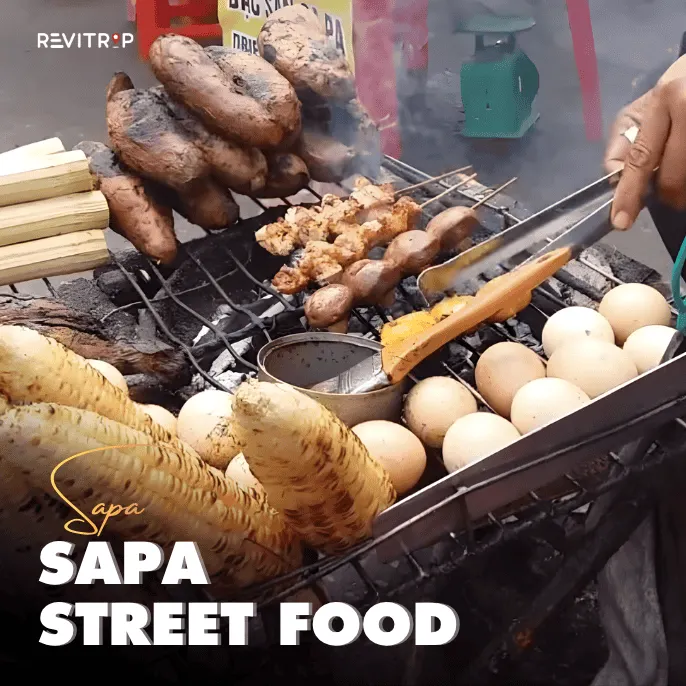
Start with the grilled stalls at night (skewers, corn, eggs, sweet potatoes) because everything is cooked hot in front of you. Go early in the evening for the best selection and shorter lines.