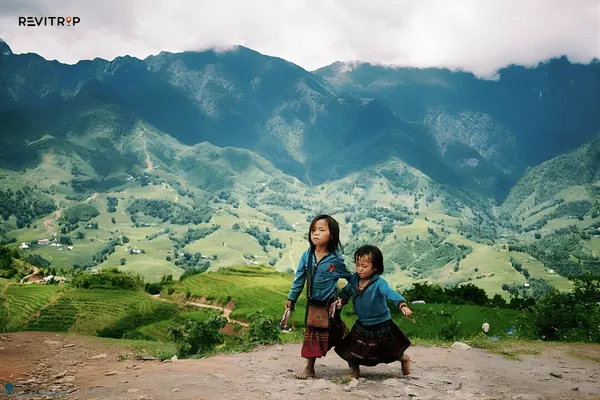
Sa Pa is often remembered through weather first. The cold air in the morning, the terraces holding light after rain, the valley opening slowly beneath a layer of mist. But the feeling of the place does not come from scenery alone. It also comes from the long human presence written into the land.
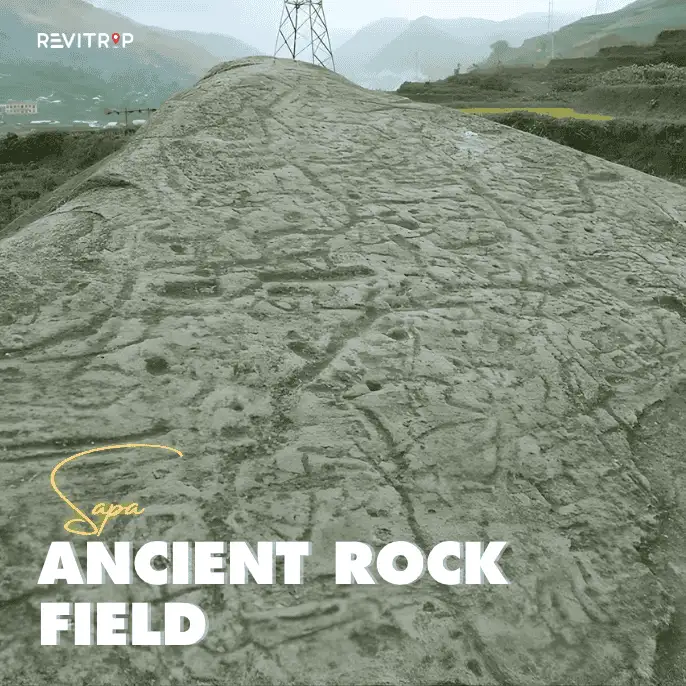
The Sa Pa Ancient Rock Field is part of that presence. Set within Muong Hoa Valley, it feels completely at home here – low in the landscape, weathered by time, and surrounded by the same fields, paths, and villages that shape the rest of Sa Pa. For anyone looking for a heritage site in Vietnam that still feels grounded in everyday landscape, this is one of the most memorable ones to know.
A heritage layer that belongs to Sa Pa
The ancient rock field lies in Muong Hoa Valley, in the stretch between Lao Chai and Ta Van. More than a hundred carved stones are scattered across the area, resting among grass, earth, and terraced land rather than inside a formal monument complex. Before you start walking through Muong Hoa Valley, it helps to know the easiest way to reach Sa Pa from Hanoi, especially if you are building the trip around quieter places like this.
That is what makes the site feel so natural within Sa Pa. The stones are not sealed off from the valley. They sit inside it, in the same setting where people farm, walk, and move through the seasons. In a place where land and daily life have always been closely tied, the rock field feels less like an isolated attraction and more like one of Sa Pa’s oldest quiet markers.

What remains on the stone
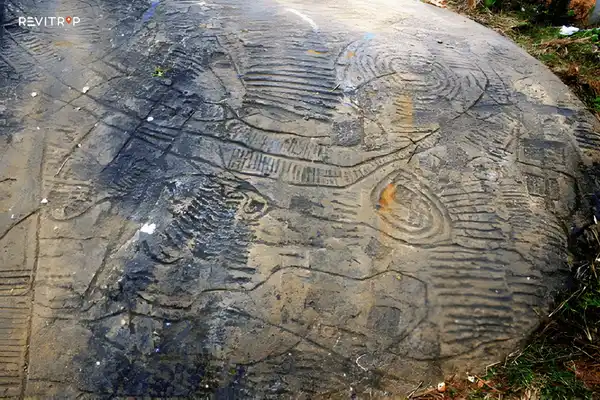
Up close, the carvings begin to emerge in lines, shapes, and patterns cut into the stone surface. Some resemble fields or terraces; some look geometric and deliberate; some seem to suggest maps or symbolic markings. None of them feel random, even when their exact meaning remains open.
That sense of partial mystery gives the site much of its depth. You are not looking at ruins arranged neatly for explanation. You are looking at traces left behind in the valley itself, still present, still visible, and still carrying something that has not been fully translated into a simple story.
In Sa Pa, that feels right. The place has always been richer in atmosphere than in spectacle.
As a heritage site in Vietnam
When people think about a heritage site in Vietnam, they often picture citadels, temples, or major UNESCO names. The Sa Pa ancient rock field offers something quieter, but no less meaningful. Its value comes from the way archaeology, landscape, and memory meet in one place.
The stones give Muong Hoa Valley a deeper historical weight. They remind you that this was never just a beautiful route through the mountains. It has been lived in, shaped, observed, and remembered for a very long time. The carvings make that history tangible without pulling it away from the land that holds it.
That connection is what makes the site stay with people. You do not leave with the feeling of having simply checked off one more stop. You leave with the sense that part of Sa Pa’s identity has been sitting quietly in the valley all along.
Let the place unfold
Most people come across the rock field while trekking through Muong Hoa Valley, and that is still the best way to approach it. The site makes more sense on foot, with enough time to let the landscape gather around it.
My simple rule: do not rush the valley and expect the stones to do all the work.
Walk slowly enough to notice how the site sits within everything else. The terraces, the paths, the river, the villages nearby – all of that shapes the experience. The ancient carvings matter, but so does the setting around them. Without that setting, the place would lose much of what makes it feel so rooted.
Morning is especially beautiful here, when the air is still cool and the valley feels half-muted. Late afternoon can also be lovely, especially when the light settles lower over the terraces and brings more texture to the stone.
The atmosphere of Muong Hoa
Part of the beauty of this site is that it never feels over-presented. Nothing about it is theatrical. The stones remain close to the ground. The carvings reveal themselves gradually. The valley continues around them in its usual rhythm.
That quietness suits Sa Pa perfectly. This is a destination where some of the strongest impressions arrive slowly – through weather, distance, texture, and silence. The ancient rock field belongs to that same mood. It adds age and memory to a landscape that already feels deeply layered.
Anyone spending time in Muong Hoa Valley should make room for it. Not because it demands attention loudly, but because it completes the feeling of the place.
Before you walk into the valley
There are many ways to describe Sa Pa – mountain town, trekking base, terraced landscape, cool-weather escape. All of them are true, but they are not the whole story. The ancient rock field shows another side of the region’s depth, one that is older, quieter, and tied closely to the valley floor.
For travelers searching for a heritage site in Vietnam beyond the usual list of famous names, Sa Pa Ancient Rock Field is worth knowing. It does not need dramatic framing. It only needs time, good light, and a slow walk through Muong Hoa.
Once you see it there, resting among the terraces and mist, it feels impossible to separate from Sa Pa itself. For many travelers, the rock field becomes one of the quieter highlights of a wider Sa Pa trip, especially when balanced with the town center, markets, and other valley walks.
FAQ
The Sa Pa Ancient Rock Field is known for its carved stones scattered across Muong Hoa Valley, with markings that have drawn attention for many years. Its exact origins and meanings are still not fully agreed upon, which is part of what gives the site its quiet fascination.
Yes, most visits happen through trekking tours in Muong Hoa Valley, often combined with Lao Chai, Ta Van, and nearby ethnic villages. A walking tour usually makes the most sense, since the stones feel most meaningful when seen in the wider landscape around them.
The Sapa Ancient Stone Gallery usually refers to the open-air area of carved stones in Muong Hoa Valley rather than a formal indoor gallery. It is less about a single enclosed site and more about a heritage landscape where the stones remain in their natural setting.