Should you visit Phu Tay Ho? Only if you’re already exploring the West Lake area or specifically interested in Vietnamese religious sites. This lakeside temple has beautiful setting and fascinating mythology, but it’s 4km from Old Quarter and often extremely crowded. Therefore, it’s optional rather than essential for most Hanoi visitors.
Phu Tay Ho (also called Tay Ho Temple or West Lake Temple) offers a peaceful lakeside atmosphere. It also shares Vietnamese spiritual culture, especially when it is not crowded.
Quick Facts: Phu Tay Ho at a Glance
Full name: Phủ Tây Hồ (Tây Hồ Temple / West Lake Temple)
Location: 52 Đặng Thái Mai, Tây Hồ District (on West Lake peninsula)
Distance from Old Quarter: 4km (15-20 minute Grab ride)
Hours: 5am-7pm daily (later during festivals)
Entry fee: Free (donations welcome)
Time needed: 30-45 minutes
Deity worshipped: Princess Liễu Hạnh (one of Four Immortals)
Best time: Weekday mornings (8-10am) or late afternoons (4-6pm)
Worst time: Festival days, Tết, weekends
The reality: Phu Tay Ho can be serene and beautiful OR chaotic and overwhelming depending entirely on when you visit. Moreover, it’s far enough from Old Quarter that you need genuine interest to justify the trip.
What Is Phu Tay Ho? Understanding the Temple
Location and Setting
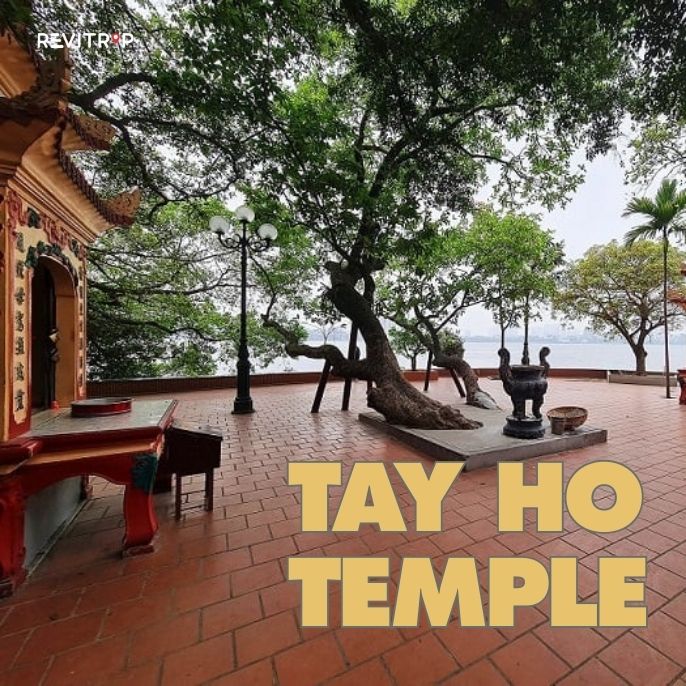
Phu Tay Ho sits on a small peninsula jutting into West Lake (Hồ Tây), Vietnam’s largest freshwater lake. Consequently, water surrounds the temple on three sides, creating a uniquely peaceful setting when it’s not crowded.
Why the location matters: West Lake itself is a pleasant Hanoi neighborhood with upscale cafes, restaurants, and lakeside atmosphere. Therefore, Phu Tay Ho works best as part of broader West Lake exploration rather than isolated destination.
Historical context: This area was once an ancient village of Thang Long Citadel (old Hanoi). The temple was recognized as official historical and cultural relic by Vietnamese Ministry of Culture in 1996.
The Legend of Princess Liễu Hạnh
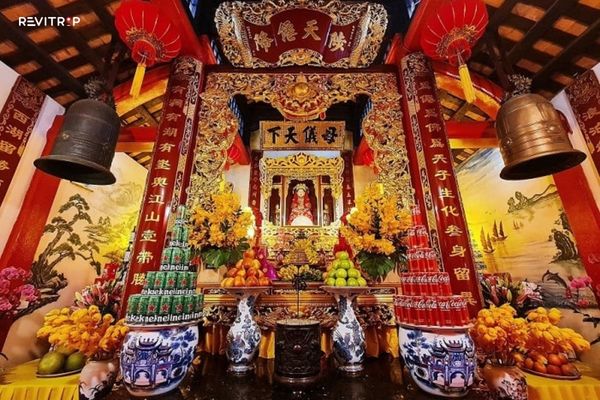
Phu Tay Ho worships Princess Liễu Hạnh, one of the Four Immortals in Vietnamese folk religion (along with Thánh Gióng, Sơn Tinh, and Chử Đồng Tử).
The mythology:
Version 1 (The Broken Cup):
- Liễu Hạnh was daughter of the Jade Emperor (heaven’s ruler)
- She broke the Emperor’s precious cup
- As punishment, she was exiled to earth
- She discovered West Lake’s beauty and settled here
- She opened a small stall and pursued literary arts
Version 2 (The Scholar Romance):
- While living at West Lake, Liễu Hạnh met Phùng Khắc Khoán (famous 16th-century scholar and mandarin)
- They became close, spending time writing poetry together
- When Phùng Khắc Khoán returned from imperial city trip, she had vanished
- To commemorate her, he built this temple
When it was built: Unclear exactly, but likely 17th century based on legends and architectural style.
Why this matters culturally: Vietnamese folk religion venerates multiple deities beyond Buddhism and Confucianism. Liễu Hạnh represents protection, prosperity, and cultural heritage. Understanding this helps appreciate why Vietnamese people visit temples. It’s not just “sightseeing” but genuine spiritual practice.
The Three Mother Goddesses
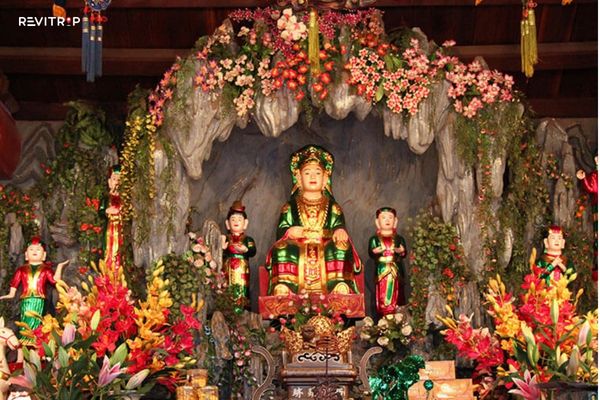
Beyond Princess Liễu Hạnh, Phu Tay Ho also houses statues of the Three Mother Goddesses (Tam Phủ):
- Green Mother (Mẫu Thượng Ngàn): Represents woods/forests
- White Mother (Mẫu Thoải): Represents water/rivers
- Yellow Mother (Mẫu Địa): Represents earth/land
What they symbolize: These three goddesses embody natural elements essential to Vietnamese agricultural life, forests for resources, water for irrigation, earth for crops. Worshipping them represents gratitude for prosperity and good harvests.
Cultural insight: This triple-goddess worship predates Buddhism in Vietnam, connecting to ancient Southeast Asian animistic beliefs. Therefore, visiting Phu Tay Ho shows layers of Vietnamese spiritual traditions beyond just Buddhist temples.
What to See at Phu Tay Ho
The Architecture and Layout
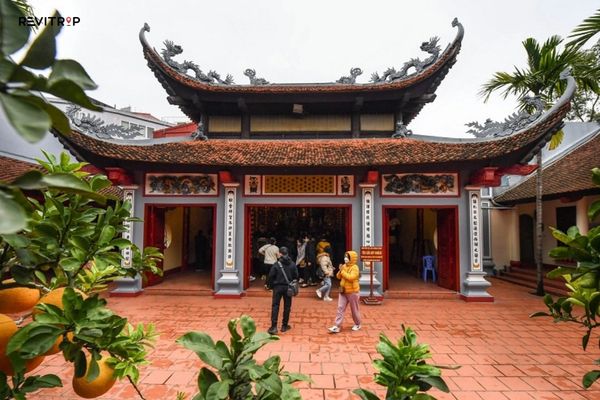
Phu Tay Ho is a complex of traditional Vietnamese buildings rather than single structure.
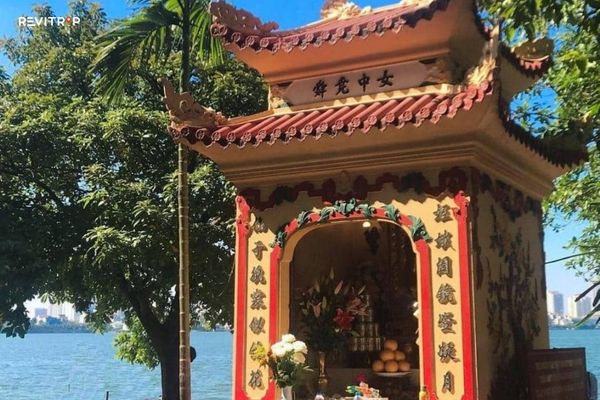
Main components:
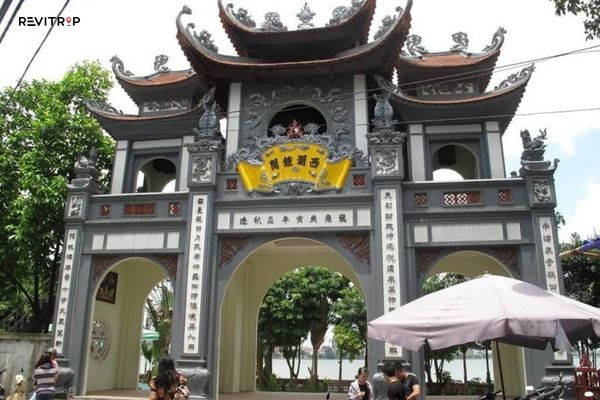
Three-door entrance gate:
- Meticulously engraved with Chinese characters
- Traditional Vietnamese temple gate architecture
- Sets ceremonial tone for entering sacred space
Two-story pavilion (Tiền đường):
- Eight eaves (bát giác)
- Where visitors offer incense and prayers
- Main worship area
Sơn Trang Shrine:
- Three stories with eight curved eaves
- More elaborate architectural details
- Secondary worship space
Two smaller shrines:
- Across courtyard from main buildings
- Honor additional deities or ancestors
The ancient banyan tree:
- Chinese banyan (榕樹)
- Recognized as Vietnam Heritage Tree
- Centuries old, culturally significant
- Adds natural beauty to temple grounds
My take on architecture: The buildings showcase traditional Vietnamese temple design, curved eaves, carved details, red and gold decorations. However, it’s not architecturally spectacular compared to other Hanoi temples. The real appeal is the setting and atmosphere rather than architectural grandeur.
When to Visit Phu Tay Ho (Critical for Good Experience)
BEST Times (Peaceful, Worthwhile)
Weekday mornings (8-10am):
- Local worshippers only (not tourists)
- Peaceful atmosphere maintained
- Good light for photography
- Temple staff relaxed and friendly
Weekday late afternoons (4-6pm):
- Golden hour lighting on West Lake
- Fewer people than morning
- Nice sunset views over water
- Temperature cooling down
These times are when I recommend visiting. The temple feels authentic, you can actually see the architecture and statues, and the lakeside setting is genuinely pleasant.
AVOID at All Costs
Major festival days:
- 3rd day of 3rd lunar month (Spring festival)
- 13th day of 8th lunar month (Autumn festival)
- Temple stays open late but impossibly crowded
- Thousands of worshippers and tourists
- Complete chaos
Tết Holiday (Lunar New Year):
- Worst possible time
- Everyone in Hanoi visits temples for luck
- Traffic nightmare
- Can’t move inside temple
- Zero peaceful atmosphere
Weekends (especially Sunday mornings):
- Popular with Vietnamese families
- Tour groups from other provinces
- Still manageable but crowded
- Not the serene experience you want
First and 15th of lunar month:
- Traditional Buddhist worship days
- More crowded than normal
- Not festival-level but busier
My strong recommendation: Check lunar calendar before visiting. If it’s festival day or Tết, skip Phu Tay Ho entirely and visit different temple or attraction.
Is Phu Tay Ho Worth Visiting? The Honest Answer
After three visits with wildly different experiences, here’s my definitive verdict.
Visit If:
- You’re already exploring West Lake area (Trấn Quốc Pagoda, cafes, lakeside walk)
- You have genuine interest in Vietnamese religious practices
- You can visit on peaceful weekday morning/afternoon
- You want to see authentic local worship (not tourist performance)
- You’re staying in Tây Hồ neighborhood (close by)
- You’ve covered major Hanoi sights and want something different
Skip If:
- You have limited time in Hanoi (1-2 days only)
- Festival day (Tết) or weekend (the timing is wrong).
- You’re not particularly interested in temples/religious sites
- You prefer spectacular architecture over peaceful atmosphere
- You don’t want to deal with 4km trip from Old Quarter
- You’ve already seen multiple Vietnamese temples
Better Alternatives
For a temple experience, if Phu Tay Ho isn’t ideal:
Ngọc Sơn Temple (Temple of Jade Mountain):
- On Hoàn Kiếm Lake (central Old Quarter)
- Easier access
- Beautiful red bridge entrance
- Less crowded generally
- Better architecture
Trấn Quốc Pagoda:
- Also on West Lake (10 minutes from Phu Tay Ho)
- Hanoi’s oldest Buddhist pagoda
- More impressive architecture
- Beautiful setting
- Can visit both if in West Lake area
Quán Thánh Temple:
- Near West Lake
- Less touristy
- Peaceful most times
- Dedicated to Tran Vo (Black Emperor/Xuanwu)
Practical Information
Getting There
From Old Quarter: 4km (not walkable)
By Grab/taxi:
- Cost: 40,000-60,000 VND
- Time: 15-20 minutes (traffic dependent)
- Drop-off: Đặng Thái Mai Street entrance
By motorbike:
- Parking: Available near temple (10,000-15,000 VND)
- Route: Follow Âu Cơ Road around lake, turn onto Đặng Thái Mai
Walking route (if in West Lake area already):
- From Trấn Quốc Pagoda: 10-minute walk along lake
- From Quán Thánh Temple: 15-minute walk
My strategy: Visit Trấn Quốc Pagoda, walk along lakeside to Phu Tay Ho (10 minutes), then Grab back to Old Quarter. This makes the trip worthwhile by combining two sites.
Costs
Entry: FREE (it’s an active worship temple, not ticketed tourist site)
Optional expenses:
- Incense offering: 10,000-20,000 VND
- Donation: As you wish
- Parking (if driving): 10,000-15,000 VND
Total cost: Essentially just transportation (40,000-60,000 VND each way Grab)
What to Bring
Essential:
- Modest clothing (covered shoulders and knees)
- Cash for donations if offering incense
- Respectful attitude (active worship site)
Recommended:
- Camera (lakeside setting is photogenic)
- Sunscreen/hat (limited shade)
- Water bottle
Leave behind:
- Loud behavior
- Inappropriate clothing (tank tops, shorts)
- Disrespectful attitudes toward worship practices
Temple Etiquette
Do:
- Remove shoes before entering worship halls
- Dress modestly out of respect
- Observe quietly if locals are praying
- Offer incense with both hands
- Place donations in official donation boxes only
- Be quiet and respectful
Don’t:
- Interrupt people praying
- Touch religious statues or altars inappropriately
- Make loud noises or laugh disrespectfully
- Wear revealing clothing
- Block people trying to worship
- Litter or show disrespect
Photography etiquette:
- Photos allowed but be respectful
- Don’t photograph people praying without permission
- No flash near altars or statues
- Don’t pose disrespectfully with religious objects
Final Verdict: Conditional Recommendation
Phu Tay Ho is a case study in how timing and expectations shape travel experiences.
When I recommend it:
- You’re in West Lake area already
- A peaceful weekday morning/afternoon.
- You want authentic local worship atmosphere
- You combine with Trấn Quốc and cafes
When I don’t recommend it:
- You have 1-2 days in Hanoi only
- Festival day is Tết.
- You expect spectacular architecture
- You don’t like temples particularly
The core issue: Phu Tay Ho isn’t spectacular architecturally or historically essential. Its value comes from peaceful lakeside atmosphere and observing genuine local worship. However, that value evaporates completely during crowded times.
If you are interested in Vietnamese folk religion, Phu Tay Ho matters.
It also matters if you are interested in the Four Immortals or the Three Mother Goddesses. Crowds do not change that. For everyone else, it’s optional rather than essential.
Have you visited Phu Tay Ho? Did you catch it peaceful or crowded? Share your timing tips in the comments!