Phu Quoc Prison stands as one of Vietnam’s most significant historical landmarks preserving memories of wartime suffering and resilience. Also known as Coconut Tree Prison, this former detention facility held over 40,000 political prisoners during the Vietnam War. Today, it serves as a National Historical Relic educating visitors about the harsh realities of conflict.
Located 25 kilometers south of Duong Dong town, Phu Quoc Prison attracts approximately 10,000 annual visitors including war veterans, history enthusiasts, and tourists seeking deeper understanding of Vietnamese history. The preserved site features brutal torture exhibits, tiger cage displays, and memorial monuments honoring those who sacrificed their lives.
This comprehensive guide covers everything about visiting Phu Quoc Prison including historical background, operating hours, main exhibits, practical tips, and nearby attractions. Understanding what to expect helps visitors approach this solemn site respectfully while gaining meaningful historical perspectives.
The free admission and central southern location make the prison accessible for day trips combining historical education with beach relaxation at nearby Sao Beach or Khem Beach.
Historical Background and Significance
French Colonial Period
Phu Quoc Prison construction began in 1949 during French colonial rule. The initial facility covered approximately 40 hectares divided into four sections labeled A, B, C, and D. It became Southeast Asia’s largest prison complex at that time.
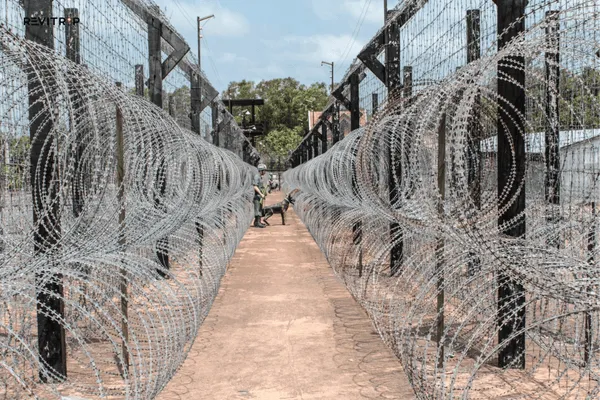
French forces carefully guarded the compound with barbed wire fences, protective lighting, and well-armed soldiers. By April 1954, the prison held 14,000 inmates predominantly male Vietnamese revolutionaries. Records indicate 99 Vietnamese soldiers died from torture during French administration.
The Geneva Agreements of 1954 ended French colonial rule transferring prison ownership to the Vietnamese government. This marked a transition period before American involvement intensified.
Vietnam War Expansion
After 1955, the South Vietnamese government backed by the United States significantly expanded Phu Quoc Prison facilities. An additional 4-hectare section was built adjacent to the original compound. The renamed Coconut Tree Prison separated detainees into areas for males, females, and elderly prisoners.
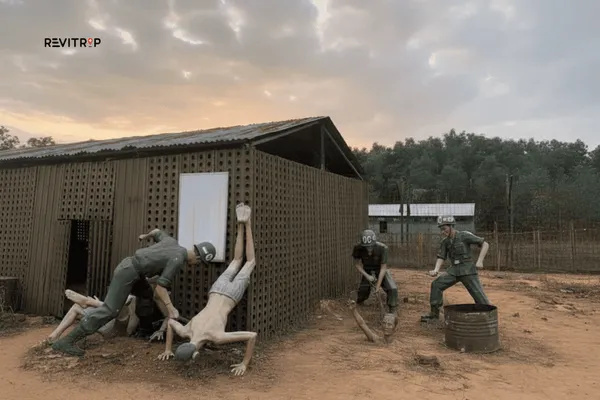
During peak operations, the expanded facility held over 40,000 political prisoners making it the largest detention center in South Vietnam. Torture methods intensified including tiger cages, nail hammering to foreheads and knees, and high-voltage electrical shocks.
Thousands of prisoners died while tens of thousands suffered permanent injuries from systematic abuse. Following Vietnam’s reunification in 1975, operations ceased. The government designated Phu Quoc Prison as a Special National Relic in 1995 preserving it for future generations.
Visiting Information and Access
Location and Operating Hours
Phu Quoc Prison sits at 350 Nguyen Van Cu Street in An Thoi Ward approximately 29 kilometers from Duong Dong town center. The location near Bai Khem and Mui Ong Doi beaches allows combining historical visits with leisure activities.
Operating hours run 7:30 AM to 11:00 AM and 1:30 PM to 5:00 PM daily. The midday closure accommodates staff lunch breaks following Vietnamese customs. Hours may change during national holidays or special commemorative events so verify schedules before visiting.
Admission remains completely free for all visitors regardless of nationality. Optional services including tour guide rentals, audio guides, and historical booklets cost 100,000 to 200,000 VND ($4-8). Most visitors allocate 1-2 hours exploring the extensive grounds thoroughly.
Transportation Options
From Duong Dong, take Tran Hung Dao Street connecting to DT46 highway then Nguyen Van Cu Street reaching the prison. The 35-40 minute journey covers approximately 29 kilometers through southern island landscapes.
From Phu Quoc International Airport, head south along the bypass road continuing on Nguyen Van Cu Street. This route takes approximately 20 minutes by car covering shorter distances.
Motorbike rentals provide independent flexibility costing 120,000-180,000 VND daily. Taxis and ride-hailing apps serve those uncomfortable riding. Organized southern island tours typically include Phu Quoc Prison with other attractions like Sao Beach.
Free parking areas accommodate all vehicle types directly at the entrance. The spacious lots handle peak visitor loads during holidays and weekends.
Main Exhibits and Displays
Tiger Cages Area
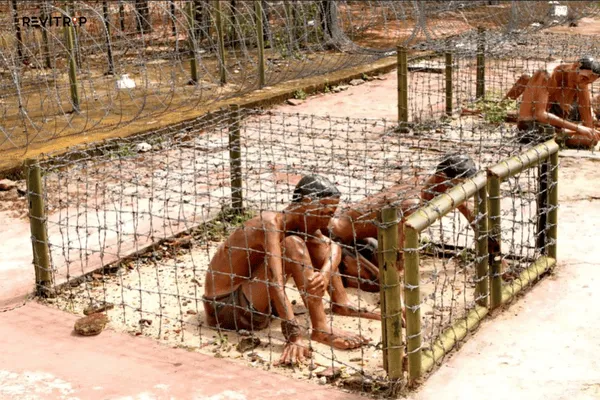
The tiger cages represent Phu Quoc Prison’s most infamous torture method. These small barbed wire enclosures forced prisoners to crouch or kneel avoiding sharp metal spikes above and surrounding them. Attempting to lie down on sand floors caused skin burns and bleeding from intense heat.
Prolonged exposure to scorching daytime sun and cold night air caused severe physical exhaustion. Many prisoners died or suffered permanent disabilities from extended tiger cage confinement. The brutal conditions aimed to break spirits and extract confessions.
Today’s reconstructed tiger cages feature realistic mannequins depicting torture scenes. Informational panels explain the historical context and prisoner suffering. This area proves most impactful for visitors understanding wartime cruelty.
Wax Figure Exhibitions
Zone B2 showcases life-sized wax figures recreating daily prison life, torture scenes, and escape attempts. The detailed statues capture facial expressions, body postures, and emotions helping visitors visualize harsh conditions prisoners endured.
Isolation cells display various torture instruments and methods including beatings, water submersion, and electrical shocks. The graphic displays may disturb sensitive visitors though the educational value proves significant.
Escape tunnel exhibits show how prisoners spent months or years digging underground passages using basic tools like metal spoons and containers. These daring attempts demonstrated extraordinary courage and determination to escape “hell on earth.”
Historical Artifacts Exhibition
The Exhibition House of Relics contains two main rooms preserving prison history. One room displays original artifacts including leg shackles, torture instruments, and personal prisoner belongings providing tangible historical connections.
The second room features approximately 100 photographs and documents showing torture methods and prisoner suffering. Maps illustrate prison layouts across different historical periods. Martyr lists commemorate those who died during imprisonment.
Both Vietnamese and English informational panels accompany exhibits ensuring international visitors understand the historical significance. The comprehensive displays educate about Vietnam’s independence struggle and the sacrifices required.
Memorial Sites and Monuments
Prisoner Graveyard
The prisoner graveyard covers 2,000 square meters located approximately 1 kilometer from the main prison compound in B2 section. The circular design centers on a large fist monument representing heroic spirits of fallen Vietnamese revolutionaries.
Visitors pay respects at this solemn site lighting incense according to Vietnamese customs honoring the deceased. The eternal flame burns continuously symbolizing enduring resistance spirits. Many veterans and family members visit during national holidays conducting memorial ceremonies.
The graveyard provides peaceful reflection spaces contemplating the immense human cost of war and the value of hard-won peace and independence.
Monument to Martyrs
The Monument to Martyrs at Doi Sim features a 5-meter tall figure of a person emerging from two waves. This powerful metaphor represents martyrs rising from suffering and Phu Quoc Prison’s dark history toward freedom and independence.
The monument crafted from granite and traditional Vietnamese stonework provides focal points for remembrance ceremonies. Inside areas contain altars, martyr name plaques, and incense offering spaces.
Both domestic and international visitors frequent this dignified stop paying respects and reflecting on sacrifice costs. The monument represents resilience triumph over oppression.
Practical Visiting Tips
Respectful Behavior Guidelines
Dress modestly and respectfully as Phu Quoc Prison represents a sacred historical site. Comfortable clothing covering shoulders and knees shows appropriate reverence. Avoid beachwear, tank tops, or shorts when visiting.
Maintain quiet, respectful atmospheres throughout the grounds. Refrain from loud conversations, excessive laughter, or inappropriate photography. Some areas prohibit photography entirely so observe posted restrictions.
Never touch exhibits, artifacts, or wax figures. These preserved items require protection for future generations. Respectful shared space behavior maintains memorial integrity.
What to Bring
Pack essentials including hats, bottled water, and sunglasses especially during dry season December to April. The extensive grounds offer limited shade making sun protection crucial.
Bring cameras or phones for photography though respect restricted areas. The historical exhibits and wax figures provide powerful visual documentation opportunities when permitted.
For elderly family members or young children, consider handheld fans or small folding chairs. The large grounds require significant walking though concrete pathways ease navigation.
Combining with Other Attractions
Phu Quoc Prison combines well with southern island attractions creating full-day itineraries. Nearby Sao Beach sits just 5 kilometers away offering pristine white sand and turquoise water for post-visit relaxation.
Khem Beach, Ong Doi Cape, and Ho Quoc Pagoda all locate within 10-15 kilometers allowing multiple stops. Organized southern tours typically visit 3-4 attractions maximizing sightseeing efficiency.
The historical education balances well with beach leisure and cultural sites creating diverse, meaningful island experiences.
Preserve Historical Memory
Phu Quoc Prison provides profound educational experiences preserving critical wartime history for future generations. The sobering exhibits, torture displays, and memorial monuments honor tremendous sacrifices made for Vietnamese independence. Approaching this site respectfully enhances understanding while showing appropriate reverence.
The free admission and accessible southern location make Phu Quoc Prison essential stops for history-minded travelers. Combining the prison visit with nearby beaches and attractions creates balanced itineraries mixing education with relaxation.
Understanding the brutal conditions prisoners endured deepens appreciation for peace and freedom. The preserved facilities ensure these important historical lessons continue educating visitors about war’s terrible costs and the courage required for resistance.
Continue planning with our guides to Phu Quoc beaches, top island activities, and best island hotels for complete trip preparation.
FAQ
Yes, Phu Quoc Prison entrance remains completely free for all visitors regardless of nationality. Optional paid services include tour guide rentals (100,000-200,000 VND), audio guides, and historical booklets though basic admission costs nothing.
Allocate 1-2 hours exploring the main exhibits, tiger cages, wax figures, memorial sites, and outdoor grounds thoroughly. Visitors wanting deeper historical understanding or attending guided tours may spend longer though most complete visits within this timeframe.
Dress modestly and respectfully with clothing covering shoulders and knees. Avoid beachwear, tank tops, or very short shorts as this sacred historical site deserves reverent treatment. Comfortable walking shoes suit the extensive concrete pathways.