Pho noodles tell the entire story of Vietnam in a single bowl. Colonial history, migration, war, and national pride all mix in a broth.
Most people first try it at 7 a.m. On a plastic stool. Understanding where pho viet comes from makes every bowl more interesting.
This guide covers the full history of pho noodles. It explains the north versus south debate. It also shows what a proper bowl looks like before you order one.
Start here if you are in Hanoi: Eat pho before 9am at a street stall. Go early. Most serious spots sell out by 10am.
Explore amazing restaurants here if you are at US: Pho Restaurant Near Buffalo, NY: 10 Best Bowls Ranked
Where Pho Noodles Actually Come From
Most people think pho noodles were born in Hanoi. That assumption is wrong.
The real birthplace is Nam Dinh province, a region in the Red River Delta about 90 kilometers south of Hanoi. Nam Dinh is not on most tourist itineraries.
It is known for flat farmland, beautiful Catholic churches, and being the home of Tran Hung Dao. He was a 13th-century general who defeated Mongol invaders. It is not, at first glance, a place that changes world food culture.
But it did.
The earliest version of pho viet was a simple dish called xao trau. Vendors cooked water buffalo meat in broth with rice vermicelli. Over time, buffalo was replaced with beef.
The noodles changed shape. The broth deepened in flavor. A recognizable version of pho noodles began to take form.
Go if you want to understand where this dish started. Nam Dinh is a day trip from Hanoi and most visitors skip it entirely.
Why French Colonialism Changed Pho Forever
Before French rule, Vietnamese people rarely ate beef. Cattle were working animals, not food. The French changed that.
French colonial demand for beef drove large-scale cattle slaughter across Vietnam. This created something new: a surplus of beef bones.
Chinese and Vietnamese street vendors saw the opportunity immediately. They simmered those bones for long periods and produced a rich, clear broth. That broth became the foundation of pho noodles as a serious dish.
This is why colonial history matters here. Without French beef consumption creating surplus bones, the broth that defines pho viet never develops in the same way. The dish is a product of its specific historical moment. Vietnamese ingredients, Chinese cooking technique, and French colonial food economics all came together in the same pot.
Traditional recipes simmer the broth for up to 65 hours. That long simmer produces clarity and depth. A rushed broth tastes flat. A properly made broth tastes like it has history in it.
How Hanoi Became the Home of Pho
Nam Dinh created pho noodles. Hanoi perfected them.
The capital had the right conditions. A large urban population. A concentration of wealth.
Migrant workers from China’s Yunnan and Guangdong provinces who recognized the soup’s similarity to dishes from home. And a food culture that rewarded incremental improvement over decades.
By the 1930s, ganh pho vendors had become a fixture of Hanoi daily life. These vendors carried mobile kitchens on bamboo poles balanced across their shoulders. They moved through the Old Quarter and assembled bowls of pho viet to order wherever they stopped. The ganh pho vendor shrouded in morning steam became one of the enduring images of the city.
Poet Tu Mo wrote “An Ode to Pho” celebrating its flavor and its democratic reach. Rich people and poor people ate pho noodles at the same stalls from the same bowls. That shared daily ritual gave pho a cultural weight beyond food.
The classic Hanoi preparation from that era is still largely unchanged today. Beef bone broth with charred onion, charred ginger, star anise, cinnamon, cloves, black cardamom, and coriander seeds.
Flat rice noodles. Thinly sliced beef. A restrained garnish of fresh chili, lemon, and herbs. Nothing added that does not earn its place.
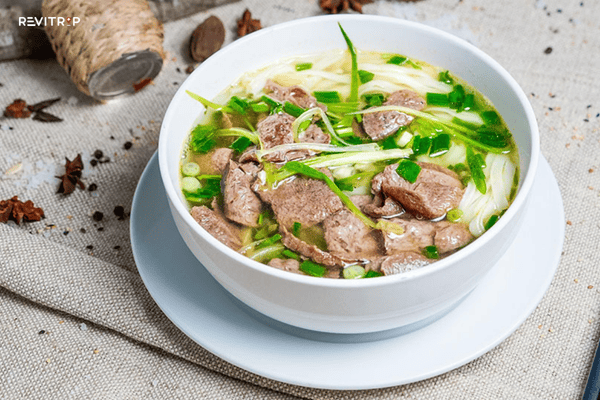
What a Great Bowl of Pho Noodles Looks Like
The gap between a great bowl and a mediocre one is larger than most first-time visitors expect. Here is what to look for.
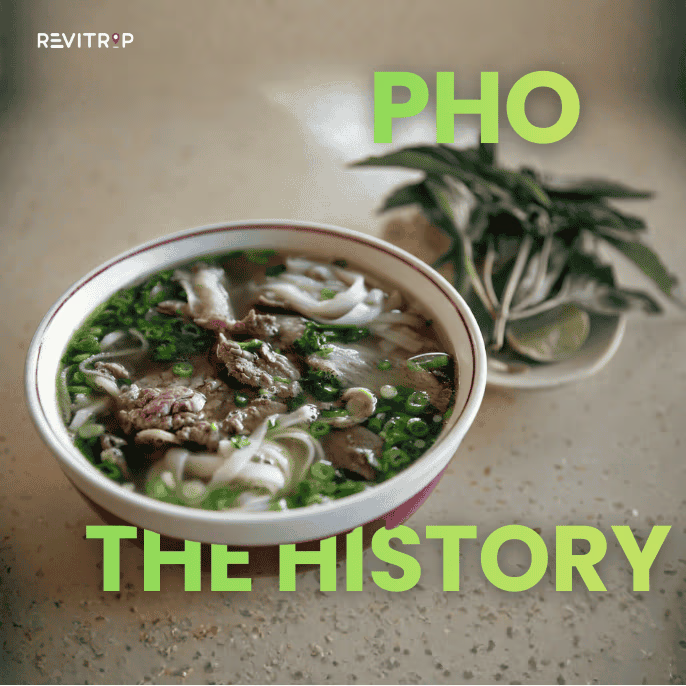
The broth comes first. It should be clear, not cloudy. The surface should show small drops of rendered fat. It should smell of warm spice without being sweet or sharp.
A great pho viet broth has depth that only comes from long cooking. A rushed broth tastes thin and salty. Trust your first sip. It tells you everything.
The noodles should be soft but not mushy. In Hanoi, the noodles are flat and slightly wider than the round vermicelli used in other Vietnamese soups. They absorb broth without falling apart. If they are gummy or breaking apart, the kitchen is not handling them carefully.
The meat is where you make your first real decision. Traditional pho noodles offer several beef options. Rare beef (tai) cooks directly in the bowl when hot broth is poured over it.
Flank (nam) is chewy and flavorful. Brisket (gau) is fatty and rich. Tripe (sach), tendon (gan), and meatballs (bo vien) are available at most traditional spots. Serious pho eaters order a combination rather than a single cut.
The garnish in Hanoi is minimal. Fresh chili, a wedge of lemon, and a small handful of herbs. Do not add hoisin sauce to a Hanoi-style bowl. It will mark you immediately as someone who learned pho somewhere else.
The North versus South Divide
The most important moment in pho viet history happened in 1954. Vietnam was partitioned. Millions of northerners moved south.
They brought pho with them. What happened next is still debated seven decades later.
In the south, cooks adapted pho noodles to local tastes and local abundance. The broth became sweeter. The table garnish expanded dramatically.
Bean sprouts, fresh basil, saw-tooth herb, and lime joined the standard chili and lemon. Hoisin sauce and chili sauce appeared as standard table condiments, not optional extras.
Northern purists say these additions distract from a broth that should speak for itself. Southern cooks say the wider garnish makes pho more personal and more enjoyable.
Both positions make sense. Both versions taste good. The honest answer is that they are two related but distinct dishes that share a name and a basic structure.
In Central Vietnam, some areas add a poached egg to the bowl. Neither northern nor southern traditionalists fully acknowledge this variation, but it exists and locals love it.
Which version should you try first? If you are in Hanoi, start with the northern style. Let the broth do its work without adding anything. Then try the southern version in Ho Chi Minh City.
Comparing them directly is the best way to understand the difference.
Chicken Pho and the Full Menu
Chicken pho (pho ga) arrived in 1939 and caused genuine controversy. Beef had been the only recognized version for decades. Adding poultry felt like a category violation to traditionalists at the time.
The controversy faded quickly. Pho ga is now one of the most popular versions of pho noodles across Vietnam. The broth is lighter and the flavor is more immediately accessible than the beef version. The chicken is poached directly in the broth, which means the soup absorbs the meat’s flavor in a direct and simple way.
For first-time pho viet eaters, chicken pho is often a better starting point than beef. It is less intense and easier to finish. It is a good way to learn what a well-made broth should taste like. Then you can move on to the more complex beef version.
Beyond chicken and beef, the base recipe for pho noodles has stayed remarkably stable. Different beef cuts have been standardized. Minor regional spice variations exist. But the fundamental structure of broth, noodle, meat, and simple garnish has not changed in ways that would confuse a diner from 1935.
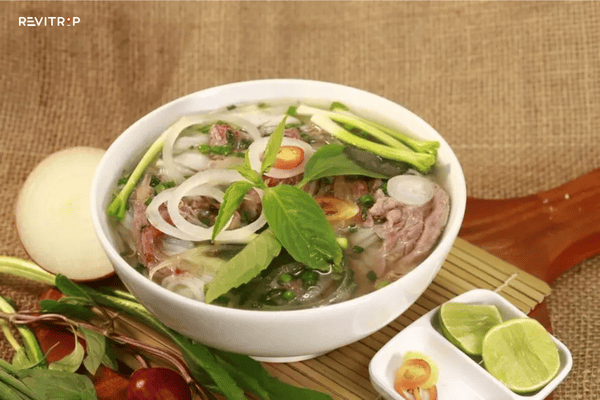
Modern Pho: Reinventions Worth Knowing
Pho noodles have not stood completely still. Young chefs in Vietnam are experimenting at the edges of the format.
In 2018, Anan Saigon introduced a 100 USD bowl using truffle oil, wagyu beef, and foie gras. It generated strong opinions on both sides.
Some saw it as creative evolution. Others saw it as expensive theater. The restaurant was unapologetic about both the price and the concept.
Outside Vietnam, overseas chefs have gone further. Crawfish pho exists. Sous vide beef pho exists. Brown rice noodle substitutes exist.
Some of these experiments are genuinely interesting. Most of them are better understood as dishes that use pho viet as a reference point rather than as pho itself.
None of these reinventions threaten the original. A 100 USD wagyu bowl does not replace the 40,000 VND street stall version. Everyone knows which one is the real thing.
Practical Guide: How to Eat Pho Noodles
Where to go in Hanoi: Look for street stalls that open before 7am and have a queue. A busy stall with plastic stools and steam rising from a large pot is a good sign. Avoid spots with laminated English menus and photographs of every dish.
When to go: Between 6am and 9am. Most serious pho noodles spots in Hanoi sell out before 10am. Pho is a breakfast dish in the north. Showing up at noon and expecting the same quality is a mistake.
How to order: Point at what the person next to you is eating if the menu is unclear. Say “mot pho bo” for one beef pho or “mot pho ga” for chicken. Add chili and lemon gradually. Do not adjust the broth heavily before you taste it properly.
What to pay: 35,000 to 80,000 VND at a local street stall or neighborhood restaurant. Tourist-area spots charge more and are not necessarily better. A bowl costing over 100,000 VND should justify itself with noticeably better ingredients or preparation.
One rule: Eat it hot. Pho viet does not improve as it cools. The fat congeals. The noodles keep absorbing liquid. Eat quickly and enjoy the bowl at its best.