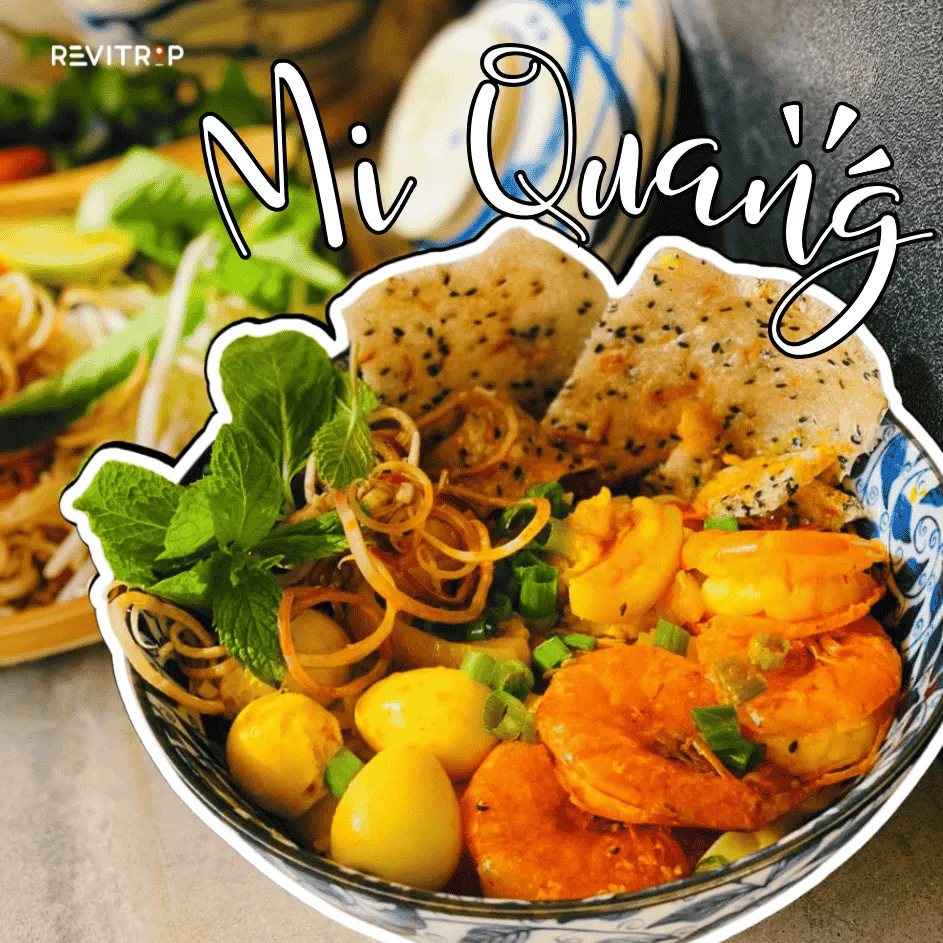
Mi Quang looks like noodle soup, shows up like noodle soup, and then immediately refuses to behave like noodle soup. The bowl arrives with a shallow, golden pool at the bottom instead of a full-on broth bath. It’s part soup, part noodle dish, part crunchy-herby build-your-own situation and somehow it all makes sense the moment you take your first proper bite.
If you’re in Da Nang and you only learn one signature dish, make it Mi Quang. It’s the city in edible form: coastal, bright, unpretentious, and quietly specific about what “good” feels like.
What Mi Quang tastes like
At its core, Mi Quang is a turmeric-tinted rice noodle dish with a small ladle of intensely seasoned broth, enough to coat. That detail is the whole point. The flavor is concentrated, not diluted. You taste the broth as a glaze.
A good bowl balances three things at once: depth, freshness, and crunch. The broth gives you savory weight. The herbs and greens keep it lively. The toppings and crackers add texture so you’re never stuck in one-note slurping.
Mi Quang also has range. One shop leans sweet and gentle, another goes punchier and more fish-sauce-forward, another makes the broth smell like roasted peanuts and warm spices. You can eat it three times in two days and still feel like you’re sampling different interpretations of the same dialect.
The bowl anatomy
Mi Quang varies by shop, but the best versions share the same internal logic.
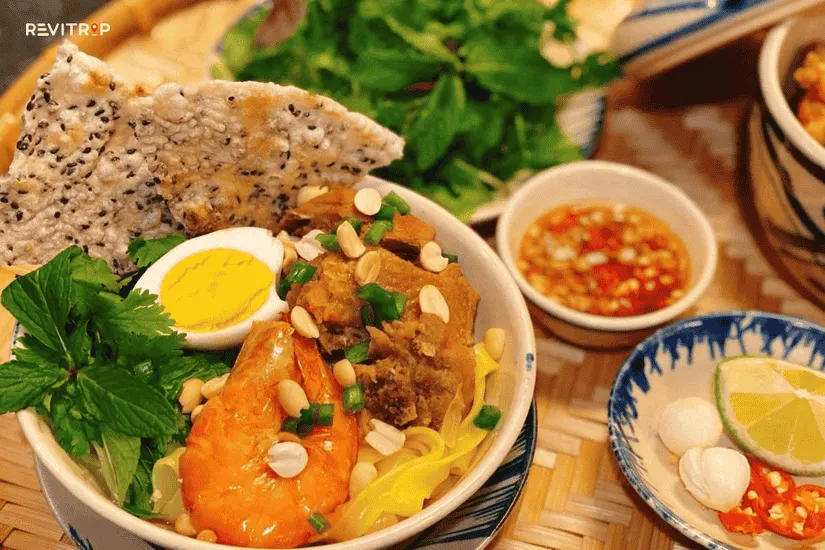
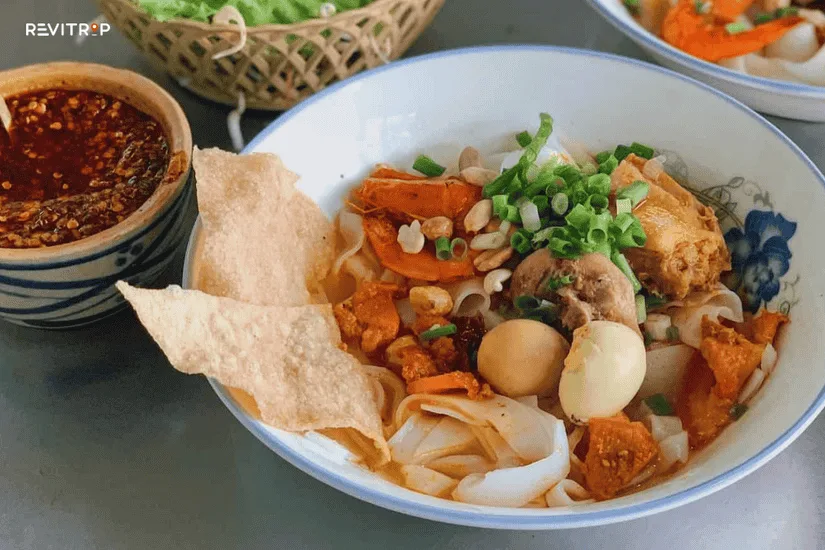
The noodles come first: broad, slightly chewy, usually yellowed by turmeric. They should feel springy, not mushy, and they should hold onto the broth instead of sliding around like they’re trying to escape.
Then there’s the broth. If it smells flat, the whole bowl feels like a missed opportunity. If it smells layered – savory, a little sweet, maybe faintly shrimp-y or pork-y – your odds jump immediately. Mi Quang broth isn’t meant to be delicate. It’s meant to taste like someone took their time.
The toppings vary, but the classic lane is shrimp and pork. Chicken is common too, and if you’re feeling adventurous, you’ll see frog in some places. The key isn’t the “exotic” angle; it’s the freshness and the way the proteins are cooked. Overcooked pork turns the bowl into a chore. Fresh shrimp and properly cooked pork turn it into comfort.
And then the supporting cast: peanuts, fried shallots, herbs, greens, and the rice cracker (bánh tráng). The cracker is not decoration. It’s the crunch that pulls the bowl together. Snap it in, let it soften just a bit, and you get that satisfying contrast between chewy noodles and brittle crispness.
When to eat Mi Quang in Da Nang
Mi Quang shines in the morning and midday because it fills you up without putting you into a food coma. It’s satisfying, but it doesn’t drag you down the way a heavier soup sometimes can in heat.
If you want the most “natural” experience, eat it early when the ingredients feel freshest and the shop is in rhythm. Then try another bowl later in the trip. That second tasting is where you start developing preferences: broth that leans savory vs sweet, more herbs vs less, fried toppings heavier vs cleaner.
How to order Mi Quang
You don’t need a rehearsed script. Keep it simple and clear.
If you want the most “default” experience, ask for Mi Quang tôm thịt (shrimp and pork). If you want lighter, go for Mi Quang gà (chicken). If you’re cautious with spice, say “ít cay” early before the chili lands in your bowl.
One small move that helps: watch what people at the next table are doing. If everyone is adding herbs and cracking rice crackers in right away, follow the room. Mi Quang is a communal dish in that sense – locals have already figured out the best version of “correct.”
How to eat Mi Quang
This bowl rewards a light mix, not aggressive stirring. The broth sits at the bottom, so your goal is to lift it up and coat the noodles, then let the toppings do their job.
Here’s a rhythm that works almost everywhere:
- Add a modest handful of herbs and greens.
- Snap in a piece of rice cracker.
- Mix gently until the noodles look lightly glossed, not drenched.
- Taste first, then adjust with lime or chili if you want.
Condiments are powerful here. Treat them like fine-tuning, not a rescue mission. Lime can sharpen the whole bowl. Chili can dominate it fast. A careful hand keeps the balance intact.
Mi Quang broth: why it feels so intense
People often fixate on the small broth level and assume the dish will feel dry. In practice, it’s the opposite. A smaller amount of broth means a more concentrated flavor experience. Every bite gets seasoned.
A classic Mi Quang broth often builds from bones and aromatics, then picks up richness from the protein and fat that naturally enters the pot. Some shops lean more savory, some carry a gentle sweetness, and some feel noticeably shrimp-forward. You’ll also notice turmeric showing up more in the noodle color than in the broth flavor.
If you want to judge a bowl quickly, take a sip of the broth from the bottom before you mix. You’re looking for a broth that tastes complete on its own, not something that needs toppings to become interesting.
The “good bowl” signals
Mi Quang isn’t fragile, but it is specific. A few details separate a genuinely good bowl from a forgettable one.
The herbs should look crisp and alive, not limp and waterlogged. The peanuts should taste fresh, not like they’ve been sitting out since yesterday’s lunch rush. The broth should smell like it has backbone. And the shop should be moving – high turnover is your quiet safety net, plus it usually correlates with flavor that people trust.
Even the rice cracker tells a story. If it’s stale, the bowl loses its snap. If it’s fresh, it turns each bite into something you feel, not just taste.
The one checklist I use for finding a great bowl
When I’m deciding where to sit down, I look for a few small signals:
- Busy at breakfast or lunch, with locals eating full bowls
- Herbs look crisp and bright
- Peanuts and fried shallots smell fresh
- Broth pot looks actively used
- The shop focuses on a small menu rather than doing everything
Mi Quang is a dish where “specialist energy” usually wins.
Why Mi Quang sticks with people
A lot of famous dishes rely on spectacle: big broth, big heat, big drama. Mi Quang wins on precision. It’s restrained in a way that feels confident, like it doesn’t need to shout to prove it belongs.
And once you “get” it, you start noticing it everywhere: in the way Da Nang eats, in the way the city feels practical but still charming, in the way mornings can be energetic without turning into a sprint.
Mi Quang is the kind of meal that makes you quietly loyal. You’ll tell yourself you’ll try something new tomorrow, and then you’ll find yourself back at another little spot, ordering the same bowl, chasing that exact combination of savory depth, bright herbs, and crackly crunch that somehow feels like Da Nang understood you first.
FAQ
Open Google Maps, search “Mi Quang”, and choose places that look busy around breakfast or lunch. Prioritize shops with a short menu and visible prep, because freshness and turnover matter more than fancy branding.
Mi Quang uses a smaller amount of broth, so the flavor comes through as concentrated and clingy rather than light and sippable. A good broth tastes layered and complete even before you add herbs and crackers, which is why the bowl stays satisfying without being “soupy.”
Yes – build a broth with depth, keep the serving level low, and focus on the finish. Wide rice noodles, fresh herbs, toasted peanuts, fried shallots, and a crisp rice cracker snapped in at the end will get you much closer to the real Mi Quang experience.