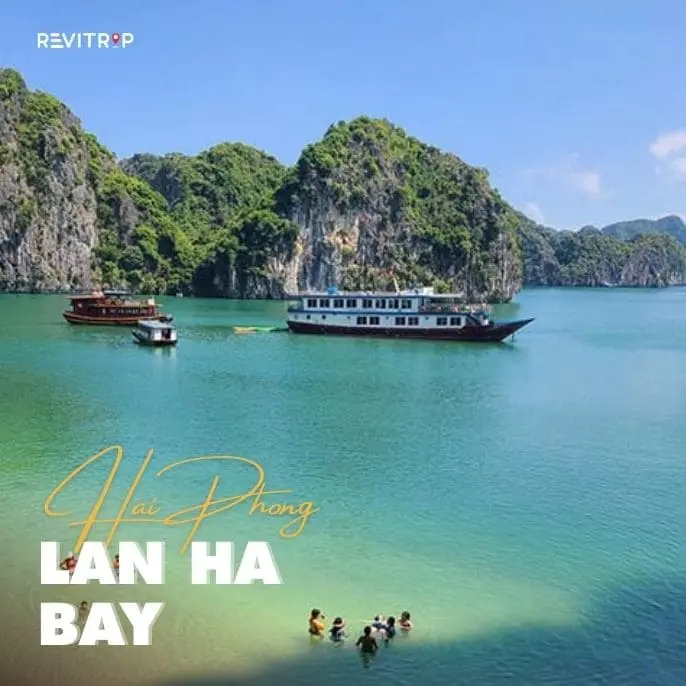
If you’ve spent any time researching northern Vietnam, you’ve probably come across Lan Ha Bay as a footnote. Mentioned briefly, then immediately overshadowed by its more famous neighbor. That’s a mistake.
Lan Ha Bay covers 76 square kilometers of dramatic limestone karst scenery. It has 139 white-sand beaches and nearly 400 rocky islets. On most days, you will share it with far fewer tourist boats than the main bay nearby.
Quick Facts: Lan Ha Bay at a Glance

- Location: Cat Ba Island area, Hai Phong Province — about 134km from Hanoi (~2.5–3 hours by road + ferry)
- Size: ~76 km² with nearly 400 limestone islets
- Best for: Couples, families, nature-focused travelers, kayaking, swimming, cave exploration
- Best time to visit: April – July or October – January
- Cruise cost: $100–$200 USD per person for an overnight cruise
- Minimum time needed: 2 days / 1 night.
- The reality: You need at least one overnight stay to actually experience the bay. A day trip is possible but you’ll spend more time on transport than on the water.
The 8 Best Things to Do in Lan Ha Bay
1. Kayaking
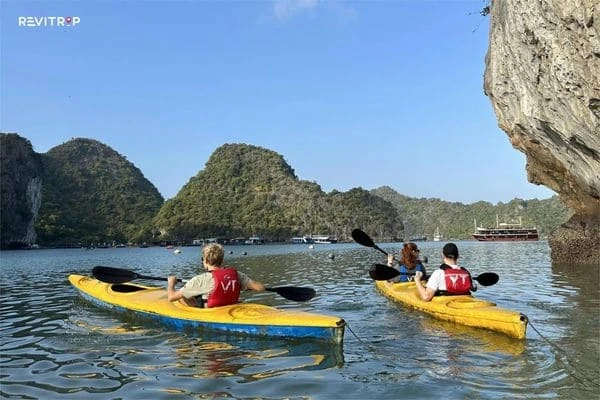
If there’s one thing to prioritize in Lan Ha Bay, it’s kayaking. The bay has areas that no boat larger than a kayak can reach. These include hidden lagoons, low caves, and narrow cliff channels.
You paddle through, and suddenly you’re inside a completely enclosed lagoon surrounded by 100-meter rock walls with no one else around. It’s the kind of thing that makes you stop paddling and just sit there.
The best. kayaking spots are Ba Trai Dao Islet (crystal clear water, great for beginners), Dark & Light Cave (paddle through darkness into a lit chamber), Tra Bau Area (calm water, good for longer paddles), and Ba Ham Area, only accessible at low tide, which makes it feel genuinely secret.
2. Swimming at the White-Sand Beaches
This is what surprises most people about Lan Ha Bay, the beaches. Northern Vietnamese bays are not typically known for white sand and clear water. Lan Ha Bay has 139 of them, most accessible only by boat.
The three best are Ban Chan Beach, which is wide, calm, and great for families. Ba Trai Dao Beach is a small crescent of sand between three peach-shaped limestone islets.
Tiptop Beach is smaller, but the water is very clear and it is less visited. You won’t find beach chairs or vendors on most of these. You anchor offshore, take the tender boat in, and have the sand largely to yourself.
3. Exploring Cat Ba Island
Lan Ha Bay is accessed through Cat Ba Island, the largest island in the area, and the island itself is worth more than just a transit stop.
Cat Ba National Park is a UNESCO World Biosphere Reserve. It has primary forest and rare wildlife. This includes the critically endangered Cat Ba langur. One of the world’s rarest primates.
Trekking trails take 3–4 hours for a round trip. Genuinely impressive and a sharp contrast to the water-focused activities on the bay.
On the southeast coast, there is a rock climbing center. It offers half-day and full-day sessions on limestone cliffs above the water. Adventure travelers find it increasingly popular and truly thrilling. Cat Ba town has a harbor lined with seafood restaurants and bia hoi (draft beer) stalls.
An excellent spot for the last evening of a trip.
4. Visiting a Floating Fishing Village
Cai Beo floating village is one of the oldest in the region. People have lived on the water for generations. They still fish the same limestone-sheltered waters their grandparents fished.
A visit by small boat takes about an hour and gives you genuine context for the landscape you’re sailing through. People actually live here, it’s not a performance.
Most overnight cruise itineraries include a floating village visit. If yours doesn’t, ask someone to add it they can usually add it.
5. Chasing Sunsets at Ba Trai Dao
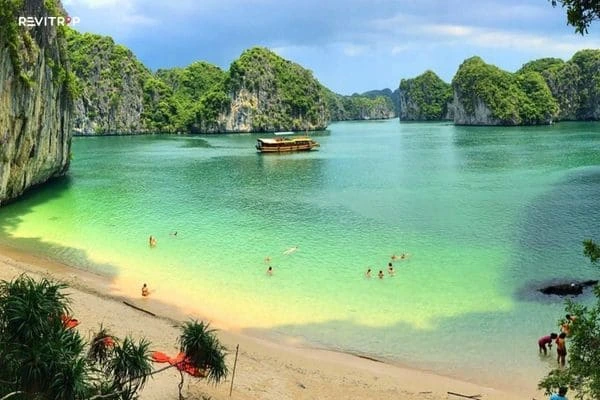
Ba Trai Dao (the Three Peaches Islets) is the best sunset spot in Lan Ha Bay. The three small limestone formations sit close together, with a crescent beach between them. In late afternoon, the light turns golden. The water reflections are truly extraordinary. Most cruises position near here in the early evening specifically for this reason.
Bring a drink from the boat bar. Sit on deck. Do nothing for 45 minutes. This is a legitimate highlight of any Vietnam trip.
8. Cave Exploration
Lan Ha Bay has impressive cave systems throughout the limestone karst formations. Dark & Bright Cave is the most famous. You enter through a dark passage. You then emerge into a brighter connected chamber.
It may sound gimmicky, but it is visually striking. Trung Trang Cave on Cat Ba Island is larger and drier, with the kind of dramatic stalagmites and stalactites you’d pay museum prices to see anywhere else.
Neither cave needs technical experience. Both are easy to visit on standard cruise itineraries. You can also go on guided trips from Cat Ba town.
Best Time to Visit Lan Ha Bay
April to July is the sweet spot. Water temperatures are warm (ideal for swimming and snorkeling), weather is generally stable, and the light is excellent for photography. June and July bring more humidity but are still very manageable on the water.
October to January is the second good window. Cooler temperatures (15–23°C / 59–73°F) make active activities like kayaking and hiking more comfortable. There’s occasional mist and light rain, which makes the limestone karst scenery look even more dramatic. Many experienced travelers prefer this window for the atmosphere.
Avoid: February and March tend to bring heavy mist and cool drizzle that limits visibility and makes open-deck time uncomfortable. August can bring typhoon-adjacent weather with sudden storms.
How to Get to Lan Ha Bay from Hanoi
The standard route from Hanoi to Lan Ha Bay goes through Hai Phong:
Step 1: Hanoi to Hai Phong by shuttle bus or private car — about 2 hours, ~150,000–300,000 VND (~$6–12 USD) by shuttle.
Step 2: Hai Phong (Got Ferry Terminal) to Cat Ba Island by ferry — about 45 minutes to 1 hour. Ferry tickets run around 100,000–200,000 VND (~$4–8 USD).
Total travel time from Hanoi: Budget 3–4 hours door-to-water, including transit between terminals.
Most reputable cruise operators offer a Hanoi pickup package that handles the entire transfer — bus from Hanoi, ferry to Cat Ba, and transfer to the boat for around $15–25 USD per person added to your cruise price. For a first-time visitor, this is almost always worth it. Coordinating the individual legs independently saves maybe $10 but costs you 2 hours of planning and stress.
Lan Ha Bay Cruise Options: What to Book
The clearest advice I can give: book an overnight cruise, not a day trip. A day trip from Hanoi means roughly 6 hours of total transit for maybe 4 hours on the water. An overnight cruise gives you a full day of activities, a night anchored in the bay, and a morning on the water before heading back — a completely different experience.
2 days / 1 night: The minimum worthwhile option. You’ll hit the highlights — kayaking, one or two beaches, a cave, a sunset. Good for travelers with tight schedules.
3 days / 2 nights: The recommended option. More islands, slower pace, better overall value per hour on the water. Most travelers who do 3 days wish they’d booked more time; almost no one regrets spending the extra day.
Plan Your Trip: Useful Links
- Near the bay: Cat Ba Island Vietnam: Better Than Ha Long Bay?
- Buy audio guide: IZI Travel
Transport & Logistics:
- Book Hanoi → Hai Phong shuttle bus: Klook
April to July and October to January are the two best windows. April–June is ideal for swimming and snorkeling (warm water, stable weather). October–January brings cooler temperatures and atmospheric mist that makes the karst scenery look particularly dramatic. Avoid February–March (cold drizzle, poor visibility) and be cautious in August (typhoon-adjacent storm risk).
Yes. If you have at least 2 days and book an overnight cruise. Lan Ha Bay offers dramatic limestone karst scenery, 139 white-sand beaches, excellent kayaking, and far fewer crowds than the more famous bay to its north. The transit from Hanoi takes 3–4 hours, so a day trip isn’t worth it. Two nights on the water, however, is one of the best experiences in northern Vietnam.
Minimum: 2 days / 1 night. Recommended: 3 days / 2 nights. One night gives you the highlights — kayaking, a beach, a cave, a sunset. Two nights gives you a slower pace, more islands, and the chance to actually relax rather than rush. Most travelers who book two nights wish they’d had three; very few regret spending the extra day.