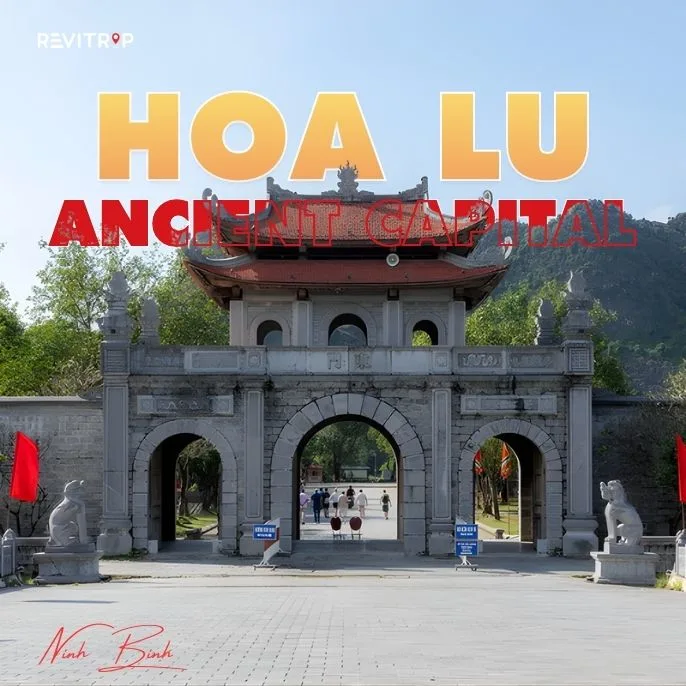
Tucked inside a natural limestone fortress in Ninh Binh Province, Hoa Lu Ancient Capital served as Vietnam’s first imperial capital for 42 years, from 968 to 1010 AD. Three dynasties ruled from here. Two emperors built temples, palaces, and citadel walls that used the surrounding karst peaks as defensive barriers no army could easily breach. And when the capital eventually moved north to what is now Hanoi, the site remained sacred, preserved in the landscape as a testament to where an independent Vietnamese nation was born.
Today, Hoa Lu sits within the Trang An Landscape Complex, a UNESCO World Heritage Site that encompasses some of the most dramatic scenery in northern Vietnam. Visiting Hoa Lu means walking through both history and landscape at the same time, and understanding why the two are inseparable here.
The History of Hoa Lu Ancient Capital
Dinh Bo Linh and the Birth of Dai Co Viet (968-980)
For nearly a thousand years, Vietnam lived under Chinese domination. The story of Hoa Lu begins with the man who ended it.
In 968, Dinh Bo Linh, after quelling the chaos of the Twelve Warlords and unifying the country, declared himself Emperor Dinh Tien Hoang and established the nation of Dai Co Viet. He chose Hoa Lu as his capital not out of convenience, but out of military logic. Surrounded by rugged limestone mountains, the capital functioned as a natural fortress. The 10th century rulers took advantage of this topography to design enclosures that would be especially difficult to attack, ordering the construction of earthen walls reinforced by wooden stakes, approximately 10 meters high and 15 meters thick.
The selection of Hoa Lu marked the true dawn of an independent Vietnamese state. The capital at Hoa Lư covered an area of 300 hectares, including both the Inner and Outer Citadels, with palaces, temples, and shrines surrounded and protected by mountains of limestone.
The Early Le Dynasty and the Defense of Independence (980-1009)
Following the assassination of Emperor Dinh Tien Hoang and Crown Prince Dinh Lien in 980, General Le Hoan ascended the throne to counter an imminent Chinese invasion, establishing the Early Le Dynasty. Hoa Lu once again demonstrated its strategic value. In 981, Le Hoan launched a successful defense against a Song Dynasty invasion from the same mountain-ringed fortress, ensuring the country’s ongoing independence.
The Early Le Dynasty ruled from Hoa Lu for 29 years, further consolidating the nation’s borders and identity.
The Relocation to Thang Long (1010)
The reign of Hoa Lu concluded in 1010, when Emperor Ly Cong Uan of the newly established Ly Dynasty decided to relocate the imperial seat from the mountainous terrain of Hoa Lu to Dai La, a more centrally located plain, which he renamed Thang Long, now known as Hanoi.
The court moved, but Hoa Lu’s influence did not vanish. The political and cultural blueprints of the first capital shaped the structure of the new one, and the temples of the two founding emperors were built on the former palace grounds, so the legacy of Vietnam’s first capital would endure.
What to See at Hoa Lu Ancient Capital
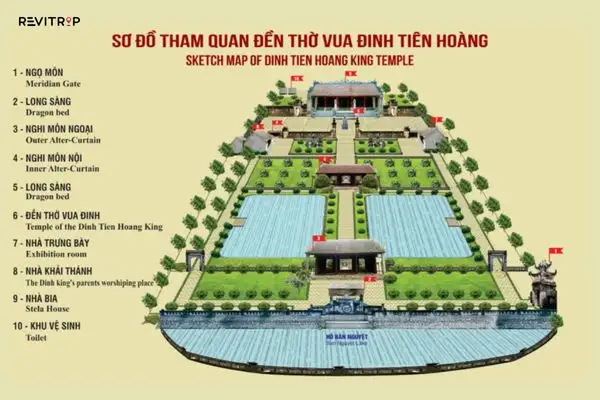
Dinh Tien Hoang Temple
The most significant structure at Hoa Lu, this temple honors the emperor who founded Dai Co Viet. The temple sits on the grounds of the former main royal palace, built in the “tien thuy hau son” style incorporating feng shui principles, with a river to the front and a mountain at the back. The temple complex includes three main shrines with intricate carved details created by Vietnamese craftsmen during the 17th century.
Inside, a large bronze statue of Emperor Dinh Tien Hoang sits at the center, flanked by statues of his sons. The courtyard is one of the most atmospheric spaces in Ninh Binh: quiet, shaded, and framed by the same limestone peaks that have stood here since the 10th century.
Le Dai Hanh Temple
The temple of Le Dai Hanh stands 300 meters north of the Dinh Tien Hoang Temple, in Truong Yen Commune, with Den Mountain as its backdrop. Dedicated to Emperor Le Hoan, founder of the Early Le Dynasty and the general who repelled the Chinese invasion of 981, this temple follows the same three-part structure as its neighbor: Thien Huong House, the front shrine, and the Sanctum. The rear of the main temple holds ancient images of Le Dai Hanh and his family.
Also notable here is the presence of Queen Duong Van Nga, the only Vietnamese queen to have been married to two emperors: Dinh Tien Hoang and then Le Dai Hanh after the former’s assassination. Her statue stands within the Le Dai Hanh temple complex, a remarkable figure in Vietnamese history who receives relatively little attention elsewhere.
Ma Yen Mountain and the Imperial Tombs
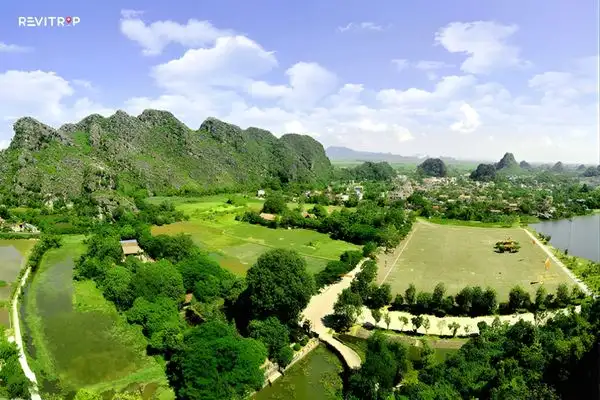
The tomb of Emperor Dinh Tien Hoang sits on nearby Ma Yen Mountain, while the tomb of Le Dai Hanh lies at the foot of the mountain. Climbing Ma Yen Mountain requires effort but rewards visitors with panoramic views over the Hoa Lu valley, the surrounding rice fields, and the karst peaks of the Trang An complex. The ascent involves several hundred steps, and the views from the summit are among the best accessible vantage points in the region.
The Citadel Walls
Several sections of the original earthen citadel walls still exist and have been excavated by archaeologists. While not the most visually dramatic feature of the site, walking alongside these remnants connects visitors to the physical scale of the original fortress. At their original height of 10 meters, with widths of 15 meters, they would have formed an imposing barrier across the gaps between the limestone peaks.
The Truong Yen Festival
The most important cultural event at Hoa Lu is the Truong Yen Festival, also called the Co Lau (Flag of Reeds) Festival, held annually from the 8th to the 10th of the third lunar month. This festival commemorates the founding emperors through processions, traditional games, and ceremonial offerings. It draws large crowds of Vietnamese pilgrims and domestic tourists and transforms the usually quiet site into a genuinely festive celebration of national heritage.
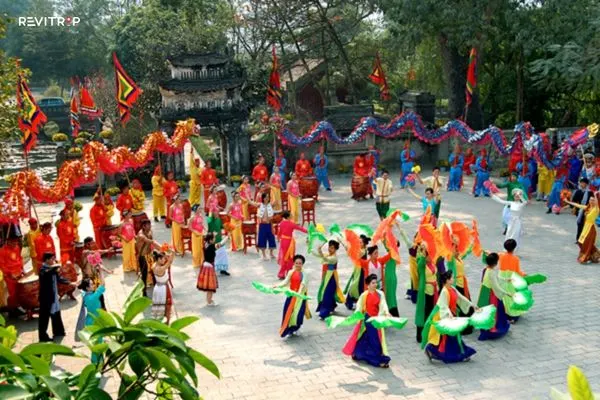
Visiting during the festival offers a vivid cultural experience, but the crowds can be significant. Visitors who prefer a quieter atmosphere should plan their trip outside the festival window.
What to Eat Near Hoa Lu
The Ninh Binh region has a distinctive food culture that pairs well with a day of historical exploration. Two dishes stand out as genuine local specialties.
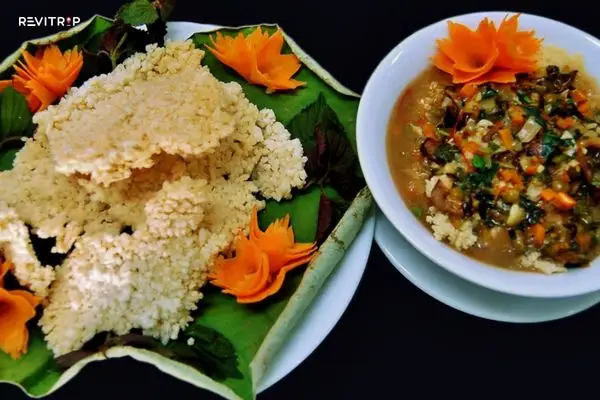
Com chay (crispy rice) is the most famous food associated with Ninh Binh. Sheets of dried, toasted rice served with braised meat and vegetables, it has a satisfying crunch and a deeply savory flavor. The dish traces its origins to the royal kitchens of the Hoa Lu capital period.
Thit de (goat meat) is the other signature of the region, served grilled, steamed, or in a curry-style preparation. The goats that produce this meat graze on the herbs growing on the limestone mountains, which gives the meat a distinctive flavor. Local restaurants near the Hoa Lu entrance serve both dishes at affordable prices.
Practical Information
| Detail | Info |
|---|---|
| Location | Truong Yen Commune, Hoa Lu District, Ninh Binh Province |
| Opening hours | 7:00 AM – 5:00 PM daily |
| Entrance fee | 20,000 VND per adult (~$1 USD) |
| Free admission | Children under 1.2 meters tall |
| Time needed | 1-2 hours for the main temples; add 30-40 minutes for Ma Yen Mountain |
| Distance from Ninh Binh city | ~12 km (15-20 min by motorbike or taxi) |
| Distance from Hanoi | ~90-100 km (~2 hours by car or limousine) |
| Distance from Tam Coc | ~7-8 km (~15-20 min by bicycle or motorbike) |
| Dress code | Modest clothing required; shoulders and knees should be covered in temples |
How to Get to Hoa Lu
From Hanoi: From Hanoi, the bus to Ninh Binh takes 2-2.5 hours and costs around 70,000-90,000 VND. The train takes approximately 2.5 hours and costs between 100,000-200,000 VND. A private car or limousine takes around 1.5-2 hours. From Ninh Binh city, a taxi or Grab ride to Hoa Lu takes 15-20 minutes.
From Ninh Binh city: Renting a motorbike for around 100,000-150,000 VND per day gives you the most flexibility. The ride to Hoa Lu takes 15-20 minutes and passes through rice fields and limestone countryside that are scenic in their own right.
Combining with other sites: Most visitors combine Hoa Lu with Tam Coc in the same day, and the two sites sit only 7-8 km apart, making them easy to link by bicycle or motorbike. Adding Trang An makes for a full day covering the most significant historical and natural attractions in Ninh Binh.
Best Time to Visit
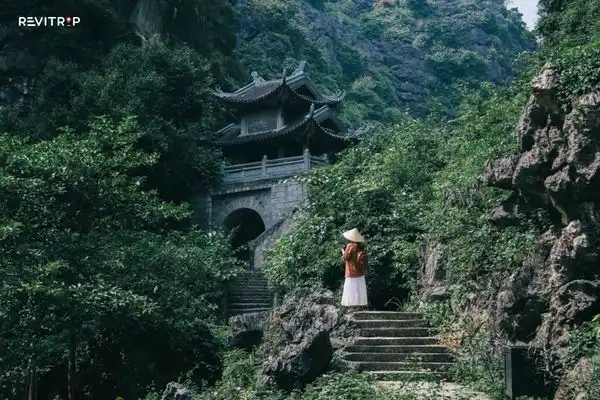
The most enchanting period to visit is from March to May on the solar calendar, when the weather runs pleasantly cool and the site comes alive with festive spirit. If you visit between March and May, you find the iconic sight of golden, ripening rice fields stretching along the base of the limestone mountains, a classic Ninh Binh landscape ideal for photography.
The dry season from November to April generally offers the most comfortable visiting conditions. Summer (May to August) brings heat and humidity. The Truong Yen Festival in the third lunar month (typically March-April) adds cultural richness but also brings larger crowds.
Early morning visits, before 9:00 AM, give the best light for photography and the quietest experience at both temples.
Honest Tips Before You Visit
Hoa Lu is not a site that overwhelms you with spectacle. It rewards visitors who arrive with some historical context and a willingness to slow down. The temples are genuinely beautiful and well-maintained, the setting among the karst peaks is dramatic, and the sense of standing on ground where an independent Vietnam was born carries real weight.
A few things worth knowing before you arrive: some vendors near the entrance may push bike rentals by overstating the walking distances inside the complex. The two main temples sit close enough to walk between comfortably in about 15 minutes. You do not need to rent a bicycle for the inner temple area.
If you plan to climb Ma Yen Mountain to the Imperial Tomb, wear shoes with good grip. The steps are steep in places and can be slippery after rain.
For context on how Hoa Lu connects to the wider Ninh Binh experience, see our comparison of Trang An vs Tam Coc, which covers how to structure a full day around the region’s main attractions.
Where to Stay Near Hoa Lu
Hoa Lu sits between the Trang An and Tam Coc areas, and most accommodation options cluster around both. Ninh Binh Hidden Charm Hotel & Resort offers walking distance access to Tam Coc with comfortable rooms and rice field views, making it a practical base for a day that combines Hoa Lu, Tam Coc, and Trang An.
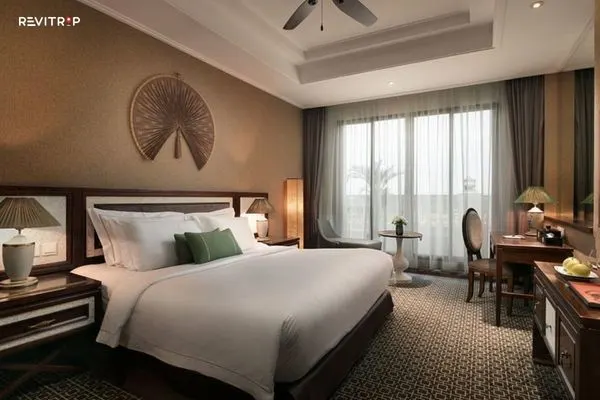
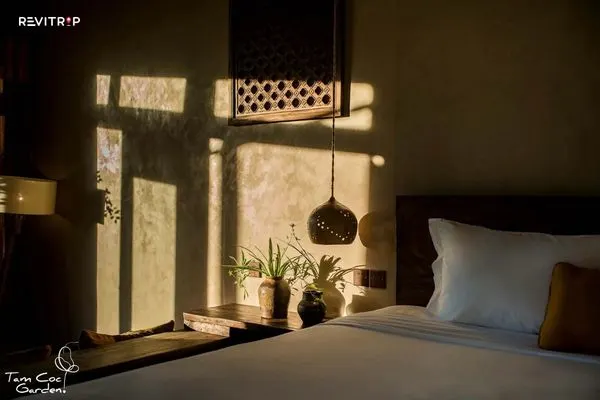
For a more boutique experience deeper in the landscape, Tam Coc Garden Resort brings Tonkinese architecture, a private onsen option, and a strong sense of place to visitors who want their accommodation to feel as considered as their itinerary.
Is Hoa Lu Worth Visiting?
If you care about history and want to see where Vietnam actually started, the answer is yes. If you’re spending at least two days in Ninh Binh, going for an hour is a straightforward decision. The entrance fee of 20,000 VND is one of the lowest for any significant historical site in Vietnam, and the combination of temple architecture, imperial tombs, limestone scenery, and living cultural traditions makes Hoa Lu a uniquely layered experience.
It is not the most dramatic attraction in Ninh Binh on its own. The boat tours at Trang An or Tam Coc deliver more immediate visual impact. But Hoa Lu gives those landscapes their full meaning: you understand what you are standing inside when you know that this valley once sheltered the capital of an independent nation against every force that tried to take it.]
FAQ
We visited Hoa Lu Ancient Capital and found it to be an interesting and atmospheric historical site. The temples are well kept and set among limestone scenery, creating a calm, traditional feel. It’s easy to walk around and learn about Vietnam’s early history.
Around 20,000 VND per person
Opening Hours: Hoa Lu Ancient Capital is open every day from 7:00 AM to 5:00 PM. Ticket Price: The entrance fee for Hoa Lu Ancient Capital is typically around 20,000 VND per person (subject to change). You can buy tickets directly at the entrance, so there’s no need to book in advance.
However, the most ideal time to visit Hoa Lu Capital is in the spring, when the weather in Ninh Binh is dry and cool. In particular, after Tet, Ninh Binh holds many special festivals, so if you are a lover of bustling atmosphere, you should not miss the time from March to May to come here.