Hanoi Train Street Food: Guide to Eating Like a Local
If you have ever wondered what it is like to sit near a passing train, with hot noodles in hand, Hanoi Train Street food is for you. Tucked into a narrow alley in the heart of the Old Quarter, this iconic strip is more than photos.
It is a lively food spot where street vendors have cooked for generations.
They have perfected Vietnamese dishes right beside the tracks.
Whether you are visiting for the first time or you know Hanoi well, its street food offers unique flavors.
What Is Hanoi Train Street?
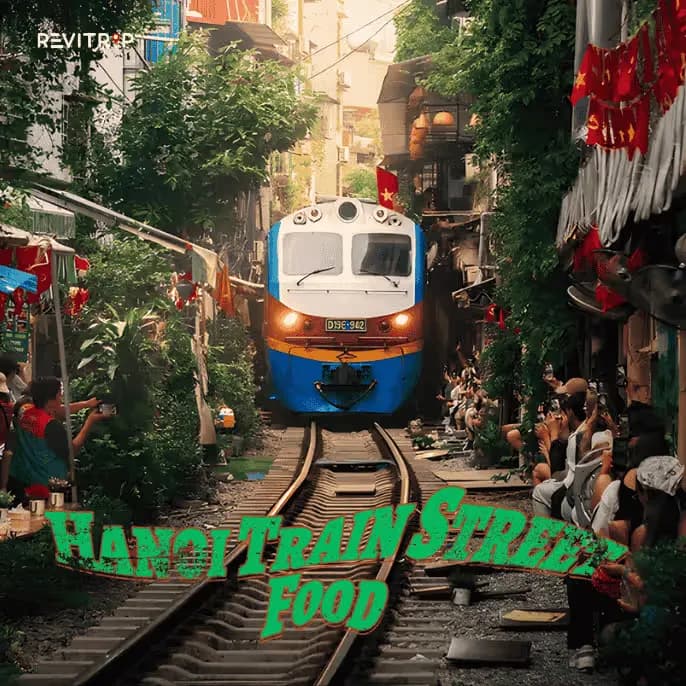
Hanoi Train Street, also called Phùng Hưng Street, is a narrow residential alley in Hoàn Kiếm. An active railway line runs just centimeters from people’s front doors. Twice a day, a train squeezes through the lane, forcing vendors and diners to press flat against the walls as carriages rumble past.
When the train leaves, life starts again at once. Vendors set stools back on the tracks. Workers refill coffee cups. Cooks get the grills sizzling again.
The combination of danger, charm, and incredible food has made it one of the most photographed spots in all of Southeast Asia.
Top Hanoi Train Street Foods You Must Try
1. Bun Cha – Grilled Pork Noodles
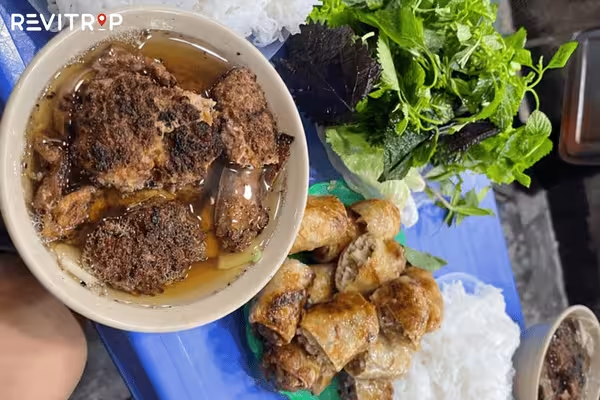
No visit to Train Street is complete without a bowl of Bun Cha. This Hanoi classic features smoky pork patties grilled over charcoal.
It also includes fatty pork belly in a tangy, sweet dipping broth.
They make the broth with fish sauce, vinegar, garlic, and chili. They serve it alongside a generous plate of fresh vermicelli noodles, crisp lettuce, and fragrant herbs that you tear and dip as you please.
The smell of Bún Chả grilling over hot coals is a defining scent of Train Street. You will notice it long before you see the vendor. Pull up a low plastic stool and eat it the way locals do: unhurried, messy, and absolutely delicious.
2. Nem Ran – Vietnamese Crispy Spring Rolls
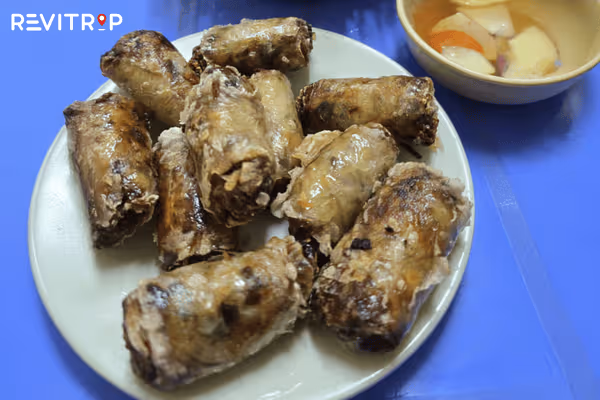
Golden, crunchy, and dangerously addictive, Nem Ran are Vietnamese fried spring rolls. Seasoned pork, glass noodles, mushrooms, and shredded vegetables fill them. Deep-fried until crisp and served with a bright, garlicky dipping sauce, these are the ideal snack. Enjoy them while you wait for the train or watch the alley’s chaos unfold.
Locals often grab a paper bag of Nem Ran to eat on the go — and after one bite, you’ll understand why.
3. Xoi Ngo – Sticky Rice with Sweet Corn
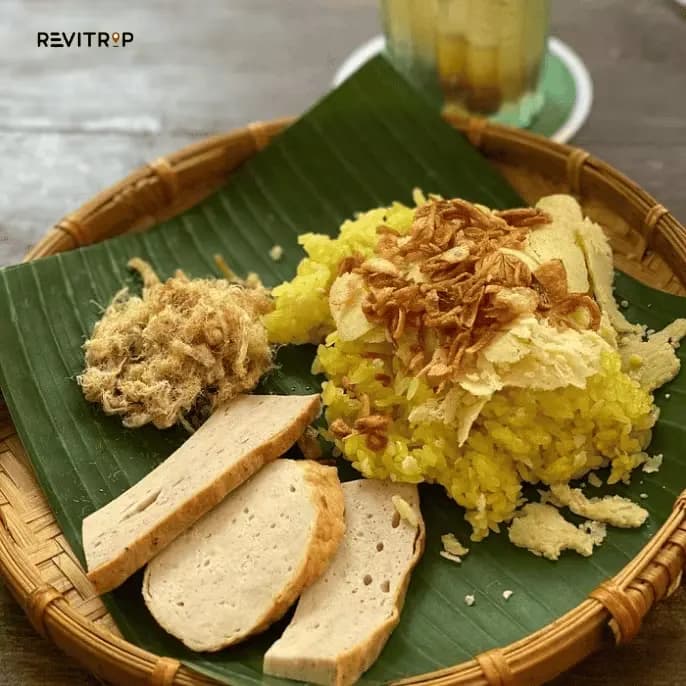
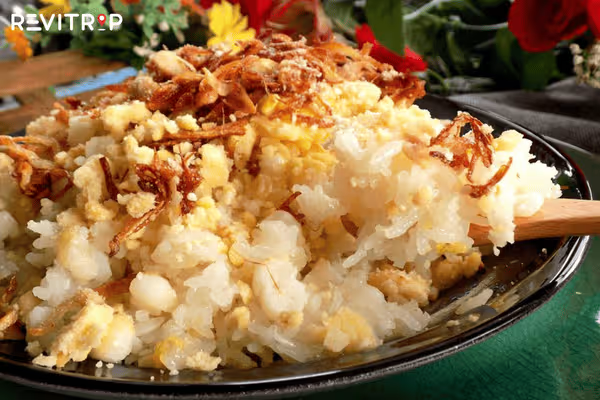
If you arrive on Train Street in the morning, look for vendors selling Xoi Ngo. A comforting dish of sticky rice. It comes with sweet shaved corn, creamy mung bean paste, and crispy fried shallots. People often wrap it in a banana leaf—which also serves as a natural, fragrant serving vessel—and eat it by hand.
This is humble, honest food: warming, filling, and deeply rooted in Hanoi’s culinary traditions. Also one of the most photogenic dishes you’ll find on the street.
4. Nem Nuong – Smoky Grilled Pork Skewers
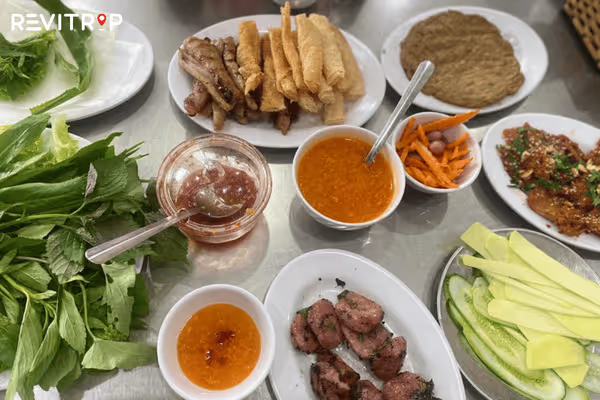
Nem Nuong are hand-rolled pork skewers grilled slowly over charcoal until lightly charred on the outside and juicy within. Served with fresh herbs, rice paper, and a rich dipping sauce, they’re the kind of dish that makes you slow down and savor every bite.
Straatverkopers die Nem Nướng maken, zijn trots op hun houtskooltechniek.
De rook hoort bij de smaak.
Geen twee kraampjes smaken precies hetzelfde. Ask for extra chili if you can handle the heat.
5. Banh Mi – The Vietnamese Sandwich
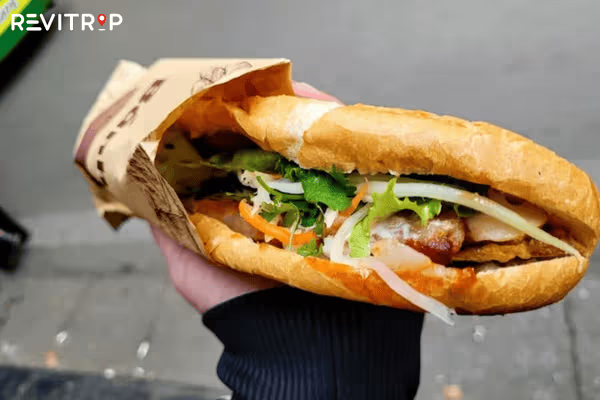
You won’t have to look far for a Banh Mi on Train Street. This iconic Vietnamese baguette sandwich has roots in French colonial influence. Cold cuts, pâté, fresh cucumber, pickled daikon and carrots, cilantro, and chili sauce fill it. Crispy on the outside, pillowy inside, and incredibly satisfying.
The vendors on Train Street often tweak their Bánh Mì fillings with local touches: char-grilled meats, slow-cooked eggs, or house-made sauces. Each one is a small masterpiece.
When to Visit Hanoi Train Street
The best time to visit Train Street is early morning, around 8–10 AM. Food stalls are freshest then, and the light is soft and golden. Morning is also when you’ll find the widest variety of street breakfast dishes, from sticky rice to Bánh Cuốn (steamed rice rolls).
The train usually passes in the late afternoon and early evening, around 3:30 PM and 7:30 PM. This is when the street looks most dramatic. Vendors and diners must clear the tracks as the train approaches, then flood back within seconds of it passing. It’s a chaotic, exhilarating moment that captures the energy of Hanoi perfectly.
Tips for Eating on Train Street
Sit low and stay aware. The stools here are low to the ground by design — and when the train warning sounds, move quickly against the walls. Vendors and locals will guide you.
Eat where the locals eat. The simplest stalls often rank as the best. They offer one dish, use a charcoal grill, and have a vendor with 30 years of experience. Follow your nose and look for the busiest stools.
Bring small bills. Most vendors don’t accept credit cards, and dishes typically range from 20,000 to 50,000 VND (roughly $1–$2 USD). Having exact change makes everything smoother.
Respect the neighborhood. Train Street is a real residential community, not a theme park. The vendors are people’s neighbors and family members. Eat, enjoy, and be respectful of the space.
Why Train Street Food Is About More Than Eating
What makes the food on Hanoi Train Street so memorable isn’t just the quality — it’s the context. You’re eating in a place where life has remained largely unchanged for decades.
Train schedules, not menus, set the day’s rhythms. Vendors know their regulars by name. Grandmothers have passed down recipes to granddaughters.
Every Banh Mi served from a folding table, and every bowl of Bún Chả set on a plastic stool, are small acts of continuity. They endure in a city that is rapidly modernizing. When you eat here, you become briefly part of that story.
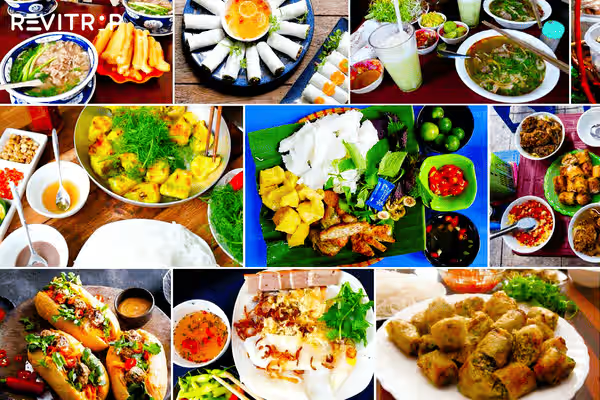
Hanoi Train Street food isn’t just street food — it’s an experience that engages all five senses at once. The rumble of the train, the scent of charcoal, the sour-sweet tang of dipping sauce, the crunch of a spring roll, the warmth of egg coffee on your palms.
Come hungry. Come curious. And when the train horn sounds, press against the wall, hold your coffee steady, and smile. This is a travel moment you’ll talk about for years.
Say xin chào to the vendors, try everything on this list, and let the flavors of Train Street Hanoi take you somewhere unforgettable.
FAQ
The most visited sections are around Phùng Hưng and Trần Phú (north end near the Old Quarter), plus the stretch closer to Lê Duẩn near Hanoi Railway Station. Locals often refer to “north” vs “south” Train Street depending on which entrance you use.
The classics are bún chả (charcoal grilled pork with noodles and dipping sauce), nem rán (crispy fried spring rolls), xôi ngô (sticky rice with sweet corn), grilled pork skewers, and bánh mì.
It’s only “safe” if you treat it like an active railway (because it is). Stay off the rails, follow staff instructions fast, keep your bag tight to your body, and move back early when the warning happens.