Should you pay 120,000 VND to tour inside Hanoi Opera House? Probably not the exterior is stunning and photographable for FREE, while interior tours offer limited access and rushed timing. However, if you can catch an actual performance (opera, ballet, concert), that’s genuinely worthwhile.
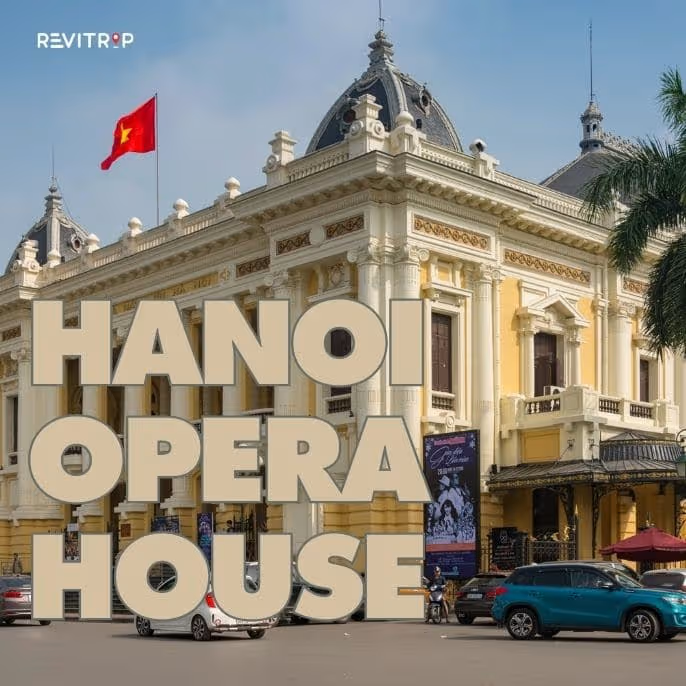
Hanoi Opera House is one of Hanoi’s most beautiful colonial buildings, located centrally behind Hoàn Kiếm Lake. Therefore, absolutely photograph the exterior (5-10 minutes, FREE).
However, skip the interior tour unless you’re an architecture completist. Instead, attend an actual performance if timing works. That’s the building’s true purpose.
Quick Facts: Hanoi Opera House at a Glance
Vietnamese name: Nhà hát Lớn Hà Nội
Location: 1 Tràng Tiền, Hoàn Kiếm (central, behind Opera House)
Built: 1901-1911 (French colonial period)
Architecture style: French Neoclassical (miniature of Garnier Palace, Paris)
Exterior viewing: FREE, anytime from outside
Interior tour: 120,000 VND (~$5), limited days, 70 minutes
Performances: 300,000-400,000+ VND depending on show
Distance from Hoàn Kiếm Lake: 300 meters (5-minute walk)
Best for: Exterior photos, occasional performances
Time needed: 10 minutes exterior, 70 minutes tour, 2+ hours performance
The reality: Hanoi Opera House looks spectacular from outside. A gorgeous French colonial architecture, perfect for photos. However, interior tours are expensive (by Hanoi standards), rushed, and don’t access the most beautiful spaces. Meanwhile, actual performances showcase the building’s true purpose and offer full experience.
What Is Hanoi Opera House? Understanding the Building
French Colonial Architectural Masterpiece
Hanoi Opera House was designed as a miniature replica of the Garnier Palace (Palais Garnier) in Paris.
Construction timeline:
- 1901: Construction began under French colonial authorities
- 1911: Completed after 10 years
- Architects: Boyer, V. Harley, François Lagisquet
- Purpose: Serve French cultural/artistic needs in Indochina
Architectural styles combined:
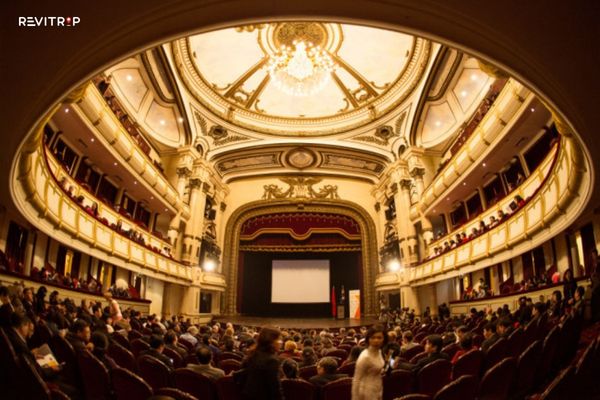
- Neoclassical base: Overall structure and proportions
- Roman Ionic Order: Column system and stone-tiled roof
- Baroque elements: Curved balconies, dome over main entrance (Italian 17th century style)
- Art Nouveau details: Side entrance roof over car areas
What this creates: A magnificent eclectic French colonial building that represents the cultural ambitions of colonial Indochina bringing “Paris to Hanoi” through architecture.
Historical Evolution
French colonial period (1911-1945):
- Hosted ballet, opera, concerts, pantomime
- Served French colonial community
- Introduced French culture to Vietnamese elite
Post-independence (1945-1954):
- Became Government and National Assembly meeting place
- Vietnamese artists performed there
- Transitioned from French to Vietnamese cultural use
Vietnamese period (1954-present):
- Continued as cultural venue
- 1997 renovation: Major restoration by French-Vietnamese architect Hồ Thiều Trì (after 80 years, building was deteriorating)
- Modern era: Hosts opera, ballet, symphony, traditional Vietnamese performances
The Interior Tour: What You Actually Get for 120,000 VND
Tour Details and Limitations
Official tour information:
- Cost: 120,000 VND per person (~$5)
- Duration: 70 minutes
- Group size: Maximum 20 people
- Days: Monday, Tuesday, Wednesday, Thursday, Saturday, Sunday (NOT Friday)
- Time: 10:30am-12:00pm slot
What’s included:
- Front hall (entrance area)
- Mirror chamber (second floor)
- Performance hall viewing (from limited vantage point)
- Guide explanation (quality varies)
What’s NOT included:
- Full stage access (restricted)
- Backstage areas (closed)
- Dressing rooms (closed)
- Some architectural details (roped off)
- Rehearsal rooms (closed)
- Library and administrative areas (closed)
What You’ll See on the Tour
Front Hall (Entrance):
- T-shaped staircase to second floor
- Stone-tiled floors
- Classical columns with luxurious decorative patterns
- French-style chandeliers
Time spent: 10-15 minutes
My take: Pretty but not spectacular. You see this briefly, guide explains, then move on.
Mirror Chamber (Second Floor):
- Italian imported stone tiles
- Large mirrors between doors and windows
- Crystal chandeliers
- Hosted important ceremonies historically
Time spent: 15-20 minutes
My take: This is the nicest space tourists access. The mirrors and chandeliers are genuinely elegant. However, it’s not spectacular enough to justify 120,000 VND alone.
Performance Hall (Brief View):
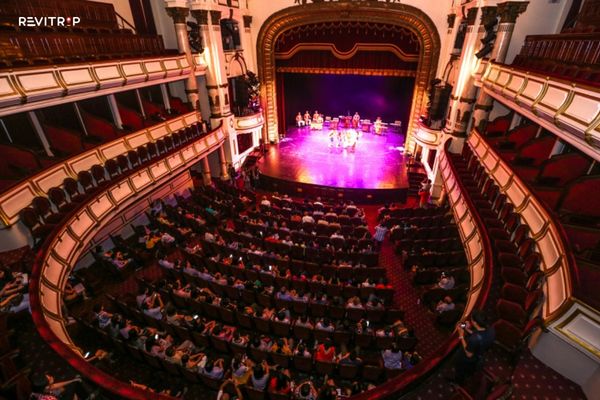
- Red velvet seats (870 capacity, three floors)
- Huge crystal chandelier
- Corinthian columns with colorful patterns
- French 19th-century classical style
Time spent: 10-15 minutes (viewing from entrance only)
Tour vs Performance: Which Provides Better Value?
Interior tour (120,000 VND):
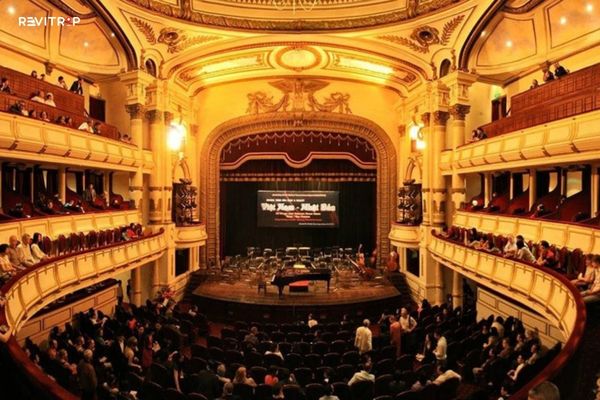
- See limited spaces in 70 minutes
- Rushed, restrictive access
- Performance hall viewed briefly from distance
- Can’t experience the building’s actual purpose
- Educational but superficial
Actual performance (300,000-400,000+ VND):
- Sit in the actual performance hall
- Experience the building as intended (opera, ballet, symphony)
- Full evening (2-3 hours typically)
- See the space properly lit and used
- Genuine cultural experience, not just building tour
The Exterior: Free, Beautiful, and Sufficient for Most Visitors
Why the Exterior Is Enough
What you can see for FREE:
- Complete architectural facade (beautiful yellow colonial design)
- Dome and curved balconies (Baroque elements)
- Column systems (Neoclassical proportions)
- Art Nouveau details on side roofs
- The building in its urban context (Tràng Tiền Square)
Best exterior viewing spots:
1. Tràng Tiền Square (front):
- Classic frontal view
- Best for architectural photography
- See dome, entrance, columns
- Good morning and late afternoon light
2. Side streets:
- Different angles showing building scale
- Less crowded for photos
- See Art Nouveau roof details
3. History Museum area:
- Contextual shots with surrounding colonial architecture
- Shows Opera House in historic district setting
Photography timing:
- Morning (8-10am): Soft light, fewer people
- Late afternoon (4-6pm): Golden hour glow on yellow facade
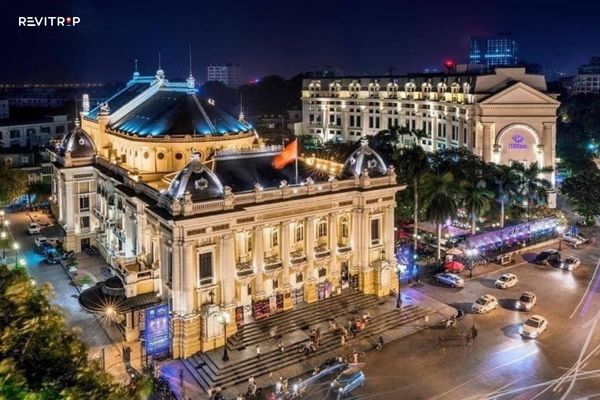
- Evening (7-9pm): Building illuminated, romantic atmosphere
- Avoid midday: Harsh shadows, washed-out colors
Should You Tour Hanoi Opera House Interior? Honest Decision Framework
Tour Interior If:
- You’re an architecture completist (must see every important building inside)
- You’re specifically researching French colonial architecture
- You have unlimited time in Hanoi (4+ days with all major sights covered)
- You can’t attend an actual performance but desperately want interior access
- You’re genuinely passionate about opera house architecture globally
- 120,000 VND is insignificant to your budget
Skip Interior Tour If:
- You have limited time in Hanoi (1-3 days)
- You’re budget-conscious (120,000 VND can buy better Hanoi experiences)
- You’re satisfied with exterior photos (beautiful and FREE)
- You’re not specifically interested in French colonial interiors
- You can potentially attend an actual performance instead
- You prefer spending money on food, museums, or activities
Attend Performance If:
- Opera, ballet, or symphony schedule aligns with your visit
- You want to experience the building’s actual purpose
- You enjoy classical performing arts
- You want memorable cultural evening in Hanoi
- You’re willing to spend 300,000-400,000+ VND for full experience
My Personal Recommendation
For 90% of visitors:
- Photograph the beautiful exterior (10 minutes, FREE)
- Walk around the building appreciating architecture
- Check performance schedule. If something interesting is showing, book tickets
- Skip the rushed interior tour
For the 10% who are architecture specialists or completists:
- Book the interior tour
- Go with specific questions about architectural details
- Take extensive notes
- Accept it’s educational rather than experiential
Final Thoughts: Appreciate Smartly, Spend Wisely
Hanoi Opera House is undeniably beautiful. One of Hanoi’s finest French colonial buildings and an important cultural landmark. The architecture deserves appreciation and the building serves genuine cultural purpose through performances.
However, “beautiful building” doesn’t automatically mean “must pay for interior tour.”
The smart approach:
- Admire the stunning exterior (FREE, takes 10 minutes)
- Appreciate its historical and architectural significance
- If a performance aligns with your schedule, attend that (full value)
- Skip the rushed, limited-access interior tour (poor value for most visitors)
You get 80% of the experience for $0 and 10 minutes. The interior tour adds maybe 15% more for $5 and 70 minutes. A performance adds 100% more (full building experience + entertainment) for $15-20 and 2-3 hours.
Interior tour delivers lowest value-per-dollar and value-per-minute. Exterior viewing and performances deliver better ratios.
Save your 120,000 VND for street food. Save your 70 minutes for the Old Quarter. Take beautiful exterior photos of one of Hanoi’s most elegant colonial buildings.
Unless a great opera, ballet, or symphony is playing. Then definitely get tickets and experience the building properly.
Have you visited Hanoi Opera House? Did you tour inside or just photograph exterior? Share your experience in the comments!