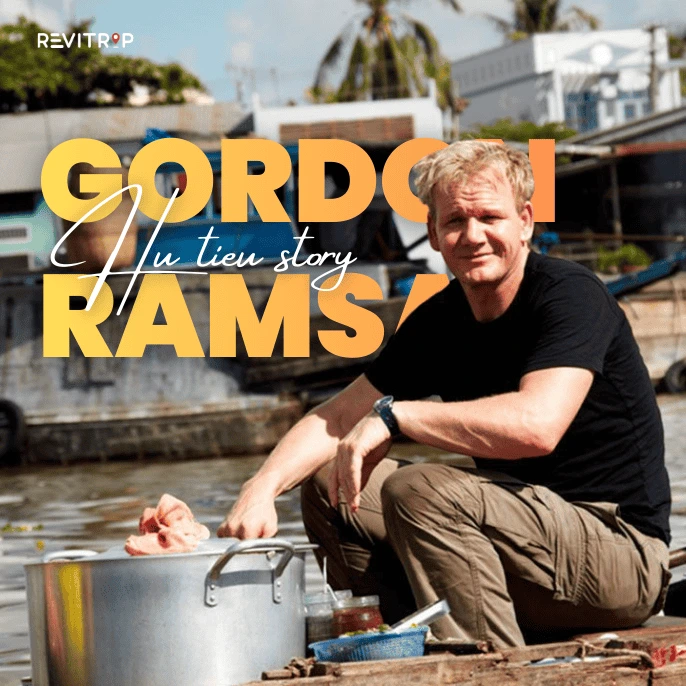
Gordon Ramsay has eaten at some of the most technically sophisticated restaurants on the planet. He holds multiple Michelin stars, has judged thousands of dishes on television, and has built a reputation on being impossible to impress.
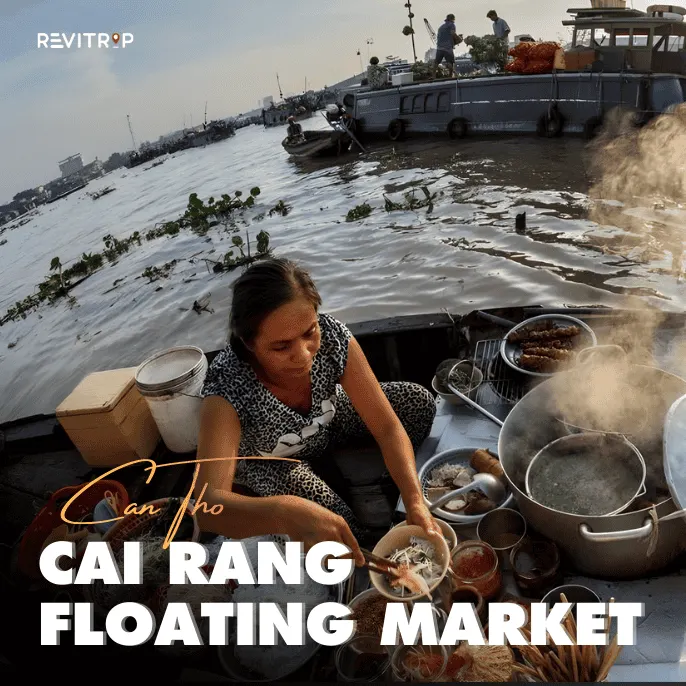
So, as he sat on a small wooden boat at the Cai Rang floating market in Can Tho, he ate a bowl of hu tieu. A local vendor prepared it. Nobody expected what came next.
“This bowl of hu tieu, a stunning, delicious slow-cooked Vietnamese pork noodle soup, is the greatest dish I’ve ever had,” Ramsay said.
Not the greatest Vietnamese dish. Not the greatest street food. The greatest dish he had ever had. The statement came from a man with more culinary experience than almost anyone alive.
It put a riverside market in southern Vietnam on the global food map. It also sent visitors looking for that bowl.
This is the full story of how it happened, what hu tieu actually is, and what Gordon Ramsay eventually did with that memory when he got home.
How Gordon Ramsay Ended Up at Cai Rang Floating Market
Gordon Ramsay’s relationship with Vietnamese food started in 2011. He visited Vietnam for an episode of Gordon’s Great Escape and quickly became enamored with Vietnamese dishes with complex flavor profiles. That first trip took him across many regions. It introduced him to a food culture he later called truly unlike any in Southeast Asia.
It was not a short-form visit. Ramsay spent time in the country, traveling north to south. He learned dishes from local cooks.
He ate street food instead of hotel restaurants and named Vietnam an “extraordinary melting pot of food,” saying “I fell in love. There’s just such a humble approach to eating incredible food.”
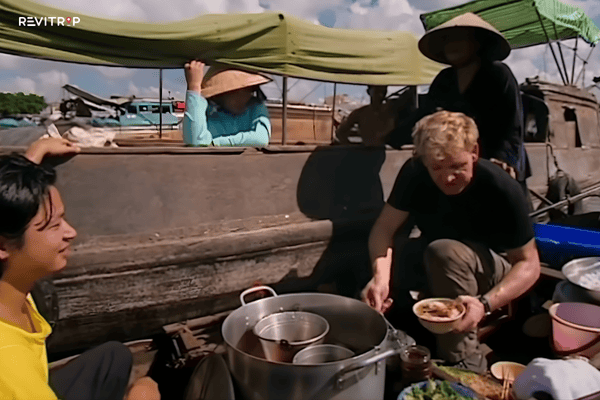
The Cai Rang visit came during a trip to the Mekong Delta. Ramsay ate a bowl of hu tieu prepared by a woman on a small boat at the Cai Rang floating market.
He was not visiting the market as a tourist attraction. He was there to eat and understand how people in the Mekong Delta live, work, and cook. The hu tieu arrived in a bowl on a boat on the river at somewhere around 6 in the morning. The setting alone is hard to replicate.
What Is Hu Tieu and Why Did It Impress Gordon Ramsay?
Hu tieu is a southern Vietnamese noodle soup that most international visitors walk past in favor of pho. That is a big mistake. Gordon Ramsay’s reaction is one of the clearest reasons to pay attention.
Hu tieu shows how Vietnam skillfully blends regional cuisines into its own in a subtle, graceful way. The dish comes from Chinese and Cambodian cooking traditions. But the version from southern Vietnam, especially the Mekong Delta, became distinct.
People in Southern Vietnam utilized the abundance of rice in the Mekong Delta and created their own version of noodles, known as “hu tieu dai” (chewy noodles), which are chewier, more transparent, and made from rice starch.
The broth is what separates hu tieu from other Vietnamese noodle soups. A clear, light soup is slow-cooked for 7 to 8 hours, resulting in a sweet taste derived from pork bones and white carrots. Three key ingredients, grilled red onions, dried squid, and shrimp, add a smoky depth to the broth while also imparting a mild sea scent.
This is what Gordon Ramsay tasted on that boat. Not a simple soup, but a broth that built flavor through most of the night. It was served fresh by the river by someone who made it for decades.
Ramsay noted that the aroma of chives, herbs, and basil created a clean, balanced flavor. He said the hu tieu broth could be better than many Vietnamese restaurants in London.
There are about 20 different versions of hu tieu. The most popular staples include pork, pork ribs, pork innards, shrimp, squid, wonton dumplings, fried garlic, fried shallots, and scallions.
The Mekong Delta version that Ramsay ate at Cai Rang leans toward the southern style. It uses lots of fresh herbs and fewer noodles. The broth is clear, not cloudy.
What Gordon Ramsay Did Next: MasterChef US Season 4
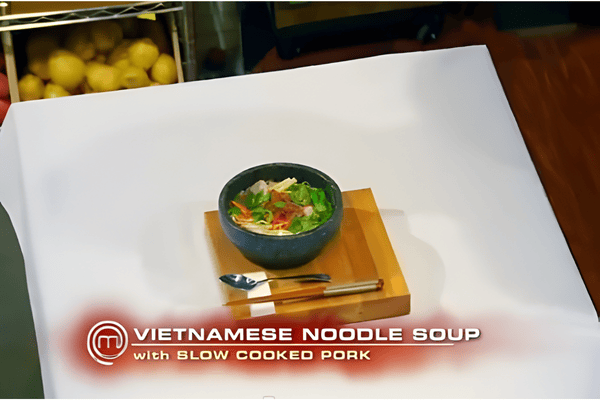
The story does not end on the river. Ramsay was impressed by Vietnamese food culture, especially hu tieu, which stayed with him. He chose it as the elimination challenge dish on MasterChef US Season 4 in 2013.
The decision surprised everyone in the competition. As the show’s judge that year, Ramsay tasked his five contestants with preparing bowls of Vietnamese hu tieu. For amateur home cooks on an American cooking show, recreating a dish from Mekong Delta tradition was very hard. The broth needed hours to prepare and required specific ingredients.
One contestant described it as “the dish with the most ingredients, the most complex, but with a wonderfully layered broth.” The contestants tasted the dish before trying to recreate it. Their reactions to the broth matched what Ramsay felt at Cai Rang. It seemed simple at first, but it was hard to reproduce well.
When one contestant’s version succeeded, Ramsay said it took him back to a boat on a river in Vietnam. The flavors truly brought back the memory. That reaction, from someone who spends most of his professional life critiquing food, is about as strong an endorsement as the dish could receive.
What This Means for Cai Rang Floating Market
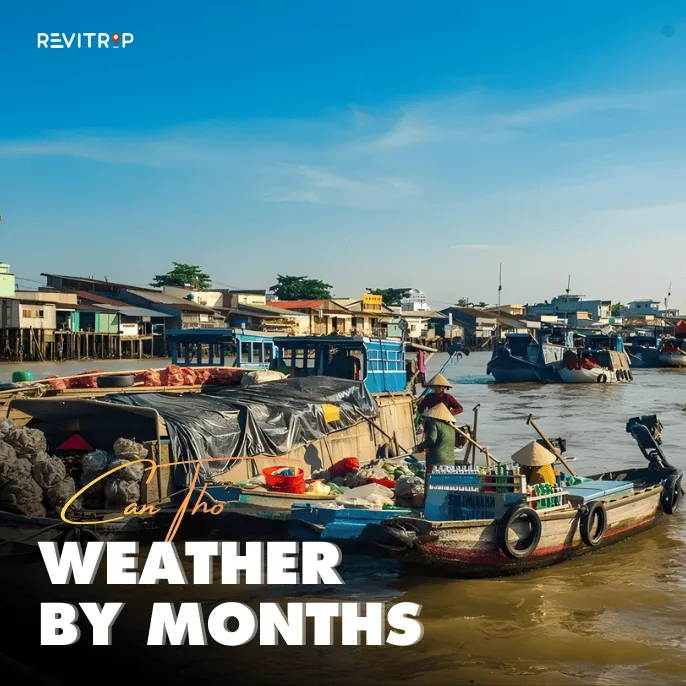
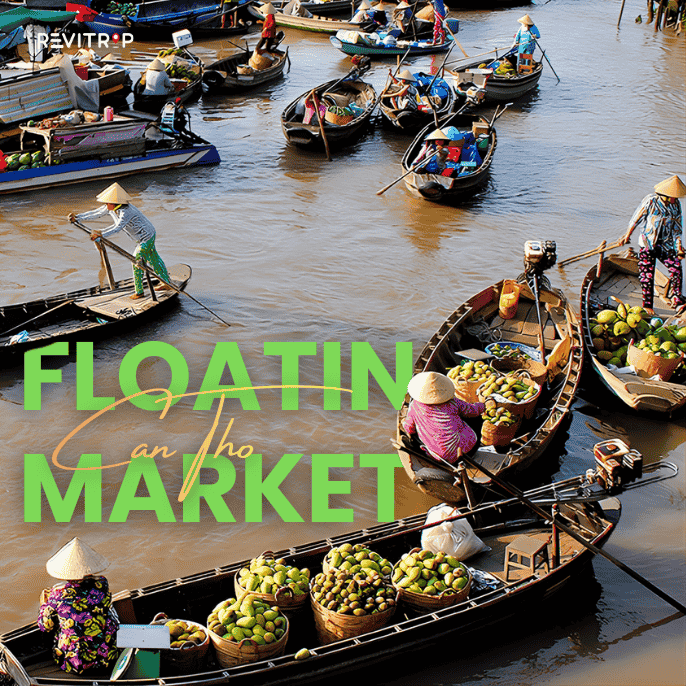
The Gordon Ramsay moment put Cai Rang floating market in a specific context for international travelers. It is no longer just the largest floating market in the Mekong Delta, a title it already held. It is now the place where one of the world’s most recognizable chefs ate what he called the greatest dish of his life.
Booking vehicle for easier trip to Can Tho
That has practical implications for visitors. More people arrive specifically to eat hu tieu at the market rather than simply to observe the trading activity. The food boats selling it have become more prominent and more sought-after than they were before Ramsay’s visit became widely known.
The Cai Rang hu tieu experience is still genuine. The vendors selling it from small boats on the river are not running a tourist operation. They are making the same broth they have been making for years, serving it to traders and early-morning visitors at around 25,000 VND a bowl. The Gordon Ramsay story has brought more attention to them without fundamentally changing what they do.
How to Replicate the Gordon Ramsay Experience at Cai Rang
If you want to eat hu tieu at Cai Rang the way Ramsay did, the logistics are straightforward but the timing is not negotiable.
Arrive before 6am. The food boats are most active during peak trading hours between 5:30am and 6:30am. This is also when the market is at its most atmospheric. Arriving at 7:30am means the energy has already shifted and some vendors have moved on.
Take a small private boat from Ninh Kieu Wharf. The journey takes about 20 to 30 minutes. A private fishing boat costs around 200,000 to 400,000 VND and gets you closer to the food vendors than a larger tour boat would.
Order hu tieu from the food boats directly. Wave one down or make eye contact as they pass. A bowl costs about 25,000 VND.
Eat it on the boat while the market is active around you. That is the closest available approximation of what Gordon Ramsay experienced.
Bring cash in small denominations. No card payments exist anywhere on the water.
The broth you receive will have been cooking since before midnight. The vendor making it has probably been doing so for longer than most visitors have been alive. That history is in the bowl.
Gordon Ramsay on Vietnam as a Food Destination
The hu tieu story is not an isolated moment. Gordon Ramsay has consistently referenced Vietnam as one of his most significant food destinations. When asked directly where the number one food destination in the world was, Ramsay named Vietnam alongside Laos as his top picks in Southeast Asia.
For a country whose food culture is not well known around the world, that endorsement matters. It carries real weight because it comes from someone as credible as Ramsay. The hu tieu bowl at Cai Rang floating market is the most specific and most memorable example of why he feels that way. It is also the most accessible one: a 25,000 VND bowl on a river, available to anyone willing to set an alarm for 4:30am.
FAQ
Yes. Gordon Ramsay visited Vietnam in Gordon’s Great Escape, where he explored Vietnamese food and cooking traditions.
Yes. Clips from his Vietnam trip show him learning about Vietnamese broth and noodle soup, including pho-style cooking.
The Vietnam episode is available on some streaming platforms under Gordon’s Great Escape Season 2, Episode 1. Full availability depends on your region, but listings appear on services like Tubi and Apple TV.