Cai Rang is the largest floating market in the Mekong Delta and one of the few places in Vietnam that still operates the way it did a century ago, not for tourists, but because it is how business actually gets done on the river.
Rough Guides named it one of the world’s 19 must-visit food destinations, which is a reasonable endorsement but also the reason tour boats started showing up in numbers. The good news is that Cai Rang floating market is large enough that the tourist traffic does not overwhelm it, especially if you arrive at the right time. Come at 5:30am and you are watching a genuine wholesale trading operation. Come at 9am and you are mostly watching other tourists watch it.
Bottom line: Worth visiting without question, but timing is everything. Arrive before 6am, bring cash, and skip the organized tour boats if you can.
Quick Facts: Cai Rang Floating Market at a Glance
- Location: Downstream of Can Tho River, 46 Hai Ba Trung Street, Ninh Kieu District, Can Tho City
- Active hours: 4:00am to around 9:00am daily
- Peak trading window: 5:30am to 6:30am (arrive by 5:00am)
- Boat ticket from Ninh Kieu Wharf: 50,000 to 100,000 VND ($2 to $4) per person
- Food prices on the water: From 25,000 VND for a full meal
- Best day to visit: Saturday or Sunday (folk music performance on the river)
- Established: Over 100 years ago, recognized as national intangible cultural heritage
- The reality: Genuinely impressive at peak hours, noticeably quieter and more touristy by mid-morning
What Makes Cai Rang Different
Most markets in Vietnam are on land. Cai Rang operates entirely on water, and the trading system that evolved here is specific to that context.
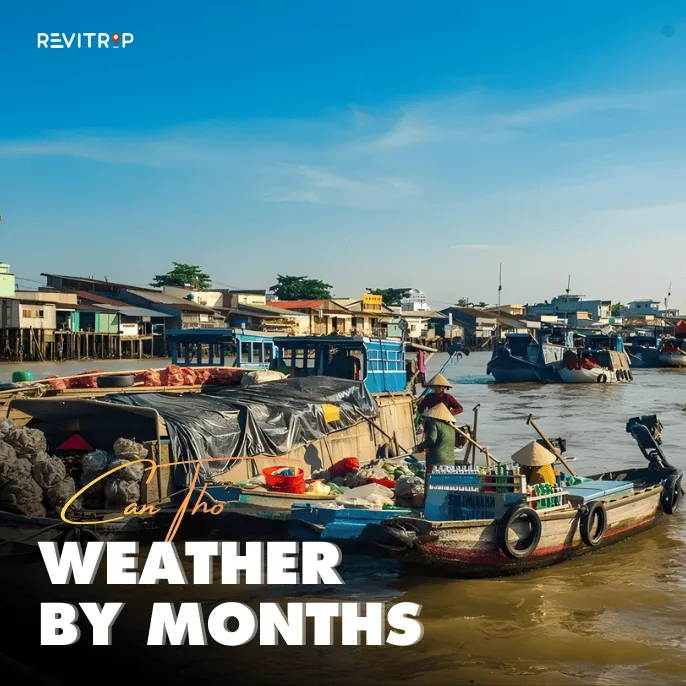
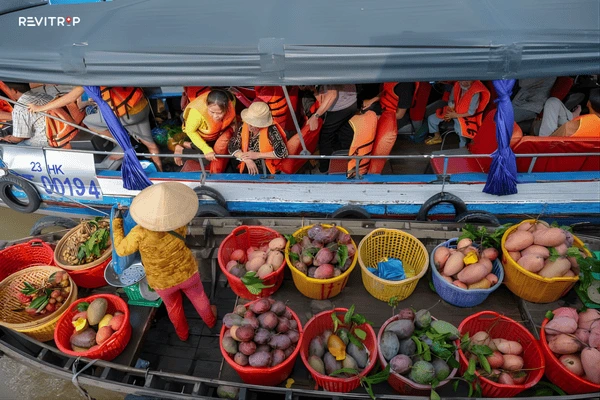
Each boat carries a tall pole at the bow with samples of goods hanging from it: a bunch of bananas, a pineapple, a bag of dried fish. This is the advertising system. Buyers on passing boats look at the poles to identify what is being sold without anyone needing to shout across the water. It works efficiently and it looks unlike anything else you will see in Southeast Asia.
The traders at Cai Rang are mostly wholesale buyers stocking up on produce to resell at smaller markets downriver. This is not a retail market designed for individual shoppers. That is precisely what makes it interesting. You are watching a supply chain operate on the water, not a performance put together for visitors.
How to Get to the Floating Market Can Tho
Booking train, bus, private car for easier trip to Can Tho there: Bookaway
Option 1: Independent Boat from Ninh Kieu Wharf
The most straightforward way is to take a boat from Ninh Kieu Wharf in Can Tho city center. The wharf is central and easy to reach by taxi or Grab from anywhere in the city.
Boat tickets cost 50,000 to 100,000 VND per person for a shared boat, or around 200,000 to 400,000 VND to hire a small private boat for your group. The journey takes about 20 to 30 minutes each way. Negotiate the price and the return time before you leave the dock.
My recommendation: Hire a small private wooden fishing boat rather than joining a larger tourist boat. The smaller boats get closer to the trading vessels, can navigate between them more freely, and the experience is significantly less staged.
Option 2: Organized Tour
Tours from Can Tho combining Cai Rang with other Mekong Delta sights range from $30 to $200 USD depending on the operator and inclusions. The advantage is convenience and a guide who can explain what you are seeing. The disadvantage is a fixed schedule that often arrives after peak trading hours.
If you book a tour, specifically ask what time the boat reaches Cai Rang. Anything later than 6:30am significantly reduces what you will see.
Booking Hotels/ Attractions Tickets/ Tours to Can Tho: Klook
Getting to Can Tho First
From Ho Chi Minh City: Buses run regularly from Mien Tay Bus Station and take around 3 to 4 hours. Cost is roughly 100,000 to 150,000 VND. Alternatively, book a direct bus to Can Tho city center. Flying is also an option with Can Tho International Airport receiving domestic flights from Hanoi and Da Nang.
What to Do at Cai Rang Floating Market
Watch the Trading System Work
The best thing to do at Cai Rang is observe rather than rush to buy. Spend time watching how the pole advertising works, how buyers pull their boats alongside sellers, how goods transfer from one boat to another, and how the waterway manages the traffic of dozens of vessels without apparent coordination.
The scale of the operation is most impressive between 5:30am and 6:30am when the channel is densely packed. By 7:30am the activity winds down noticeably as wholesale buyers head back downriver.
Eat Breakfast on the Water
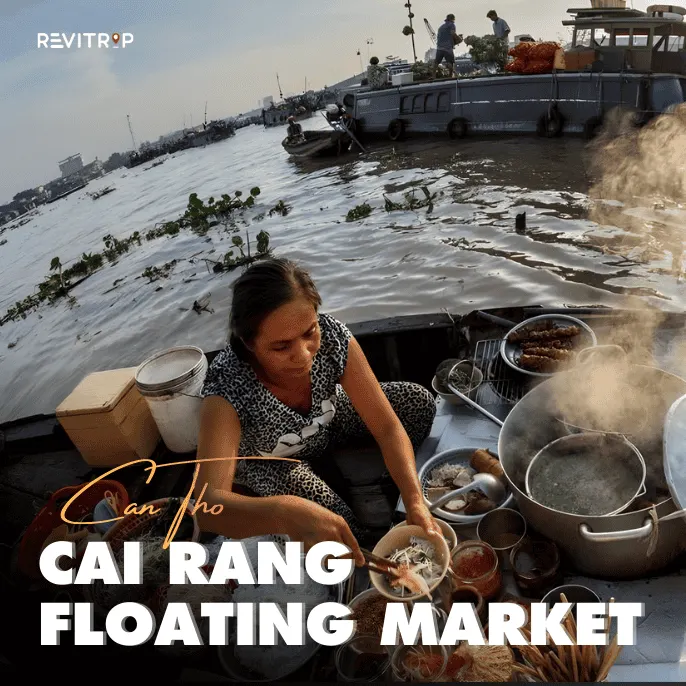
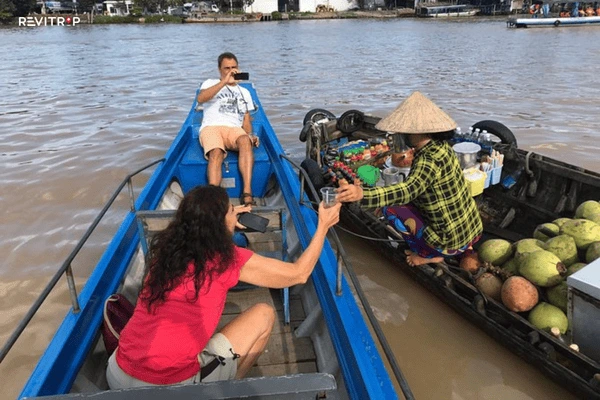
Several small boats navigate through the market selling food and drinks directly to traders and visitors. This is one of the genuinely great breakfast experiences in Vietnam.
For around 25,000 VND you can get a full bowl of hu tieu (rice noodle soup with pork and shrimp), bun rieu (crab-based noodle soup), or com tam (broken rice with grilled pork and egg). Fresh fruit is also abundant: durian, rambutan, mangosteen, and milk fruit depending on the season, all sold at prices well below what you would pay at any market on land.
Ordering tip: Wave down the food boats or make eye contact with vendors and they will pull alongside. No menu exists. Point at what you want and hand over cash. Prices are fair and non-negotiable at this hour since the sellers are mostly serving the traders, not tourists.
[IMAGE: cai-rang-floating-market-food-boat-breakfast.jpg] Alt text: “Food boat at Cai Rang floating market serving hot noodle soup breakfast to traders on the Can Tho river”
Listen to Don Ca Tai Tu on Weekends
Every Saturday and Sunday, a boat travels through the market performing don ca tai tu, the traditional folk music of southern Vietnam. The style developed in the Mekong Delta and reflects the lifestyle and emotional landscape of people who live and work on the river. It was recognized by UNESCO as intangible cultural heritage in 2013.
The performance is not a show organized for tourists. It is a regular fixture of the weekend market and the musicians play for traders and visitors alike. If your visit falls on a weekend, stay on the water long enough to hear it.
Practical Tips for Visiting Cai Rang
Arrive early. The market is most active between 5:30am and 6:30am. Arriving at 5:00am gives you time to settle before peak hours. Arriving at 8:00am means you have mostly missed it.
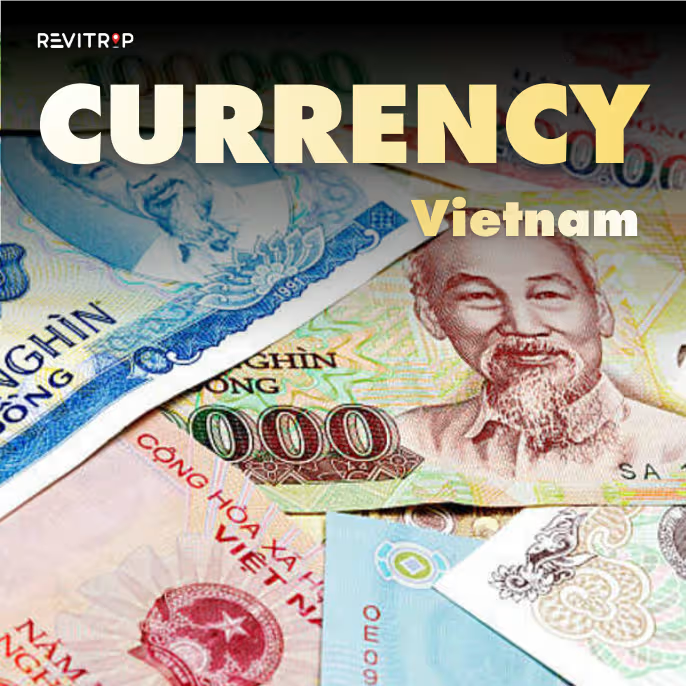
Bring cash in VND. No card payments exist on the water. Small bills are ideal since sellers and food vendors rarely carry change for large notes.
Dress for sun and water. The river reflects heat intensely once the sun is up. A hat, sunglasses, and sunscreen are not optional if you are staying out past 7am. Light clothing that dries quickly is practical if spray or small waves are a factor.
Choose the right boat. Smaller wooden fishing boats offer a more authentic experience than larger tourist vessels. They are also cheaper if you negotiate before boarding at Ninh Kieu Wharf.
Combine with nearby attractions. The Ba Cong Orchard Garden is a 2-hectare fruit farm supplying produce to the market and worth visiting directly after Cai Rang. Rice noodle factories and coconut candy workshops in the area offer a look at how the goods traded at the floating market actually get made.
Is Cai Rang Floating Market Worth It?
Yes, if: You arrive before 6am, hire a small private boat, and give yourself at least 90 minutes on the water. The combination of the pre-dawn light, the sheer density of boats at peak hour, the pole advertising system, and breakfast on the river adds up to one of the more memorable mornings you can have in southern Vietnam.
Manage expectations if: You arrive after 8am on a tour boat and expect to feel immersed in local life. At that hour the market is winding down and the experience skews more toward photography than genuine observation.
Skip it if: You are not a morning person and cannot realistically be on the water before 6:30am. The floating market Can Tho experience is specifically tied to those early hours. A midmorning visit to a quieter Mekong Delta destination will give you more for less effort.
FAQ
Cai Rang Floating Market is busiest very early in the morning, with the best visiting window usually around 5:00 AM to 8:00 AM. Some sources describe trading starting around 4:00 AM and fading by about 10:00 AM.
Yes, you can visit Cai Rang Floating Market on your own by taking a boat from Can Tho, usually from the Ninh Kieu area. It is a common independent trip, though going early matters if you want to see the market at its liveliest.
The market itself does not usually work like a ticketed attraction, but you normally pay for a boat ride or tour to reach it. In practice, your main cost is transportation on the river rather than an entry ticket.