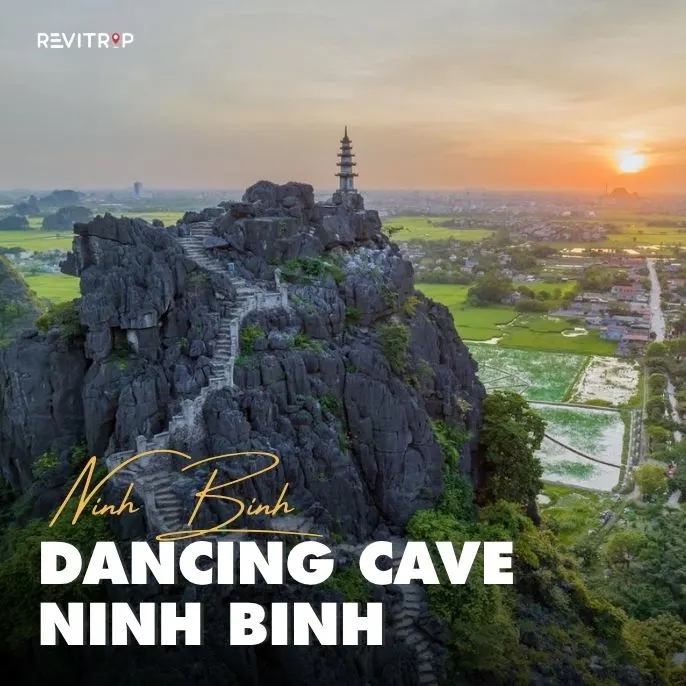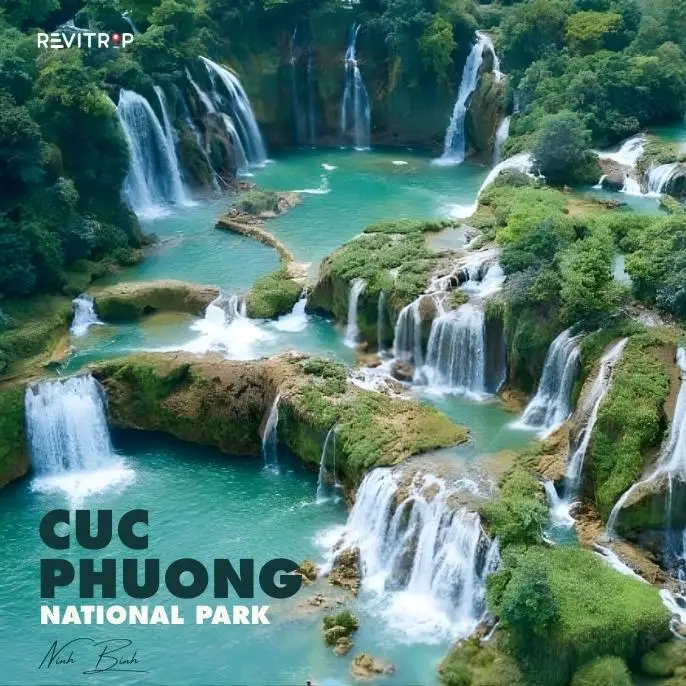
Most Ninh Binh itineraries revolve around boat tours at Tam Coc or Trang An, a morning at Hoa Lu Ancient Capital, and maybe a stop at Bich Dong Pagoda. Cuc Phuong National Park sits about 45 km further west and rarely makes the shortlist. That is a mistake, but only for the right type of traveler.
Here is an honest look at what Cuc Phuong actually delivers, what it does not, and whether you should add it to your trip.
The Short Verdict
Cuc Phuong National Park is one of the most rewarding nature experiences in northern Vietnam, but it rewards preparation and patience. If you walk in expecting easy wildlife sightings and a polished eco-resort experience, you will come away disappointed. If you come for old-growth forest, genuine conservation work, and a slower, more contemplative kind of travel, you will likely say it was the best day of your Ninh Binh trip.
The Endangered Primate Rescue Center is exceptional by any standard. The trekking is genuinely beautiful. The ancient trees are quietly astonishing. The infrastructure, however, is basic, some of the guided tours are rushed, and leeches are real in the wet season.
What Cuc Phuong Actually Looks Like
Vietnam’s first national park, established in 1962, covers 22,200 hectares of primary tropical forest across Ninh Binh, Hoa Binh, and Thanh Hoa provinces. The 20-kilometer road from the park entrance to the park center passes under an unbroken forest canopy for almost its entire length. There is no traffic. The air is noticeably cooler than in the lowlands. Giant hardwoods line both sides of the road, and if you cycle this stretch early in the morning, the forest sounds and filtered light make for an experience that most visitors describe as genuinely memorable.
The park holds over 2,234 plant species, 135 mammal species, 336 bird species, and 122 reptile and amphibian species. It has won Asia’s Leading National Park at the World Travel Awards for six consecutive years through 2024. Those numbers are not marketing language: the biodiversity here is real and exceptional.
What Is Genuinely Worth Your Time
The Endangered Primate Rescue Center (EPRC)
This is the standout attraction, full stop. Established in 1993 by the Frankfurt Zoological Society, the EPRC houses over 145 individuals across multiple critically endangered species including Delacour’s Langur, the Cat Ba Golden Langur, various gibbons, and slow lorises, all rescued from the illegal wildlife trade.
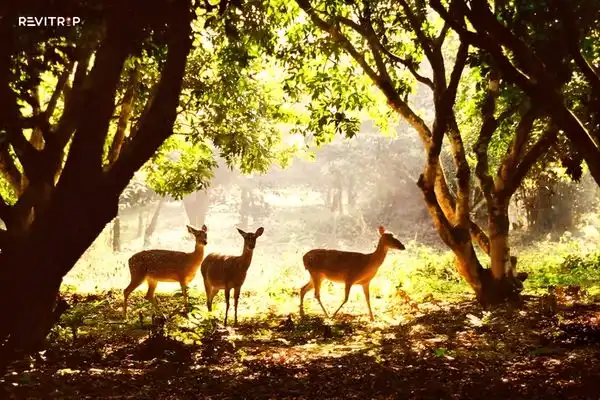
A guided tour through the center costs 60,000 VND extra and takes 45 minutes to an hour. The quality of your guide matters enormously. A good guide explains the conservation programs and individual animals’ histories in ways that are genuinely moving. A hurried guide rushes you through in 10 minutes before moving you to the turtles. If your guide is clearly rushing, hold your ground and take the time you need at each enclosure. You are paying for the experience.
The Trek to the Thousand-Year-Old Tree
The trail to the Cho Chi tree, a 1,000-year-old giant standing nearly 50 meters tall, runs about 3 km from the park center through old-growth forest. The canopy closes overhead, tree roots raise the forest floor into elaborate structures, and the silence inside the old forest carries a different quality from anything you encounter in more open landscapes.
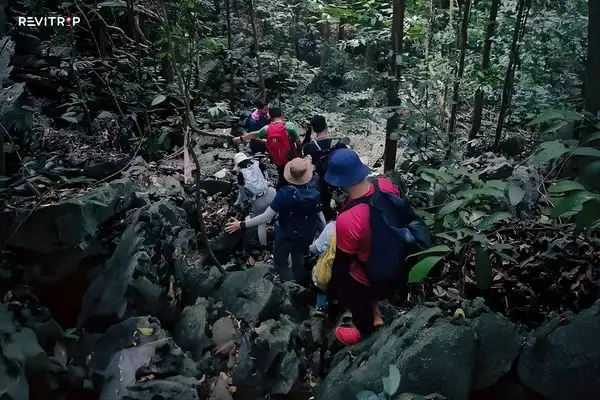
One honest note: the map at the trailhead marks the loop as 3 km. Most visitors report it runs closer to 6-7 km with significant stair climbing. Budget 2.5 to 3 hours and bring at least 1.5 liters of water. Trails can be muddy after rain.
Con Moong Cave (Cave of Prehistoric Man)
The stairs up to this cave are steep and narrow, and coming down requires care in wet conditions. The cave contains archaeological evidence of human habitation dating back 7,500 years, and the view from the entrance justifies the climb on its own. Budget about 45 minutes for this stop.
Night Safari
If the daytime trails leave you wondering where all the animals are, the night safari answers that question. Most of Cuc Phuong’s mammals are nocturnal, and after dark the forest transforms into something altogether different. Park rangers lead small groups along the forest road and main trails with headlamps, scanning the undergrowth and treetops for wildlife that simply does not appear during daylight hours.
Night safaris run from approximately 7:30 PM to 9:30 PM and cost around 150,000-200,000 VND per person on top of the park entrance fee. Book through the park’s visitor center when you arrive, or in advance through your tour operator. Groups are kept small, which is one of the few Cuc Phuong experiences where the guided format genuinely works in your favor: a good ranger with a torch covers far more ground than you would independently, and knows exactly where to look.
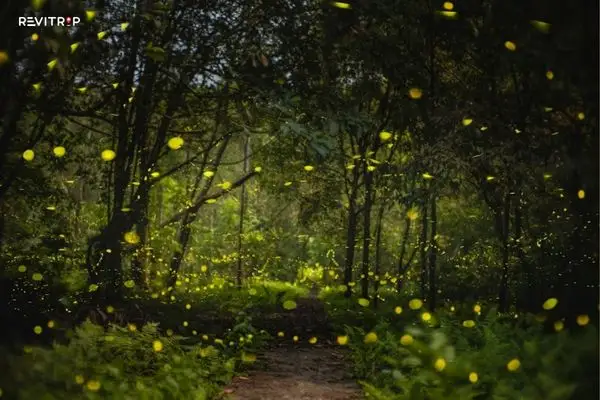
One practical note: the night safari is only available to guests staying inside the park. If you plan to do the day tour and then drive back to Ninh Binh, you cannot add it on. This alone is a strong reason to book an overnight stay rather than a day trip if your schedule allows.
The Honest Downsides
Basic Infrastructure
Overnight stays at park headquarters mean hard mattresses, mosquito netting, and rooms that do not always lock properly. The Mac Lake accommodation is more scenic, but involves a 1.5 km walk from headquarters with no luggage assistance unless you pay an extra 50,000 VND for the minibus. Everything inside the park is cash only. The food at the headquarters restaurant is adequate but nothing more.

None of this is a dealbreaker if you know it going in. It becomes a dealbreaker if you expect hotel-level comfort.
Rushed Guides at the EPRC
The most consistent complaint across visitor reviews. Some park-assigned guides at the EPRC move groups through the primate center in under 10 minutes, which defeats the purpose of visiting. The remedy: be direct about wanting to take your time, and do not let your guide move you on before you feel ready. Booking through an independent tour operator from Ninh Binh or Hanoi rather than taking a park-assigned guide generally produces a better-paced experience.
Leeches in the Wet Season
Between July and October, leeches are active on the forest trails. They are harmless but unpleasant, and they get on your shoes and socks without you noticing. The fix: wear long pants tucked into socks, apply insect repellent to your footwear, and check your feet periodically during the trek.
When to Go
| Season | Months | Conditions | Verdict |
|---|---|---|---|
| Dry season | Nov to Feb | Dry trails, cooler temps, good wildlife visibility | Best for trekking |
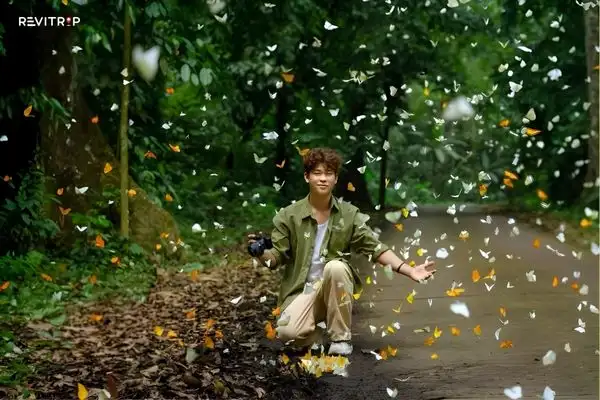
| Butterfly season | Apr to May | Thousands of butterflies in forest clearings | Best spectacle |
| Hot and transitional | Mar to Jun | Warming up, first rains by late April | Manageable with preparation |
| Wet season | Jul to Oct | Muddy trails, active leeches, fewer crowds | For experienced hikers only |
Weekends draw domestic visitors in larger numbers throughout the year. A midweek visit is noticeably quieter. For wildlife viewing, early mornings before 9:00 AM and late afternoons after 4:00 PM are consistently the most active periods.
What to Pack
The park is a genuine tropical rainforest. Packing correctly makes a significant difference to your day.
- Long pants and long-sleeved shirt: essential for leech and insect protection on trails
- Sturdy closed-toe shoes with grip: cave stairs and some trail sections are steep and slippery
- At least 1.5 liters of water: no reliable water sources on the main trekking trails
- Insect repellent applied to clothing, not just skin
- Rain jacket or poncho: afternoon showers are possible even in dry season
- Cash only: the park does not accept cards anywhere on site
Getting There and Costs
Cuc Phuong sits roughly 45 km west of central Ninh Binh and 120 km southwest of Hanoi.
From Ninh Binh city: A Grab or private car takes about 1 hour and costs 200,000-350,000 VND one way. Private guided day tours from Ninh Binh run around $40-55 per person including transport, guide, entrance fees, and lunch.
From Hanoi: A private car takes 2-2.5 hours and costs 1,200,000-1,500,000 VND one way for a four-seater. Public buses leave from Giap Bat Station toward Nho Quan, then a local taxi to the park gate.
The park entrance fee is 60,000 VND per adult. The EPRC visit requires an additional 60,000 VND for a compulsory guided tour.
Booking train, bus, car, rent motorbike to Cuc Phuong National Park
Who Should Go and Who Should Skip It
Go if you: care about wildlife conservation, enjoy trekking through dense forest, want something genuinely different from the boat-and-karst experience of the rest of Ninh Binh, or are spending three or more days in the region.
Skip it if you: only have one day in Ninh Binh and have not yet done Tam Coc or Trang An, expect comfortable infrastructure, or are not prepared for basic conditions and physical trails.
For context on how the rest of Ninh Binh stacks up, see our comparison of Trang An vs Tam Coc. Cuc Phuong sits in a completely different register from either of those experiences, and that is precisely its appeal.
Where to Stay
If you stay inside the park, book well ahead and bring cash. Accommodation at headquarters is the most convenient option for day-one arrivals. Mac Lake is quieter and more atmospheric.
If you base yourself in the Tam Coc area and do Cuc Phuong as a day trip, Tam Coc Garden Resort and Ninh Binh Hidden Charm Hotel & Resort both sit within a comfortable 45-60 minute drive of the park entrance.
FAQ
Overnight stays in Cuc Phuong National Park offer immersive nature experiences, including staying in park bungalows, stilt houses, or camping near Park Headquarters or Mac Lake.
Visitors can book rustic, ensuite rooms for roughly 500k VND, or opt for guided jungle treks with overnight stays in a Muong village.
Tickets for Cuc Phuong National Park are typically purchased directly at the main gate reception upon arrival. As of 2025–2026, the standard entrance fee is 60,000 VND (approximately $2.40 USD) for adults.
Cuc Phuong National Park offers nightly tours from 7 PM to 10 PM, providing a unique opportunity to spot nocturnal wildlife like civets, deer, and flying squirrels, along with millions of fireflies.
These 1 to 1.5-hour, guided excursions focus on wildlife conservation and education, with a limit of 100 participants per tour.