Cai Rang Floating Market: Complete Visitor Guide (2026)
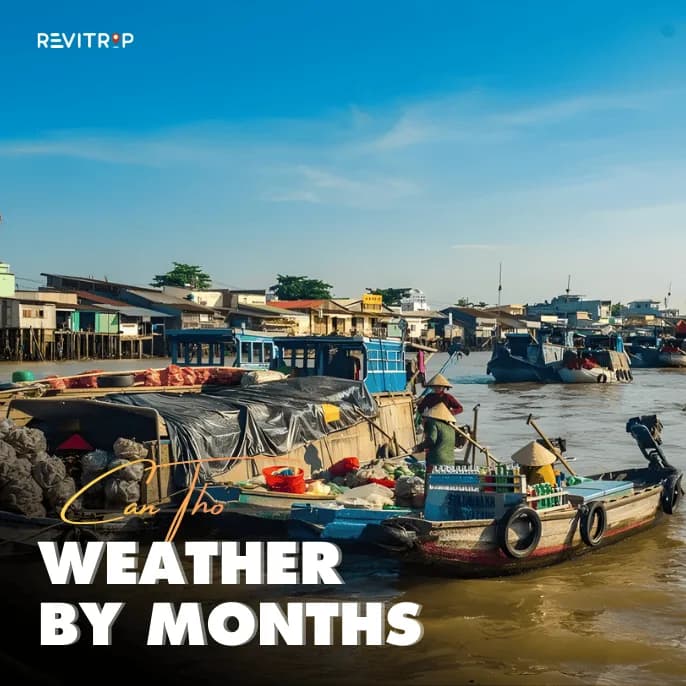
Cai Rang floating market sits on the Hau River about 6 km southwest of Can Tho city center. Every morning before sunrise, hundreds of boats load up with fruit, vegetables, and food and converge on a single stretch of river. By 7am the market reaches full noise: boat engines, vendors calling out prices, and the sound of goods trading across the water. By 9am it begins to wind down.
This is the largest and busiest floating market in the Mekong Delta. It is also one of the few real floating markets left in southern Vietnam. In 2016, the Vietnamese government recognized Cai Rang floating market as a national intangible cultural heritage site.
Bottom line: Go early, hire a private boat, and arrive between 6am and 8am. That window gives you the sunrise, the peak market activity, and enough time to eat hu tieu on the river before the boats disperse.
Quick Facts: Cai Rang Floating Market
- Location: Hau River, Cai Rang District, Can Tho City
- Distance from Can Tho city center: About 6 km southwest
- Opening hours: 5:00 AM daily, busiest 7:00 AM to 8:00 AM, winds down by 9:00 AM
- Best time to visit: Dry season (December to April) for stable water and clear skies
- Peak activity window: 6:00 AM to 8:00 AM
- Closed: First two days of Lunar New Year and Doan Ngo Festival (5th day of 5th lunar month)
How to Get to Cai Rang Floating Market
From Ninh Kieu Wharf (Recommended)
The most straightforward route starts at Ninh Kieu Wharf in the center of Can Tho. From the wharf, a private boat takes about 30 minutes to reach the Cai Rang floating market on the river. Multiple boat rental agencies operate at the wharf from early morning, with staff ready to depart before sunrise. Book a ride to Ninh Kieu Wharf the evening before so you arrive on time for a 5:30am departure.”
To reach Ninh Kieu Wharf from the city center, take Nguyen Van Linh to the southeast. Turn left onto 30/4 Street. Continue along Hoa Binh Avenue.
Then turn right onto Vo Van Tan Street. The wharf sits about 500 meters ahead.
From An Binh Market
Alternatively, An Binh market near the foot of Cai Rang bridge offers a second departure point. It sits about 5 km southwest of the city center and takes around 15 to 20 minutes by motorbike or taxi. A state-managed ferry terminal operates here alongside several private boat rental households.
Boat Rental Prices
| Group Size | Price |
|---|---|
| 1 to 7 passengers | 500,000 VND per boat |
| 8 to 15 passengers | 600,000 VND per boat |
| 16 to 30 passengers | 700,000 VND per boat |
| 31 to 40 passengers | 800,000 VND per boat |
| 40+ passengers | 900,000 VND per boat |
| Solo traveler (shared boat) | 30,000 to 40,000 VND per person |
For groups of three or more, renting a private boat gives you full control over timing and stops. Solo travelers can join a shared boat at significantly lower cost.
What Makes Cai Rang Floating Market Unique
The Beo Pole Advertising System
Perhaps the most distinctive feature of the Cai Rang floating market is the traditional advertising method called the beo pole. Each vendor places a 3 to 5 meter pole at the bow of their boat and hangs samples of what they sell. Because the river is loud and wide, calling out to customers the way a land market vendor would simply does not work. Instead, buyers read the beo pole from a distance and approach only the boats carrying what they need.
The system follows four unspoken rules that locals understand immediately. First, a boat hangs whatever it sells. Second, a boat carrying food and drinks hangs nothing, since the smell and steam do the advertising.
Third, a boat displaying clothing or household items is a family home, not a market stall. Fourth, a boat hanging a coconut leaf or roofing sheet has the boat itself for sale, not the hanging items.
That layered system of visual signals makes the can tho floating market one of the most culturally specific trading environments in Vietnam.
Don Ca Tai Tu: UNESCO Music on the River
On weekends, a boat carrying musicians travels the market route and performs don ca tai tu, a traditional Southern Vietnamese folk music genre recognized by UNESCO as an intangible cultural heritage. The sound carries across the water above the engine noise and the chatter of traders.
Listening to don ca tai tu while sitting on a boat with a cup of kho coffee or fresh coconut water is one of the most specific experiences the Cai Rang floating market offers. Most visitors to Can Tho do not encounter this tradition elsewhere.
What to Eat at Cai Rang Floating Market
Food boats weave through the market throughout the morning, selling directly to other vendors and to visitors. The selection ranges from congee and grilled pork vermicelli to fresh tropical fruit and iced coffee.
Two dishes stand out above everything else on the Cai Rang floating market food scene.
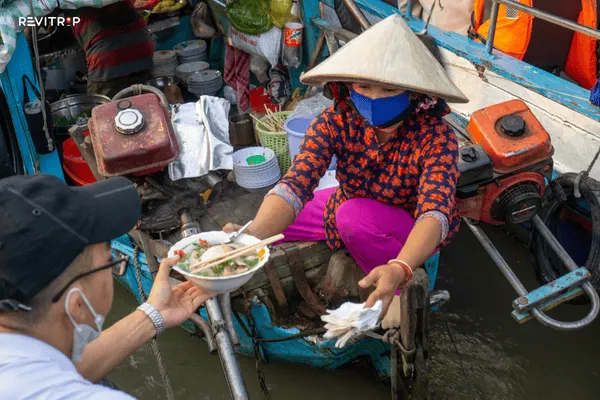
Hu tieu: A southern Vietnamese noodle soup with a light, aromatic broth made from pork bones, dried shrimp, and squid. Can Tho hu tieu uses thinner noodles and a cleaner broth than versions found elsewhere in Vietnam. Fresh coriander, boiled pork, and pig’s trotters complete the bowl. Gordon Ramsay tried hu tieu at Cai Rang during his Vietnam trip and called it one of the most wonderful dishes he had ever eaten.
Kho coffee: A distinctively bitter, concentrated coffee style particular to the Mekong Delta. Vendors brew it strong and serve it with condensed milk over ice. The contrast between the bitterness of the coffee and the sweetness of the milk is more pronounced than in Saigon-style iced coffee.
Beyond these two, look for fresh mangosteen, rambutan, durian, star apple, and jackfruit sold directly from the boats that specialize in fruit.
Best Time to Visit Cai Rang Floating Market
Time of day: Arrive between 6:00 AM and 8:00 AM. That window gives you the sunrise over the river, the peak trading activity, and enough time to eat breakfast on the water before the market thins out. By 9:00 AM most vendors start heading back, and by 10:00 AM the river returns to normal traffic.
Season: The dry season from December to April offers the most stable river conditions and the clearest mornings. Moreover, this period falls outside the wet season flooding risk, which makes boat travel more comfortable.
The fruit season peaks between May and August. If fresh tropical produce matters, consider that window. It is worth it, even with more rain.
Day of the week: Weekdays are quieter and more genuine. On weekends, particularly Saturday, the market attracts more tour groups, which changes the atmosphere. For the most authentic can tho floating market experience, go on a Tuesday or Wednesday morning.
Practical Tips for Visiting
Book a private boat at Ninh Kieu Wharf. Negotiate the price, agree on a departure time, and confirm which stops the boat will make. Avoid paying any deposit without a written receipt.
Always wear a life jacket. Reputable boat operators provide them. Keep your hands inside the boat while moving between vessels.
Ask prices before ordering food. Food boat vendors post no menus. Ask the price of any dish before eating to avoid misunderstandings.
Do not bargain and then walk away. At the Cai Rang floating market, prolonged bargaining followed by not buying is considered disrespectful, particularly from fruit traders who deal in small margins.
Combine the visit with nearby attractions. After the market winds down, boat operators can take you to nearby fruit orchards, My Khanh tourist village, or traditional craft workshops including coconut candy and noodle-making kilns. All of these sit within 30 minutes by boat from the floating market. Book a Mekong Delta day tour from Can Tho that combines Cai Rang with fruit orchards, craft villages, and a riverside lunch in one itinerary.
FAQ
Most tours start very early (around 5:00–6:00 AM) from Ninh Kieu Wharf and include the floating market plus a nearby canal or noodle workshop. Choose a small-boat tour if you want a quieter experience and better photos.
Get to Ninh Kieu Wharf in Can Tho first, then take a boat (usually 20–30 minutes) to the market. Going by road alone won’t give you the real experience, you need a boat to see the action on the river.
Search “Cai Rang Floating Market” on Google Maps and save the pin, then also save “Ninh Kieu Wharf” as your usual departure point. Use both pins so you can track where you start (wharf) and where the market sits on the river.