Bun Dau Mam Tom at a Glance
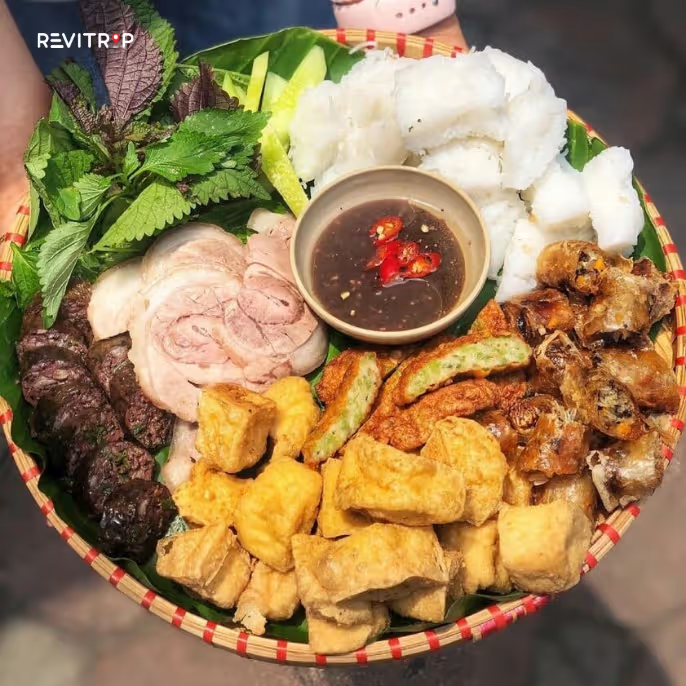
- What it is: Rice noodles + fried tofu + boiled meat + fermented shrimp paste dipping sauce
- Price range: 40,000 – 120,000 VND per person (~$1.60 – $4.80)
- Best time to eat: 11am – 1pm or 5pm – 7pm (fresh ingredients, right crowd)
- Location: Street stalls in Hoan Kiem, Hang Khay, Dinh Liet, Cho Hom area
- Difficulty level for first-timers: Medium (the mam tom/shrimp paste is polarizing)
- The reality: Most blogs recommend tourist-friendly restaurants. “Real bun dau mam tom pho” means plastic stools, no English menu, and tofu the kitchen just pulled from the fryer.
What Is Bun Dau Mam Tom – And Why Does the “Pho” in the Name Matter?
Before we get into where to eat it, let’s clear up what you’re actually ordering.
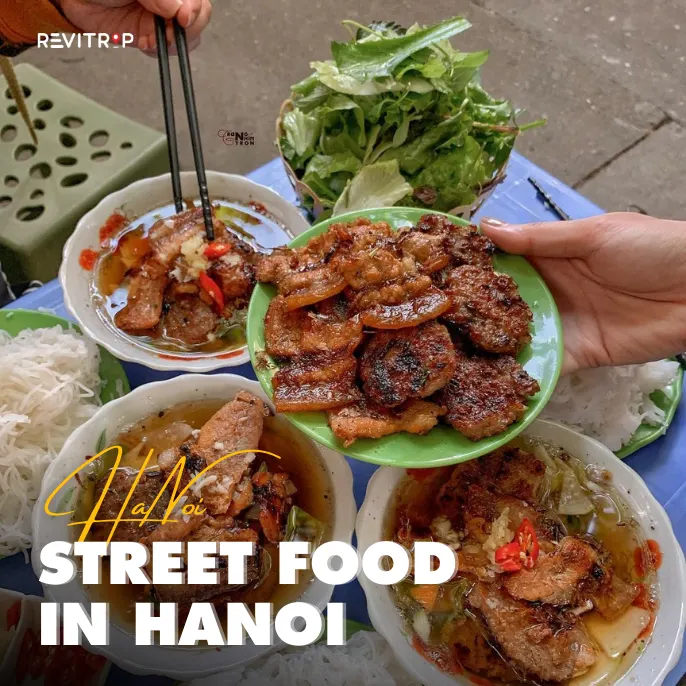
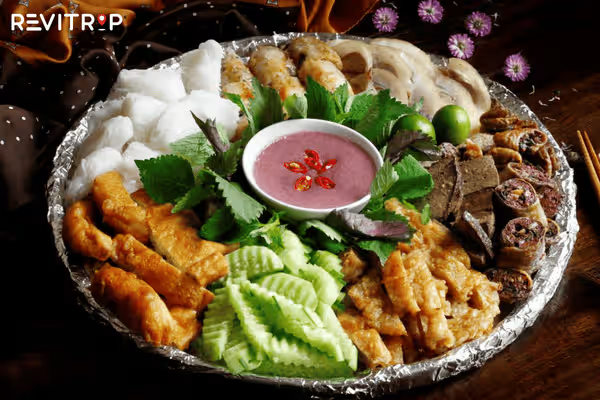
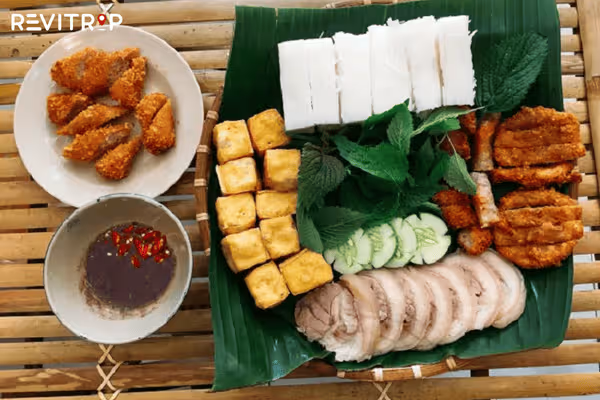
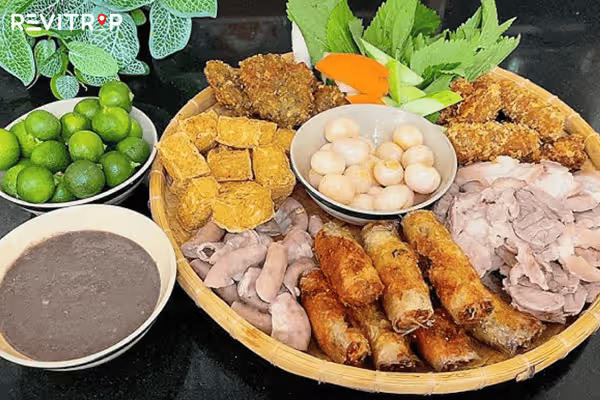
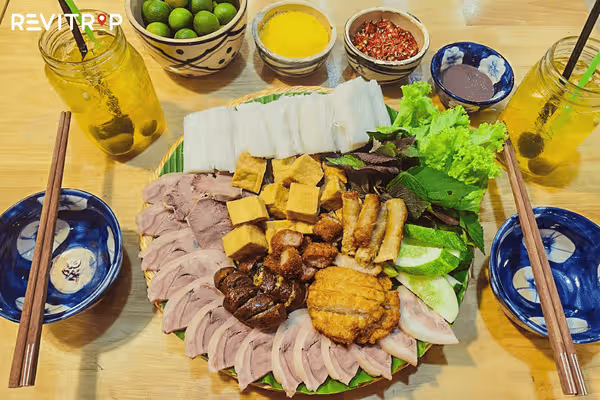
Bun dau mam tom is a Hanoi dish with four main parts. It includes fresh rice vermicelli (bun) and fried tofu (dau). It also has fermented shrimp paste (mam tom).
It often comes with boiled pork or offal. Simple ingredients. Complex experience.
The word “pho” here doesn’t mean the noodle soup — it means “street” in Vietnamese (phố). Bun dau mam tom pho literally means street-style bun dau mam tom. This distinction matters more than it sounds.
There’s a version served in restaurants with menus, receipts, and air conditioning. Then there’s the version eaten on tiny plastic stools outside, where the tofu was fried 10 minutes ago and the mam tom is mixed fresh with lime and chili in front of you. These are not the same dish.
Moreover, bun dau mam tom pho is a deeply Hanoian thing. You’ll find versions in Ho Chi Minh City and Da Nang, but the shrimp paste is mixed differently, the tofu varies, and the whole experience shifts. If you want the real thing, Hanoi is where you eat it.
[IMAGE: bun-dau-mam-tom-street-stall-hanoi-plastic-stools.jpg] Alt text: “Bun dau mam tom pho street stall Hanoi – locals eating on red plastic stools on the sidewalk”
Priority 1: The Non-Negotiables Before You Take a Bite
1. The Mam Tom (Shrimp Paste) Is the Whole Point — Don’t Skip It
My honest take: I’ve watched tourists order bun dau mam tom and ask for the shrimp paste on the side, then not touch it. At that point, you’re eating fried tofu with noodles. It’s fine, but it’s not what you came for.
Mam tom is fermented shrimp paste — purple-grey, intensely pungent, and absolutely essential to the dish. When prepared correctly at a street stall, it’s mixed to order with fresh lime juice (which makes it bubble and froth), fresh chili, and sometimes a small pinch of sugar. The smell is aggressive. The taste is savory, slightly funky, deeply complex, and completely addictive once you’re past the first bite.
If you’re a first-timer: Start by lightly dipping a piece of fried tofu — don’t go straight for a full dunk. The smell is stronger than the flavor, and the flavor usually surprises people in the best way.
What to watch out for: A stall that hands you pre-mixed mam tom that’s been sitting since morning is cutting corners. Fresh lime squeezed tableside is a good sign. A bowl of mysterious purple paste from a shared container is not.
2. The Fried Tofu (Dau Ran) — The Single Biggest Quality Indicator
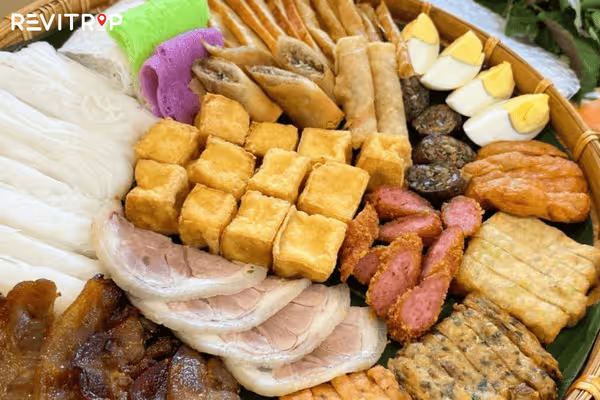
Good fried tofu at a bun dau mam tom pho stall should be: golden and crispy on the outside, soft and slightly steaming inside, and served within minutes of coming out of the oil.
Bad fried tofu: sitting in a tray for two hours, gone rubbery on the outside and dense inside, visibly oil-soaked. If you arrive at a stall and the tofu looks like it’s been there since breakfast — leave. This is not an exaggeration. The tofu tells you everything about how a stall operates.
Practical tip: If you can see the tofu being fried, or you can hear it sizzling nearby, you’re in the right place. Wait five minutes for a fresh batch rather than eating old tofu.
3. Timing: When You Show Up Determines What You Get
The golden window: 11am to 1pm for lunch, or 5:30pm to 7pm for early dinner. This is when tofu is freshest, mam tom is mixed most carefully, and the stalls are running at full speed.
Avoid: Showing up after 2pm for lunch — many stalls have already sold through their best ingredients and are running on what’s left. Before 10:30am, stalls haven’t hit their stride yet.
Seasonal note: If you’re visiting Hanoi between September and November, look specifically for stalls offering cha com (green sticky rice cakes). This is a seasonal addition to bun dau mam tom pho that’s genuinely special and only available during com season. Outside those months, frozen cha com exists — it’s fine, not the same.
Priority 2: The Add-Ons — What to Order and What to Ignore
Cha Com (Green Rice Cake) — Order Only in Season
Between September and November, cha com made with fresh com (young green sticky rice) is one of the best arguments for eating bun dau mam tom pho in autumn Hanoi. The outside is lightly crisped, the inside is soft and fragrant with green rice. It’s genuinely worth seeking out.
Out of season, stalls sell frozen cha com year-round. It’s acceptable, but if you eat it without knowing the fresh version exists, you might not understand the hype. Order it in autumn. Otherwise, focus on the tofu and meat.
Boiled Pork or Offal — More Interesting Than It Sounds
Most bun dau mam tom pho stalls offer boiled pork belly, pork leg, or offal (intestines, liver, blood pudding) alongside the tofu. The boiled meat is milder than the tofu and easier for first-timers to enjoy — pork belly luoc in particular is tender, subtly flavored, and works perfectly dipped in mam tom.
Offal (long luoc) is for the more adventurous. It’s genuinely how many Hanoians eat the dish and marks a stall that takes the full spread seriously. If you’re hesitant, pork belly is the safe and excellent starting point.
Fried Spring Rolls (Nem Ran) — Skip
Many stalls throw nem ran onto the menu as an upsell. Unless the stall is specifically known for them, these are usually frozen spring rolls reheated in the same oil as the tofu. They’re not bad, but they’re not why you’re here. Spend that appetite on more tofu and another round of mam tom.
Priority 3: The “Famous” Options — Worth the Hype or Not?
The Instagram-Famous Stalls — Approach With Skepticism
Controversial take: The bun dau mam tom pho spots that dominate Google results and appear in every Hanoi food roundup have, in most cases, coasted on reviews written two or three years ago. Expanded operations, higher turnover, more tourists — all of this tends to dilute quality. A stall that was exceptional in 2022 may be entirely adequate in 2026.
The best bun dau mam tom pho I’ve had in Hanoi came from stalls I found because locals were sitting there, not because a blog told me to go. No flashy sign, no QR code for the menu, no staff member at the door.
What to look for instead: A stall where the clientele is overwhelmingly Vietnamese, where the plastic stools are always occupied, and where no one is photographing their food.
Mall and Restaurant Versions — Skip If You Want the Real Experience
Bun dau mam tom pho served in shopping centers or sit-down restaurants with air conditioning is a fundamentally different product. Not necessarily bad — but the name no longer really applies. The “pho” (street) is the point. Remove the street context and you’re eating a cleaned-up approximation.
Better alternative: Walk into any alley off Hang Khay, Dinh Liet, or around Cho Hom market. You will find stalls. You will find plastic stools. You will find better bun dau mam tom pho than anything served indoors.
Practical Information: Eating Bun Dau Mam Tom Pho in Hanoi
Getting There
- Walking from Hoan Kiem Lake: Most good stalls are within a 10–15 minute walk through the Old Quarter
- Grab motorbike: 15,000 – 30,000 VND anywhere in the inner city, fastest option
- Avoid driving yourself: Parking in the Old Quarter is a headache not worth having for a lunch stop
Real Cost Breakdown (2026)
ItemPrice (VND)Price (USD)Basic portion (noodles + tofu + mam tom)40,000 – 60,000~$1.60 – $2.40Add boiled pork/offal+20,000 – 40,000+$0.80 – $1.60Cha com (per piece)15,000 – 25,000~$0.60 – $1.00Iced tea (tra da)Free – 10,000Free – $0.40Realistic total per person70,000 – 120,000~$2.80 – $4.80
Red flag pricing: If a bun dau mam tom pho stall is charging you more than 150,000 VND per person without any premium additions — you’re at a tourist markup spot.
What to Bring / Not Bring
Essential: Cash. Many small stalls don’t accept cards or QR payment — small bills (20,000 and 50,000 VND notes) are ideal.
Recommended: Hand sanitizer. Street stalls vary in hygiene setups. Not a dealbreaker, just practical.
Not needed: Reservations. Bun dau mam tom pho stalls don’t take them. Show up, find a stool, sit down.
Best Neighborhoods to Look
- Hang Khay / Dinh Liet area (Old Quarter): Dense with options, walk until you find a stall that looks busy
- Cho Hom market surrounding streets: More local clientele, slightly less tourist-facing
- West Lake area (Ho Tay): Some excellent stalls here, slightly further from the center but worth it if you’re already in the area
[IMAGE: bun-dau-mam-tom-pho-price-stall-hanoi-2026.jpg] Alt text: “Bun dau mam tom pho price sign at Hanoi street stall 2026 – affordable local street food”
Is Bun Dau Mam Tom Pho Worth It? The Honest Verdict
Absolutely Worth It If:
- You’re in Hanoi for more than one day and want to eat something genuinely local
- You’re willing to try mam tom — even just once, even cautiously
- You’re eating between 11am–1pm or 5:30pm–7pm when ingredients are fresh
- You find a stall based on local foot traffic, not Google reviews
- Your budget for lunch is under $5 and you want to eat like a Hanoian
Skip It If:
- You know for certain that fermented, pungent flavors are a dealbreaker for you — without mam tom, this dish loses its reason for existing
- You’re looking for a comfortable sit-down experience — this is plastic stools on a sidewalk
- You only have 20 minutes — this is a meal you should eat slowly, not rush
Compared to Other Hanoi Street Food Staples
Bun dau mam tom pho sits in an interesting spot among Hanoi’s iconic street foods. It’s more challenging for first-timers than bun cha (which is milder and more internationally approachable), more unique than banh mi (which you can find everywhere in Vietnam), and in my opinion more interesting than a second bowl of pho once you’ve already had one.
However, if this is your very first meal in Hanoi and you’re jet-lagged and uncertain, start with pho or bun cha. Come back to bun dau mam tom pho when you’ve settled in and you’re ready to go further. That timing usually makes it better.
Bun dau mam tom pho is not the most visually beautiful or immediately crowd-pleasing dish in Hanoi’s food scene. But it’s one of the most distinctly Hanoian things you can eat — the kind of meal where, if you let yourself get past the smell of the mam tom, you’ll end up going back for it before you leave the city. I did. Most people who try it properly do.
The tofu is crispy outside and soft inside. The shrimp paste tastes salty, savory, and strongly fermented. The smell is intense, but the flavor is usually milder than first-timers expect.
Yes, bun dau mam tom is safe when eaten at busy, high-turnover street stalls. Choose places where tofu is freshly fried and the shrimp paste is mixed to order.
Bun dau mam tom is a Hanoi street food dish made with rice vermicelli, fried tofu, boiled pork, and fermented shrimp paste (mam tom). It is typically served at sidewalk stalls and eaten by dipping each bite into the shrimp paste.