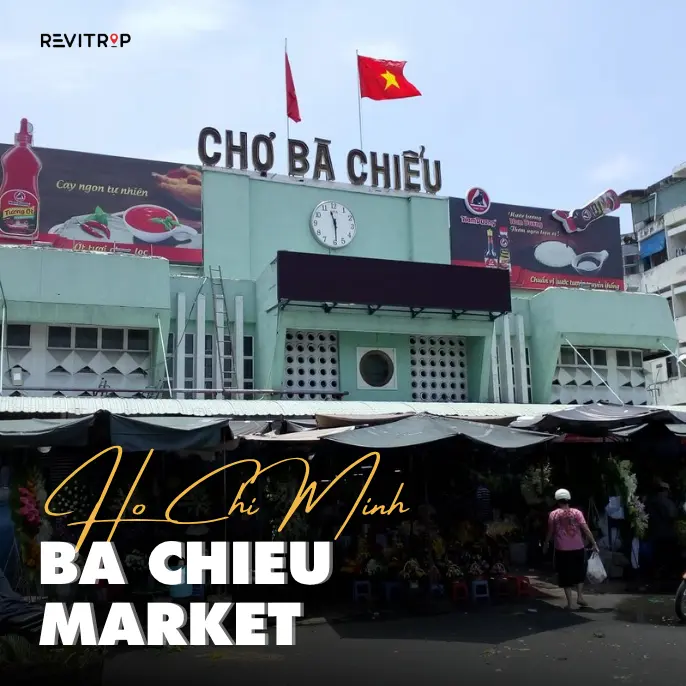
If you want to see how Saigon actually lives, Ba Chieu Market is one of the best places to start. Located in Binh Thanh District, this traditional market has been part of the city’s daily rhythm since the 19th century. It is not a tourist attraction in the polished sense. Instead, it is a working neighborhood market where locals shop for groceries, hunt for secondhand bargains, and eat incredibly well. For travelers who want something more genuine than a souvenir stall, Ba Chieu Market delivers the real Saigon experience.
Where Is Ba Chieu Market and When Is It Open?
Ba Chieu Market sits in Ward 1, Binh Thanh District, Ho Chi Minh City, at the intersection of Phan Dang Luu, Le Quang Dinh, and Bach Dang streets. It is roughly four to five kilometers from the center of District 1, making it a short and easy trip from most central hotels.
The market operates around the clock, opening from 5am and staying active well into the late evening. However, different sections follow slightly different schedules. Fashion and clothing stalls typically close around 7pm to 8pm each night. Morning hours draw mostly local residents buying fresh produce and daily essentials. In contrast, the evening hours are ideal for visitors who want to browse, eat, and absorb the atmosphere without the early rush.
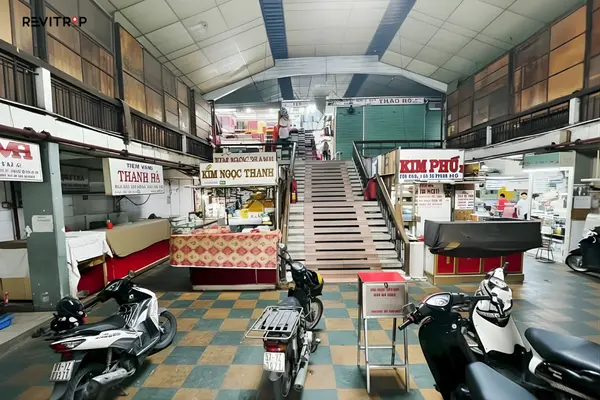
The market covers 8,465 square meters and is divided into eight main sections. Together these house nearly 800 vendors selling across more than 40 product categories. Clothing, shoes, accessories, household goods, fresh food, and local specialties all have their place here.
Booking Tours to Ho Chi Minh City
The Story Behind the Name
The origin of the name Ba Chieu is not entirely settled, and that mystery adds a small layer of character to the market. According to the writer Son Nam, the word “Chieu” refers to a natural pond, while “Ba” means a female deity worshipped beside it. Another theory connects the name to the reign of Emperor Tu Duc, when the market faced a small canal linked to Nhieu Loc Creek. Local residents reportedly built a shrine to a female guardian spirit near that canal.
A further theory links the name to the wife of General Le Van Duyet, a revered historical figure whose mausoleum, Lang Ong, sits close to the market. Regardless of which story is accurate, all of them reflect the deep folk traditions and spiritual beliefs that characterize southern Vietnamese community life.
How to Get to Ba Chieu Market
Ba Chieu Market is easy to reach by several different means of transport. A ride-hailing app like Grab is the most convenient option, with fares from central District 1 running approximately VND 60,000 to VND 75,000 one way. Taxis charge similar rates depending on traffic and departure point.
For budget-conscious travelers, public buses are an excellent choice. Several routes stop nearby, including lines 08, 24, and 104 on Bach Dang Street, and lines 18, 36, and 54 on Phan Dang Luu Street. Bus fares cost just VND 5,000 to VND 7,000 per trip, making this the cheapest way to arrive.
Motorbike riders can follow Dien Bien Phu Street from the city center and park at the designated parking area on Phan Dang Luu Street, around a six-minute walk from the market entrance.
Top Things to Do at Ba Chieu Market
Shop Across 40 Product Categories
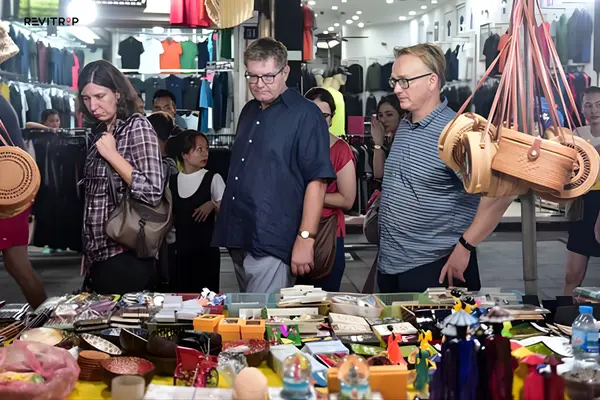
Ba Chieu Market offers one of the widest product ranges of any traditional market in Ho Chi Minh City. Clothing, footwear, fashion accessories, kitchenware, fresh produce, and local food products are all easy to find across the market’s eight sections. Prices here are considerably lower than in tourist-oriented shopping areas, and bargaining is both expected and encouraged.
The secondhand section, known locally as do si, is one of the most popular draws at Ba Chieu Market. Vendors here sell used clothing, bags, shoes, and miscellaneous items at very low prices. The quality varies, so inspecting items carefully before buying is important. Weekends and public holidays are the best time to browse do si stalls, as vendors typically refresh their stock during these periods. If you are patient and enjoy hunting for unique pieces, this section alone can easily fill an afternoon.
It is worth noting that cosmetics and accessories are available at Ba Chieu Market but in limited variety. For those specific items, other markets in the city may offer better selection.
Eat Your Way Through the Food Section
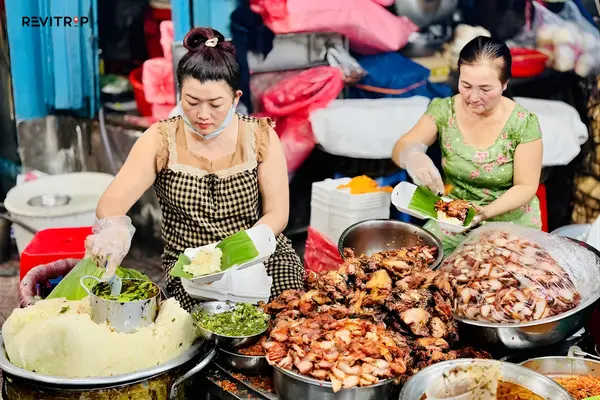
Ba Chieu Market has a strong reputation as a food destination in its own right, and for good reason. The market serves an impressive range of local dishes at prices that are hard to beat anywhere in the city. Morning visitors can start with sticky rice topped with chicken, durian sticky rice, or savory rice porridge. Throughout the day, vendors sell banh xeo crispy pancakes, grilled pork vermicelli noodles, snail dishes, and braised offal.
Several stalls at Ba Chieu Market have become well-known neighborhood institutions. Chicken sticky rice at 318/1 Bui Huu Nghia, durian sticky rice at 384 Bui Huu Nghia, and grilled pork vermicelli at stall 898 to 899 inside the market are all regularly cited as standout options. A sweet dessert shop around 100 meters from the right entrance rounds out the food trail nicely. Evening is particularly good for eating here, as the food section lights up and the aroma from dozens of stalls creates an irresistible atmosphere.
Experience Everyday Saigon Life
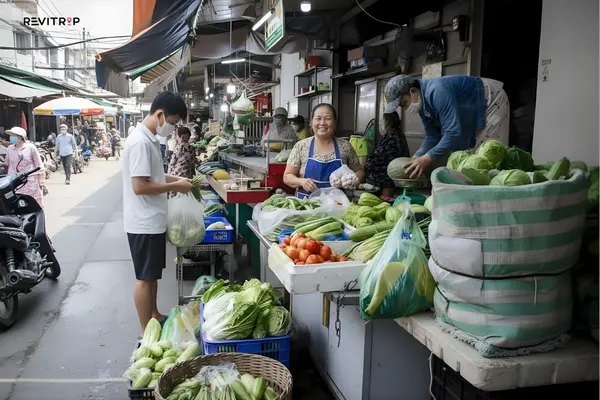
Beyond shopping and eating, Ba Chieu Market offers something harder to quantify but equally valuable: a genuine window into how local people live. Mornings bring vegetable sellers, fishmongers, and housewives doing the daily grocery run. Afternoons shift toward clothing and general goods. Evenings bring food seekers, casual browsers, and the warm noise of a neighborhood market doing what it has done for generations.
Simply walking through the market, observing the interactions between vendors and regulars, and taking in the sights and sounds is an experience in itself. Ba Chieu Market has none of the performance that tourist markets often develop. Everything here is functional, real, and alive with the specific energy of a community going about its daily business.
Practical Tips for Visiting Ba Chieu Market
The best time to visit is late afternoon or evening. During these hours, the fashion and food sections are at their most active. Arriving early morning is also rewarding if fresh produce and a local breakfast are your priorities.
Bargaining is standard practice throughout the market. A good starting point is to offer around 20 to 30 percent below the initial asking price and negotiate from there. Buying multiple items from the same vendor often results in a better deal. Vendors at the end of the day are also sometimes more flexible as they prepare to close.
When browsing the secondhand section, always inspect items closely. Check stitching, fabric condition, and overall wear before agreeing to a price. Rushing this step is the most common reason buyers end up disappointed.
Finally, keep your belongings close at all times. Ba Chieu Market is busy and genuine, but like any crowded market environment, it pays to keep bags secured and phones out of sight when not in use.
Ba Chieu Market is not the most famous market in Ho Chi Minh City, and that is exactly what makes it worth visiting. It has no performance for tourists, no inflated souvenir prices, and no curated experience waiting to be sold. What it does have is real food, real people, and a genuine piece of the city that has been there for over a century. For more on exploring Saigon like a local, check out our guides on Ho Chi Minh City travel tips, best street food in Saigon, and things to do in Ho Chi Minh City.
FAQ
Ba Chieu Market is known for its secondhand clothing section, affordable street food, and authentic local atmosphere. It is one of the oldest traditional markets in Ho Chi Minh City.
Late afternoon to evening is ideal. Food stalls are at their busiest, fashion vendors are still open, and the market atmosphere is at its most vibrant. Early morning is good for fresh produce and a local breakfast.
Yes, bargaining is a normal part of the shopping experience here. Starting at around 20 to 30 percent below the asking price is a reasonable approach, and vendors generally expect and welcome negotiation.