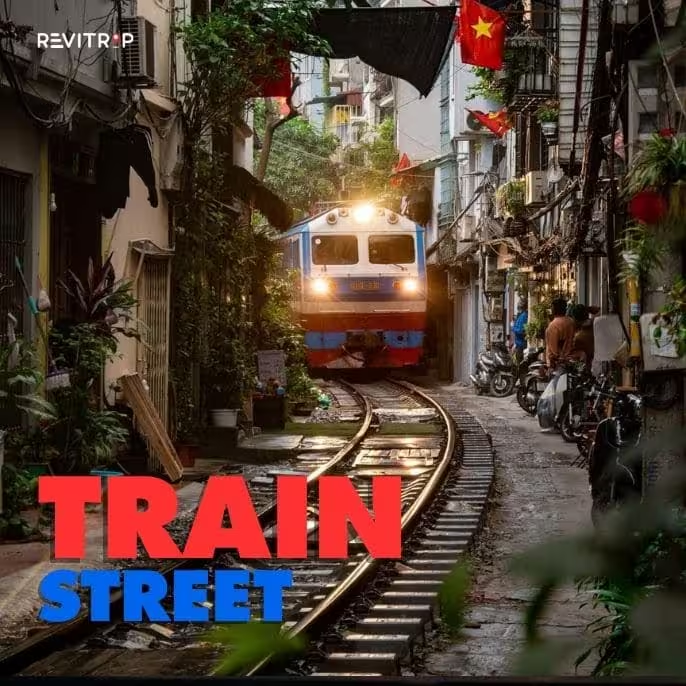
Should you visit Hanoi Train Street in 2026? The honest answer: probably not unless you’re okay with restricted access, unpredictable closures, and potential disappointment. However, if you understand the reality and still want to go, this guide tells you exactly what to expect at Hanoi Train Street today.
Hanoi Train Street is no longer the free-for-all experience it was in 2018-2019. Consequently, you need realistic expectations, backup plans, and honest advice about whether it’s worth your limited time in Hanoi.
Quick Facts: Hanoi Train Street At a Glance (2026 Update)
Current status: Partially restricted (as of February 2026)
Access: Through licensed cafes only; street access blocked by security
Train frequency: 4-6 times daily (schedule unreliable)
Best viewing times: 3:30pm and 7:30pm (if trains run on time)
Cost: Free entry, but you must buy drinks (50,000-80,000 VND minimum)
Time needed: 1-2 hours (including waiting time)
Worth it?: Only for train/railway enthusiasts or if already nearby
The reality check: Most visitors wait 60+ minutes for a 10-second train passing. Moreover, you might arrive to find it completely closed with no warning.
What Is Hanoi Train Street? Understanding the Reality
The Original Concept (2010s)
Hanoi Train Street refers to several narrow alleyways where active railway tracks run directly through residential neighborhoods. Specifically, houses sit just 1-2 meters from the tracks. Twice daily (or more), trains squeeze through at walking speed while residents pull in furniture and close their doors.
Originally, this was simply where locals lived. Then, around 2015-2016, a few cafes opened along the tracks. Subsequently, Instagram discovered it. By 2018-2019, hundreds of tourists crowded the tracks daily for photos.
The Current Reality (2024-2026)
What changed: In 2019, Vietnamese authorities officially closed Hanoi Train Street to tourists because of safety concerns. Specifically, too many people standing on active tracks created accident risks.
Current situation (February 2026):
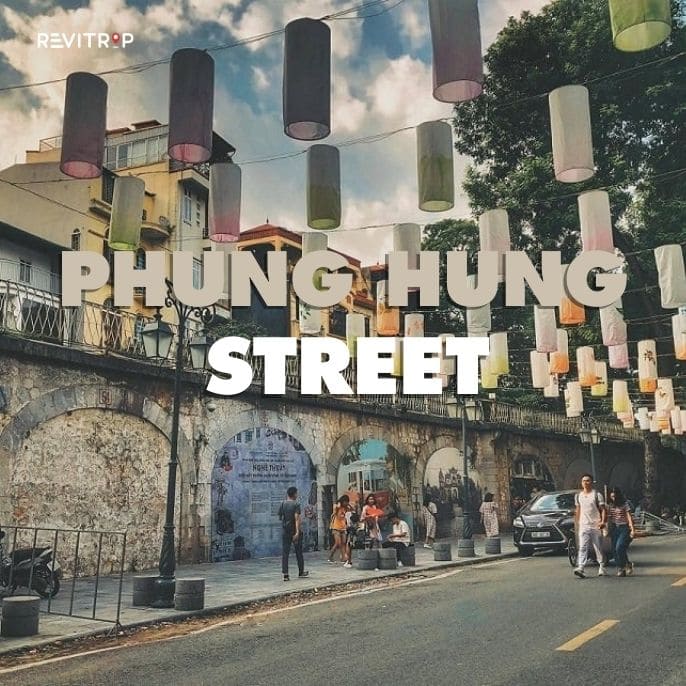
- Security checkpoints block main entrances (particularly Phung Hung section)
- Only a few licensed cafes can legally host tourists
- Police clear the area completely
- Access status changes weekly without warning
- Local residents still live there, but tourist infrastructure is dismantled
Translation: The “iconic” photo of sitting on tracks with coffee while trains pass? That’s mostly over. Instead, you’ll watch from cafe doorways or designated safe zones.
Where Is Hanoi Train Street? How to Find It
Main Sections of Hanoi Train Street
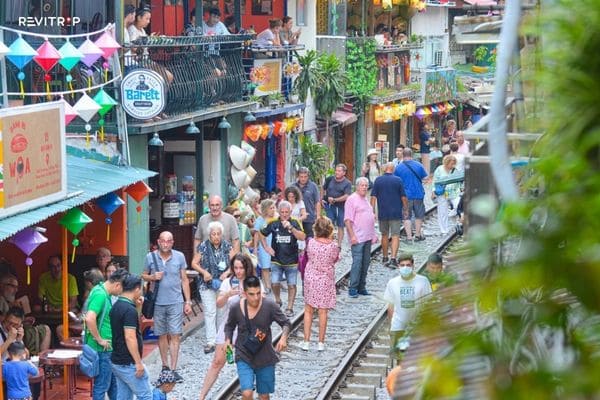
Hanoi Train Street actually consists of several different sections along the north-south railway line:
1. Phung Hung Street Section (Most Famous)
Location: Runs parallel to Phung Hung Street, between Hàng Bông and Hàng Đào
Status: Most heavily restricted section
Why it’s famous: This is where most Instagram photos came from (2017-2019)
Current access: Security guards block the main entrance points. However, a few licensed cafes on side alleys still operate. Nevertheless, they can close anytime authorities decide.
How to find it:
- Walk to intersection of Phung Hung and Trần Phú
- Look for small alleys leading toward tracks
- Ask cafe owners about current access (they’ll know)
2. Le Duan Street Section
Location: Le Duan Street, specifically around alley 224
Status: Less restricted than Phung Hung
Why it’s different: More residential, fewer tourists, longer straight track
Current access: Still accessible through residential alleys. However, fewer cafes operate here. Therefore, it’s less “Instagram-ready” but more authentic.
3. Tran Phu Street Section
Location: Small alleys off Tran Phu Street
Status: Varies weekly
Reality: This section connects to other parts. Consequently, if one section closes, people try this one. Then, authorities close this too. A cat-and-mouse game exists.
Hanoi Train Street Schedule: When Do Trains Pass?
Official Train Schedule (February 2026)
Here’s the theoretical schedule. However, Vietnamese trains run on “Vietnamese time” (meaning: expect delays).
Phung Hung Section
Weekdays:
- 8:30am, 9:30am, 11:50am
- 3:15pm, 7:50pm, 9:15pm, 9:30pm, 10:00pm
Weekends:
- 6:00am, 7:15am, 9:30am, 11:50am
- 3:30pm, 5:30pm, 7:30pm, 7:50pm, 9:15pm, 9:30pm, 10:00pm
Le Duan Section
Daily:
- 6:10am, 11:40am
- 3:30pm, 6:00pm, 7:10pm, 7:50pm, 9:00pm
The Reality of Train Schedules
Here’s what guidebooks won’t tell you:
Trains are routinely 15-45 minutes late. Sometimes, they don’t come at all. Moreover, schedules change without announcement. Additionally, maintenance or weather delays happen constantly.
What this means for you:
- Arrive 30 minutes before scheduled time (cafe owners will update you)
- Bring something to do while waiting
- Have a backup plan if train is cancelled
- Don’t plan tight schedules around train times
Best times for higher reliability:
- 3:30pm slot: Most reliable, good lighting for photos
- 7:30-8pm slot: Second most reliable, nice evening atmosphere
- Avoid: Early morning trains (most likely to be cancelled)
What to Do at Hanoi Train Street
1. Watch the Train Pass (If It Actually Comes)
This is the main event. However, set realistic expectations.
What actually happens
First, you hear announcements (in Vietnamese). Then, cafe staff start clearing items from tracks. Next, security (if present) moves people to safe zones. After that, you wait.
Finally, the train crawls through at 5-10 km/hour. The whole passing takes 10-15 seconds.
That’s it. Ten seconds of train. For 60+ minutes of waiting.
What it feels like
Honestly? Initially thrilling, then underwhelming. The train moves so slowly that marketers oversell the “adrenaline rush.”
Rather, it’s interesting from a cultural perspective (how do people live here?). However, it’s not the edge-of-your-seat experience Instagram suggests.
Worth it if: You’re genuinely interested in urban planning, railways, or documenting unique living situations.
Skip if: You’re expecting an adrenaline rush or once-in-a-lifetime moment.
2. Photography Opportunities
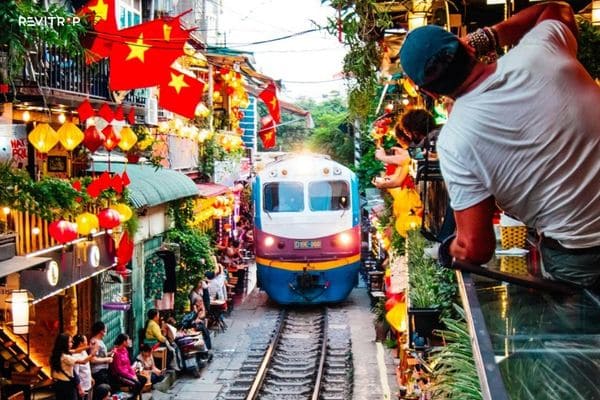
Hanoi Train Street offers unique photo opportunities. However, the best shots are harder to get now because of restrictions.
Photos you CAN still get (2026)
Before train arrives:
- Colorful cafe fronts along tracks
- Empty tracks perspective (morning light is best)
- Local residents in doorways
- Street life in adjacent alleys
During train passing:
- Train approaching through narrow alley
- Cafe staff clearing tables (if they allow photos)
- Train from cafe doorway perspective
Photos you CANNOT get anymore
Standing on tracks with coffee: Prohibited. Security removes you.
Sitting on tracks while train approaches: Extremely prohibited. Actually dangerous.
Close-up train shots from track level: Only possible from cafe properties, not public tracks.
Photography tips for 2026 reality
Timing: Arrive 45 minutes early for good positioning in licensed cafes.
3. Cafe Experience Along the Tracks
If authorities haven’t closed everything, a few cafes still operate.
Licensed Cafes (as of February 2026)
Note: These can close anytime. Therefore, always check current status locally.
Cafe options if open:
- The Note Coffee: Sticky note-covered walls, 50,000-70,000 VND drinks
- Hanoi Train Street Cafe: Generic name, 60,000-80,000 VND
- Various unnamed local cafes: 50,000-60,000 VND
What you get for your money
Minimum purchase: 50,000-80,000 VND per person (required to sit and wait for train)
Drink quality: Average. You’re paying for location, not artisan coffee.
Seating: Limited. Arrive early or stand.
Service: Variable. Some owners are friendly and informative. Tourist questions clearly exhaust others.
Is the cafe experience worth it?
Honest answer: Only if you genuinely want to sit in a unique space. However, the coffee itself is mediocre. Moreover, prices are 2-3x normal Hanoi cafe rates. In contrast, you can get better coffee elsewhere for 20,000-30,000 VND.
Is Hanoi Train Street Safe? Real Safety Concerns
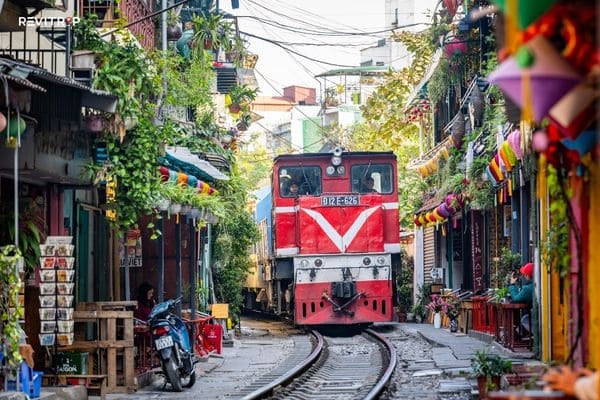
Official Safety Issues (Why It Was Closed)
Vietnamese authorities closed Hanoi Train Street primarily because:
1. Overcrowding on active tracks: Hundreds of tourists standing where trains pass
2. Accidents and near-misses: People too focused on photos to notice approaching trains
3. Obstructing railway operations: Blocking tracks, delaying trains
4. Residential disruption: Locals couldn’t access homes during tourist peak hours
Current Safety Situation (2026)
If you visit through licensed cafes:
- Generally safe if you follow staff instructions
- Stay in designated viewing areas
- Don’t step on tracks under any circumstances
- Listen for announcements
If you try to access closed sections:
- Security will turn you away
- Potential fines (though rarely enforced)
- Actual safety risk if you ignore warnings
Safety Tips if You Visit
Before train arrives:
- Identify your safe zone (cafe interior, designated viewing area)
- Don’t place belongings on tracks
- Keep children close and supervised
- Plan your exit route
When train approaches:
- Move immediately to safe zone
- Don’t try to get “one more shot”
- Never touch the train (it’s closer than it looks)
- Wait until train fully passes before moving
General safety:
- Watch for motorbikes in alleys (they still use these paths)
- Secure valuables (pickpockets target distracted tourists)
- Stay hydrated if waiting in summer heat
- Have emergency contacts saved
The Honest Answer: Is Hanoi Train Street Worth Visiting in 2026?
When Hanoi Train Street IS Worth Your Time
Visit if:
- You’re specifically interested in railways or urban planning
- You’re a photographer documenting unique urban spaces
- You’re already in the immediate area (walking distance)
- You have flexible schedule and don’t mind if it’s closed
- You want to see the murals (which are genuinely good)
- You understand it’s not the Instagram fantasy anymore
When to Skip Hanoi Train Street
Skip if:
- You have limited time in Hanoi (1-2 days)
- You’re expecting the 2018-era “sit on tracks with coffee” experience
- You don’t want to deal with uncertainty (access status, train delays)
- You’re traveling with young children or elderly (safety, accessibility)
- You believe Instagram hype (it’s oversold)
- You can’t handle disappointment well (real risk it’s closed)
Frequently Asked Questions: Hanoi Train Street
Is Hanoi Train Street still open in 2026?
Partially. However, access is heavily restricted compared to 2017-2019.
Specifically, you can only enter through a few licensed cafes. Moreover, authorities close sections without warning. Therefore, always check current status before visiting.
What time should I arrive to see the train?
Arrive 30-45 minutes before scheduled train time. For example, for a 3:30pm train, arrive by 2:45-3:00pm. This gives you time to find a spot and account for delays.
Can I still take photos on the tracks?
No. Security and cafe owners prohibit standing on tracks. Instead, you can photograph from cafe doorways or designated safe zones. Therefore, the classic “sitting on tracks” photo is no longer possible legally or safely.
Is it safe to visit with children?
Not recommended. The combination of active railway, restricted spaces, crowds, and unpredictable access makes it stressful with kids. Moreover, children get bored waiting 60+ minutes for a 10-second train.
Are there bathrooms near Hanoi Train Street?
Extremely limited. Some cafes have small toilets for customers. However, they’re basic and often occupied. Therefore, use bathroom at your hotel before visiting.
Can I visit Hanoi Train Street at night?
Yes, evening trains (7:30-8pm) are popular. However, lighting for photos is challenging. Moreover, it’s more crowded in evening. Additionally, some sections close earlier.
The Exception
Visit if you are documenting urban change, studying Vietnamese railways, or want to see every famous place. Otherwise, honestly, you’re not missing much.
Hanoi has so much better to offer.
Have you visited Hanoi Train Street recently? Share your experience (including whether you found it open!) in the comments below.