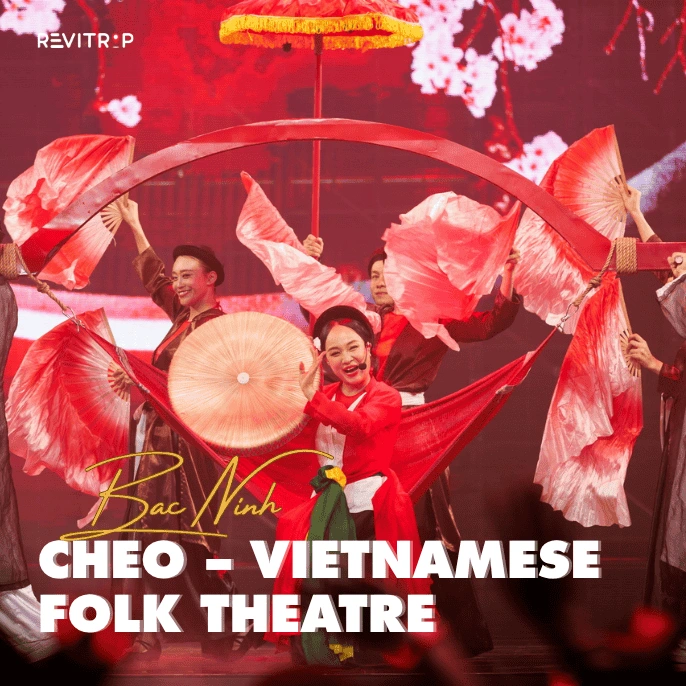
In northern Vietnam, culture often settles into daily life in quiet, familiar ways. It appears in old melodies, in village gatherings, in stories told with humor and a certain softness rather than grandeur. Cheo comes out of that world.
It is a traditional form of folk performance that brings together singing, storytelling, dialogue, and gesture, shaped over centuries in the Red River Delta. When people think about intangible culture heritage in Vietnam, Cheo is one of the traditions that feels especially close to the life of ordinary communities. It does not live through monuments or fixed objects. It continues through voices, performance, memory, and the shared language of a culture that has been carried forward over generations.
Cheo and the cultural rhythm of northern Vietnam
Cheo has long been associated with northern Vietnam, especially the villages of the Red River Delta, where communal life shaped much of the region’s cultural expression.
That background is still easy to sense in the form itself. Cheo feels closely tied to open village spaces, seasonal festivals, and gatherings where people came together not only to watch, but to take part in a shared cultural moment. The performance was never only about technique. It belonged to a wider atmosphere of community, familiarity, and local tradition.
This is part of what makes Cheo so meaningful within intangible culture heritage in Vietnam. It reflects a cultural form that grew naturally from the social life around it. The humor, the language, the characters, and the pacing all carry traces of village life in northern Vietnam, where performance and daily experience were never far apart.
A performance tradition shaped by story, music, and character
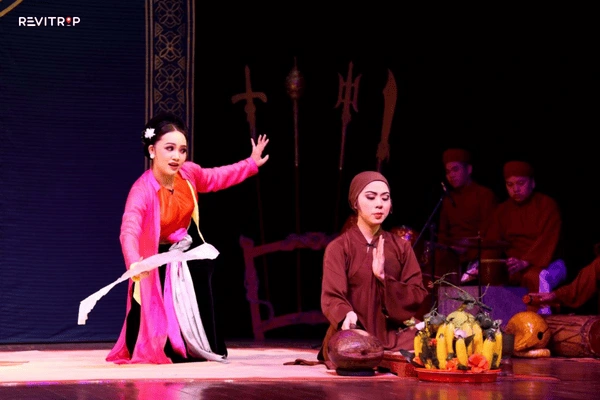
Cheo is built around storytelling, but it carries that story through more than words alone.
Music gives the performance its movement. Dialogue gives it texture. Gesture and expression give it warmth. Characters are often vivid and recognizable, sometimes graceful, sometimes comic, sometimes exaggerated in a way that allows the audience to understand them immediately. Many Cheo stories draw from folklore, moral lessons, historical tales, or familiar social situations, so the performance often feels rooted in both memory and observation.
There is also a certain liveliness in Cheo that makes it approachable. The tone can be playful, satirical, or gently critical without ever losing its connection to tradition. Even when the themes are serious, the performance often keeps a sense of openness and rhythm that invites the audience in.
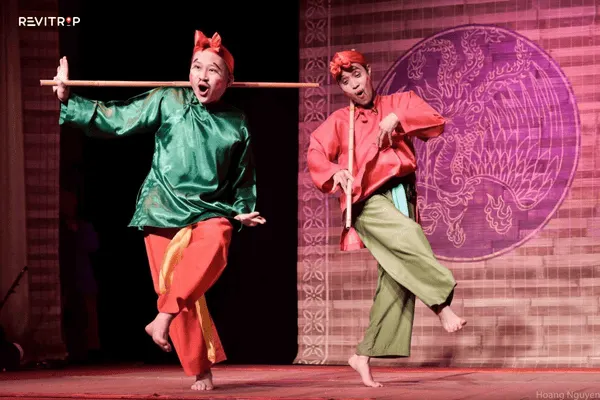
For first-time visitors, that matters. You may not understand every lyric or every cultural reference, but the structure of the performance still comes through clearly. The flow of the story, the change in expression, and the musical cues all help carry the experience.
If Cheo draws you toward Vietnam’s traditional performance culture, Hanoi water puppetry is another form worth exploring, with its own village roots and storytelling rhythm.
The village roots of Cheo
One of the most compelling things about Cheo is how strongly it remains tied to its origins.
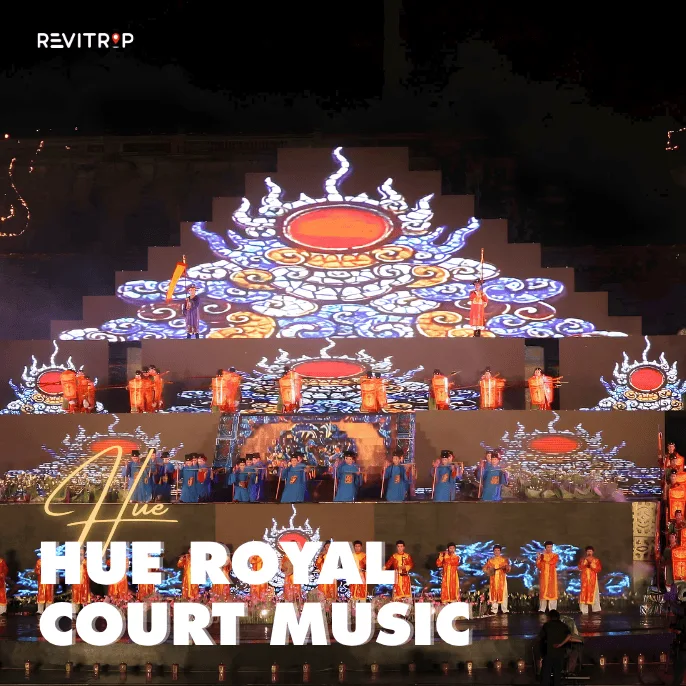
Unlike Nha Nhac Hue, which took shape within the formal world of the royal court, Cheo grew out of village life in northern Vietnam. It stayed close to festivals, gatherings, and the everyday rhythms of the community, which is why the form still carries such warmth and familiarity today. Performers worked within a tradition that stayed close to the community around them. Over time, that gave Cheo a sense of ease and familiarity that still shapes how it feels today.
Even when performed in more formal theaters now, Cheo often retains that closeness. It still feels like a tradition shaped by people gathering in the same space, sharing the same story, and recognizing something of themselves in the performance. That intimacy gives it a different texture from forms that were historically more ceremonial or court-centered.
Cheo as a living intangible culture heritage in Vietnam
Cheo remains important not only because of its history, but because people are still trying to keep it present in contemporary life.
That effort appears in formal preservation, in stage performance, and sometimes in newer popular formats that bring traditional material to younger audiences. A recent example is the “Dao Lieu” stage on Anh trai vuot ngan chong gai (Call Me by Fire Vietnam), which drew wide attention for bringing cheo elements into a mainstream entertainment setting. Moments like that do not replace the tradition in its original form, but they do show how older performance culture can continue to find new listeners.
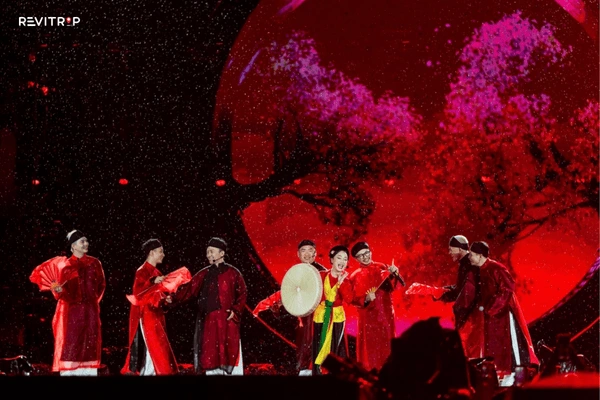
This is part of what defines intangible culture heritage in Vietnam. A living tradition survives through people who perform it, teach it, reinterpret it, and keep it present in contemporary life.
What stays with you
Cheo leaves behind a feeling that is less about spectacle and more about atmosphere.
The music lingers gently. The storytelling feels close to the ground. The expressions, the pacing, and the interplay between humor and feeling all create an impression that stays with you in a quiet way. It does not depend on scale to be memorable. Its effect comes from familiarity, rhythm, and the sense that this tradition grew out of real community life.
Within intangible culture heritage in Vietnam, Cheo holds a special place because it carries so much of northern Vietnam’s cultural memory in an accessible, human form. It speaks through performance, but it also speaks through the everyday emotional world behind that performance – family, village life, social roles, affection, wit, and shared understanding.
If your journey takes you through the north of Vietnam, Cheo is one of the traditions worth making time for. It offers a way of seeing cultural heritage not as something distant or sealed off, but as something still alive in voice, gesture, and story.
FAQ
In Vietnamese culture, Chèo refers to a traditional folk theatre form rather than just a single song style. It includes singing, acting, movement, and dramatic storytelling.
Yes. Movement and gesture are important parts of Cheo, and some performances also include dance-like sequences that help express character and mood on stage.
Cheo comes from northern Vietnam and is rooted in folk theatre and village tradition, while Cai Luong developed in southern Vietnam with a different musical style and emotional tone.