Ha Giang is one of the most beautiful provinces in Vietnam. It sits in the far north of the country. Many travelers come here to see the mountains, the passes, and the local culture. Among all the places in Ha Giang, Dong Van Karst Plateau Global Geopark stands out the most. It is a place like no other in Vietnam. It is wild, vast, and full of history.
What Is Dong Van Karst Plateau?
Dong Van Karst Plateau is a large highland area in Ha Giang Province. It sits at an average height of 1,000 to 1,600 meters above sea level.
The total area covers about 2,356 square kilometers. The plateau spreads across four districts. These are Quan Ba, Yen Minh, Meo Vac, and Dong Van.
In 2010, the United Nations Educational, Scientific and Cultural Organization recognized this plateau as a Global Geopark.
This made it the first Global Geopark in Southeast Asia. The recognition brought Dong Van to the attention of travelers around the world.
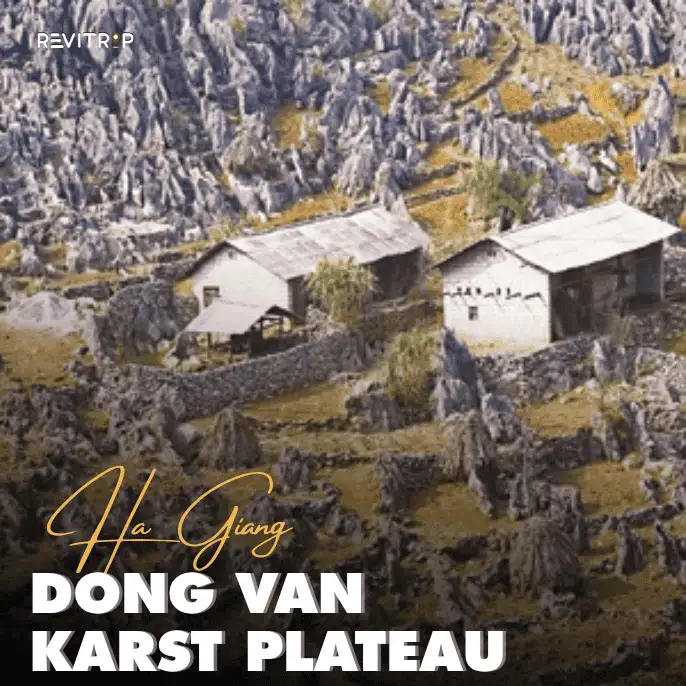
The plateau contains rocks that are hundreds of millions of years old. About 80 percent of the surface is limestone. These ancient rocks tell the story of how the Earth was formed long ago. Scientists and geologists come here to study these rare formations.
The Landscape
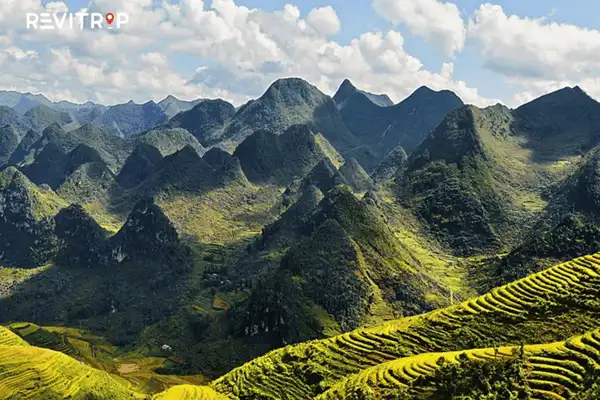
Dong Van looks very different from many other places. Rocky peaks stretch in every direction. The stones are gray and rough. They rise from the ground in many shapes and sizes. From far away, the plateau looks like a sea of sharp rocks.
But nature has arranged these rocks in a way that feels almost perfect. The scenery changes with every season. Green cornfields cover the hillsides in summer. Golden rice terraces brighten the slopes in autumn.
Pink buckwheat flowers spread across the land in October and November. Each season gives the plateau a different color.
How To Get There
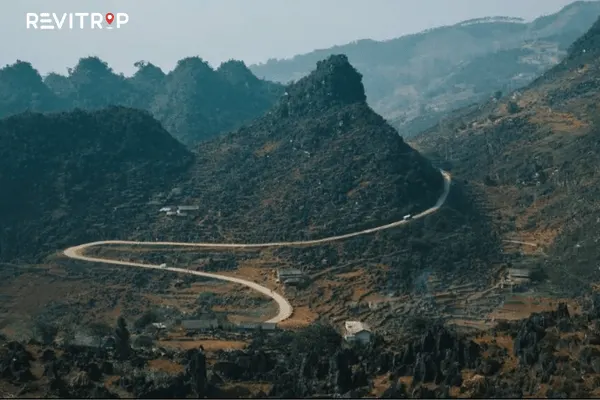
Dong Van town is about 140 kilometers from Ha Giang city. The drive takes around 2.5 to 3 hours. You can travel by motorbike or by car. Many travelers choose to go by motorbike.
The road passes through some of the most scenic spots in Ha Giang. You should fill up your gas tank before you leave. Gas stations are rare along the route.
You can also take a local bus from Ha Giang city to Dong Van town. The bus ticket costs around 70,000 to 80,000 Vietnamese dong per person.
The road has many sharp bends and steep passes. Make sure you are a confident driver before riding a motorbike here.
Top Places To Visit
Dong Van Karst Plateau has many attractions. Here are the top spots you should not miss.
Vuong Palace
Vuong Palace is a historic mansion in Sa Phin Commune, Dong Van District. It was built in the early 20th century. The design follows the style of the Manchu Qing Dynasty from China. The palace covers over 1,000 square meters. It has 10 houses and 6 of them face the same direction. The builders used precious wood and traditional curved roof tiles. The carvings on the walls are very detailed and beautiful. This is a rare example of cultural and architectural history in the highlands.
Lung Cu Flag Tower
Lung Cu Flag Tower sits at the northernmost point of Vietnam. It stands at an average height of 1,600 meters above sea level. This is a deeply meaningful place for Vietnamese people.
Ma Pi Leng Pass
Ma Pi Leng Pass is one of the four most famous mountain passes in Vietnam. It reaches a height of 1,200 meters above sea level. The road stretches for about 20 kilometers. It has many sharp curves and narrow sections. The views from the pass are breathtaking. You can see deep valleys, jagged peaks, and the Nho Que River far below. This pass is a favorite among motorbike riders and adventure lovers.
Nho Que River
The Nho Que River flows through a deep canyon below Ma Pi Leng Pass. From above, the river looks like a thin blue thread running between the mountains.
The water is a bright, clear green. It is one of the most photogenic spots in all of Ha Giang. You can hire a boat to ride on the river and see the canyon walls up close. The road down to the river is steep.
Travel Tips
There are a few things to keep in mind before your visit.
Bring warm clothing if you travel in winter. The temperature in Ha Giang can drop very low at night. Even in summer, the highland air at night can be cool. A light jacket is always useful.
Wear comfortable shoes. The terrain is rocky and uneven. Hiking boots or sturdy walking shoes are the best choice.
If you travel by motorbike, always carry your license and vehicle papers. Bring some extra fuel and a basic tire repair kit.
Be respectful of local customs. Many villages along the plateau are home to Hmong, Tay, and other ethnic minority communities. Their way of life and traditions are part of what makes this place special.
Why You Should Visit
Dong Van Karst Plateau Global Geopark is more than just a scenic destination. It is a place where geology, history, and culture come together. The landscape is dramatic and ancient. The flowers change with every season. The local food is unique. The people are warm and welcoming.
If you are planning a trip to Ha Giang, Dong Van should be at the top of your list. It is a place that will stay in your memory long after you leave.
FAQ
Dong Van Karst Plateau Global Geopark is a large highland area in Ha Giang Province, northern Vietnam. It is known for its dramatic limestone landscape and its UNESCO Global Geopark status.
Dong Van Karst Plateau is located in Ha Giang, in the far north of Vietnam. It stretches across several districts, including Dong Van, Meo Vac, Yen Minh, and Quan Ba.
It is famous for its ancient limestone mountains, deep valleys, scenic mountain roads, and unique ethnic minority culture. It is one of the most iconic landscapes in Vietnam.