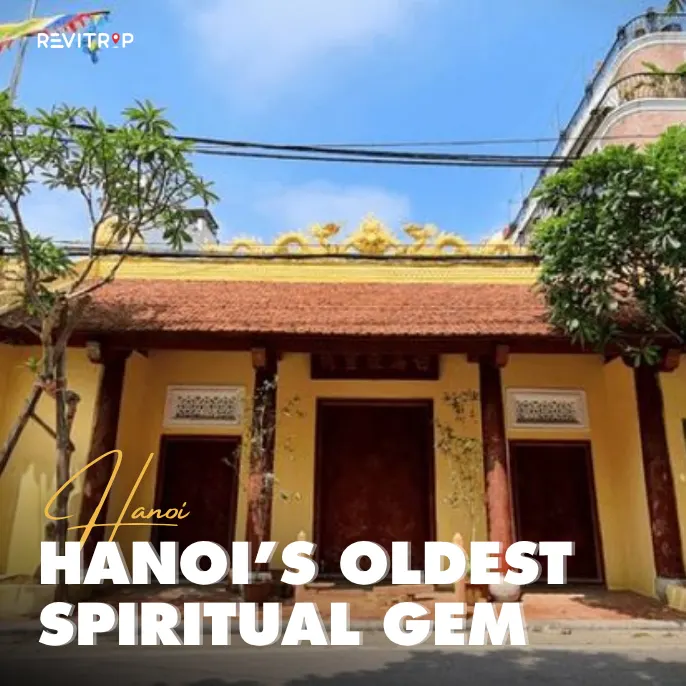
Bach Ma Temple is the oldest temple in Hanoi. Tucked into the heart of the Old Quarter, this ninth-century structure has stood at the eastern boundary of the ancient city for over a thousand years. It was built to honor the god Long Do, revered as the great protective king of Thang Long, and it remains an active place of worship today. Beyond its age and spiritual significance, Bach Ma Temple delivers exceptional architectural detail, a compelling origin legend, and a festival that fills the surrounding streets twice a year. This guide covers everything you need to plan your visit.
1. What Is Bach Ma Temple?
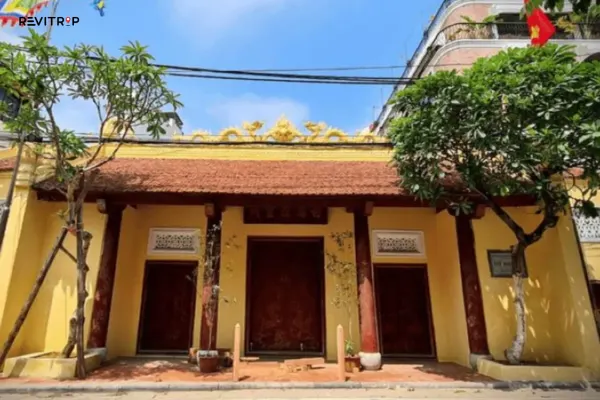
Bach Ma Temple is one of the Four Guarding Temples of Thang Long, the ancient name for Hanoi. These four temples once formed a protective boundary around the imperial city, positioned at each cardinal point. Bach Ma guards the east. Together, the four structures are known historically as the four towns of Thang Long.
The temple sits on Hang Buom Street in the Hoan Kiem District, placing it directly within the Old Quarter’s most visited area. Despite its central location, it maintains a quieter and more devotional atmosphere than most tourist sites in the surrounding neighborhood.
“Bach Ma Temple is not a museum piece. Incense burns here every day. Worshippers arrive throughout the week. The ninth century and the present moment exist in the same space, separated by nothing but time.”
2. The History and Legend of Bach Ma Temple
Origins and Construction
Bach Ma Temple dates to the ninth century. Its original purpose was to honor Long Do, a deity considered the spiritual guardian and great king of Thang Long. The temple predates the Ly dynasty’s establishment of the imperial citadel and represents one of the earliest surviving structures in the city.
King Ly Thai To, founder of the Ly dynasty, played a central role in the temple’s most famous story. According to legend, the king struggled to find the right location for the city walls he wanted to build. A white horse appeared to him in a vision and led him to the precise spot. The king followed the horse’s path and used it as the guide for the wall’s construction. He subsequently built Bach Ma Temple at that location to honor the sign.
The White Horse
The name Bach Ma translates directly as white horse. The bronze statue of the white horse inside the temple commemorates the legend directly. It is one of the first things visitors encounter upon entering and gives immediate visual context to the story behind the site.
The legend connects the temple to the founding logic of Hanoi itself. In that sense, Bach Ma is not simply a religious site. It is a physical record of how the city came to exist in its current form.
3. What to See Inside Bach Ma Temple
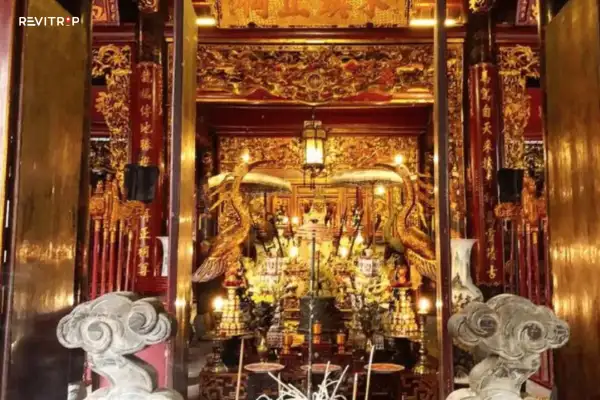
Bach Ma Temple rewards careful attention. The decorative program across the interior is unusually rich for a structure of its size.
Key things to look for:
- The bronze white horse statue at the entrance to the main hall
- A red-lacquered funeral palanquin, one of the most striking objects in the collection
- Multiple altars dedicated to Long Do and associated deities
- Stone engravings and inscribed panels covering the walls of the inner sanctuary
- Ancient weapons displayed as votive offerings
- Antique objects accumulated across generations of worship and donation
The architecture itself reflects several layers of restoration and renovation across the centuries. The current structure blends original ninth-century foundations with additions from the Ly, Tran, and Le dynasties. Each layer added something without erasing what came before.
“The red-lacquered palanquin inside Bach Ma Temple is one of those objects that stops you in your tracks. Its scale and craftsmanship belong to a ceremony that the modern city has otherwise completely forgotten.”
4. The Bach Ma Temple Festival
The Bach Ma Temple Festival takes place on the 12th and 13th days of the second lunar month each year. It is one of the most culturally rich community celebrations in the Old Quarter calendar.
Festival activities include:
- Lion dances performed in the temple courtyard and surrounding streets
- Traditional drumming ceremonies
- Tug-of-war competitions open to community participants
- Poetry recitals honoring Long Do and the temple’s history
- Fencing demonstrations drawing on Vietnamese martial traditions
- Additional cultural performances that vary by year
The festival draws local worshippers, Hanoi residents, and visitors who happen to be in the Old Quarter at the right time. Timing a Hanoi trip to coincide with the second lunar month gives you the chance to experience the temple at its most alive. For a full overview of festivals and cultural events across Vietnam, our guide to Vietnam festivals covers the annual calendar in detail.
5. Practical Tips for Visiting Bach Ma Temple
Bach Ma Temple is an active religious site. A few simple habits ensure your visit is respectful and rewarding.
Before you go:
- Cover shoulders and knees before entering. The temple observes standard Vietnamese religious dress codes.
- Remove shoes before stepping into the inner sanctuary areas.
- Check our guide to scams in Vietnam before exploring the Old Quarter, where tourist-targeted street scams operate around busy temple areas.
During your visit:
- Move quietly and avoid loud conversation inside the main hall.
- Ask permission before photographing worshippers or active prayer areas.
- Allow at least 30 to 45 minutes to examine the interior objects properly.
- Combine the visit with a walk along Hang Buom Street and the surrounding Old Quarter lanes for the full neighborhood context.
Getting there:
- Address: 76 Hang Buom Street, Hoan Kiem District, Hanoi
- Walking distance from Hoan Kiem Lake: approximately 5 to 7 minutes
- Ride-hailing apps including Grab and Be both cover the route from any point in central Hanoi
For guided Old Quarter walking tours that include Bach Ma Temple alongside other historical sites, GetYourGuide lists a range of Hanoi cultural experiences with local guides. Klook also offers bookable Hanoi city tours that cover the Old Quarter’s main historical and cultural landmarks.
FAQs
Bach Ma Temple is famous for being the oldest temple in Hanoi, dating to the ninth century. It is one of the Four Guarding Temples of ancient Thang Long and is named after the white horse that appeared to King Ly Thai To in a vision. The bronze white horse statue, the red-lacquered palanquin, and the annual festival on the 12th and 13th days of the second lunar month are its most celebrated features.
Bach Ma Temple is at 76 Hang Buom Street in the Hoan Kiem District of Hanoi, within the Old Quarter. It is approximately five to seven minutes on foot from Hoan Kiem Lake and easily reachable from any central Hanoi location by ride-hailing app.
Yes. Bach Ma Temple welcomes visitors throughout the week. It is an active place of worship, so respectful behavior, modest dress, and quiet movement within the main hall are expected. Entry is free.