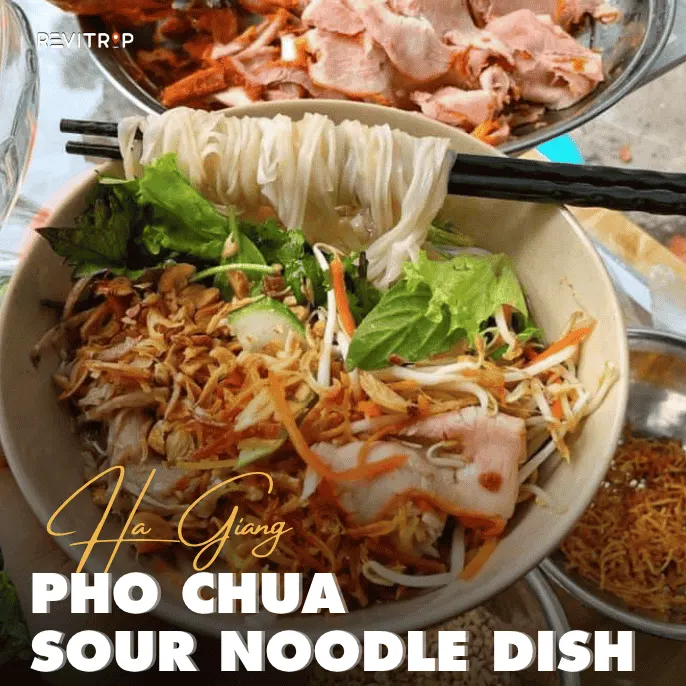
Ha Giang is one of the most beautiful provinces in Vietnam. It sits in the far north of the country. Many travelers come here for the rocky plateau and the mountain roads. But Ha Giang also has amazing food. One dish stands out from the rest. That dish is Pho Chua.
Pho Chua means sour noodles. It is not the same as the popular pho bo or pho ga you find in Hanoi. This dish has a totally different flavor. It is cool, tangy, and full of toppings. Once you try it, you will not forget it.
What Is Pho Chua Ha Giang?
Pho Chua is a cold noodle dish. The name comes from its sour taste. In Chinese, people call it “Luong Pan.” That means “cool noodles.” The dish first came from Manchuria in China. It arrived in the northern mountain provinces of Vietnam about 300 years ago. Over time, local people made it their own. They changed some ingredients. They added their own spices. The result is a dish that feels both familiar and completely new.
Today, Pho Chua is popular in several northern provinces. You can find it in Lang Son, Cao Bang, and Ha Giang. Each place has its own small twist on the recipe. But Ha Giang’s version is the most famous.
Why Does Pho Chua Taste So Good?
The secret is the sauce. The broth of Pho Chua is not a hot soup. It is a thick, sticky sauce. The cook makes it with strong vinegar and sugar. Then they add tapioca starch to thicken it. They also put in salt, pepper, and seasoning powder. The sauce is sweet and sour at the same time. It coats every noodle perfectly.
The noodles are fresh rice noodles. They are soft and smooth. Cooks make them on the same day. Dried noodles are never used in this dish. Fresh noodles give the bowl a clean, light texture.
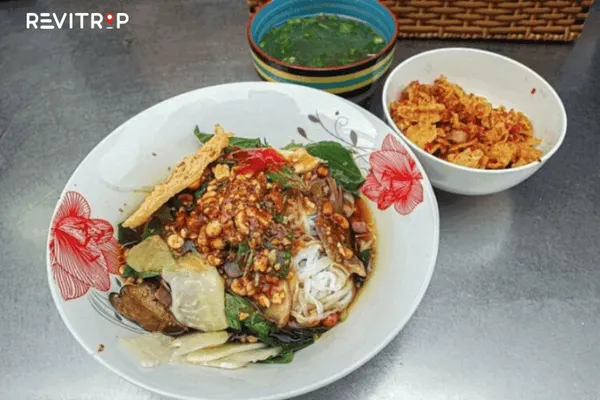
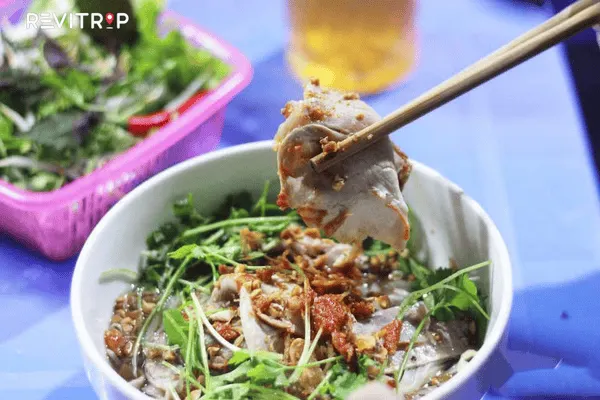
The toppings make this dish very rich. A bowl of Pho Chua usually comes with roasted pork (char siu), roasted duck, fried peanuts, garlic, and sausage. On top of that, you get fresh herbs. Spearmint leaves, green papaya, and sliced cucumber are common. All these ingredients together make every bite different.
You can also add chili paste or fresh chili. This gives the bowl a spicy kick. The mix of sour, sweet, salty, and spicy is what makes Pho Chua so special.
When Is the Best Time to Eat Pho Chua?
Pho Chua is a cool dish. It works best in warm or hot weather. Summer in Ha Giang can be hot and humid. A cold noodle bowl with sour sauce feels very refreshing. Local people also enjoy it with corn wine. Corn wine is another famous product of Ha Giang. The two go very well together.
That said, you can eat Pho Chua any time of year. Many shops sell it year-round. The dish is light enough to eat in the morning. It is also filling enough for lunch.
Where to Eat Pho Chua in Ha Giang
Ha Giang has several good places to enjoy this dish. Here are three of the best.
Hien Luong Restaurant
This is one of the most well-known Pho Chua spots in Ha Giang city. The address is 12 Bach Dang Street. The shop opens from 7 AM to 9:30 PM. A bowl costs between 25,000 and 35,000 VND. That is very affordable.
Hien Luong has been serving this dish for many years. The recipe is traditional and passed down through the family. The noodles are always fresh. The sauce is hot and thick. The toppings are generous. The staff are friendly and fast. Even when the shop is full, the wait is short. Many locals and travelers consider this the best Pho Chua in town.
Ly Dinh Restaurant
This shop is at 543 Nguyen Trai Street. It opens from 7 AM to 9 PM. Prices range from 35,000 to 70,000 VND. The menu has a few more options than other places.
Ly Dinh is known for its high-quality rice noodles. The owner carefully selects the rice. The noodles have a soft texture and a light, natural fragrance. The broth is rich and well-balanced. The bowl comes loaded with char siu pork, roasted duck, and sausage. The shop also makes its own homemade chili sauce. This chili sauce is a highlight. It adds a deep, smoky flavor to the bowl. Many visitors say this sauce alone is worth the visit.
The shop has a spacious and clean dining area. The staff are warm and welcoming. The owner often gives extra toppings to guests at no charge.
Dong Van Sunday Market
If you want a more local experience, visit the Dong Van Market. This market is in Dong Van Town. It only opens on Sundays. The market is one of the largest in the Ha Giang area.
At the market, you sit on long wooden benches. You watch the cook prepare your bowl right in front of you. You see every step. The noodles go into the bowl. The toppings follow. Then the sauce is poured over everything. It is a great way to understand how the dish is made.
The market is also a place to buy local products. You can find mountain honey, corn wine, handmade clothes, and many other items. Eating Pho Chua at the Dong Van Market is a full cultural experience. Prices are between 25,000 and 50,000 VND.
Tips for Enjoying Pho Chua
Mix the bowl well before eating. The sauce settles at the bottom. Stir everything together to get the full flavor in every bite.
Add chili if you like spice. The dish is mild on its own. Chili makes it more exciting.
Eat it with a local drink. Corn wine or glutinous rice wine pairs well with Pho Chua. This is how locals enjoy the meal.
Go early. Popular shops fill up fast. Morning is a great time to visit.
Final Thoughts
Pho Chua Ha Giang is a dish with history, flavor, and culture all in one bowl. It came from China 300 years ago. But Ha Giang has made it something truly its own. The sour sauce, the fresh noodles, the roasted meat, and the crispy peanuts all work together perfectly.
If you travel to Ha Giang, do not skip this dish. It is one of the most unique food experiences in northern Vietnam. Try it at a local restaurant. Or try it at a Sunday market. Either way, you will leave with a great memory and a full stomach.
Pho Chua is simple food done right. That is why people love it so much.
FAQ
Pho Chua Ha Giang is a Vietnamese sour noodle dish served cold with a thick sweet-and-sour sauce, fresh herbs, and roasted meats. It is a popular specialty in northern Vietnam.
Pho Chua has a unique mix of sweet, sour, salty, and sometimes spicy flavors. The sauce is tangy and slightly thick, while the toppings add richness and texture.
The dish typically includes fresh rice noodles, roasted pork or duck, peanuts, herbs, cucumber, green papaya, and a sweet-and-sour sauce.