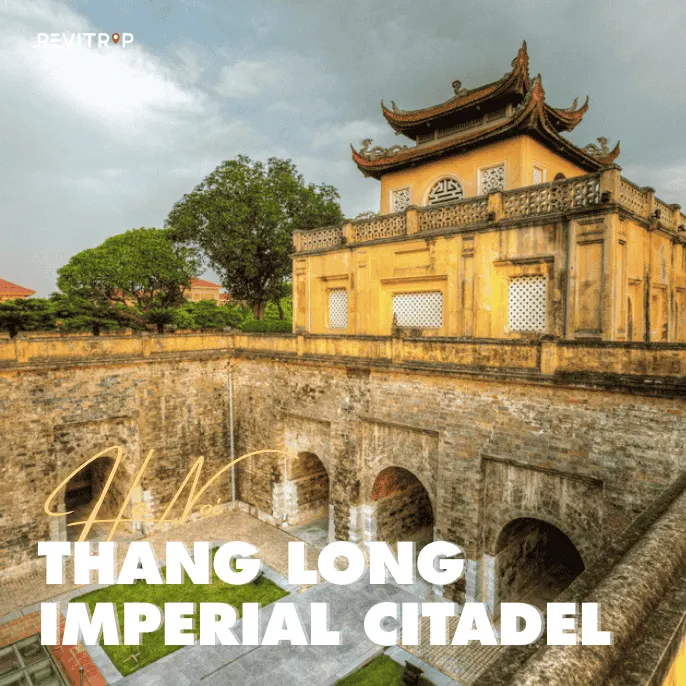
The Imperial Citadel of Thang Long stands at the center of Hanoi’s historical identity. This UNESCO World Heritage Site traces its origins back to the 7th century, making it one of the oldest continuously inhabited royal sites in Southeast Asia. Over 1,300 years of Vietnamese dynastic history left their marks here through architecture, buried relics, and ceremonial traditions that archaeologists are still uncovering today. Whether you visit during the day to walk the grounds and explore the excavation sites, or join the acclaimed night tour for a fully immersive cultural experience, the Imperial Citadel of Thang Long delivers a depth of historical encounter that few sites in Vietnam can match. This guide covers everything you need to plan your visit.
1. What Is the Imperial Citadel of Thang Long?
The Imperial Citadel of Thang Long, known in Vietnamese as Hoang Thanh Thang Long, served as the political center of Vietnam for nearly 13 consecutive centuries. Construction began during the Ly dynasty in the 11th century on foundations that date back to the Dai La citadel of the 7th century. The site functioned as the royal seat of power through the Ly, Tran, Mac, Le, and Nguyen dynasties before the imperial capital shifted to Hue in the 19th century.
UNESCO granted the site World Heritage status in 2010, recognizing its outstanding universal value as a record of continuous human settlement and political authority across an extraordinary span of time. The citadel sits in the Ba Dinh District of Hanoi, close to the Ho Chi Minh Mausoleum complex and within easy reach of the city center.
“Hanoi is a city where history coexists with the modern world. The Imperial Citadel of Thang Long is perhaps the clearest expression of that coexistence anywhere in the capital.”
2. Visiting the Imperial Citadel of Thang Long
Opening Hours and Ticket Prices
The Imperial Citadel of Thang Long opens to visitors throughout the week. The night tour operates on a separate schedule from the daytime visit.
| Visit Type | Days | Hours | Price |
|---|---|---|---|
| Daytime visit | Tuesday to Sunday | 8:00 am to 5:00 pm | 30,000 VND per adult |
| Night tour | Friday and Saturday | From 7:00 pm | Contact site for current pricing |
| Children under 15 | All days | All hours | Free |
Note: Prices and schedules may change. Contact the Thang Long Heritage Conservation Center directly for the most current information before your visit.
How to Get There
The Imperial Citadel of Thang Long sits in the Ba Dinh District of Hanoi. The main entrance is on Hoang Dieu Street. Several transport options connect it to the city center and the Old Quarter.
- By motorbike or personal vehicle: From Hoan Kiem Lake, head west along Trang Thi Street toward Ba Dinh Square, then follow Hoang Dieu Street to the main gate. Parking is available near the entrance.
- By public bus: Bus routes 09, 22, 33, and 45 all stop within walking distance of the citadel entrance.
- By ride-hailing app: Grab and Be both cover the route from any point in central Hanoi. The journey from the Old Quarter takes approximately 15 minutes by car.
For a full overview of navigating Hanoi and Vietnam by every available transport method, our transportation in Vietnam guide covers all options in detail.
3. What to See at the Imperial Citadel of Thang Long
The Main Gate and Doan Mon
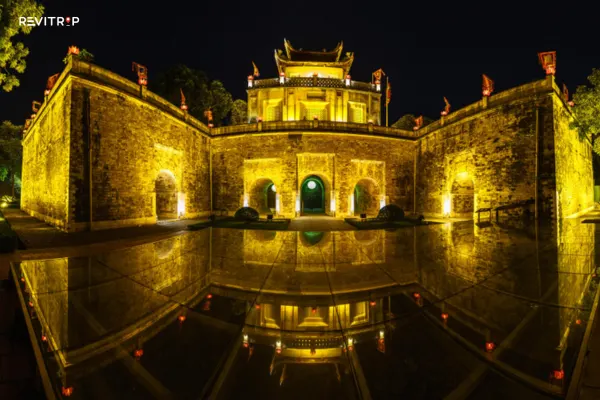
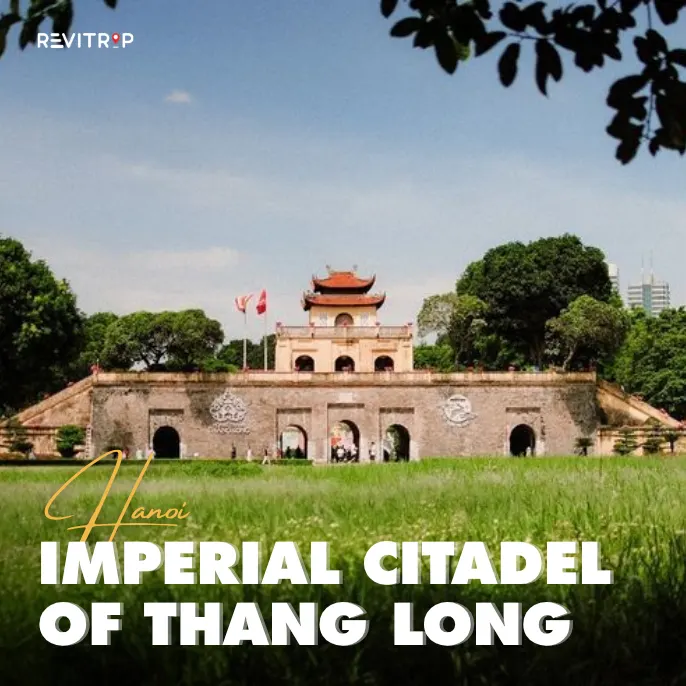
Doan Mon Gate served as the ceremonial entrance to the Forbidden City within the citadel, the area reserved exclusively for the king and the royal household. The gate consists of five arched passageways. The central arch was reserved for the king alone. Visitors today enter through the same structure and immediately encounter the scale of what was built here.
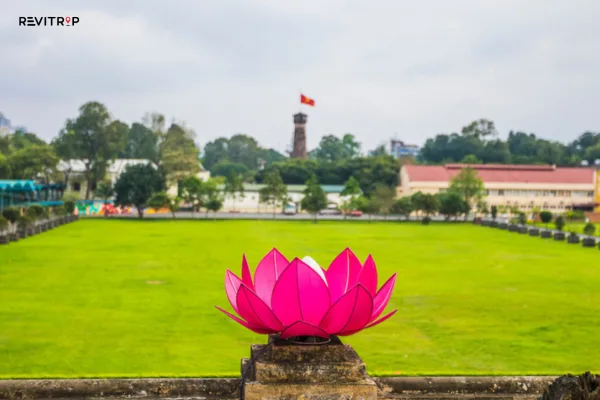
The view from the top of Doan Mon across the citadel grounds gives the clearest sense of the site’s spatial organization. On clear days, the Flag Tower of Hanoi is visible to the south and the Kinh Thien Palace foundation to the north.
Kinh Thien Palace
Kinh Thien Palace stood at the symbolic center of the ancient citadel. Ancient Vietnamese cosmology considered this point the center of heaven and earth. The palace itself no longer stands, but its stone foundation and the ornate dragon staircases leading up to the platform survive in exceptional condition. The carvings on these staircases are among the finest examples of Le dynasty stone craftsmanship remaining in Vietnam.
The incense offering ceremony held at Kinh Thien Palace during the night tour carries particular significance. It commemorates the ancestors who governed Vietnam from this site across centuries of dynastic rule.
The Archaeological Site at 18 Hoang Dieu Street
The excavation site at 18 Hoang Dieu Street is one of the most remarkable archaeological discoveries in Vietnamese history. When construction work began here in 2002, excavators uncovered layer upon layer of relics spanning the Dai La, Ly, Tran, Mac, Le, and Nguyen periods. Millions of artifacts have since been recovered, creating a physical map of overlapping dynasties through the objects they left behind.
Visitors can walk along elevated platforms above the excavation area and view the uncovered foundations, ceramic fragments, architectural elements, and daily-use objects that give tangible form to centuries of court life. The well dating from the Tran dynasty, 13th to 14th century, is among the most evocative individual finds on the site. It still draws water today.
“The well at 18 Hoang Dieu Street has been drawing water for over 700 years. That single fact communicates the continuity of this place better than any exhibition panel.”
The Relics and Artifact Exhibitions
The citadel’s permanent exhibition spaces display ceramics, bronze tools, carved architectural elements, and decorative objects recovered from across the site. Each piece connects to a specific dynasty and a specific function within the royal court.
The collection includes:
- Roof tiles and decorative ceramics from the Ly, Tran, and Le dynasties
- Bronze tools and weapons recovered from military compounds within the citadel
- Stone carvings documenting royal ceremonies and court life
- Personal objects and daily-use items that bring the human scale of court life into focus
For visitors who want to explore the citadel’s artifact collection alongside other major Hanoi cultural sites, GetYourGuide lists guided Hanoi heritage tours that include the Imperial Citadel with expert local commentary.
4. The Night Tour: Decoding the Imperial Citadel of Thang Long
What the Night Tour Is
The night tour launched in April 2022 as a response to a specific challenge. Most of the original buildings within the citadel were destroyed over centuries of conflict and neglect. Sharing the full story of what stood here requires imagination, technology, and performance to supplement what remains physically. The Thang Long Heritage Conservation Center designed the Decoding the Imperial Citadel of Thang Long program to meet exactly that need.
The tour runs every Friday and Saturday evening. It begins at 7:00 pm at Doan Mon Gate and lasts approximately 90 minutes. Throughout the experience, visitors receive eight questions about the relics and artifacts they encounter. Completing the decoding game earns meaningful souvenirs and deepens engagement with the material in a way that passive observation cannot.
The Night Tour Experience Step by Step
| Stop | Experience |
|---|---|
| Doan Mon Gate | Entry point. Royal dance performance greets visitors with traditional music and choreography. |
| Artifact exhibitions | Close examination of ceramics, carvings, and tools spanning 1,000 years of citadel history. |
| Kinh Thien Palace | Incense offering ceremony commemorating royal ancestors at the symbolic center of the ancient city. |
| 18 Hoang Dieu excavation site | Walk above the archaeological dig. Draw water from the Tran dynasty well. |
| Decoding game finale | Use clues collected throughout the tour to identify artifacts projected by laser onto the site and river. |
| Bodhi tree | Traditional lotus tea and lotus jam served beneath a tree symbolizing luck and peace. |
The combination of live performance, interactive challenge, and atmospheric lighting transforms the citadel into something genuinely different from its daytime presentation. For travelers who can only visit once, the night tour is the version worth choosing.
“When the sun goes down and the city lights shimmer across the citadel grounds, something changes here. The stones feel closer. The history feels less distant. The night tour makes that possible.”
For booking the night tour in advance, Klook lists ticketed experiences at major Hanoi cultural sites including the Imperial Citadel.
5. Practical Tips for Visiting the Imperial Citadel of Thang Long
A few preparation habits improve the visit considerably.
Before you go:
- Book the night tour in advance, particularly on Friday evenings when demand is highest
- Confirm your Vietnam entry requirements through our Vietnam visa guide before departure
- Read our guide to scams in Vietnam for awareness of common tourist area risks near major Hanoi attractions
- Dress modestly and wear comfortable shoes. The grounds involve significant walking across uneven surfaces
During your visit:
- Arrive at least 15 minutes before your scheduled tour time, particularly for the night tour
- Carry a fully charged camera or power bank. The lighting at the night tour creates exceptional photography opportunities
- Take your time at the 18 Hoang Dieu excavation site. This section rewards slow, careful attention more than any other part of the complex
- Pick up an audio guide at the entrance if visiting independently during the day
Combining the Citadel with Other Hanoi Attractions
The Imperial Citadel sits within easy reach of several other major Hanoi landmarks:
- Ho Chi Minh Mausoleum: 5 minutes on foot, suits a morning combination visit
- One Pillar Pagoda: 10 minutes on foot from the citadel’s north gate
- Temple of Literature: 15 minutes by motorbike or taxi, covers a complementary chapter of Vietnamese cultural history
- Hanoi Flag Tower: visible from the citadel grounds and accessible on foot
For a full Hanoi sightseeing itinerary that connects these landmarks efficiently, our Hanoi travel guide covers the city’s top attractions and how to structure your days. After a full morning of historical sightseeing, our guide to street food in Hanoi points you toward the best lunch options in the neighborhoods surrounding the citadel.
Final Thoughts: The Imperial Citadel of Thang Long Belongs on Every Hanoi Itinerary
The Imperial Citadel of Thang Long is not a reconstructed heritage site. It is the genuine article, 1,300 years of Vietnamese history embedded in foundations, stones, wells, and artifacts that archaeologists are still uncovering. No other site in Hanoi offers the same span of time in a single visit. The night tour makes that history accessible in a way that daylight and exhibition panels alone cannot achieve.
Plan at least two to three hours for a daytime visit. If your schedule includes a Friday or Saturday evening, prioritize the night tour over the standard daytime option. The 90-minute immersive experience covers more ground, more history, and more atmosphere than a self-guided afternoon walk through the same grounds. For a broader look at what Hanoi has to offer beyond its historical sites, explore guided experiences through GetYourGuide and build an itinerary that does the capital justice.
FAQs
The Imperial Citadel of Thang Long is a UNESCO World Heritage Site in Hanoi with origins dating to the 7th century. It served as the royal seat of Vietnamese power through six dynasties across 1,300 years. The site is known for its Doan Mon Gate, the Kinh Thien Palace foundation, and the extraordinary archaeological excavation at 18 Hoang Dieu Street where millions of relics have been uncovered.
The Decoding the Imperial Citadel of Thang Long night tour runs every Friday and Saturday from 7:00 pm. It combines royal dance performances, artifact exhibitions, an incense ceremony, an interactive decoding game, and laser projections across the site. The tour lasts approximately 90 minutes and ends with traditional lotus tea under the Bodhi tree.
The citadel is located on Hoang Dieu Street in Ba Dinh District, Hanoi. From the Old Quarter, it takes approximately 15 minutes by ride-hailing app. Public buses including routes 09, 22, 33, and 45 stop nearby. Motorbike parking is available adjacent to the main entrance gate.