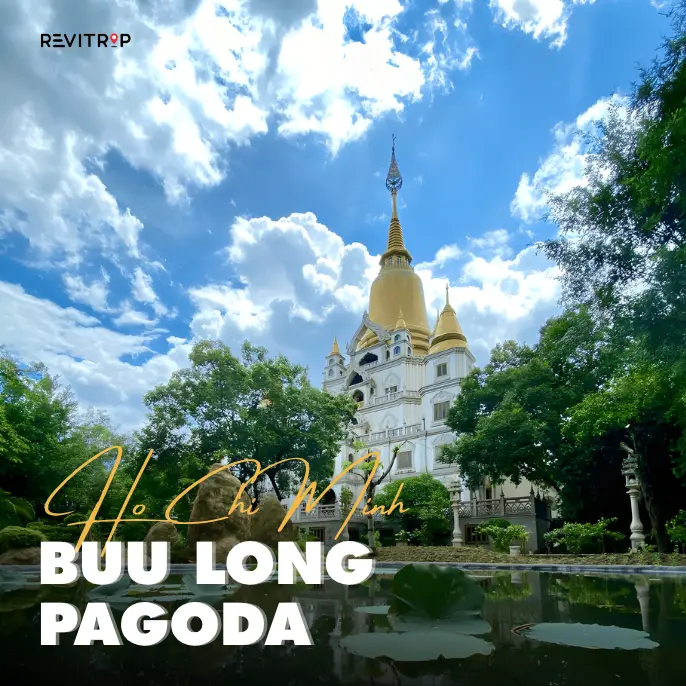
Not many temples in Vietnam stop you in your tracks quite like Buu Long Pagoda. Located in Thu Duc City, formerly known as District 9, this extraordinary Buddhist complex rises above its lush surroundings with golden spires, jade-green reflecting pools, and layered rooftops that immediately remind visitors of Thailand. Yet look closely and you will find Vietnamese dragon carvings, lotus motifs, and Nguyen dynasty influences woven throughout. Buu Long Pagoda is one of the most visually striking and spiritually meaningful places you can visit in Ho Chi Minh City, and best of all, entry is completely free.
Where Is Buu Long Pagoda and How Do You Get There?
Buu Long Pagoda is located at 81 Nguyen Xien Street, Long Binh Ward, Thu Duc City, Ho Chi Minh City. The temple is open daily from 8am to 6pm. However, between 11am and 2pm, visitors are not permitted inside the main buildings. During this midday window, you can still walk the outer grounds and gardens.
Getting there takes around 30 to 45 minutes from central District 1 depending on traffic. The most flexible option is renting a motorbike, which costs VND 100,000 to VND 250,000 per day plus around VND 20,000 to VND 30,000 for fuel. For those who prefer to be driven, a taxi or ride-hailing service from the city center costs approximately VND 150,000 to VND 250,000 one way. Carpooling with friends or family makes this option more economical and comfortable.
Three main approach routes exist. From Thu Duc intersection, take Le Van Viet Street for 4.5 kilometers to the My Thanh junction, then turn right onto Nguyen Van Tang Street and follow the signs. From Suoi Tien, head approximately 2.5 kilometers to the Hiep Phu 2 petrol station junction, then turn and continue to Nguyen Xien Street. From Thu Thiem Tunnel, follow Mai Chi Tho Boulevard, then turn onto Nguyen Thi Dinh and Nguyen Duy Trinh streets toward Nguyen Xien.
Booking Tours to Ho Chi Minh City
A Brief History of Buu Long Pagoda
Buu Long Pagoda began its existence in 1942 as a small hermitage established by lay practitioner Vo Van Tuong. For decades it remained modest and little known. Then in 2007, the pagoda underwent a major reconstruction and expansion under the guidance of Most Venerable Vien Minh, following the Theravada school of Buddhism, also known as Southern or Original Buddhism.
This renovation transformed the site into one of the most architecturally significant Theravada Buddhist complexes in Vietnam. Today, Buu Long Pagoda serves as both an active center for Buddhist study and practice and a major cultural destination that draws thousands of visitors each year. Its blend of Thai Buddhist architecture with distinctly Vietnamese decorative traditions makes it genuinely unlike any other temple in the country.
5 Architectural Highlights of Buu Long Pagoda
The Gotama Cetiya Stupa
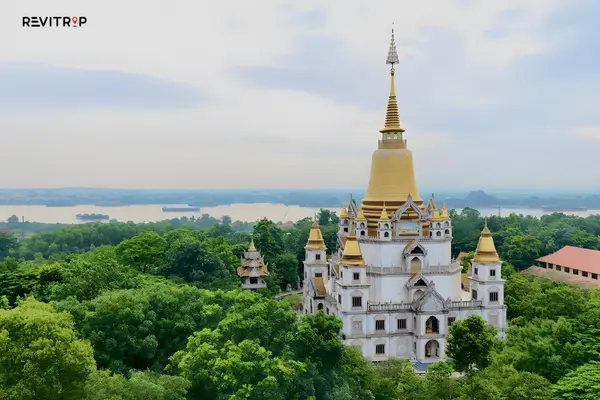
The centrepiece of Buu Long Pagoda is the Gotama Cetiya stupa, which stands approximately 56 meters tall and can accommodate up to 2,000 people. Its stacked dome layers rise to a sharp golden pinnacle, creating a silhouette that is visible from some distance away. The pale gold and white colour palette gives the structure a clean, luminous quality that looks particularly beautiful in the early morning or late afternoon light. This stupa is considered one of the largest and most beautiful of its kind in Vietnam.
The Jade Green Reflecting Pool
Directly in front of the Gotama Cetiya stupa sits a pool with an unusually vivid jade-green colour. This colour is not artificially applied. Rather, it results from a combination of water filtration and the way light reflects off the surrounding stonework. The pool is framed by railings and walkways decorated with Southern Buddhist motifs. Together, the stupa and pool create the most photographed view in the entire complex.
The Main Prayer Hall
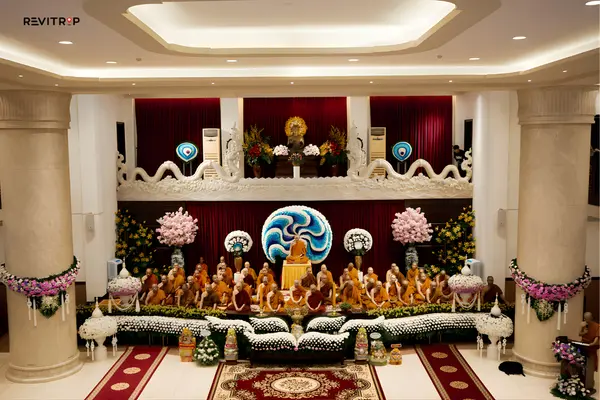
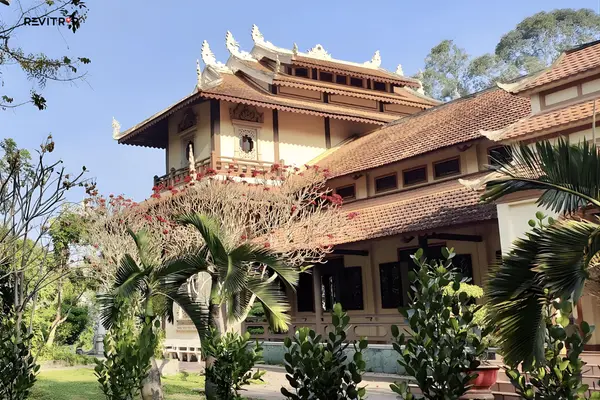
The main hall, or Chanh Dien, serves as the primary space for religious ceremonies and Buddhist study activities. Unlike many Vietnamese temples, this hall follows Theravada principles, which means the interior is open, uncluttered, and deliberately simple. Large columns support a sweeping multi-layered roof modelled on ancient Thai temple architecture. The roofline features upturned eaves with stylised dragon finials and hand-applied decorative plasterwork. Visitors are welcome to enter and sit quietly without any requirement to make offerings or burn incense.
The Fusion of Thai and Vietnamese Design
Buu Long Pagoda is sometimes called the Thai Temple by locals, and the Thai Buddhist influence is undeniable. However, the closer you look, the more Vietnamese details emerge. Dragons, phoenixes, and lotus flowers carved in a distinctly Vietnamese style appear on columns, railings, and roof edges throughout the complex. This fusion of Theravada Buddhist architecture with Nguyen dynasty decorative traditions creates something entirely unique. Furthermore, the red-brick pathways, stone lion statues, and curved roof tiles all echo the aesthetic of Vietnam’s imperial architecture.
The Gardens and Green Grounds
The pagoda grounds are extensive and covered with mature trees that provide welcome shade throughout the day. Brick pathways wind between garden beds, small shrines, and resting areas. Wind chimes hang from trees, and the sound of leaves, bells, and distant chanting creates an atmosphere that is rare to find within a major city. Simply walking through the gardens at Buu Long Pagoda is a genuinely calming experience.
Top Things to Do at Buu Long Pagoda
Visit the Temple and Pray
The main hall and surrounding shrine areas are open for quiet prayer and contemplation. Unlike Northern Vietnamese Buddhist temples, Buu Long Pagoda does not use incense burning or elaborate offerings as part of worship. Instead, visitors can meditate, recite sutras, or simply sit in stillness. The atmosphere is calm and welcoming regardless of your religious background.
Walk the Grounds and Take Photos
Buu Long Pagoda offers exceptional photography opportunities throughout the complex. The most popular spots include the base of the Gotama Cetiya stupa, the edge of the jade-green pool, the colonnaded walkways, and the garden paths beneath the trees. Morning light brings out the warm tones of the golden architecture, while late afternoon casts a softer, more atmospheric glow across the entire complex.
Volunteer and Give Back
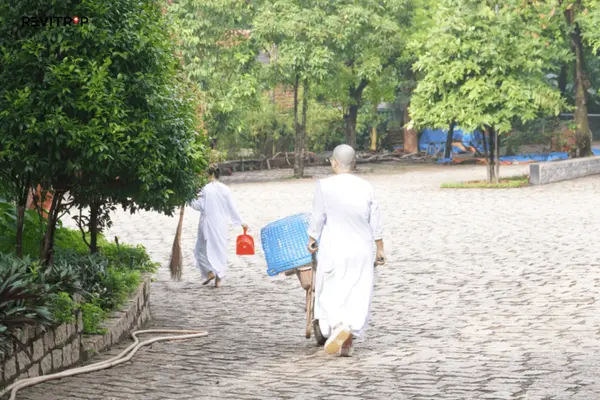
For visitors who want a more meaningful experience, Buu Long Pagoda welcomes volunteers to assist with daily tasks such as sweeping the grounds, preparing vegetarian meals, or helping with general maintenance. The pagoda also organises charitable activities including free vegetarian meal distributions and community support programs. If you want to participate, contacting the pagoda’s volunteer coordination team in advance is recommended, particularly around major Buddhist festivals.
Essential Tips Before You Visit
Dress modestly. Shoulders and knees should be covered when entering the prayer hall and ascending the stupa. Loose, lightweight clothing works well given the tropical climate. Remove shoes before entering the stupa and the main hall, and use the designated shoe storage areas near each entrance.
Visit early in the morning or in the late afternoon. Both periods offer cooler temperatures, softer light, and fewer visitors than midday. Avoid the 11am to 2pm window if you want access to the main buildings. Photography inside the stupa and prayer hall should be minimal and discreet. Do not use flash photography or pose disrespectfully near sacred objects. Keep noise low throughout the grounds, and dispose of any waste in the bins provided.
Buu Long Pagoda offers something genuinely rare in Ho Chi Minh City: space, silence, and beauty that asks nothing from you except a little respect. Whether you come for spiritual reasons, architectural interest, or simply a break from the pace of the city, a visit here leaves most people feeling calmer than when they arrived. For more on exploring the city, check out our guides on things to do in Ho Chi Minh City, Bui Vien Walking Street, and Ba Chieu Market Saigon.
FAQ
Yes, entry to Buu Long Pagoda is completely free. There is no ticket required at any point during your visit.
Buu Long Pagoda follows Theravada Buddhism and features a rare architectural blend of Thai Buddhist design with Vietnamese Nguyen dynasty decorative elements. The Gotama Cetiya stupa and jade-green reflecting pool make it visually unlike any other temple in the region.
Wear modest, respectful clothing that covers shoulders and knees. Avoid sleeveless tops, shorts, or tight-fitting clothing. You will need to remove shoes before entering the stupa and main prayer hall.