The Mekong Delta covers the vast floodplains of southern Vietnam where the Mekong River fans out into a network of canals, streams, and tributaries before reaching the sea. Locally called Mien Tay, or the Western region, it spans 13 provinces and cities including Can Tho, Ben Tre, An Giang, and Ca Mau. Together, those provinces cover roughly 40,600 square kilometers of some of the most productive agricultural land in Southeast Asia.
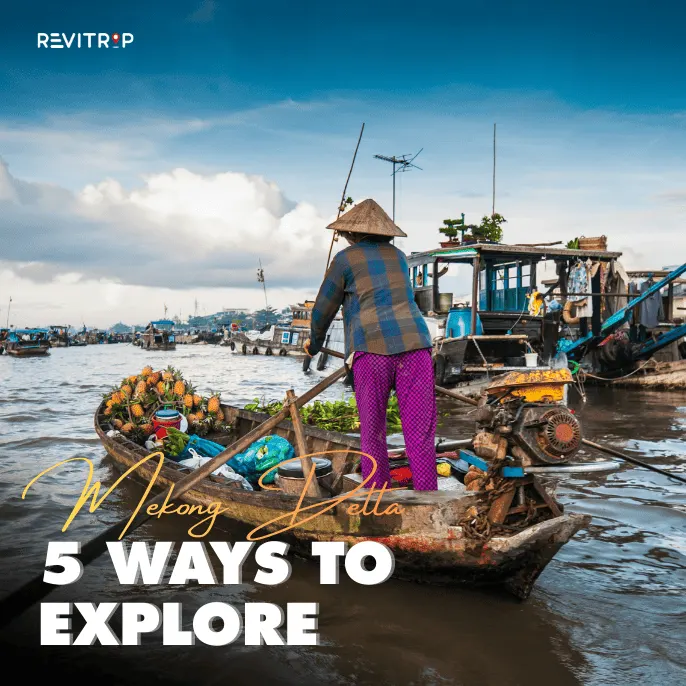
Life in the Mekong Delta Vietnam runs on water. Boats replace motorbikes on many routes. Floating markets operate before sunrise. Rice paddies stretch to the horizon in every direction.
The culture, food, and daily rhythms here differ sharply from the rest of the country, and that difference is exactly why visitors keep coming back.
Bottom line: The Mekong Delta Vietnam rewards travelers who stay longer and move slower. A day trip from Ho Chi Minh City gives you a surface-level view. Two to three nights gives you enough time to actually feel how this place works. Before you go, listening to an audio travel guide helps you orient with the region’s history and key stops.
Quick Facts: Mekong Delta Vietnam
- Location: Southern Vietnam, south of Ho Chi Minh City
- Provinces: 12 provinces and Can Tho city
- Main entry point: Ho Chi Minh City (3 to 4 hours by road)
- Dry season: November to April (best for travel)
- Wet season: May to October (flooding possible in low areas)
- Best overall window: September to November (floating season, lower rain)
- Key cities: Can Tho, My Tho, Rach Gia, Ca Mau
Why Use This Mekong Delta Travel Guide?
The Mekong Delta Vietnam stands out because it offers a version of Vietnam that most visitors to Hanoi and Ho Chi Minh City never see. The landscape is almost completely flat and almost completely green. The food draws on Cambodian and Thai culinary influences alongside Vietnamese tradition, producing a regional cuisine centered on freshwater fish, tropical fruit, and fermented sauces.
Moreover, the people here carry a reputation for warmth that extends even within Vietnam. The delta communities developed a culture of mutual support shaped by generations of working together through floods, harvests, and the demands of river life.
In practical terms, the Mekong Delta Vietnam also delivers strong value. Accommodation, food, and boat tours all cost less here than in the major cities or coastal resort areas.
Best Destinations in This Mekong Delta Travel Guide
Can Tho
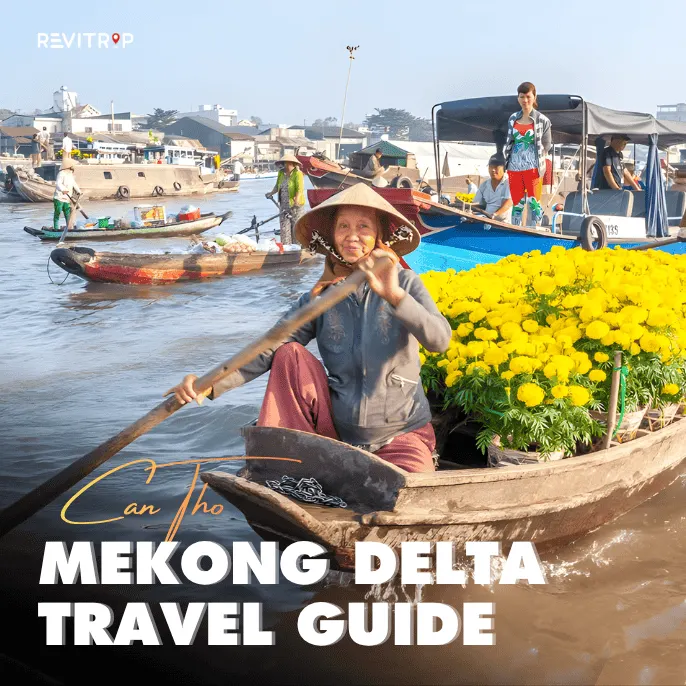
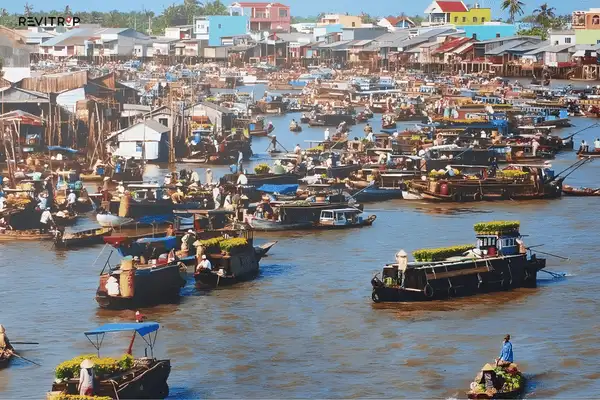
Can Tho is the largest city in the Mekong Delta Vietnam and the most practical base for exploring the region. The city sits on the Hau River and offers direct access to the Cai Rang Floating Market, the busiest and most famous floating market in the delta.
Beyond the market, Can Tho holds the Binh Thuy ancient houses, Ninh Kieu Wharf, and a range of fruit orchards accessible by boat. It is the most developed tourism infrastructure in the delta and the right starting point for any Mekong Delta travel guide itinerary. Book your Ho Chi Minh City to Can Tho transfer in advance to lock in the best price.
Ben Tre
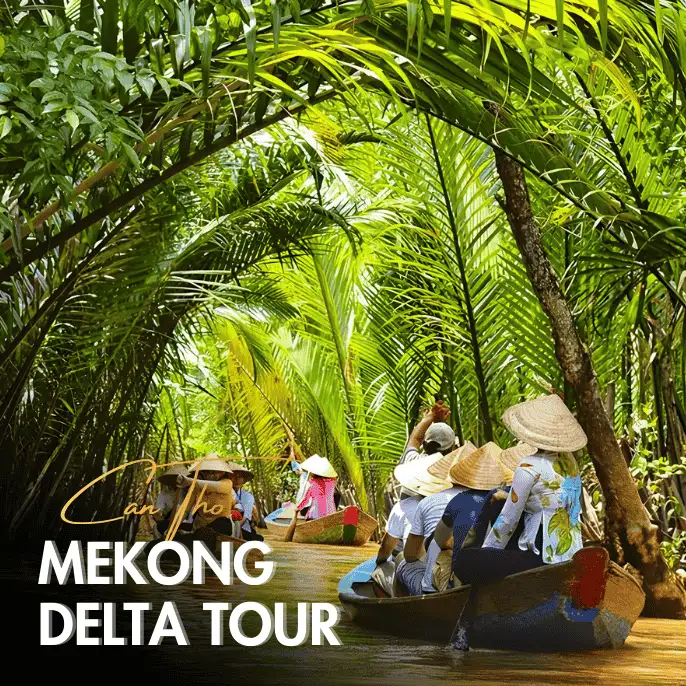
Ben Tre earns its nickname as the “kingdom of coconut” honestly. Coconut groves line every road and canal throughout the province. Visitors cycle through village lanes, visit coconut candy factories, and take sampan rides through narrow waterways where the canopy closes completely overhead.
In particular, Ben Tre suits travelers who want a slower, more rural Mekong Delta Vietnam experience than Can Tho provides. Any good Mekong Delta travel guide should flag it as the best province for cycling and canal tours.
An Giang
An Giang stands out for the Tra Su Cajuput Forest, especially during the floating season from September to November when water fills the forest floor and visitors explore by boat among the submerged trees. Sam Mountain and Cam Mountain also draw visitors looking for highland scenery within the otherwise flat delta landscape.
Dong Thap
Dong Thap offers lotus ponds, stork fields, and Sa Dec Flower Village, which fills with color during the weeks before Tet. The province also contains Tram Chim National Park, home to hundreds of bird species including the rare sarus crane.
Ca Mau
Ca Mau occupies the southernmost tip of Vietnam. The Dat Mui Landmark sits at the literal end of the country, where visitors stand at the final point of the Vietnamese mainland and look out over open sea. The U Minh Ha Forest and Hon Khoai Island add ecological variety to a province most visitors skip entirely.
Best Time to Visit: Mekong Delta Travel Guide by Season
The Mekong Delta Vietnam has two distinct seasons, and the timing of your visit shapes the experience significantly.
Dry season (November to April): Lower humidity, stable river levels, and minimal flooding. This is the easiest time to travel and the most reliable window for boat tours and floating market visits. December to February also brings the Tet flower village season, when Sa Dec and surrounding villages fill with blooms.
Wet season (May to October): The delta turns intensely green and the rivers run high. Flooding in low-lying areas is possible from August to October. However, June to August brings the peak fruit season when orchards overflow with mangosteen, durian, rambutan, and longan. Furthermore, September to November marks the floating season in An Giang and Dong Thap, which offers one of the most visually striking experiences in the entire region.
Overall best window: September to November. The floating season, post-harvest fruit availability, lower rain than the peak wet season, and the early dry-season clarity all combine during this period.
How to Get to the Mekong Delta from Ho Chi Minh City
Getting from Ho Chi Minh City to the Mekong Delta Vietnam is straightforward. This Mekong Delta travel guide covers several transport options depending on budget and comfort preference.
By bus: The most affordable option. Buses depart from Mien Tay Bus Station in Ho Chi Minh City to Can Tho and other delta cities throughout the day. Journey time to Can Tho is about 3 to 4 hours. Tickets cost around 100,000 to 150,000 VND.
By private car or transfer: A private transfer to Can Tho takes about 3 hours. Groups of three or more find this option competitive with bus pricing once the per-person cost splits. Book a private car transfer from Ho Chi Minh City to Can Tho and skip the bus station altogether.
By plane: Flights connect Tan Son Nhat Airport in Ho Chi Minh City to Can Tho Airport in about 45 minutes. This option suits travelers with limited time or those continuing to Phu Quoc Island from the delta.
By organized tour: A guided Mekong Delta tour handles all transport, boat hire, and entry fees in a single booking. Day tours from Ho Chi Minh City cover the highlights. Multi-day tours add depth and access to less-visited areas. Book a 2-day Mekong Delta tour from Ho Chi Minh City covering Can Tho, Ben Tre, and the floating markets with accommodation included.

How to Get Around the Mekong Delta
Once in the delta, four main transport options cover most situations.
By boat: The most authentic Mekong Delta Vietnam experience and the most practical for floating market visits. Boat rental from Ninh Kieu Wharf in Can Tho costs 500,000 to 900,000 VND per boat for a half-day tour depending on group size.
By bicycle: The flattest terrain in Vietnam makes cycling highly accessible. Guided cycling tours cover village lanes, narrow bridges, and riverside paths that motorbikes cannot reach. This is the best way to see the rural Mekong Delta at a genuinely human pace, and pairing the ride with an audio guide lets you learn about villages and food traditions as you pass them.
By motorbike: Freedom to stop anywhere and reach off-route villages. Rental costs around 150,000 to 200,000 VND per day. Suitable for confident riders who have experience with Vietnamese traffic.
By river cruise: A multi-day luxury cruise covers large distances between delta provinces comfortably. The schedule is fixed and the cost is higher, but the combination of comfortable accommodation, guided shore excursions, and scenic river travel makes it the right option for visitors who want to cover more of the delta without managing logistics independently.
What to Eat: Mekong Delta Travel Guide to Regional Food
The food of the Mekong Delta Vietnam carries distinct regional character. The cuisine draws on Cambodian and Thai influences alongside Vietnamese tradition, producing dishes that taste noticeably different from what you find in Hanoi or Ho Chi Minh City.
Key dishes to try include hu tieu noodle soup (particularly in Can Tho), fried elephant-ear fish in Ben Tre, caramelized clay-pot fish (ca kho to), fresh spring rolls with river herbs, and the extraordinary range of tropical fruits available at market stalls throughout the region.
For visitors who want to understand Mekong Delta food culture more deeply, the floating markets provide the most concentrated experience. Cai Rang Floating Market in Can Tho operates daily from 5am to 9am, with food boats serving hu tieu and coffee directly on the river.
FAQ
Take a small-boat canal ride, visit a coconut/candy workshop, and bike through village lanes for the “real delta” feel. Add an early-morning floating market if you want the classic river-life scene.
Can Tho is the easiest base if you want comfort, restaurants, and quick access to the floating market. For a slower, more local vibe, stay in a riverside homestay in Ben Tre/Vinh Long and plan for earlier nights.
It’s hot and humid year-round, with a rainy season that brings short, heavy showers (often in the afternoon). Pack light clothes, a thin rain jacket, and bug spray, and you’ll be fine.