TOP 10 FESTIVALS AND HOLIDAYS
Vietnam’s festivals and holidays offer some of the most vivid cultural experiences in Southeast Asia. From ancient royal ceremonies to riverside lantern processions and high-energy boat races, each celebration reflects a distinct thread of the country’s history and identity. Whether you plan your trip around a specific event or simply stumble into one along the way, Vietnam’s festival calendar adds a dimension to travel that no museum or monument can replicate. Here are the top 10 festivals worth building into your Vietnam itinerary.
Lunar New Year
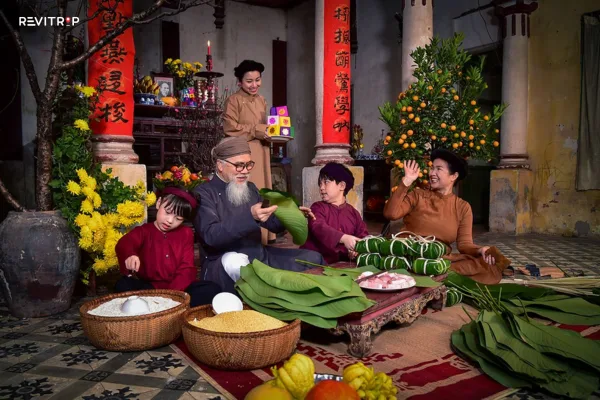
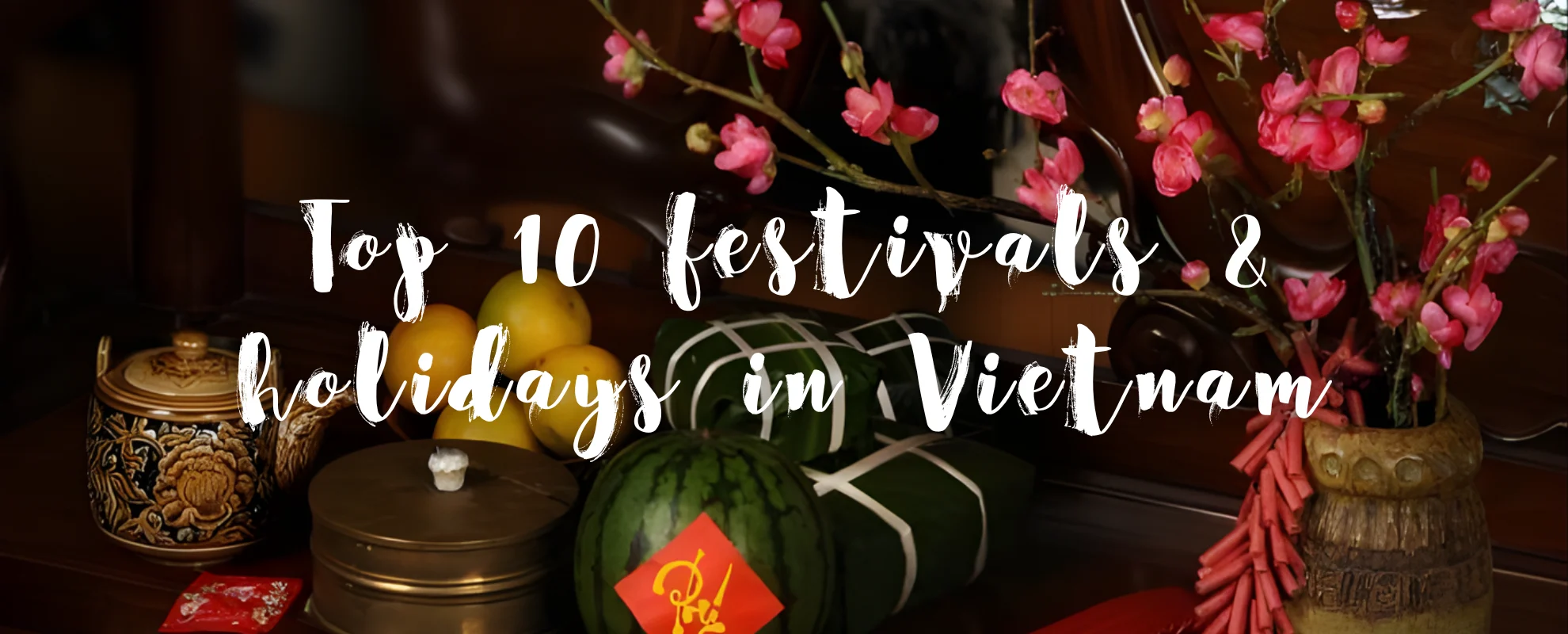
Tet Nguyen Dan, or simply Tet, is the single most important celebration in the Vietnamese calendar. Family reunions drive the holiday, with millions of people returning to their hometowns across the country. For travelers, Tet delivers extraordinary energy through flower markets, decorated streets, and midnight fireworks that light up every major city simultaneously. The atmosphere on Tet Eve is unlike anything else in Vietnam. Step outside, find a public space, and let the celebration unfold around you.
Tet always falls on the first day of the first month of the lunar calendar, typically in late January or early February.
Lim Festival
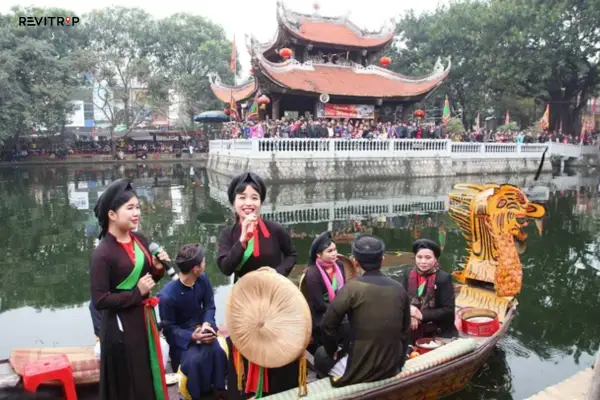
The Lim Festival celebrates the arrival of spring while honoring the cultural traditions of the Red River Delta region. Its defining feature is quan ho, a form of call-and-response folk singing performed by men and women in traditional dress aboard decorated boats on the lake. The melodies carry across the water with a quality that feels timeless. Watching a quan ho performance from the lakeside is one of the quieter, more unexpected pleasures the north of Vietnam offers.
The Lim Festival takes place on the 12th or 13th day of the first lunar month.
“TIP: Traveling through Hanoi in February? The Lim Festival takes place in Bac Ninh Province, roughly an hour east of the capital by road.“
Hue Festival and Hue Craft Village Festival
Hue served as the imperial capital of Vietnam under the Nguyen dynasty, and its cultural heritage remains unusually deep and well-preserved. The Hue Festival and the Hue Craft Village Festival alternate each year in late April. The Hue Festival brings the Citadel and surrounding landmarks to life through large-scale historical performances and ceremonial processions. The Craft Village Festival shifts the focus to the artisanal traditions of surrounding villages, showcasing techniques in silk weaving, conical hat making, incense production, and bronze casting that have continued for centuries.
Both festivals run for approximately one week from late April into early May.
Hung Kings Temple Festival
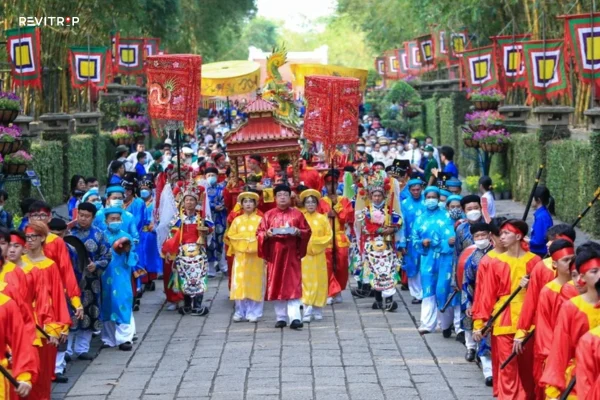
The Hung Kings Temple Festival honors the legendary founding king of the Vietnamese nation. Each year, pilgrims travel to Hung Temple in Viet Tri City in Phu Tho Province to take part in one of Vietnam’s most symbolically significant commemorations. The eve of the festival features hundreds of lanterns released into the night sky above the temple grounds. The following day, ceremonial processions move up the mountain in a rhythm that has repeated for generations.
Hung Kings Day falls between the 8th and 11th day of the third lunar month, typically in April or May.
Xen Xo Phon Festival
The White Thai people of Mai Chau Valley hold the Xen Xo Phon Festival as a ritual call for rain to ensure a prosperous growing season. Songs, offerings, and communal ceremonies fill the valley across several days in the fourth lunar month. Local tradition holds that the scale and sincerity of the festival directly influences the generosity of the rains that follow. Visiting Mai Chau during this period offers an immersive window into minority culture that few mainstream travel itineraries include.
The Xen Xo Phon Festival takes place in the 4th lunar month, generally between April and May.
Ghost Festival or Wandering Souls Day
Vietnamese tradition holds that once each year the boundary between the living and the spirit world opens, allowing ancestors to return briefly to their earthly homes. Families respond by offering prayers, fresh fruit, flowers, and incense at ancestral graves the night before. Paper money and paper clothing are burned so that spirits carry resources into the afterlife. The day carries a mood of quiet reverence that differs entirely from the energy of Vietnam’s more celebratory festivals.
Wandering Souls Day falls on the 15th day of the 7th lunar month, usually in late August or early September.
“TIP: Hue’s network of historic pagodas provides one of the most atmospheric settings in Vietnam to observe the rituals of Wandering Souls Day.”
Independence Day
On September 2, 1945, Ho Chi Minh read the Declaration of Independence in Ba Dinh Square in Hanoi, establishing the Democratic Republic of Vietnam. That moment is commemorated every year with national pride expressed through flag displays, street decorations, military parades in major cities, and fireworks after dark. The celebration draws locals out in large numbers and welcomes travelers to join the atmosphere freely. Hanoi’s Ba Dinh Square and Ho Chi Minh City’s central districts are the most energetic places to experience the day.
Vietnamese Independence Day falls on September 2 each year.
Mid-Autumn Festival
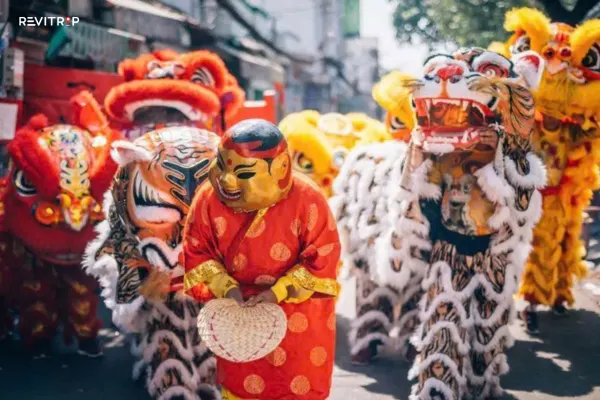
The Mid-Autumn Festival centers on children, celebrated with paper lanterns, masks, and toys distributed through neighborhoods as evening falls. Lion dance troupes move through the streets while families gather in their gardens with mooncakes and tea to watch the harvest moon rise. The festival carries a warmth and simplicity that resonates across all generations. It is one of the most photogenic nights of the Vietnamese year.
The Mid-Autumn Festival falls on the 15th day of the 8th lunar month, between September and October.
“TIP: Hoi An’s Ancient Town transforms completely on Mid-Autumn Festival night. Electric lights are switched off, paper lanterns line every street, and decorated boats drift down the Thu Bon River by candlelight.”
Ooc Om Boc
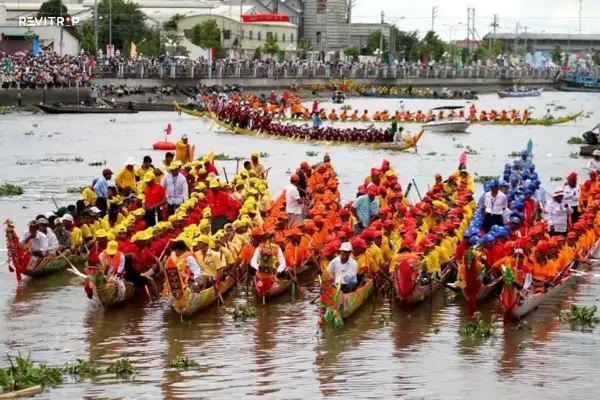
The Khmer community of the Mekong Delta celebrates Oc Om Boc as a night of gratitude to the moon god for the harvest just completed. Soc Trang Province, where Khmer culture maintains a strong presence, hosts the largest and most vibrant version of the festival. Offerings, feasting, traditional music, and ceremonial dances build through the evening toward the festival’s defining event: the Ngo boat race. Dozens of long, elaborately painted boats compete on the river in front of crowds that number in the thousands.
Oc Om Boc is celebrated on the night of the 14th day of the 10th lunar month, usually in early December.
New Year’s Eve
Vietnam marks both the Gregorian New Year on January 1 and the Lunar New Year later in the season, giving the country two distinct moments of collective celebration each year. Gregorian New Year’s Eve draws large crowds to city centers across the country for outdoor concerts, fireworks, and street parties that run well past midnight. Hanoi’s Hoan Kiem Lake and Ho Chi Minh City’s Nguyen Hue Walking Street are the most popular gathering points. Joining the crowds on the street is free, spontaneous, and genuinely memorable.