VIETNAMESE ETIQUETTE
Few countries offer the depth of cultural experience that Vietnam does. Three regions, dozens of ethnic groups, and thousands of years of history have produced a society with its own distinct logic and social code. None of it is difficult to navigate once you understand the basics. A small amount of cultural preparation before you arrive will transform the quality of your interactions and open doors that remain closed to travelers who arrive without it. These eight tips cover the essentials.
Shoes off, shoulders covered
Two situations call for immediate adjustments to how you present yourself. The first is entering a Vietnamese home. Shoes come off at the door without exception. Once inside, watch for altars positioned at floor level within the living space. These are sacred to the family and should never be stepped over or stood directly in front of.
The second situation is visiting any temple, pagoda, or communal house. Modest clothing is non-negotiable. Shoulders and knees should be covered, hats removed, and shoes left outside or carried in hand.
“TIP: A small gift makes an immediate positive impression when visiting a Vietnamese household. Fruit, sweets, flowers, or a cold drink all work well. Avoid anything black. Start your greetings with the eldest person in the room, use your right hand for the handshake, and smile freely throughout.”
Permission first, camera second
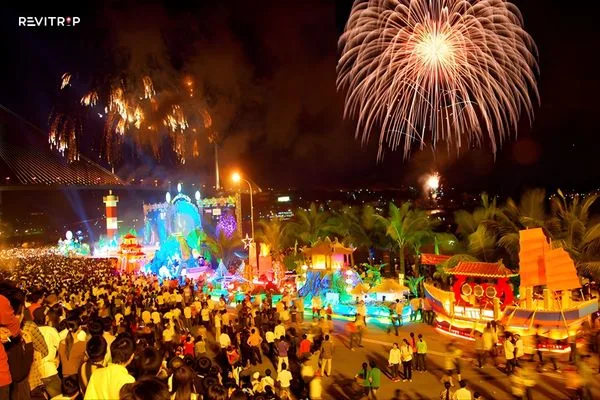
Vietnam is one of the most photogenic countries in the world. Markets, river life, craftspeople, temple ceremonies, and everyday street scenes all present images that are almost impossible to resist. Most people are genuinely happy to be photographed, but the assumption of consent is where problems begin. Make eye contact, gesture toward your camera, and wait for a nod before you shoot. That moment of acknowledgment changes the dynamic entirely and often leads to a more interesting encounter than the photograph itself.
Start with a smile and a few words
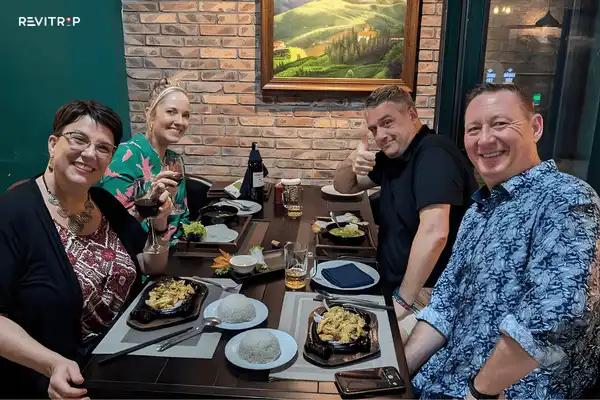
Vietnamese people are warm, sociable, and genuinely curious about visitors who make an effort. At the same time, they are protective of their cultural values and can read quickly when a foreigner is operating without awareness. A smile is your most reliable opening move in any uncertain social moment.
Two phrases carry you further than almost anything else: xin chao for hello and cam on for thank you. Neither requires perfect pronunciation to land well. The attempt alone communicates goodwill and almost always generates a positive response.
“TIP: Group drinking in Vietnam follows a shared rhythm. Everyone raises their glass together and drinks at the same moment. The toast is do, said as yo in the south and zo in the north. The call you will hear most often is mot, hai, ba, do, which simply counts down to the drink. Join in every time and you will make friends faster than any other method available to you.”
Address people the right way
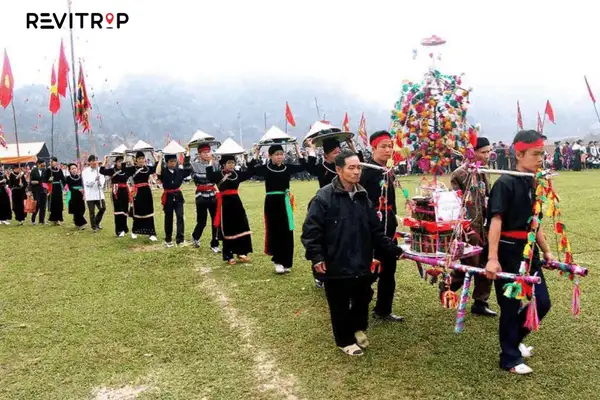
Vietnamese does not have a single neutral word for you. The language uses different terms depending on the age and gender of the person you are addressing, and getting this right signals immediate respect.
The terms to know:
- Em oi: for anyone younger than you, male or female. Em means younger sibling.
- Chi oi: for a woman slightly older than you. Chi means older sister.
- Anh oi: for a man slightly older than you. Anh means older brother.
- Co oi: for a woman old enough to be your aunt.
- Chu oi: for a man old enough to be your uncle.
- Ba oi: for a woman old enough to be your grandmother.
- Ong oi: for a man old enough to be your grandfather.
Unsure of the right term? Ban oi covers almost everyone. It simply means hey friend, and delivers warmth without the risk of getting the relationship wrong.
Eat together, not separately
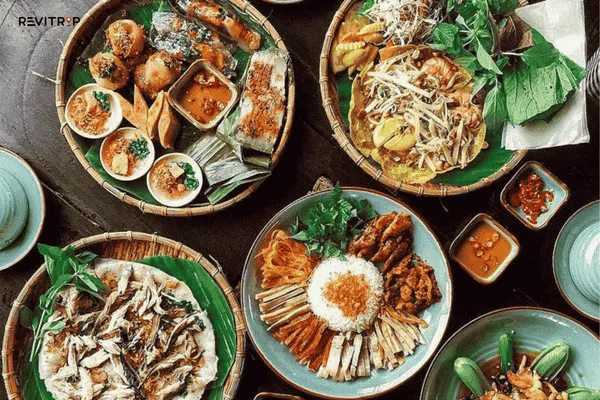
A Vietnamese meal is a shared experience by default. Multiple dishes arrive at the center of the table for everyone to take from, accompanied by individual bowls of steamed rice and chopsticks. Use both hands or your right hand when passing dishes. Keep your left hand out of it when handling food at the table. When eating soup, the spoon goes in the left hand.
Your host will express care through action: placing food in your bowl, refilling your drink, and offering the best portions first. Accept graciously. When you genuinely cannot eat more, a repeated and polite insistence on being full is the correct signal. On the question of who pays: the person who issued the invitation typically covers the table. When no clear host exists, the most senior person present usually steps in.
“TIP: Restaurant tipping is not an expectation in Vietnam. It happens more naturally in the context of private tours and spa treatments. Leave something if the experience moved you, but feel no pressure if it did not.”