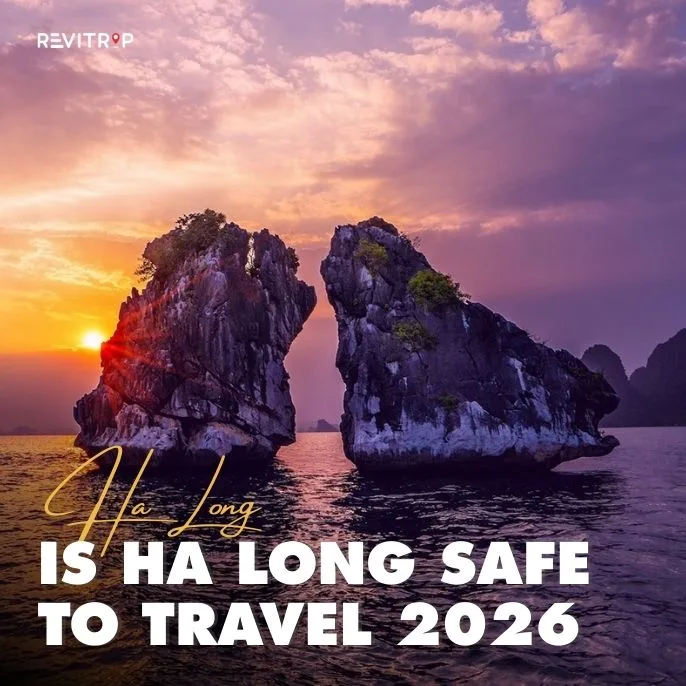
Ha Long Bay is one of Vietnam’s most iconic destinations. Every year, millions of visitors come to cruise among its limestone karsts, kayak through hidden lagoons, and explore ancient caves. For most people, the trip passes without incident. However, in 2025, a tragic accident changed the conversation around safety on the bay. If you are planning a visit and asking “is Ha Long Bay safe?”, this guide gives you an honest, up-to-date answer.
The Wonder Sea Tragedy: What Happened in July 2025
On 19 July 2025, the tourist boat Wonder Sea set off from Ha Long City carrying 46 passengers and 3 crew members. The vessel had met all current safety requirements and had been inspected as recently as January 2025. The number of people on board did not exceed the permitted limit.
Shortly after departure, the situation changed rapidly. The boat capsized amid a sudden thunderstorm, with strong winds causing it to tip over during the sightseeing tour. Most of the passengers were Vietnamese families from Hanoi, including over 20 children. The incident was reported as the deadliest naval accident in Vietnam in over 20 years. In total, 39 people died and 10 survived.
One survivor described the sequence of events: “Everything happened so fast. I tried to get out, and then the soldiers rescued me.” A 10-year-old boy survived by finding an air pocket inside the capsized hull and waiting for rescue teams to reach him.
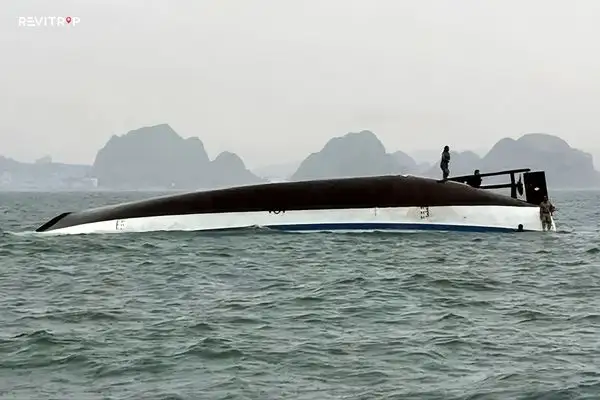
This tragedy was a wake-up call. However, it also revealed something important: the primary cause was not negligence with existing safety rules, but rather the extreme speed and intensity of a flash thunderstorm – and the absence of a real-time weather warning system capable of alerting vessels before conditions became life-threatening.
What the Authorities Did After the Incident
The government response was swift and substantial. Since early August 2025, the Provincial Military Command deployed a medical ship and two high-speed patrol boats to operate around the clock in Ha Long Bay. Each patrol shift includes 6 to 8 personnel with a dedicated communications and medical team. The medical ship carries stretchers, oxygen tanks, fire extinguishers, and other emergency equipment.
Additionally, technology upgrades began immediately. Local authorities upgraded communication devices across the fleet, added six new storm shelters in Ha Long Bay, and approved the installation of early warning systems for storms and lightning at key locations across both Ha Long Bay and Bai Tu Long Bay.
The Vietnam Meteorological and Hydrological Administration proposed installing additional wind and rain monitoring stations in Ha Long Bay, along with an X-band weather radar, three automatic weather stations, and five sets of onboard weather sensors for tourist boats. Furthermore, all nearly 500 tourist boats now require Automatic Identification Systems (AIS) for real-time monitoring of routes, positions, and speeds, alongside mandatory VHF radios and GPS equipment.
Operating regulations have also been tightened. Responsibilities now attach directly to port owners, ship captains, and crew members. Hotline numbers are publicly posted at ports and on ships so that tourists can report shortcomings directly to authorities.
These measures represent a significant shift from reactive to proactive safety management. Consequently, travelers visiting Ha Long Bay today are entering a bay with more infrastructure, more patrols, and more technology than at any previous point.
Ongoing Safety Standards on Ha Long Bay
Beyond the post-incident response, the bay has long maintained strong baseline safety requirements. The bay is strictly managed by the Quang Ninh Province Port Department and the Ha Long Bay Management Board. The Waterway Traffic Police regularly inspect boats and supervise vessel operations at docking areas to confirm compliance with safety standards.
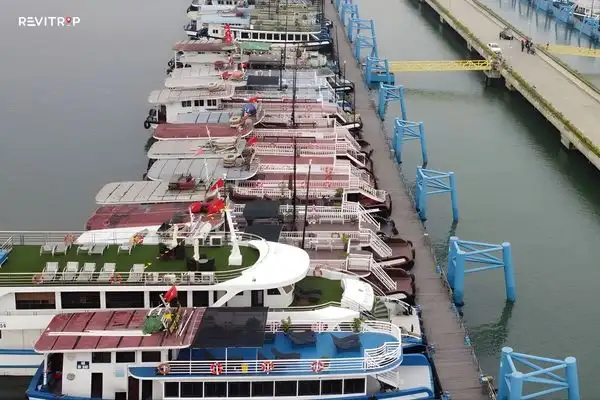
Each cruise cabin connects to the vessel-wide alarm system and includes a fire extinguisher, hammer, flashlight, and life jackets. Before every cruise, all passengers take part in a safety briefing. Reputable operators also go beyond minimum requirements. Safety protocols now require operators to cover vessel-specific evacuation routes, life jacket demonstrations, assembly point locations, emergency communication signals, and man-overboard procedures.
The following table summarizes the key safety standards currently in place across Ha Long Bay cruise operations.
| Safety Area | Current Standard |
|---|---|
| Vessel inspection | Quarterly for registered cruise operators |
| AIS tracking | Mandatory for all ~500 tourist boats |
| Life jackets | Required for all passengers and crew, plus 10% extra |
| Weather monitoring | X-band radar + automatic weather stations (in deployment) |
| Emergency patrol | 24/7 medical ship + 2 high-speed patrol boats |
| Storm shelters | 6 new shelters added across the bay in August 2025 |
| Onboard briefings | Mandatory before every cruise departure |
The Real Risks and How to Reduce Them
Being honest about risk means acknowledging that Ha Long Bay is a natural environment, not a theme park. Weather can change rapidly, particularly during the summer months (May to September). Flash thunderstorms are the most serious hazard – and they move faster than most boats can respond to.
The key factors that determine your personal risk level are the vessel quality, the operator’s judgment, and the time of year you visit. Here is what we recommend based on experience:
Choose a Mid-Range or Above Cruise Operator
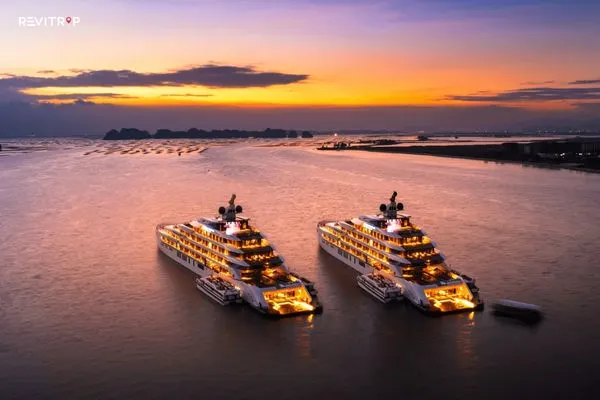
The Wonder Sea was an inland waterway vessel used for day tours. Larger overnight cruise ships have more stability, better communication equipment, and more experienced crews. Modern Ha Long Bay cruises come equipped with first aid kits, fire prevention systems, life vests, lifebuoys, and clearly outlined emergency procedures. Crew members receive basic first aid training, and assistance from nearby support boats can typically reach a vessel within one hour.
Choose a licensed overnight cruise operated by a reputable company rather than a low-budget day tour boat, especially during summer. If you are looking for an overview of where to stay or what to experience beyond a cruise, the Ha Long destination guide is a good place to start planning.
Avoid the Bay During Thunderstorm Season
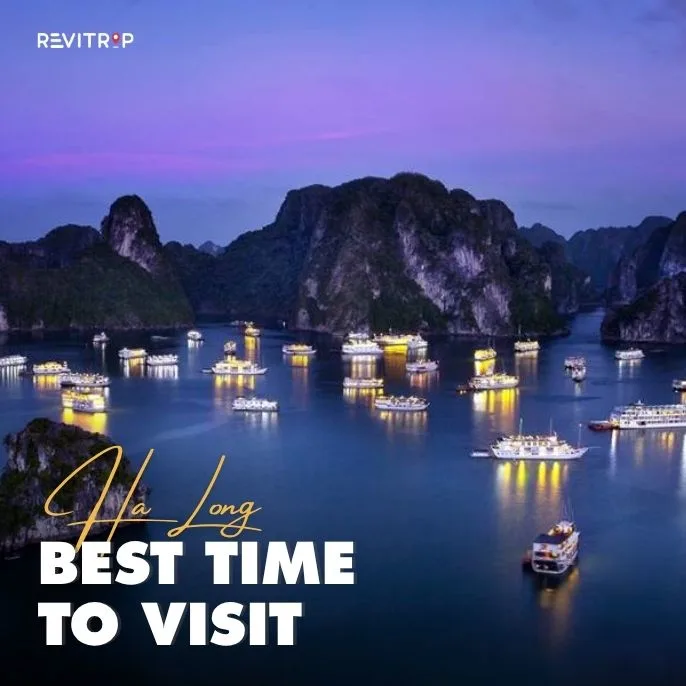
The safest months to visit Ha Long Bay are March to April and September to November. These shoulder seasons bring mild temperatures and lower storm risk. Summer visits are possible and many people enjoy them, but be prepared for potential itinerary changes due to weather.
Check the Weather Before You Board
This sounds obvious, but many travelers skip it. Before you step onto any vessel, check the local forecast. Ask your cruise manager or guide what weather monitoring systems the boat uses and what the protocol is if a storm develops mid-tour.
Book a Cabin with a Window or Balcony
This is a practical tip that experienced travelers often share. In an emergency, a cabin with direct exterior access is significantly safer than an interior cabin. Travelers recommend specifying a room with a window, or preferably a balcony, for ease of exit if an emergency requires fast evacuation.
Pay Attention to the Safety Briefing
Every reputable cruise on Ha Long Bay includes a safety briefing before departure. Do not treat this as background noise. Know where the life jackets are stored, locate the nearest emergency exit, and identify the assembly point. This takes less than five minutes and matters enormously if something goes wrong.
Is Ha Long Bay Safe for Families and Children?
Yes, with the right preparation. Families are among the most common visitor groups in Ha Long Bay, and the bay’s activities, from cave exploration to kayaking, are appropriate for children when managed sensibly. However, parental supervision near open water is essential at all times. Family bookings on Ha Long Bay cruises increased by 37% between 2023 and 2024, reflecting growing confidence among family travelers.
For families, we recommend overnight cruises on larger, well-reviewed vessels. Avoid small day-tour boats during summer, particularly between June and August when storm risk peaks. If your children are young, check in advance whether your cruise carries child-sized life jackets.

For families planning a broader trip to northern Vietnam, combining Ha Long with Ninh Binh is a popular and practical option, as both destinations offer dramatic natural scenery at a manageable pace.
Is Ha Long Bay Safe Now Compared to Before?
Tourism in Quang Ninh began to rebound after the initial decline following the July capsizing, with local authorities reporting an average of 7,000 to 8,000 visitors daily in early August 2025. The government’s rapid response and ongoing upgrades have restored a significant degree of confidence. Travelers who booked cruises with reputable operators throughout this period continued to complete their journeys safely.
The honest answer is that Ha Long Bay today has more safety infrastructure in place than it did before July 2025. The tragedy prompted real change. At the same time, the bay remains a natural environment with weather-related risk that no technology can eliminate entirely. Choosing the right operator, the right season, and the right vessel class reduces that risk substantially.
FAQ
The highest-risk period is June to August, when summer thunderstorms are most frequent and can develop rapidly with little warning. Typhoon activity also increases during this period across the Gulf of Tonkin. If you must visit in summer, choose a large, well-equipped overnight cruise operator and monitor weather forecasts closely each day.
On 19 July 2025, the tourist boat Wonder Sea capsized during a sudden flash thunderstorm while carrying 46 passengers and 3 crew members. The accident resulted in 39 deaths and 10 survivors. It was described as the deadliest maritime accident in Vietnam in over 20 years and prompted major safety reforms across Ha Long Bay.
Book with a licensed, established operator that holds a valid safety certificate and runs larger overnight vessels rather than small day-tour boats. Look for cruises that include a formal safety briefing, have bay-facing cabins with windows or balconies, and carry updated life-saving equipment. Avoid the cheapest options, especially for summer visits.