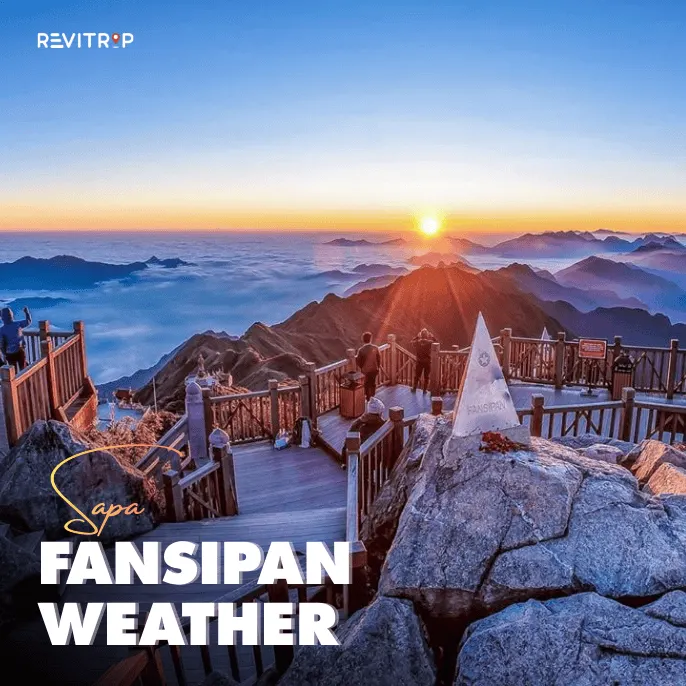
Fansipan weather changes constantly. The mountain sits at 3,143 meters above sea level in the Hoang Lien Son range. At that altitude, the weather does not behave the same way it does in Sapa town below. On some days all four seasons arrive before noon.
Understanding Fansipan weather matters most if you plan to trek. If you are taking the cable car or mountain railway, the conditions are less critical. But for trekkers, the wrong season means slippery trails, zero visibility, and genuine safety risks.
This guide breaks down Fansipan weather month by month, identifies the best windows for trekking, and tells you what to pack.
Quick Facts: Fansipan Climate
- Annual average temperature: 20.1°C overall, but the summit is significantly colder
- Summit daytime temperature in winter: Around 7°C
- Summit nighttime temperature in winter: 0°C to 3°C, with occasional snowfall
- Annual rainfall: Approximately 1,576 mm
- Wind: Strong and unpredictable, gusts can exceed 15 km/h without warning
- Climate type: Humid subtropical with no true dry season
- Key fact: Temperature drops sharply with altitude. Sapa town and Fansipan summit are two different weather environments
Fansipan Weather by Season
Spring: March to May
Temperature: 13°C to 20°C Rainfall: Moderate, increasing toward May Visibility: Generally good in March and April
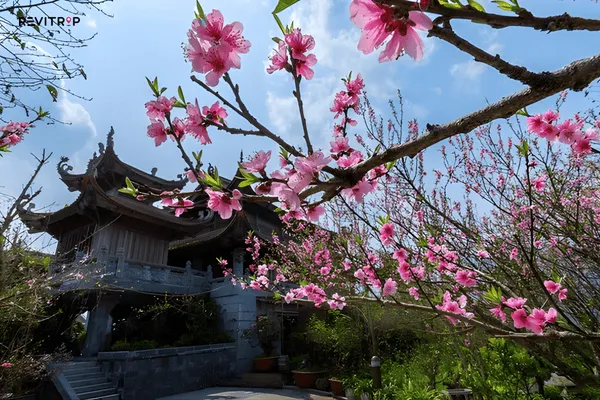
Spring is one of the two best windows for Fansipan trekking. March and April bring dry, cool conditions with good trail visibility. The hillsides are covered in cherry blossom, apricot blossom, and white plum blossom across the northwestern highlands.
Daytime temperatures are comfortable for hiking. Nights remain cold. By May the humidity rises and afternoon rain becomes more frequent.
Best time to trek: March and April Cable car: Excellent. Spring light is clean and the forest is at its most colorful.
Summer: June to August
Temperature: 15°C to 25°C in lower sections, cooler at the summit
Rainfall: Heavy and frequent
Visibility: Frequently poor due to cloud cover
Summer is the most complicated season for Fansipan weather. The mountain experiences what feels like all four seasons within a single day. Morning is often clear. Midday brings strong sun. Afternoon cloud builds fast. By evening the temperature can drop sharply and feel like winter.
Rain is frequent and heavy during these months. Trails become slippery and some sections flood. This is the hardest season for trekking safely.
The cable car continues operating through summer and remains a good option. The mist creates dramatic scenery even if the summit is sometimes hidden.
Best time to trek: Not recommended. High risk of slippery trails and poor visibility.
Cable car: Good for scenery. Check weather forecasts before going.
Autumn: September to November
Temperature: 12°C to 22°C
Rainfall: Decreasing sharply from October onward
Visibility: Excellent from October
Autumn is the best overall season for Fansipan weather. October and November bring the clearest skies, the most stable conditions, and the most spectacular scenery. The terraced rice fields below the mountain turn golden during the harvest. The air is dry and cool.
October to November is peak trekking season. Trails are drier than in summer. Visibility is strong. The mountain rewards trekkers with long views across the Hoang Lien range.
This is also the busiest time. Trails and cable cars are more crowded. Book accommodation in Sapa in advance if you are visiting on weekends.
Best time to trek: October and November. This is the recommended window.
Cable car: Excellent. Best visibility of any season.
Winter: December to February
Temperature: 3°C to 12°C at lower elevations, 0°C to 7°C near the summit
Rainfall: Low
Special condition: Snow possible at the summit, especially January and February
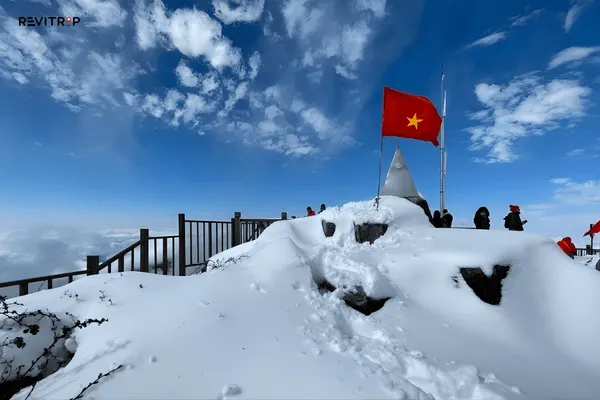
Winter is underrated for Fansipan. Snowfall on the summit is rare in Vietnam and Fansipan is one of the few places where it happens. January and February occasionally bring snow to the upper sections of the mountain.
The cold is significant. Summit temperatures drop to 0°C or below at night. Wind chill makes it feel colder. Trekking in winter is possible but requires proper gear. Trails are generally dry, which helps with footing.
The cable car in winter delivers some of the most striking scenery of any season. Snow-dusted ridgelines and frozen foliage make the journey memorable even without trekking.
Best time to trek: February, when rain is low and blossom season is approaching. Avoid January unless prepared for extreme cold.
Cable car: Excellent in clear weather. Snow days are the most dramatic.
The best approach for most visitors is to check the forecast 2 days before, then decide. When you are ready, book a ride from Sapa town to the cable car station or trailhead.
Fansipan Weather by Month: Quick Reference
| Month | Temp Range | Conditions | Trek? | Cable Car? |
|---|---|---|---|---|
| January | 3°C to 10°C | Cold, possible snow | Challenging | Yes |
| February | 5°C to 13°C | Dry, blossom starts | Good | Yes |
| March | 10°C to 18°C | Dry, cool, clear | Excellent | Excellent |
| April | 13°C to 20°C | Mild, some rain | Excellent | Excellent |
| May | 15°C to 22°C | Humid, more rain | Moderate | Good |
| June | 18°C to 25°C | Wet, misty | Not recommended | Good |
| July | 18°C to 25°C | Heavy rain | Not recommended | Moderate |
| August | 17°C to 24°C | Heavy rain, slippery | Not recommended | Moderate |
| September | 15°C to 22°C | Rain easing | Moderate | Good |
| October | 12°C to 20°C | Clear, dry, golden | Excellent | Excellent |
| November | 10°C to 18°C | Cool, clear | Excellent | Excellent |
| December | 5°C to 14°C | Cold, dry | Moderate | Good |
Best Time to Trek Fansipan
There are two clear trekking windows based on Fansipan weather patterns.
October to November is the top choice. Conditions are dry, trails are stable, and the surrounding landscape is at its most dramatic. The golden rice terraces visible from the mountain during this period are one of the most photographed scenes in northern Vietnam.
March to April is the second best option. Slightly warmer and with the added bonus of spring blossom across the mountain slopes. Rainfall is still low in March and only begins to pick up toward late April.
Avoid June to August for trekking. The trails become dangerous in heavy rain. Visibility drops significantly and the risk of slipping on steep sections is real.
If you want a guided experience with the right gear and a local leader, book a Fansipan trekking tour for October or March departures.
Packing List for Fansipan
Fansipan weather changes fast. Packing the wrong gear is one of the most common trekking mistakes.
Footwear: Trekking boots with strong grip. The trails are steep and often wet even in the dry season.
Clothing: Layer up. A moisture-wicking base layer, insulating mid-layer, and waterproof outer shell are the minimum. Even in spring, summit temperatures drop sharply.
Gear: Trekking poles for steep descents. Ankle and knee braces if you have any joint concerns. Rubber-grip gloves for rocky sections.
Protection: Leech socks for the rainy season. Sunscreen for spring and autumn days with strong UV at altitude.
Health: Basic first aid including blister pads, aspirin, and rehydration salts. Altitude headaches are possible above 2,500 meters.
Documents: A valid ID is required to obtain a trekking permit for Hoang Lien National Park. Do not forget this. No permit, no access.
Cable Car vs. Trekking: Which to Choose?
If Fansipan weather is poor or you have limited time, the cable car is the right choice. The 20-minute ride from Sa Pa town reaches the summit regardless of trail conditions. You still experience the mountain scenery, the mist, and the altitude views.
If you have 2 to 3 days and strong physical fitness, trekking gives you something the cable car cannot. Time on the trail in good Fansipan weather is an entirely different experience from a ride to the top.
The best approach for most visitors is to check the forecast 2 days before, then decide.
FAQ
Morning is usually best for clearer views and fewer crowds, especially if you go early. Late afternoon can be great for sunset light and “sea of clouds,” but visibility is more hit-or-miss, so check the forecast.
Yes, Fansipan can be hiked, and the Tram Ton route is the most common, but it’s still a steep, long climb. Most people do it as a 2–3 day trek, while fit hikers may finish in a long day (often 8–12+ hours). Check the guide first for safety.
Your best chance is winter, usually December to February, with the most likely window around late December and January. Snow is rare and often brief at the peak, so treat it as “lucky timing” and follow cold-front updates close to your trip.