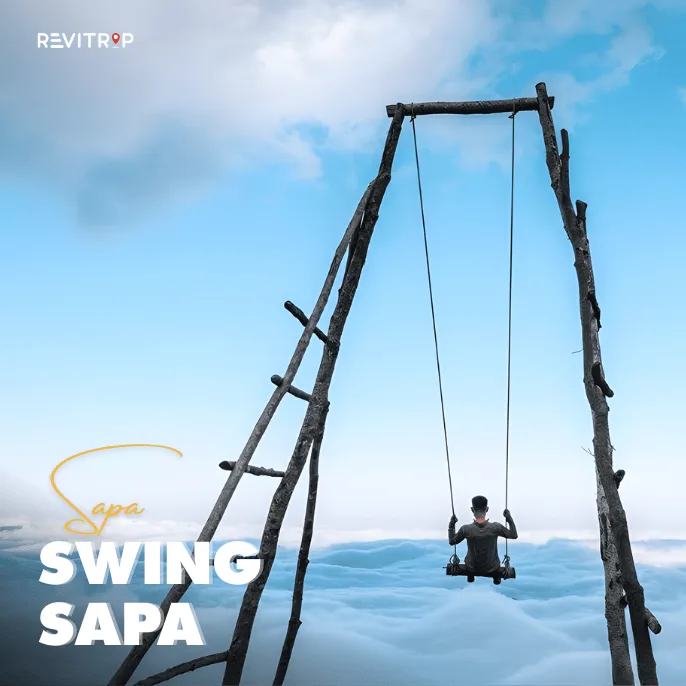
Swing Sapa is one of the most popular photography destinations in northern Vietnam. It sits about 2 kilometers from Sapa town center and looks out over the Hoang Lien National Park.
The view is extraordinary. On clear days you see forest-covered ridgelines stretching into the distance. On misty days the entire complex disappears into low clouds.
The concept draws comparisons to Bali. There is a reason for that. Swing Sapa has an infinity pool with two large stone statues.
It also has a giant stone hand rising from the hillside. Rope swings hang over the valley. Scenic terraces are designed for photography. It is theatrical, intentional, and genuinely beautiful.
Bottom line: Swing Sapa is worth visiting if photography is part of your Sapa trip. The views are real, the photo setups are excellent, and the ticket price includes a drink. Plan for 2 to 3 hours.
Before you head out, listen to the Sapa audio guide to get oriented while you walk.
Quick Facts: Swing Sapa
- Address: 87 Nguyen Chi Thanh, Sapa Town, Lao Cai Province
- Opening hours: 7:00 AM to 6:00 PM daily
- Ticket price: Around 80,000 VND per person (includes entry and one drink)
- Distance from town center: About 2 km, roughly 15 minutes on foot
- Best time to visit: Sunny mornings or late afternoon for golden light
- Note: Confirm the current ticket price directly with Swing Sapa before visiting, as prices may have changed
What Is Swing Sapa?
Swing Sapa is a cafe and homestay complex built on a hillside overlooking Hoang Lien National Park. It opened as a combination of accommodation, food and beverage, and scenic outdoor spaces.
The outdoor areas are what attract most visitors. Each section is built around a clear visual idea. It works as a scenic viewpoint and a photo setup.
The complex is entirely outdoors. Almost every photo spot at this Sapa photo spot has the forest and mountains as a natural backdrop. When cloud rolls in, the atmosphere shifts completely. Scenes that look sharp and bright in sunshine become soft and cinematic in the mist.
Best Photo Spots at Swing Sapa
The Infinity Pool
The infinity pool is the centerpiece of Swing Sapa. Two large stone statues face each other across the water, inspired by a traditional love story from the H’Mong people. The pool is designed so the water appears to merge with the valley and mountains beyond it.
This is the most photographed spot at Swing Sapa. Couples in particular come specifically for this location. Early morning gives the cleanest light and the smallest crowd. By late morning, queues form for the best angles.
The Giant Stone Hand
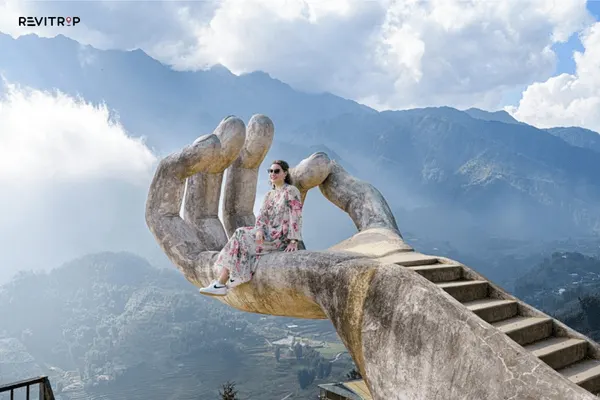
A large stone hand rises from the hillside and reaches upward into the open sky. When cloud rolls in around it, the effect is dramatic. The hand is set against the forest backdrop, which makes it one of the most striking Sapa photo spots regardless of the weather conditions.
The hand is also one of the best spots for cloud watching. On mornings when mist fills the valley below, you can stand at this point and look down into white cloud with only the forest visible above.
The Rope Net Bed
A large rope net bed is suspended over the hillside. It is popular with female visitors who come with colorful dresses to photograph. The white ropes contrast well against the green forest background. A white blanket and pillow are provided so the setup is ready to use.
Photography tip: Shoot from behind the subject facing the mountains. Bright, contrasting colors work best against the neutral background of the valley.
The Stairway to the Sky
A set of tiered stone steps climbs upward from the main terrace. The steps are photogenic on their own, but on misty days the upper steps disappear into cloud. Walking up gives a genuine feeling of moving above the weather. It is one of the more dramatic perspectives at this Sapa photo spot.
The Cloud Swings
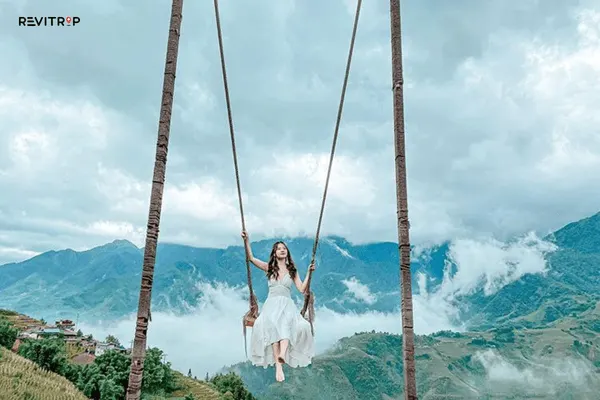
The swings at Swing Sapa are the namesake feature. They hang from wooden frames positioned at the edge of the hillside with nothing but open air and mountain scenery in the frame. The best shots are taken from the front with the subject facing the mountains, dress or scarf catching the wind.
The Lone Pine Tree
A single tall pine tree stands in an open area within the complex. It creates a quiet, contemplative kind of photograph compared to the more dramatic setups elsewhere at Swing Sapa. The pine framed against cloud or blue sky with the hillside below is a good alternative if the more crowded spots are busy.
Other Things to Do at Swing Sapa
Have Coffee with a View
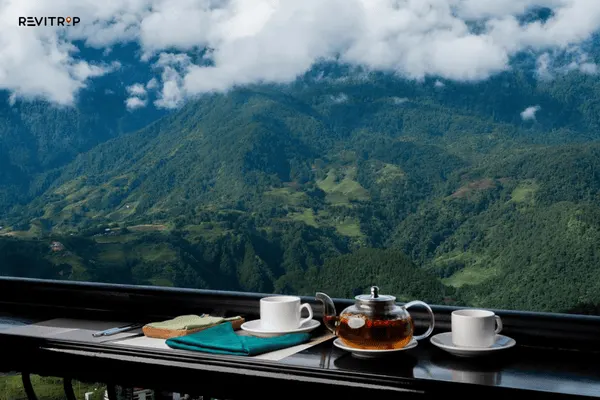
Swing Sapa has a cafe with outdoor seating facing the valley. A hot coffee here with the mountains in front of you is one of the more relaxing ways to spend an hour in Sapa. Drinks are included with the entry ticket, so the cafe is a natural first or last stop.
Stay Overnight
Swing Sapa offers homestay accommodation for guests who want to wake up in the complex. Staying overnight opens access to sunrise photography, which is the best light of the day for most of the outdoor spots. The complex is significantly quieter in the early morning before day visitors arrive.
Prefer to stay closer to town? Browse the full Sapa hotels guide for options at every price point.
Evening Campfire
Overnight guests can join a campfire in the evening. The communal outdoor setting with mountain food including grilled pork, black chicken, corn, and potatoes cooked over open coals is a genuine highland experience.
When to Visit Swing Sapa
Swing Sapa works in every season but looks different depending on the time of year.
Spring (March to May): Mild temperatures, green hillsides, cherry blossoms in the area. Good visibility on clear days. One of the best windows for outdoor photography at this Sapa photo spot. For a full breakdown of what to expect, read the Sapa in March guide.
Summer (June to August): Lush and intensely green. More cloud and mist, which creates atmospheric conditions for moody shots. Rain is possible so check the forecast before going.
Autumn (September to November): Clear skies and golden light. October is peak season in Sapa and the complex will be more crowded, especially on weekends.
Winter (December to February): Cold and misty. The atmosphere is unique. Hot drinks at the cafe become essential rather than optional. Snow is possible on the highest ridges nearby.
Best single time of day: Sunny mornings between 8am and 11am for bright, colorful photography. Late afternoon around 4pm to 5pm for golden light and smaller crowds before closing.
Avoid: Immediately after heavy rain. The outdoor photo setups are all exposed and muddy paths reduce the experience.
How to Get to Swing Sapa
Walking: About 2 km from the town center. A 15 to 20 minute walk through residential streets. Manageable on a dry day with comfortable shoes.
Motorbike: Rental from 80,000 to 120,000 VND per day in town. Riding to Swing Sapa takes about 5 minutes and lets you stop along the route.
Taxi: Around 60,000 VND one way for a 4-seat car from the town center, book a ride from the town center directly to the entrance. Good option for groups or when carrying camera equipment.
What to Wear at Swing Sapa
Swing Sapa is a photography destination. Most visitors dress for the occasion.
Bright, contrasting colors photograph well against the neutral mountain backdrop. Long flowing dresses are popular because they move well in the wind on the swings and rope beds. If you do not bring your own outfit, Swing Sapa has a costume rental service on site.
Layer clothing for temperature changes. The hillside can be significantly cooler than the town center, especially on misty days and in the early morning.
Nearby Attractions
Thac Bac (Silver Waterfall): About 1.2 km from Swing Sapa. A 200-meter waterfall surrounded by forest. Worth combining on the same half-day.
Sapa Stone Church: About 1.9 km toward the town center. The most recognizable landmark in Sapa town. Easy to visit on the walk back.
Cat Cat Village: About 3.4 km from Swing Sapa. An H’Mong village with traditional weaving, jewelry crafting, and a waterfall. Add a full morning if you want to visit both.
Is Swing Sapa Worth It?
Yes, for most visitors to Sapa. The ticket price is low, the views are genuine, and the photo setups are well-designed. You do not need to be a serious photographer to enjoy it. The scenery does the work.
Give it 2 to 3 hours. Go on a clear morning. Bring a fully charged phone or camera.
FAQ
The basic entrance ticket is usually around 80,000 VND per person, and it often includes a drink. Some times/combos can be about 100,000–120,000 VND, depending on the drink/package.
Most people go for the photo spots (giant swings, “Bali-style” setups) with mountain and cloud views. You can also grab a drink on-site and spend 1–2 hours taking photos.
You can usually buy tickets at the entrance, and the basic ticket typically includes a drink. If you prefer booking online, some ticket sites sell combo packages too.