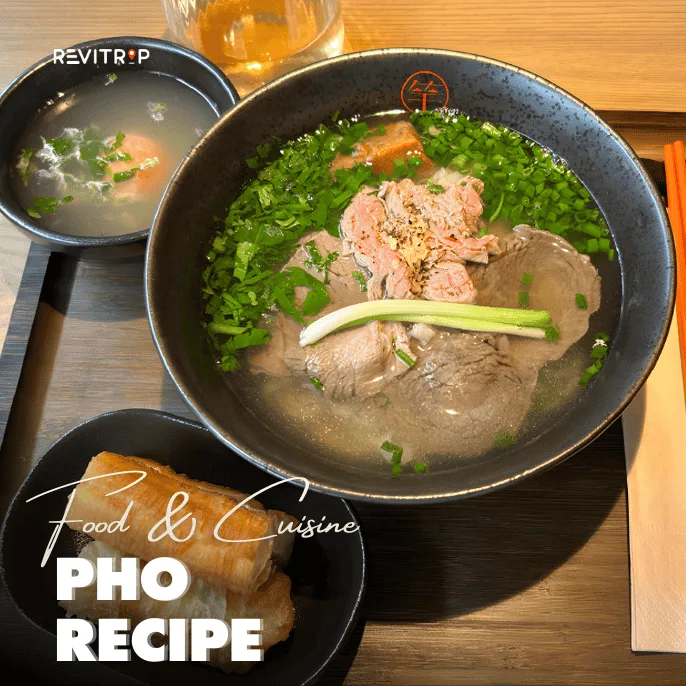
Pho is Vietnam’s national dish and one of the most widely recognized soups in the world. Outside Vietnam, it is now shorthand for Vietnamese food in general. This shows how good it is. But it is slightly unfair to the depth of Vietnamese cuisine.
But what is pho, really? Why does a good bowl take 12 to 24 hours to make? How can you make it at home without that much time?
This guide covers the history, ingredients, a home recipe, and regional differences. It explains why a bowl in Hanoi tastes different from one in Ho Chi Minh City.
Bottom line: Pho is a slow-simmered bone broth with charred aromatics and warm spices. It is served over rice noodles with protein and fresh toppings. The broth is everything. Get the broth right and the rest follows.
What Is Pho?
Pho (spelled phở in Vietnamese and pronounced “fuh,” like “duh”) is a Vietnamese soup. It has slow-simmered broth, flat rice noodles, protein, and fresh toppings. It is Vietnam’s national dish and a common street food, also holds deep cultural and emotional meaning for Vietnamese people worldwide.
The most common version is pho bo, which uses beef. Pho ga uses chicken. And if you want a lighter, herb-forward variation, pho ga cham is worth trying on its own.
Pho chay is a vegetarian version. There are also broth-less versions, like pho sate. It uses a Vietnamese chile sauce with garlic and lemongrass.
Another option is pho kho, or dry pho. It is a popular street dish in Vietnam. It is made with chicken and the same aromatics as the broth-based version.
What Is Pho’s Origin?
The origin of pho is genuinely debated. Some food historians say it came from the French dish pot-au-feu. They note the similar sound and the shared method of slow-simmering beef bones. Others see the rice noodles as evidence of Chinese influence.
The most grounded explanation is that pho was made in Vietnam by Vietnamese people. They adapted what was available through centuries of Chinese and French presence. This created something that belongs fully to Vietnamese food culture.
During French occupation, pho was considered more of a luxury dish. Today in Vietnam it is common enough to eat several times a week. For Vietnamese communities abroad it serves as a reliable connection to home and family.
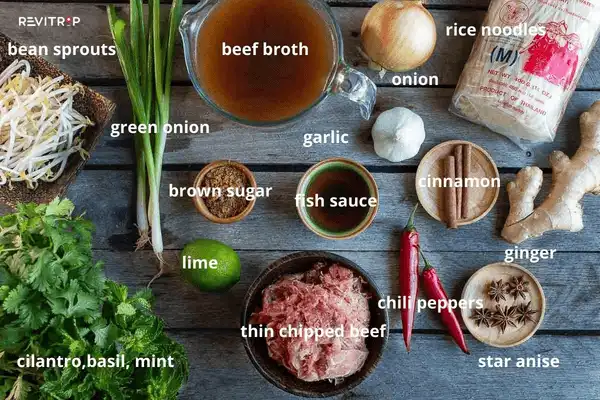
Pho Recipe: Full Ingredients List
For the Broth (Serves 6)
Bones and meat:
- 2 kg beef bones (knuckle and marrow bones give the best body)
- 500g beef brisket or chuck short rib (adds flavor and serves as sliced meat in the bowl)
Aromatics to char:
- 1 large onion, halved
- 1 piece of ginger (about 10 cm), halved lengthways
Whole spices:
- 3 star anise
- 1 cinnamon stick
- 5 whole cloves
- 1 tsp coriander seeds
- 1 tsp fennel seeds
- 3 green cardamom pods
Seasoning:
- 3 tbsp fish sauce (add more to taste)
- 1 tbsp rock sugar (or brown sugar as a substitute)
- Salt to taste
For the Bowls
- 400g dried flat rice noodles (banh pho), medium width
- 300g beef sirloin or eye of round, sliced paper thin (for raw slices that cook in the hot broth)
- Brisket from the broth, sliced thinly
Toppings
- Fresh bean sprouts
- Thai basil
- Fresh cilantro
- Scallions, sliced into thin rings
- White onion, thinly sliced and soaked in cold water
- Jalapeño or fresh chili, sliced
- Lime wedges
- Hoisin sauce
- Sriracha
Pho Recipe: Step by Step
Step 1: Parboil the Bones (20 minutes)
Place the beef bones in a large pot, cover with cold water, and bring to a rolling boil. Boil for 10 minutes. You will see gray foam and impurities rising to the surface.
Drain completely, rinse the bones under cold water, and clean the pot. This step is non-negotiable for a clear, clean broth. Skipping it results in a cloudy, bitter stock.
Step 2: Char the Aromatics (10 minutes)
Place the halved onion and ginger cut-side down directly on a gas flame or under a broiler. Char until the surfaces are blackened in patches and the onion is softened, around 5 to 8 minutes. This charring step is what gives pho its characteristic depth and slight smokiness. Do not skip it.
Step 3: Toast the Spices (5 minutes)
In a dry pan over medium heat, toast the star anise, cinnamon, cloves, coriander seeds, fennel seeds, and cardamom pods until fragrant, about 2 to 3 minutes. Watch carefully and remove from heat as soon as the aroma rises. Burnt spices will make the broth bitter. Place the toasted spices in a spice bag or wrap in cheesecloth for easy removal later.
Step 4: Build and Simmer the Broth (3 to 24 hours)
Return the cleaned bones to the pot. Add the charred onion and ginger, the spice bag, and the brisket. Cover with cold water, around 4 to 5 liters.
Bring to a boil, then immediately reduce to the lowest possible simmer. The broth should have just a gentle movement, not a rolling boil.
Skim any foam that rises in the first 30 minutes. After that, leave it alone. The longer the simmer, the deeper the flavor. Professional pho kitchens simmer for 12 to 24 hours.
At home, a 3-hour simmer in a pressure cooker or 6 to 8 hours on the stovetop produces excellent results.
Remove the brisket after 2 to 3 hours when it is tender. Set aside to cool, then slice thinly for serving.
Season the finished broth with fish sauce, rock sugar, and salt. The flavor should be rich, slightly sweet, gently spiced, and deeply savory. Taste and adjust.
Step 5: Prepare the Noodles
Soak the dried rice noodles in cold water for 20 to 30 minutes until pliable. Blanch briefly in boiling water, 30 to 60 seconds, until just tender but still with some chew. Divide between bowls immediately.
Step 6: Assemble the Bowls
Add a portion of cooked noodles to each bowl. Arrange sliced brisket on top.
For raw beef slices, lay them over the noodles at this point. Ladle very hot broth (close to boiling) over the top. The heat of the broth cooks the raw beef to a tender, barely-pink texture within 30 to 60 seconds.
Add sliced scallions and white onion to each bowl. Bring the toppings to the table separately for everyone to customize.
Regional Differences: Northern vs Southern Pho
Understanding the regional differences matters because pho is not one uniform dish. A bowl in Hanoi tastes different from one in Ho Chi Minh City. Knowing why helps you adjust the recipe to your taste.
Northern pho (pho Bac) has a cleaner, less complex broth. Fewer garnishes are served. Purists in Hanoi see heavy herbs and condiments as a southern habit. They believe it hides the broth’s pure taste. The focus is entirely on the clarity and depth of the stock itself. Scallions and a small amount of white onion are typically the only additions beyond the noodles and meat. If the minimalist northern style appeals to you, also explore pho cuon — a Hanoi street dish that wraps the same flavors in a completely different form.
Southern pho (pho Nam) is bolder and more complex. The broth tends to be richer and sweeter from rock sugar, the spice profile is more pronounced, and the bowl arrives with a generous plate of accompaniments: Thai basil, bean sprouts, fresh chili, jalapeño, lime, hoisin, and Sriracha.
Southerners generally pile their herbs directly into the broth and mix everything together. The southern style is what most people outside Vietnam meet first. Many overseas Vietnamese communities have roots in the south.
For a home pho recipe, southern-style is more forgiving and easier to adjust. Its bold flavors can handle small changes in technique.
For Vietnamese communities abroad and our American fellows: Looking for a bowl closer to home? Here is a guide to finding pho restaurants in Buffalo, NY that stay true to the original.
How to Eat Pho
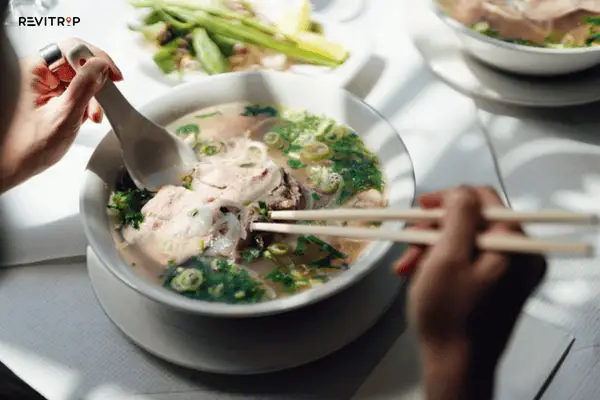
The standard technique is to hold chopsticks in one hand and a deep soup spoon in the other. Twirl some noodles onto the spoon, add a slice of meat and some broth, and eat in one coordinated bite. This is the right approach because it ensures you get broth, noodles, and protein in every bite. You won’t need to eat them separately.
On toppings: add bean sprouts and fresh herbs to the bowl first, then squeeze lime over the top. The lime brightens the broth noticeably. Hoisin and Sriracha can go directly into the bowl or into a small side cup for dipping meat before eating. There is no wrong approach, but adding too much of either directly to the broth before tasting it first is a mistake most first-timers make.
Slurping is acceptable and in many settings expected. The sound indicates you are eating the noodles correctly.
Ready to try it in person? Book a ride to the nearest pho shop and eat it fresh.
Is Pho Healthy?
Within Vietnamese culture, pho is regarded as restorative and nutritious. The long-simmered bone broth provides collagen and minerals.
The warm spices, particularly cinnamon and cloves, contribute anti-inflammatory compounds. Fresh herbs add vitamins. The dish is light enough to eat when unwell and substantial enough to function as a full meal.
Pho is usually gluten-free if the noodles are 100% rice. The broth must not contain any gluten-based additives. Fish sauce and hoisin should be checked one by one if strict gluten-free prep is needed. Recipes vary by brand.
Pho Recipe: Common Mistakes to Avoid
Boiling instead of simmering: A rolling boil makes the broth cloudy and can give it a greasy texture. Keep the heat as low as possible after the initial boil.
Skipping the parboil: The gray foam that appears in the first boil contains impurities from the bones. Without parboiling, this ends up in your final broth.
Under-seasoning: The broth needs both fish sauce and salt, and more of both than most first-time cooks expect. Taste repeatedly and adjust.
Adding raw beef too early: Raw sliced beef cooks in seconds in near-boiling broth. Add it to the bowl and pour hot broth over it at the last moment.
FAQ
A quick pho recipe usually uses store-bought broth, rice noodles, and simple toppings like sliced beef, herbs, and lime. The broth is heated with spices, then poured over cooked noodles and toppings.
Vegetarian pho uses vegetable broth simmered with spices like star anise, cinnamon, and ginger. It is served with rice noodles, tofu, mushrooms, and fresh herbs.
Pho noodles are flat rice noodles commonly used in Vietnamese pho soup. They are soft, slightly chewy, and absorb the flavor of the broth well.