March is one of the best months to visit Sapa, and if you talk to people who have been multiple times, many will tell you it is their favorite.
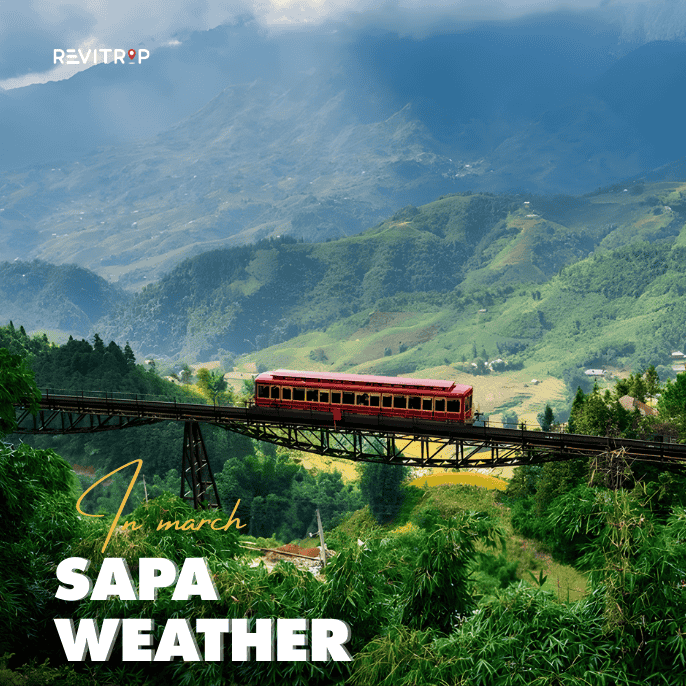
The reason is the combination. Sapa weather in March sits in a sweet spot between the cold fog of winter and the heavy rain of summer. Temperatures are mild enough for comfortable trekking, the skies clear up compared to December and January, and the landscape is doing something visually remarkable: white pear blossoms cover the hillsides, azaleas bloom in the mountain range, and the terraced rice fields begin filling with water for the new planting season.
Bottom line: If you are deciding between March and another month and your priorities are trekking and scenery, March is a strong choice. The only caveat is that it is increasingly popular, so book your accommodation immediately.
Read more for hotels guide: Top 10 Best Sapa Hotels in 2026 (Honest Reviews + Prices)
Quick Facts: Sapa Weather in March
- Temperature range: 12 to 23°C (day), dropping to 8 to 12°C at night
- Rainfall: Low to moderate, fewer rain days than any winter month
- Sunshine hours: Around 12 hours of daylight
- Humidity: Around 74%, comfortable for outdoor activities
- Crowds: Building toward peak, book accommodation 2 to 3 weeks ahead
- Highlight: Peak pear blossom season and start of azalea blooms
- The reality: Weather can shift quickly, especially at higher elevations. A warm morning can become a cold, foggy afternoon. Layers are non-negotiable.
What the Sapa Weather Is Actually Like in March
Sapa sits in the Hoang Lien Son Mountain Range at around 1,500 to 1,800 meters above sea level, which keeps it significantly cooler than the rest of northern Vietnam year-round. In March, the country is transitioning out of winter and daytime temperatures climb into the low-to-mid 20s on clear days.
That sounds comfortable, and during the day it is. The issue is the variability. Sapa in March can genuinely deliver four seasons in a single day: a warm, bright morning on the trail, cloud cover and dropping temperatures by early afternoon, and a cold, damp evening back in town. This is not an exaggeration. It is a consistent pattern that surprises visitors who pack based on the high temperature alone.
Rainfall in March is lower than the summer months but not zero. Occasional showers are possible, particularly in the afternoons. The dry season technically begins in March, which means the trend is moving in the right direction, but you should not rely on staying dry without a waterproof layer.
What to pack: A waterproof outer layer is essential. Two or three mid-layers for morning and evening temperatures. Light hiking clothing for daytime. Waterproof boots or trail shoes with good grip if you are planning to trek.
Why Sapa weather in March Is Special: The Natural Highlights
Pear Blossoms at Peak
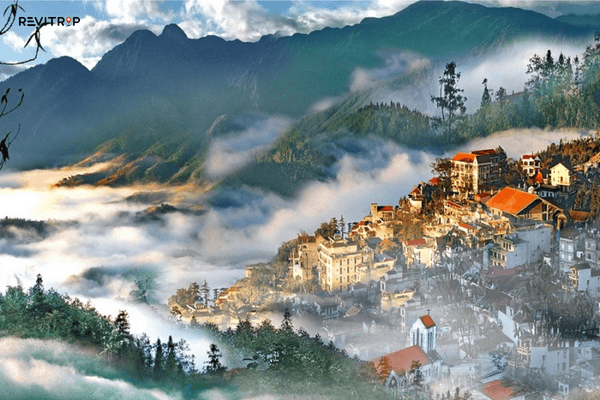
The pear blossom season in Sapa starts in late February and reaches its peak in March. The hillsides and valley slopes around the town turn white with clusters of small blossoms that cover entire ridgelines. The effect is dramatic from any viewpoint in the area and completely different from what you see in the rice harvest season that most travel photography focuses on.
The blossoms are concentrated around the villages and lower slopes rather than at high altitude. Cat Cat Village, Ta Phin Village, and the road toward Muong Hoa Valley all offer good access to areas with significant blossom coverage.
The season is short. By mid-to-late April the blossoms are largely gone. If seeing the pear blossom landscape is a priority, March is the only reliable window.
Azalea Season Begins
Higher on the Hoang Lien Son Mountain Range, azaleas start blooming in March with pink, red, and purple flowers appearing against the green forest. Azaleas grow at altitude rather than in the valleys, which means seeing them requires some upward effort. Trekking toward Fansipan Mountain or climbing Ham Rong Mountain puts you in the right elevation zone.
The azalea season extends into April, so March gives you the beginning of it alongside the pear blossoms lower down, which creates an unusual layered floral landscape across different elevations simultaneously.
The Water-Pouring Season on the Rice Fields
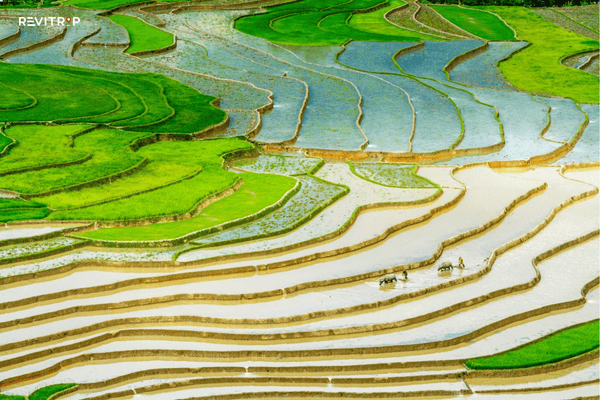
March marks the beginning of the water-pouring season in the terraced rice fields around Sapa. Farmers begin flooding the fields to prepare for planting, and the terraces fill with water that reflects the sky and surrounding mountains. The visual effect is completely different from the golden harvest season in October: glassy water surfaces replacing the dry winter fields, with green shoots beginning to emerge.
This is the best time to visit Sapa if you want to see the rice fields in a state that most visitors miss. The fully harvested golden fields get the most attention in travel photography, but the flooded planting season has its own quiet beauty that is worth seeking out.
Best Things to Do in Sapa in March
Trekking and Cloud Hunting
March is one of the best months for Fansipan Mountain trekking. The trails are drier than in summer, temperatures are manageable at altitude, and the combination of clear mornings and rolling cloud cover through the day creates dramatic conditions for both hiking and photography.
Cloud hunting is exactly what it sounds like: positioning yourself on a ridge or summit to watch clouds move through the mountain landscape below you. Fansipan Mountain at 3,143 meters is the most obvious spot, but Ham Rong Mountain directly behind Sapa town, O Quy Ho Pass, and the ridgeline above Hang Da Village all offer excellent vantage points without requiring a multi-day trek.
The best window for cloud hunting is early morning before 9am, when overnight clouds are still sitting in the valleys before the day’s warmth begins to lift them.
Valley Trekking
Muong Hoa Valley, about 8 kilometers from Sapa town, is the most accessible and most rewarding valley trek in March. The combination of blossom-covered slopes, flooded rice terraces, and traditional H’Mong and Dao villages along the route makes it the single best day walk during this season.
The Rose Valley and Green Valley offer alternatives for travelers who want shorter routes with different scenery. Both are within reach of the town center and do not require a guide, though hiring one adds cultural context that makes the walk significantly more interesting.
Waterfall Visits
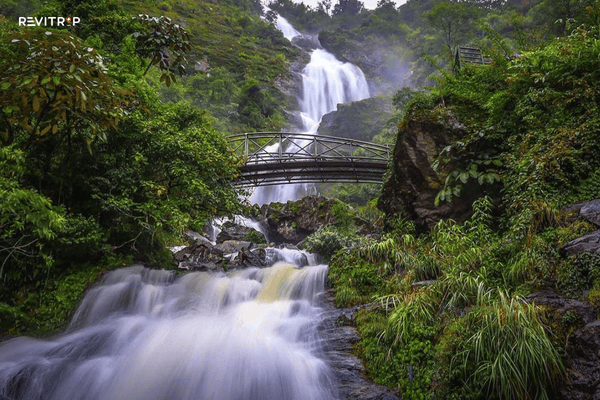
The waterfalls around Sapa are at good flow levels in March without the flood risk that heavy summer rain creates. Thac Bac (Silver Waterfall) sits on the road toward Fansipan and drops 200 meters in a dramatic cascade that is genuinely worth stopping for rather than treating as a roadside photo opportunity.
Love Waterfall, deeper in the forest near Sin Chai Village, requires a longer approach but rewards the effort with a quieter, more atmospheric setting. Tien Sa Waterfall near Ta Phin is the most accessible of the three and combines well with a visit to the village itself.
Ethnic Village Visits
The ethnic villages around Sapa are worth visiting in any season, but March adds specific value because the agricultural activity in the fields is interesting to observe during the planting preparation period.
Cat Cat Village is the closest to town and the most visited, with good craft demonstrations and a manageable walk from the center. Ta Phin Village, home to the Red Dao community, offers traditional herbal bath experiences that are particularly appealing after a cold trekking day. The Red Dao herbal bath uses locally harvested mountain plants and is worth scheduling specifically rather than treating as an afterthought.
Sin Chai Village is where brocade weaving is most visible as a working craft rather than a demonstration. Arriving without a large tour group, which March’s shoulder-season crowd levels allow, makes the interaction feel more genuine.
Local Food Worth Trying in March
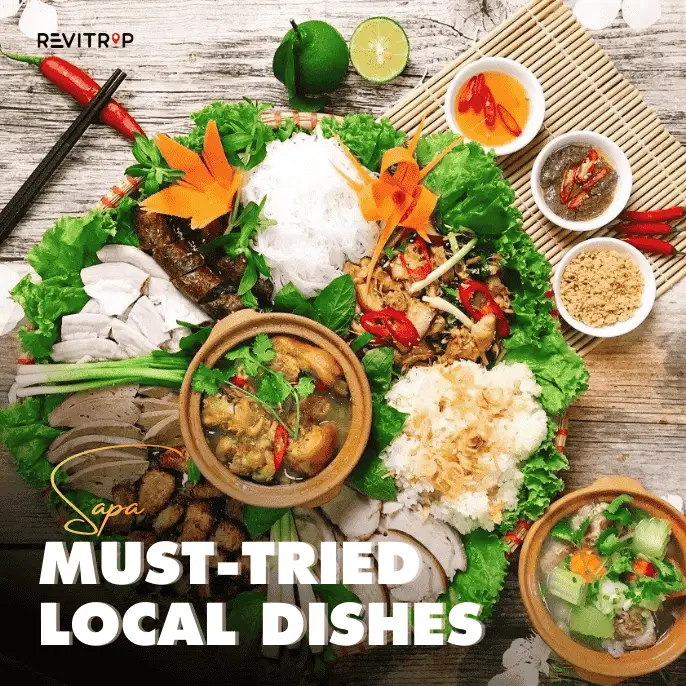
Sapa’s food scene is built around cold-weather staples that make particular sense in March’s cool evenings. Thang co is the most traditional dish: a stew made with horse meat and organs, spiced with local herbs and served at the weekly markets in Bac Ha and Can Cau. It is an acquired taste but a genuine local specialty.
Cap nach pork comes from a small indigenous pig breed raised by hill tribe families and has a distinctive flavor from the free-range upland diet. Dried buffalo meat is the ubiquitous snack: smoked, chewy, and sold at almost every market and restaurant. Rainbow trout, farmed in Sapa’s cold mountain streams, is one of the best options for visitors who want something lighter: fresh, clean-tasting, and typically grilled with local herbs.
Tao meo wine, made from a wild fruit native to Sapa’s highlands, rounds out the list. It is sold in bottles at the markets and tastes somewhere between apple wine and plum liqueur. Worth trying once.
Is March the Best Time to Visit Sapa?
For trekking and natural scenery: yes, March ranks alongside October and November as one of the three best months.
October wins on the rice harvest visuals. November wins on quiet trails and cloud photography. March wins on the blossom season and the beginning of the planting cycle in the fields.
If you have flexibility in your schedule and are choosing between these three months, the deciding factor is usually what you want to see. Pear blossoms and azaleas: come in March. Golden rice terraces: come in October. Quieter trails with clear skies: come in November.
What March has that neither October nor November can offer is the combination of blossoms and active farming that makes the landscape look specifically like spring. That is a genuinely distinct experience.
Practical note: March is increasingly popular, and good accommodation in Sapa sells out weeks in advance during the blossom peak (mid-to-late March). Book as early as possible, particularly for boutique properties and hotels with valley views.
FAQ
Humidity in Sapa during March is moderate compared with the summer months. Mornings can feel misty and damp, but conditions usually improve as the day warms up.
Sapa is coldest from December to February, mild and blooming from March to May, rainy from June to August, and clearer again from September to November. You can explore here for more details.
Many travelers consider March to May and September to November the best months to visit Sapa. These periods usually offer comfortable temperatures, clearer skies, and excellent trekking conditions.