Scams in Vietnam are more common than most travel guides will tell you. From the moment you land at the airport to th-e final taxi ride back, opportunistic situations pop up in nearly every city across the country. Vietnam is not a dangerous destination by any measure, but knowing how to avoid the most common tricks separates a smooth trip from a stressful one. This guide covers all 17 scams you need to know, where they happen, and exactly how to protect yourself.
The 17 Most Common Scams in Vietnam
Understanding scams in Vietnam starts with knowing what to look for. The list below covers every major scam reported by travelers across the country, from Hanoi in the north all the way down to Ho Chi Minh City in the south.
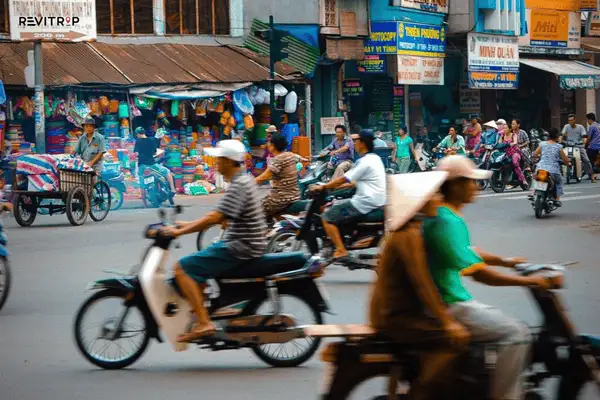
1. Motorbike Taxi Overcharging
Solo travelers often choose motorbike taxis for short trips. The price gets agreed upfront, which feels safe. However, some drivers add a zero to the original price at the end of the ride and insist that was always the agreed amount.
How to avoid it:
- Use the Grab app instead of flagging down a random driver
- The fare displays on your phone before the ride starts
- No driver can dispute a price shown clearly on a screen
2. Buying a Motorbike
Purchasing a motorbike is one of the most popular ways to explore Vietnam independently. Unfortunately, some sellers pass off faulty bikes or swap the agreed vehicle for an inferior model at the last moment.
How to avoid it:
- Research reputable sellers online before you arrive
- Read traveler reviews and ask your hostel for trusted recommendations
- Never complete a purchase without thoroughly inspecting the bike first
3. Motorbike Rental Scams
Rental scams take things further than just overcharging. Some operators hold your passport until you pay for damages you never caused. Others send staff to quietly take the bike back from where you parked it, then demand you pay for a stolen vehicle when you return without it.
How to avoid it:
- Ask fellow travelers or hostel staff for recommended rental shops
- Be cautious of kickback arrangements between hotels and rental companies
- Document the condition of the bike with photos before riding away
4. Pickpockets and Snatch Thieves
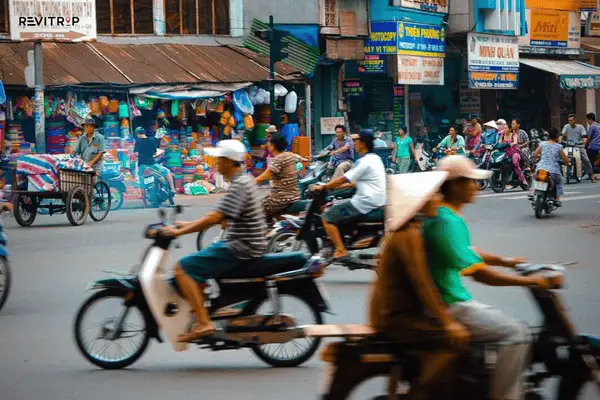
Petty theft runs high across Vietnam, particularly in busy tourist areas. Thieves on motorbikes watch for travelers standing near roads while checking their phones, opening wallets, or carrying bags loosely over one shoulder.
How to avoid it:
- Use your phone facing a wall or building, away from the road
- Wrap camera straps tightly around your wrist when shooting
- Carry a cross-body bag with a zipper at all times
5. Taxi Scams
Fake taxis copy the color schemes of trusted companies like Vinasun (white) and Mai Linh (green). Inside these copycat vehicles, meters move significantly faster than they should, and drivers often attempt money-switching tricks on top of the inflated fare.
How to avoid it:
- Only use verified Vinasun or Mai Linh taxis
- When in doubt, open Grab and book directly from the app
- Confirm the company name on the car door before getting in
6. Money Switching
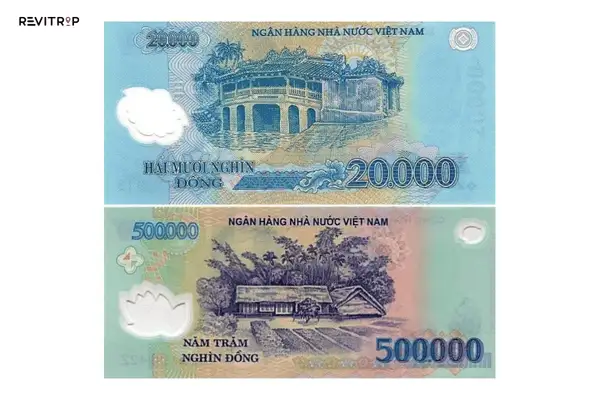
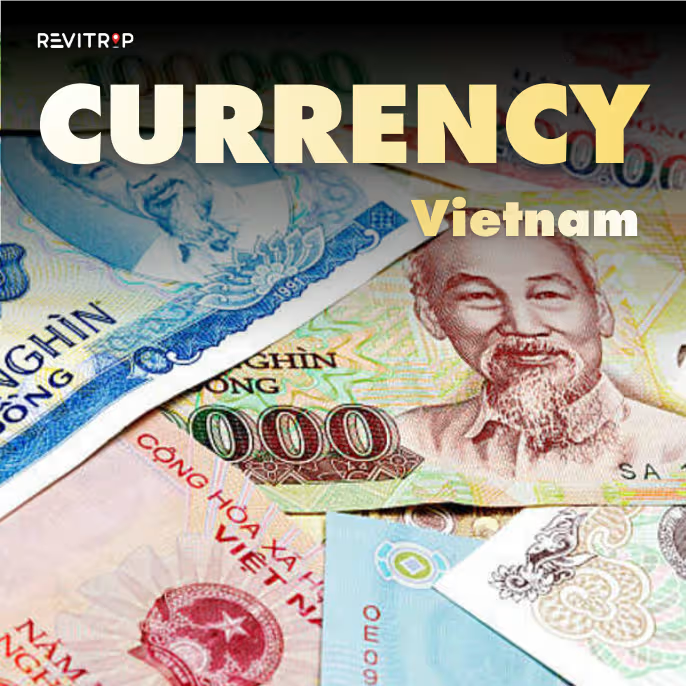
This scam targets anyone paying by cash. Drivers use sleight of hand to swap your note for a lower denomination, then accuse you of underpaying. The most common switch involves the 500,000 VND and 20,000 VND notes, which share a similar shade of blue. Before your trip, it helps to familiarize yourself with Vietnamese currency and how each note looks so you can spot a switch the moment it happens.
How to avoid it:
- Pay with small bills or the exact amount wherever possible
- Break larger notes at Circle K, reputable restaurants, or banks
- Always double-check your change before putting it away
7. Fruit Basket and Coconut Sellers
Vendors dressed in traditional clothing balance impressive arrangements of fruit or coconuts on their shoulders. They invite you to take a photo, then demand a large sum afterward. Some begin chopping the fruit mid-pose and insist you buy it once the photo is taken.
How to avoid it:
- Do not stop or engage with these vendors, no matter how appealing the setup looks
- Walk past without making eye contact or picking up any produce
8. Duplicate Businesses
Well-known tour companies and travel agencies often have near-identical copies operating nearby under almost the same name. A company called “Mekong Tours” might be imitated by “Mekong Tour,” “Mekong Guest Tours,” or “Mekong Touring.” These duplicates deliver a far worse service while trading on the reputation of the original.
How to avoid it:
- Search online for the exact address and contact details of the real company
- Be especially cautious in Hanoi, where this scam runs particularly high
9. Shoe Shining Scam
A stranger approaches and shows unusual interest in your shoes. Before you can respond, they have already pulled one off your foot and started shining it. Once finished, they demand a price far beyond what any reasonable shine would cost.
How to avoid it:
- Keep walking the moment someone approaches about your shoes
- Do not stop, even for a second, as that is all the opening they need
10. Cyclo Driver Scam
Cyclo drivers offer a relaxed sightseeing ride through the city. Some take detours far from your intended destination before demanding a high fare to return. Others add surprise “waiting fees” that start at 500,000 VND per hour without ever mentioning them upfront.
How to avoid it:
- Keep Google Maps open during the ride to track your route
- Book cyclo tours through a reputable company online in advance
- Always agree on a full price including waiting time before setting off
11. The Donut Trap
Street vendors balance baskets of powdered sugar donuts on their shoulders and offer you a free sample. Once you taste one, they pressure you into buying a full bag. The oil used to fry these donuts is unregulated and often unchanged for long periods, making illness a real risk.
How to avoid it:
- Simply decline and keep walking
- Vietnam offers far better street food options at every corner
12. Missing Prices on Menus
Sitting down at a restaurant with no prices on the menu gives staff the freedom to charge whatever they decide. This happens across tourist areas and can result in bills far beyond what you expected to pay.
How to avoid it:
- If a menu has no prices listed, leave and find somewhere else
- Never order food or drinks until you can see clear pricing
13. “Free” Food and Snacks
In places like Hanoi and Nha Trang, servers bring small bowls of peanuts or snacks to your table without being asked. These are added to your bill at the end of the meal, and refusing to pay causes a scene.
How to avoid it:
- Politely decline any food brought to your table that you did not order
- If the server insists on leaving it, do not touch it and request it be removed from your bill
14. Luggage Fees on Buses
On certain smaller or less reputable bus companies, staff tell foreign travelers they must pay a fee to load luggage under the bus. There is no such official fee anywhere in Vietnam. The money goes directly into the staff member’s pocket.
How to avoid it:
- Walk straight to your assigned seat without engaging
- No legitimate bus company in Vietnam charges a luggage fee
15. Shopping Scams and Fake Goods
Markets and shops across Vietnam sell fake goods presented as authentic. This includes branded clothing, accessories, and materials such as leather.
How to avoid it:
- Assume any branded item is a replica regardless of what the seller claims
- To test leather, heat a small piece of metal and press it to the material. Real leather will not melt.
16. SIM Card Scams
Corner stores buy SIM cards in bulk and sell them to travelers at marked-up prices. By the time the cards reach the traveler, the plan has already been running for days or weeks, meaning your “30-day unlimited data” package may stop working within a few days of purchase.
How to avoid it:
- Buy SIM cards only from official phone company stores
- Consider using an eSIM activated as soon as you land for instant and reliable connection
17. ATM Skimming
Skimming devices attached to ATMs record your card details without you realizing. Since Vietnam operates largely on cash, frequent ATM visits increase your exposure to this risk.
How to avoid it:
- Use ATMs inside banks with security cameras or a visible guard
- Inspect the card reader and keypad before inserting your card
- Give both a firm tug to check for any attachments
18. Other Things to Watch Out For in Vietnam
Beyond the main scams in Vietnam, a few everyday situations catch travelers off guard and cost unnecessary money.
Corrupt police and motorbike riders sometimes pull travelers over and request informal payments to avoid a fine. Carrying a second wallet with a small amount of cash gives you something to offer without handing over your real funds.
Photo charges are common in tourist areas across Southeast Asia. Locals dressed for attention, such as someone posed on a water buffalo, will encourage you to take their photo and then request payment. Read the situation before raising your camera.
ATM fees add up quickly when backpacking on a budget. Agribank offers the lowest and most consistent fees across the country, making it the smartest ATM choice for regular cash withdrawals.
Currency confusion catches many first-time visitors. Vietnamese dong amounts abbreviate frequently, so 500,000 VND might appear simply as “500” on a price tag. USD is also used in tourist bars and restaurants. Always confirm which currency applies before agreeing to a price.
Final Thoughts: Stay Smart and Enjoy Vietnam to the Fullest
Scams in Vietnam are real, but they do not define the country or its people. The vast majority of Vietnamese locals are warm, generous, and genuinely welcoming to travelers. Knowing how to avoid the traps simply means you spend more time enjoying everything Vietnam has to offer rather than dealing with avoidable headaches.
Stay alert in busy tourist areas, use trusted apps like Grab for transport, pay with exact change where possible, and trust your instincts when something feels off. With the right preparation, Vietnam delivers one of the most rewarding travel experiences in all of Southeast Asia.
FAQs
The most frequently reported scams in Vietnam include motorbike taxi overcharging, fake taxi services copying the colors of trusted companies like Vinasun and Mai Linh, money switching where drivers swap high-value notes for lower ones, and ATM skimming in unsupervised locations.
Yes, Vietnam is a safe and welcoming destination for travelers. The vast majority of Vietnamese people are warm, honest, and genuinely hospitable. Scams in Vietnam tend to cluster around busy tourist areas and involve opportunistic individuals rather than reflecting the character of the country as a whole. Staying alert in crowded markets, using reputable transport apps, keeping valuables in a cross-body bag, and trusting your instincts when something feels off is enough to avoid most situations entirely.
The most effective steps are simple and practical. Use Grab for all motorbike and taxi rides to lock in a fare before you move. Only withdraw cash from ATMs inside banks with visible security. Buy SIM cards from official phone company stores rather than corner shops. Keeping a small secondary wallet with minimal cash also protects you in situations involving corrupt traffic stops or aggressive vendors.