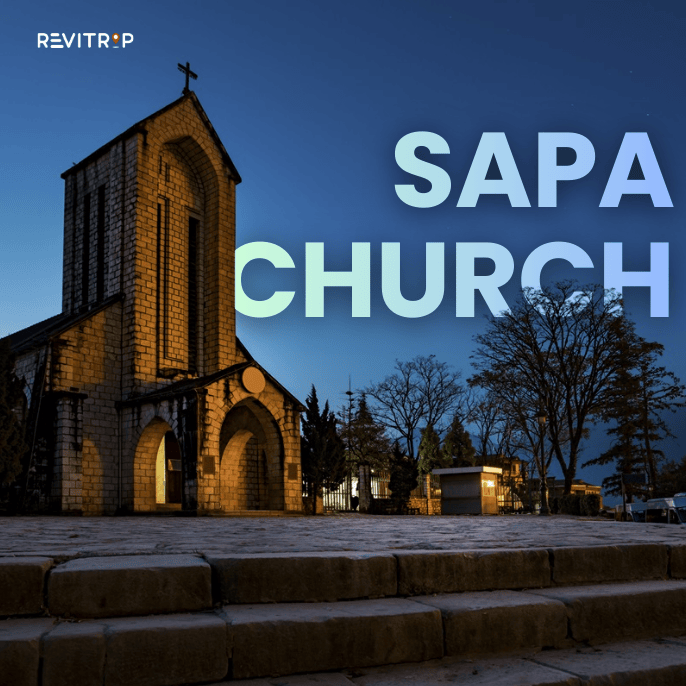
Sapa Church sits at the center of town and is hard to miss. The stone bell tower is visible from most main streets. The square in front serves as Sapa’s main social hub, from morning to late evening.
Most visitors walk past it quickly on their way to something else. That is a mistake. The church has more than a century of history. Its architecture is impressive up close. The square around it hosts much of Sapa’s cultural life. It includes weekend markets, traditional games, and the Saturday evening Love Market.
Bottom line: Sapa Church is free to visit, takes about 45 minutes to explore properly, and is best seen either at dusk or on a Saturday evening when the square comes alive.
Explore more:
Fansipan Mountain: Complete Trekking Guide (2026)
Sapa Weather by Month: When to Visit and What to Expect
Sapa Market Guide: 10 Best Markets to Visit (2026)
Quick Facts: Sapa Church at a Glance
- Official name: Our Lady of the Rosary Church (commonly called Sapa Stone Church)
- Location: Town center, Sapa, Lao Cai Province. A 3-minute walk along Thach Son Street from the main road
- Built: 1895 by French missionaries
- Size: 500 square meters of building, 6,000 square meter grounds
- Bell tower height: 20 meters, with a bell cast in 1932 weighing 500 kilograms
- Mass times: 7:00 PM on weekdays, 9:00 AM on Sundays
- Entry: Free
- Best time to visit: Late afternoon or Saturday evening
Booking Hotels/ Attractions Tickets/ Tours near: Klook
History of Sapa Church
Sapa Church was built in 1895 during the French colonial period. This makes it one of the oldest surviving structures in the town. French missionaries constructed it using locally quarried stone.
This was a practical choice, due to Sapa’s remoteness at the time. It was also hard to transport materials into the mountains.
The church has survived earthquakes, wartime damage, and multiple periods of neglect. It has been renovated several times over the past century. The core structure remains intact. The original stonework is still visible on the exterior walls and interior columns.
During the French colonial era, Sapa was developed as a hill station retreat for European administrators and military officers. The church was part of that broader effort to establish familiar institutions in a remote outpost. Today it serves an active local Catholic congregation alongside its role as one of Sapa’s most visited landmarks.
The bell in the tower was cast in 1932 and can be heard across a one-kilometer radius when it rings. It still operates on its original schedule.
Architecture: What to Look For
Sapa Church is built in the Roman Gothic style. This style is less common in Vietnam than the colonial buildings in Hanoi and Ho Chi Minh City. The pointed arches, tall bell tower, and heavy stone walls give it a European look. This look contrasts with the mountain landscape around it.
The Exterior
The entire structure is built from carved stone mixed with limestone and other local materials. The facade features a central rose window above the main entrance and two flanking towers. The taller bell tower on the right side rises 20 meters above the square.
The stone surfaces show signs of age in darker patches and moss growth. This adds to the building’s character.
The steps leading from the church down to the town square are worth a photograph in both directions. Looking up from the square, the church appears to rise out of the hillside with Ham Rong Mountain directly behind it.
The Interior
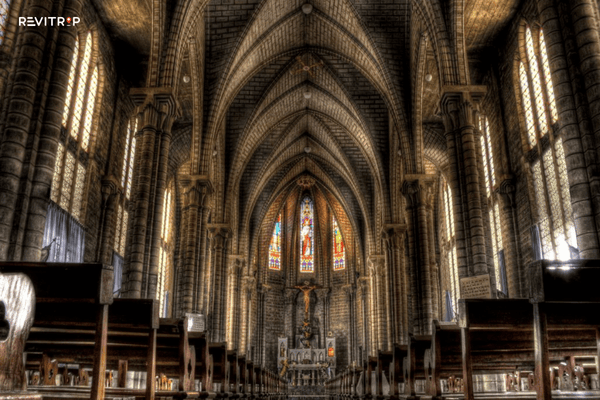
The interior is painted predominantly white, which creates an unexpectedly bright and spacious feeling given the heavy stone exterior. Arched vaults run the length of the nave, and the stained glass windows along both sides depict scenes from the life of Jesus in deep blues, reds, and greens. The contrast between the white walls and the dark wood pews and altar creates a clean visual effect that photographs well.
The church has seven interior compartments. The bell tower can be viewed from the base but is not open for public access.
My tip: Visit during a weekday afternoon when the church is quiet and you can spend time in the interior without crowds. The light through the stained glass windows is best between 2pm and 4pm.
Things to Do Around Sapa Church
Walk the Town Square
The square in front of Sapa Church is the social center of the town. In the mornings, local vendors set up small food stalls along the perimeter. During the day, ethnic minority women from surrounding villages often gather here to sell handmade textiles, embroidered bags, and silver jewelry. In the evenings, the square fills with both locals and visitors, and the church facade is lit up against the night sky.
Spending 20 to 30 minutes simply sitting on the steps and watching the square is genuinely worthwhile.
Attend the Saturday Love Market
Every Saturday evening, the square in front of Sapa Church hosts the Love Market. It is a traditional gathering and part of local culture for generations. Originally, young H’Mong and Dao people met partners here through music, dancing, and games. Now, it serves as a larger community and cultural event.
You can expect traditional musical performances, ethnic minority games including Pao throwing, cane wrestling, and tug-of-war. You can also find food vendors and craft stalls. The atmosphere is festive and the square is packed by 7pm. Arriving at 6pm gives you a better position and lets you watch the setup before the crowd builds.
Worth knowing: The Love Market is free to attend and entirely open to visitors. Photography is welcome but ask before photographing individuals closely.
Try Local Food Nearby
The streets immediately around Sapa Church have a good concentration of restaurants and street food vendors.
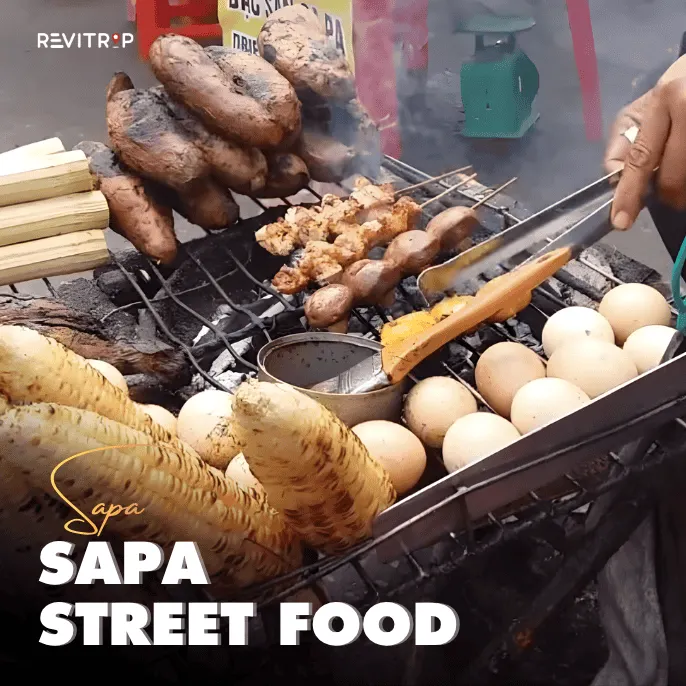
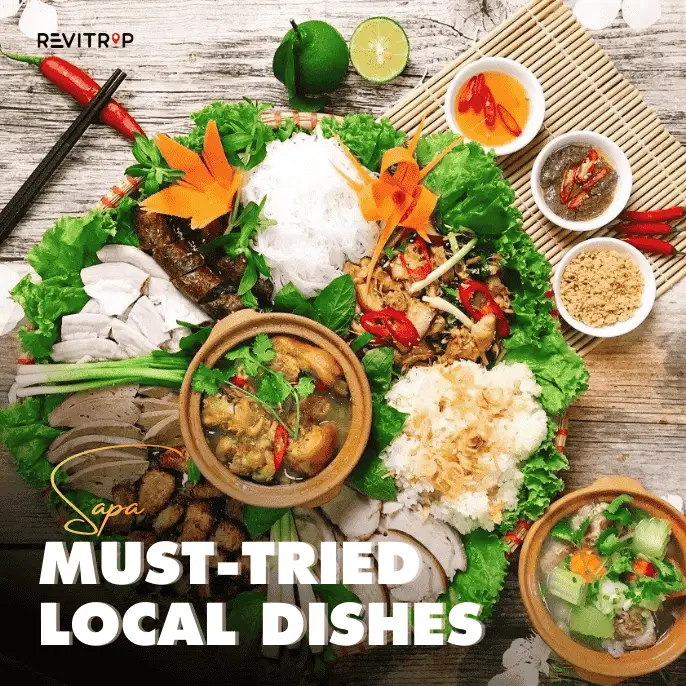
Worth trying in this area: Salmon hotpot (a Sapa specialty using fish farmed in the cold mountain streams), thang co (a traditional horse meat stew more commonly found at market days but available in some restaurants year round), and grilled corn sold by street vendors near the square steps in the evenings.
Prices here are higher than the outlying villages but reasonable by town center standards. Expect 80,000 to 200,000 VND per dish at sit-down restaurants.
Best Time to Visit Sapa Church
The church is accessible year-round and each season gives it a different character.
Spring (March to May): Cherry blossoms around the square and mild temperatures make this one of the most pleasant times to visit. The light is soft and the surrounding hills are green.
Autumn (October to November): Clear skies mean you get the best views of Ham Rong Mountain behind the church. The golden rice harvest season in October adds context to everything you see in Sapa during this window.
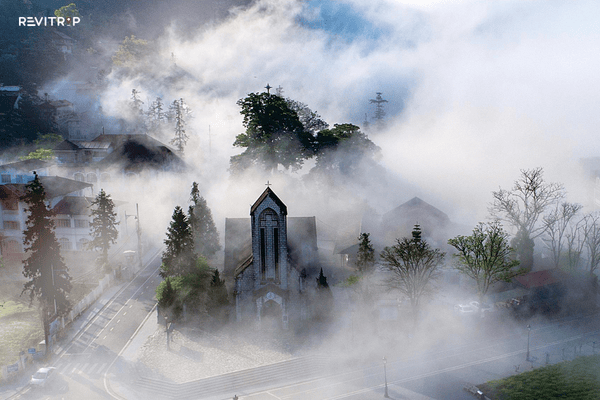
Winter (December to January): On rare cold snaps, frost or light snow settles on the church roof and stone walls. The fog and mist that roll in during winter mornings give the church an atmospheric, almost theatrical quality. Worth seeing if you are visiting Sapa during this period.
Any season: visit Saturday evening for the Love Market. Go any day in late afternoon for the best church light. Enjoy a quieter square before the evening crowd arrives.
How to Get to Sapa Church
Sapa Church is in the center of Sapa town and easy to reach from anywhere in the area.
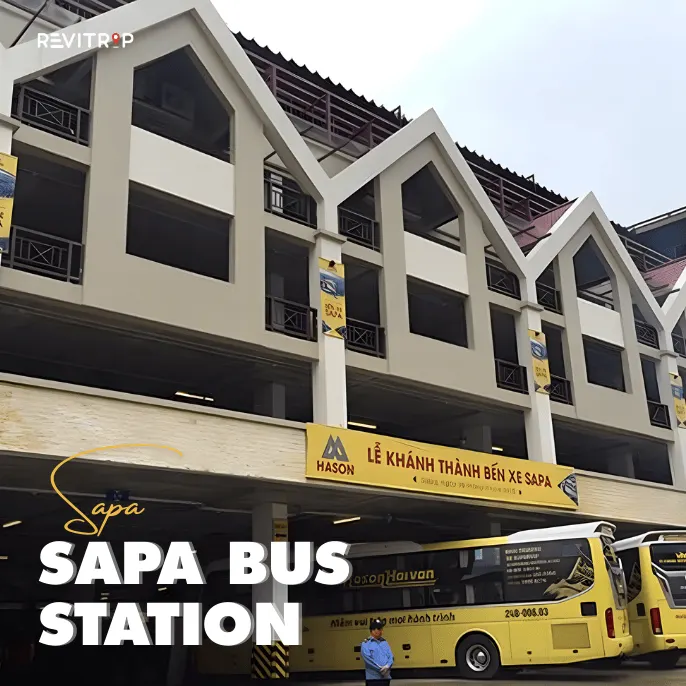
From Hanoi: The overnight train from Hanoi takes about 8 hours to Lao Cai Station. From there, a bus or taxi covers the 38 kilometers to Sapa town in around 45 minutes to 1 hour. The church is a 3-minute walk along Thach Son Street from the main bus and taxi drop-off point.
From within Sapa: Walk. The church is the central landmark in town and visible from most of the main streets. It is not possible to get significantly lost looking for it.
By sleeper bus from Hanoi: Several operators run direct overnight buses from Hanoi to Sapa town center, taking around 6 hours. This option drops you within easy walking distance of the church.
Booking train, bus, private car there: Bookaway
Practical Tips
- Entry is free and no ticket is required to enter the grounds or the church exterior at any time
- Dress modestly inside the church, shoulders covered and no shorts
- Mass times are 7:00 PM on weekdays and 9:00 AM on Sundays. If you want to observe a service, arrive 10 minutes early and sit toward the back
- Photography is allowed in the exterior and most of the interior, but turn off flash inside
- Crowds peak on Saturday evenings and Sunday mornings. Weekday afternoons are the quietest window
Final Verdict
Sapa Church is not a half-day activity but it is more than a quick photo stop. The architecture rewards a slow look. The interior is worth visiting. The square around it is one of the best spots for people-watching in northern Vietnam.
Give it 45 minutes on a weekday afternoon. Or plan your Saturday evening around the Love Market in the square. You will leave with a clearer sense of how the town feels.
FAQ
An English Mass is not reliably scheduled or widely posted for Sapa Stone Church, so you should not assume one will be available. The safest move is to check with the church or your hotel the day before, since service details can change.
The main Catholic church in Sapa is the Sapa Stone Church, also known as the Church of Our Lady of the Rosary. It sits right in the town center by the main square and functions as an active parish church.
Reviews often describe it as a beautiful, atmospheric landmark that’s especially photogenic in misty weather. Some visitors note you may only see the exterior if a service is happening or access is limited at that time.